
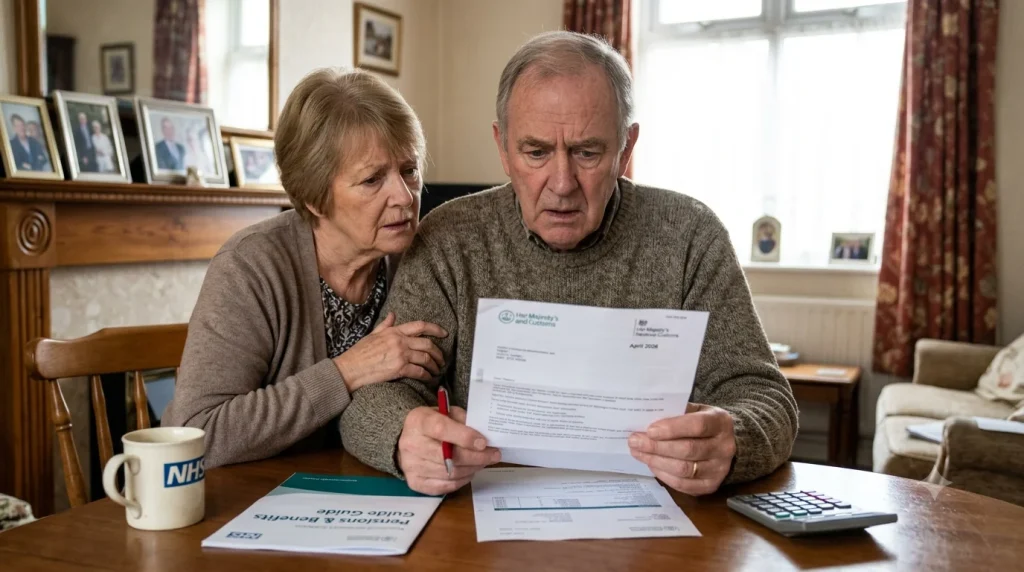
There is no official HMRC policy that automatically deducts £500 from every pensioner’s bank account. The £500 figure circulating online should not be treated as a fixed charge, penalty or new deduction applying to pensioners across the UK.
HMRC can recover unpaid tax and other established tax debts, while the Department for Work and Pensions (DWP) separately has powers to recover certain benefit overpayments.
The amount involved depends on the individual circumstances rather than a standard £500 figure.
Pensioners may also see their net private or workplace pension change because HMRC has adjusted their PAYE tax code. This is different from HMRC taking £500 directly from a bank account.
Those concerned about increasing tax liabilities can also check how the State Pension tax rules in 2026 may affect their overall taxable income.
Last Updated: 19.08.2026
HMRC Update June 2026: Direct Recovery of Debts Is Being Rolled Out More Widely
An important development behind some of the concern about HMRC bank deductions is the return of Direct Recovery of Debts (DRD).
HMRC confirmed in an updated briefing published on 11 June 2026 that Direct Recovery of Debts had restarted in a controlled “test and learn” phase in September 2025. HMRC then began rolling the power out to more customers from April 2026 onwards.
This does not mean HMRC has introduced a £500 pensioner deduction.
Direct Recovery of Debts allows HMRC, in qualifying cases, to require a bank or building society to transfer money directly from the account of a person or business with an established tax debt.
A further government consultation published on 23 June 2026 confirmed that the existing DRD eligibility conditions include a debt of more than £1,000 and a safeguard requiring at least £5,000 to remain in the relevant accounts after money is recovered.
Customers are also given a period in which they can object or pay before funds are transferred.
The current position can therefore be summarised as:
- No Universal £500 Deduction: There is no fixed £500 charge applying to UK pensioners
- DRD Is Active Again: HMRC restarted its Direct Recovery of Debts powers
- Wider Rollout Began In 2026: HMRC expanded the use of DRD from April 2026
- Debt Must Meet Conditions: Existing DRD rules generally require more than £1,000 to be owed
- £5,000 Safeguard Applies: At least £5,000 must normally remain in relevant accounts after recovery
- Notice Is Required: The process includes contact and an opportunity to object or settle the debt
Anyone concerned about a bank deduction should therefore establish what the debt actually relates to rather than assuming an unexplained £500 amount is part of a new pension policy.
What Is HMRC’s Direct Recovery of Debts Scheme?
Direct Recovery of Debts is an HMRC debt-enforcement power. It is intended for cases where tax remains unpaid and HMRC considers that the taxpayer has the financial means to settle the debt but has not done so.
Under the HMRC Direct Recovery of Debts rules, HMRC can require banks and building societies to make payments from current accounts, savings accounts and certain Cash ISAs when the statutory requirements and safeguards are satisfied.
It should not normally be the first action a pensioner encounters when a relatively small PAYE tax discrepancy arises.
HMRC’s June 2026 briefing states that DRD is aimed at customers who can afford to pay what they owe but choose not to. HMRC also said the power had been used only 19 times during the two years before it was paused during the COVID-19 pandemic.
That context matters because online references to an “HMRC £500 bank deduction” can create the impression that direct bank recovery is routine for pensioners. It is not the standard method used to deal with ordinary pension tax adjustments.
Why Might HMRC Recover Money From a Pensioner?
There are several legitimate reasons a pensioner may owe additional tax, but none creates an automatic £500 deduction.
Income Tax Underpayments
State Pension is taxable income, although tax is not normally deducted directly from the State Pension before it reaches the recipient.
If total taxable income exceeds the available Personal Allowance, HMRC may need to collect tax elsewhere. This can become particularly relevant where someone receives both State Pension and a private or workplace pension.
The way a person’s allowance is distributed can also affect deductions, which is why checking HMRC Personal Allowance allocation changes can help explain an unexpected change in PAYE.
Incorrect Tax Codes
An incorrect or temporary tax code can result in too much or too little tax being collected.
For example, pension providers may sometimes operate an emergency tax code when they do not yet have all the information required to calculate tax correctly.
The amount deducted can vary considerably, as shown by how emergency tax deductions on £1,000 depend on the code and type of income involved.
Private Pension And Other Income
A pensioner’s overall tax position may include:
- State Pension
- Workplace Pension
- Private Pension
- Employment Income
- Savings Interest
- Investment Income
- Other Taxable Income
Changes to one income source can therefore affect the tax collected from another.
Savings can also cause unexpected PAYE adjustments if HMRC’s information differs from the actual interest received. Checking figures carefully is particularly important where an HMRC savings tax calculation appears incorrect.
How Are Smaller Tax Underpayments Usually Collected?
A common misconception is that HMRC automatically removes an underpayment directly from a bank account.
In many ordinary PAYE cases, that is not what happens.
HMRC says people who are employed or receiving a pension may receive either a P800 tax calculation or a Simple Assessment if they have paid too much or too little tax. Reasons can include an incorrect tax code or starting to receive a workplace pension.
Where a P800 shows less than £3,000 is owed and the necessary conditions are met, HMRC will usually collect the underpayment by changing the person’s tax code. The extra tax is then normally spread across the following tax year.
A Simple Assessment may instead be issued when:
- Tax Cannot Be Collected Automatically: There is no suitable PAYE income
- More Than £3,000 Is Owed: The debt exceeds the normal PAYE coding limit
- State Pension Creates A Tax Liability: Tax is due but cannot be taken directly from the State Pension
This distinction is important because a tax-code adjustment, Simple Assessment bill and Direct Recovery of Debts action are three different processes.
Age UK’s information on income tax for pensioners also explains that HMRC may change a pensioner’s tax code where tax needs to be collected automatically.
What Is the Difference Between an HMRC Deduction and a DWP Pension Overpayment?
HMRC and DWP perform different functions, so references to “government deductions” should not automatically be treated as the same thing.
| Situation | Who Normally Handles It? | Typical Recovery Method |
| Income Tax Underpayment | HMRC | PAYE Tax Code, P800 or Simple Assessment |
| Established Unpaid Tax Debt | HMRC | Debt Collection or Direct Recovery of Debts |
| Benefit Overpayment | DWP | Benefit Deductions or Repayment Arrangement |
| State Pension-Related Payment Issue | DWP/Pension Service | Investigation and Appropriate Recovery Process |
| Flat £500 Pensioner Deduction Rumour | No Universal Scheme | No Standard £500 Deduction Exists |
DWP’s published overpayment guidance states that it seeks to recover overpaid benefits where doing so is reasonable and cost-effective, while taking account of financial hardship and other safeguards.
Pensioners examining their transaction history should also check the payment reference. For example, DWP SP on a bank statement generally relates to a State Pension payment rather than an HMRC tax deduction.
Could a £500 Deduction Actually Be a DWP Overpayment?
It is possible for a person to owe DWP money following an overpayment, but again there is no standard £500 amount.
Benefit overpayments can arise when a claimant receives more than they were entitled to. The cause may involve a change in circumstances, incorrect information or another adjustment affecting entitlement.
DWP may recover eligible overpayments through methods including deductions from benefits or agreed repayment arrangements. Its published guidance says recovery should take account of financial hardship.
Anyone who does not agree that an overpayment occurred should check the decision before assuming that repayment is unavoidable.
Citizens Advice guidance on benefit overpayments recommends requesting a full explanation and disputing an overpayment where there is evidence that the decision is incorrect.
Can HMRC Take Money Directly From a Pensioner’s Bank Account?
Yes, HMRC has legal powers that can allow direct recovery from a bank or building society account, but this does not mean it can simply take an arbitrary £500 without following the relevant process.
For Direct Recovery of Debts, current eligibility conditions include debt above £1,000 and the requirement for at least £5,000 to remain across relevant accounts after recovery.
The process also involves temporarily holding funds and giving the customer 30 days to object or pay before the money is taken.
This means a pensioner should distinguish between:
- A PAYE Tax-Code Change: More tax is taken from pension income
- A Simple Assessment: HMRC sends a bill for tax owed
- A Voluntary Payment: The taxpayer pays an HMRC debt themselves
- Direct Recovery of Debts: HMRC uses its legal bank-recovery power
- A DWP Deduction: Money is recovered under benefit-overpayment rules
The method matters when deciding which department to contact and whether the amount can be disputed.
How Does HMRC Tell Pensioners About Tax They Owe?
HMRC normally communicates a tax liability before enforcement reaches the stage of direct recovery.
Depending on the issue, a pensioner may receive:
- A P800 Tax Calculation
- A Simple Assessment Letter
- A PAYE Coding Notice
- A Tax Bill
- Debt-Management Correspondence
- A Notice Connected With Enforcement Action
HMRC says P800 and Simple Assessment letters can be issued to people receiving pensions when their tax for a previous year has not been correct.
A person who suddenly receives less from a workplace or private pension should therefore check the tax code shown on the pension statement before assuming money has been removed directly from their bank.
What Should Pensioners Do If They Notice an Unexpected Deduction?
An unexplained deduction should be investigated rather than ignored.
- Check The Transaction Reference: Establish whether the payment relates to HMRC, DWP, a pension provider or another organisation.
- Review Recent Letters: Check HMRC tax calculations, PAYE coding notices, Simple Assessment letters and DWP correspondence.
- Check The Tax Code: Compare the current code with previous pension statements.
- Check The Personal Tax Account: Review income records and tax information held by HMRC.
- Ask For A Breakdown: Request the calculation showing exactly why money is owed.
- Check The Figures: Compare HMRC or DWP records against pension statements, savings information and other income.
- Challenge Incorrect Information: Contact the relevant department promptly when figures or circumstances appear wrong.
Pensioners should avoid paying an unexpected demand merely because a message claims to come from HMRC or DWP.
Can a Pensioner Challenge an HMRC or DWP Deduction?
Yes, depending on the type of decision.
If a P800 calculation appears incorrect, the taxpayer can contact HMRC and explain which figures are wrong. HMRC states that if it agrees that a calculation was incorrect, it will issue a replacement calculation.
Simple Assessment calculations can also be challenged. Current GOV.UK guidance states that someone who believes information on a Simple Assessment is wrong should contact HMRC within 60 days.
DWP decisions follow different procedures, so pensioners should not send a DWP benefit-overpayment dispute to HMRC.
Where repayment would cause serious financial difficulty, the individual should contact the department responsible for the debt and discuss affordability rather than simply stopping payments.
What About Winter Fuel Payment Recovery in 2026?
Another reason some pensioners may notice higher tax deductions in 2026 is the recovery of Winter Fuel Payments from people above the relevant income threshold.
This is a separate policy and should not be confused with the rumoured £500 bank deduction.
For 2025/26 Winter Fuel Payments, people with taxable income above £35,000 are subject to recovery through the tax system. Pensioners can see how HMRC is recovering Winter Fuel Payments through PAYE or Self Assessment depending on their tax circumstances.
The key distinction is that the Winter Fuel Payment recovery has specific rules and eligibility conditions. It is not evidence of a universal £500 charge on pensioners.
How Can Pensioners Avoid Unexpected Tax Deductions?
It is not possible to prevent every adjustment, but keeping records accurate can reduce the risk of unexpected tax bills.
Pensioners should:
- Check PAYE Tax Codes: Review pension statements whenever a code changes
- Check HMRC Income Records: Make sure pension and employment income is correct
- Review Savings Interest: Incorrect estimates can affect tax calculations
- Report Important Changes: Notify the appropriate department when circumstances change
- Read HMRC Letters: Do not ignore a P800, Simple Assessment or debt notice
- Keep Pension Statements: These can help identify when and why deductions changed
- Update Contact Details: Make sure HMRC and DWP have the correct address
Those receiving an occupational pension may also find that a tax-code change affects the amount arriving in their account even when the gross pension itself has risen.
How Can Pensioners Spot a Fake HMRC £500 Deduction Message?
Online discussion around pension deductions also creates opportunities for scammers.
A message should be treated cautiously when it:
- Demands Immediate Payment: Especially where the recipient is threatened with arrest or urgent legal action
- Requests Bank Details: Unexpected requests for sensitive financial information should be verified independently
- Includes Suspicious Links: Do not sign in through an unexpected text or email
- Promises A Refund For A Fee: Genuine tax refunds do not require paying an unknown third party first
- Uses Pressure Tactics: Fraudsters frequently try to prevent people from checking information
- Refers To A Universal £500 Charge: There is currently no official flat £500 pensioner deduction
Anyone unsure about a letter or message should independently use official government contact information rather than the telephone number or website supplied in the suspicious communication.
Conclusion
There is no confirmed universal HMRC £500 bank deduction for pensioners in 2026. The £500 figure should not be interpreted as a new tax, charge or automatic penalty applying to people receiving the State Pension.
There has, however, been a genuine and important change in HMRC debt enforcement. Direct Recovery of Debts restarted on a controlled basis in September 2025 and has been rolled out to more customers from April 2026 onwards.
Current eligibility rules generally require more than £1,000 to be owed, while safeguards require at least £5,000 to remain in relevant accounts after recovery.
For most ordinary pension tax underpayments, PAYE tax-code adjustments, P800 calculations or Simple Assessment remain more relevant than direct bank recovery.
Pensioners should also distinguish HMRC tax debts from DWP benefit or pension-related overpayments.
Anyone who notices an unexpected deduction should check their tax code, official correspondence and bank reference before contacting the appropriate department for a full explanation.
Frequently Asked Questions
Is HMRC Taking £500 From Every Pensioner in 2026?
No. There is no official policy requiring HMRC to deduct £500 from every UK pensioner. Any tax debt or repayment is calculated according to the individual’s circumstances.
Has HMRC Introduced a New £500 Pensioner Deduction?
No. HMRC has not announced a universal £500 pensioner deduction. Confusion may arise from individual tax adjustments, benefit-overpayment cases or reports about HMRC’s Direct Recovery of Debts powers.
Can HMRC Take Money Directly From a Bank Account?
Yes, HMRC can use Direct Recovery of Debts in qualifying cases. However, statutory conditions and safeguards apply. Current rules generally require an eligible debt above £1,000 and at least £5,000 to remain in relevant accounts after recovery.
What Is the £1,000 HMRC Direct Recovery of Debts Threshold?
Existing Direct Recovery of Debts eligibility requires more than £1,000 to be owed before HMRC can use the power. This is one reason claims about a special fixed £500 direct bank deduction should be treated cautiously.
How Much Money Must HMRC Leave in a Bank Account?
Under the existing DRD safeguards, at least £5,000 must remain across the relevant accounts after the deduction. The safeguard is intended to prevent HMRC from emptying an account through this particular recovery mechanism.
Are State Pension Overpayments Recovered by HMRC or DWP?
Benefit and State Pension administration generally sits with DWP and the Pension Service, while HMRC is responsible for taxation. A pensioner should establish whether the issue concerns an overpayment of a DWP-administered payment or unpaid Income Tax before contacting the relevant department.
What Should a Pensioner Do If a £500 Deduction Looks Incorrect?
They should check the transaction reference, pension statement, tax code and recent HMRC or DWP correspondence. If the amount cannot be explained, they should contact the responsible department through official contact details and request a full calculation or breakdown before accepting that the deduction is correct.