

Has the NHS Finally Drawn the Line on Underperformance?
It appears that a long-awaited shift has finally arrived in the National Health Service. In 2024–25, nearly 7,000 NHS staff were dismissed, compared with just over 4,000 in 2022–23. This sharp rise suggests that the NHS is no longer prepared to tolerate persistent underperformance, particularly in roles that directly affect patient care.

For communities like Preston, where reliable healthcare services are essential, this change carries real significance. During her recent visit, our author Hannah spoke with patients and staff across the area and sensed a noticeable shift in attitudes.
“There’s a quieter confidence now,” Hannah observed. “People aren’t celebrating sackings, but they do feel reassured that standards are finally being taken seriously.”
This new direction has largely been driven by a tougher stance on accountability, reinforced by political leadership and growing public pressure to improve outcomes.
What Is Behind the Record Number of NHS Staff Dismissals?
The rise in dismissals has been widely described as unprecedented. According to reporting on record NHS staff being dismissed under new performance rules, the latest figures mark the highest number of terminations since workforce records began in 2011. This points to a systemic shift rather than isolated incidents.
What stands out is not misconduct or redundancy, but a significant increase in capability-based dismissals. These cases relate to staff who are unable to meet the core requirements of their role, even after support and training. While the percentage of NHS leavers dismissed remains relatively small, the absolute numbers are substantial due to the sheer size of the workforce.
For many observers, this signals a move away from a historically cautious approach towards one that prioritises outcomes and patient safety over organisational inertia.
Why Are Capability-Related Dismissals Increasing Across the NHS?
Capability-related dismissals have become the most common reason for staff being let go, reflecting a growing intolerance of long-term underperformance. These cases often involve repeated errors, failure to follow procedures, or an inability to adapt to evolving clinical and professional standards.

In the past, such issues might have been managed through redeployment or extended performance plans. Today, there is greater emphasis on whether an individual can safely and effectively fulfil their role.
As highlighted in analysis of why NHS staff are being sacked for underperformance, this represents a cultural shift towards clearer expectations and firmer consequences.
Hannah found that, locally, opinions are divided. Some staff worry about increased pressure, while others believe that clearer accountability ultimately protects both patients and professionals.
How Does the NHS Define Grounds for Staff Dismissal?
Understanding the categories used by the NHS helps explain the recent trend. Dismissals typically fall into three broad areas:
| Grounds for Dismissal | Definition |
| Capability | Inability to perform duties safely or effectively |
| Misconduct | Breach of professional or behavioural standards |
| Redundancy | Role removed due to restructuring or funding |
Capability now accounts for the largest share of dismissals. This reinforces the message that competence is non-negotiable, regardless of seniority or length of service.
What Is the “Zero Tolerance” Policy Introduced by Wes Streeting?
In late 2024, Health Secretary Wes Streeting introduced a so-called zero tolerance policy, aimed at tackling systemic underperformance across the NHS. The policy is built on the principle that failure to meet acceptable standards should no longer be quietly managed or ignored.
A key feature of this approach is greater transparency. NHS trusts are now subject to closer scrutiny, with performance data playing a larger role in decision-making. Poorly performing trusts face direct intervention, and senior managers can now be dismissed where improvement is not delivered.
Supporters argue that this policy sends a clear signal to both staff and the public that accountability matters. Critics, however, caution that without sufficient support and resources, the approach risks increasing pressure on an already stretched workforce.
How Is NHS Performance Management Changing in Practice?
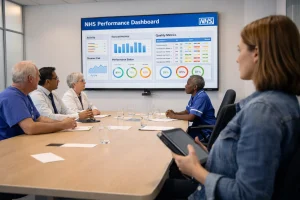
One of the most notable changes is the end of what some commentators have described as a “revolving door” culture, where underperforming managers moved between trusts without consequence. Performance management is now more data-led, with clearer benchmarks and fewer informal compromises.
For frontline staff, this means more regular assessments and earlier intervention when problems arise. For patients in Preston, Hannah noted that this has begun to translate into clearer communication and more consistent care, although the full impact will take time to emerge.
How Much Does It Cost to Replace Dismissed NHS Staff?
While dismissing incompetent NHS staff may improve standards, it also carries financial consequences. Replacing a single NHS employee is estimated to cost around £6,500, once recruitment, training, and temporary cover are included.
| Cost Factor | Estimated Cost |
| Recruitment and advertising | £1,000–£1,500 |
| Induction and training | £2,000 |
| Temporary staffing cover | £2,500–£3,000 |
| HR and legal processes | £500–£1,000 |
When applied across thousands of dismissals, these costs place additional strain on NHS budgets. This has strengthened arguments for earlier support and intervention, rather than relying solely on dismissal as a solution.
Is the NHS Falling Behind the Private Sector on Accountability?
Even with the recent increase, NHS dismissal rates remain lower than those seen in the private sector, where performance-based exits are more common. This contrast has fuelled debate about whether the NHS has historically been too cautious.
Coverage on incompetent NHS staff being sacked and accountability gaps suggests that public expectations are changing. Patients increasingly expect the same level of professional accountability from public services as they would from private organisations, particularly where safety is concerned.
What Are the Implications for Patient Safety and Public Trust?
At the centre of this debate is patient safety. Supporters of the tougher approach argue that removing persistently underperforming staff reduces risk and helps rebuild trust in the system.
However, concerns remain about morale and service continuity, especially if dismissals are not matched with effective recruitment and retention strategies. Hannah heard these concerns echoed by staff in Preston, many of whom stressed the importance of balancing accountability with support.
The Department of Health has emphasised that dismissals are only one part of a broader reform agenda, which also includes training, workforce planning, and wellbeing initiatives.

Can Early Intervention Reduce the Need for NHS Staff Being Sacked?
There is broad agreement that earlier intervention could prevent many capability-related dismissals. Regular appraisals, access to training, and timely managerial support can often address problems before they escalate.
For local NHS trusts, investing in these preventative measures may prove more sustainable than relying on dismissal alone, both financially and culturally.
What Is the Long-Term Direction for NHS Workforce Reform?
The government’s long-term workforce strategy aims to professionalise performance management while strengthening support systems. The focus is on building skills, improving leadership, and ensuring that high standards are maintained consistently across the NHS.
While the current rise in dismissals reflects short-term disruption, policymakers argue that it is a necessary step towards long-term stability and improved care quality.
Conclusion
The growing number of cases involving incompetent NHS staff being sacked reflects a health service at a turning point. The NHS is clearly drawing firmer lines around performance and accountability, responding to public concern and political pressure.
As Hannah reflected after her visit to Preston:
“This moment feels less about blame and more about responsibility. People want an NHS they can trust, and trust starts with standards.”
Whether these changes lead to lasting improvement will depend on how well accountability is balanced with support. What is clear is that the NHS is no longer standing still, and for many patients and staff alike, that change is long overdue.