
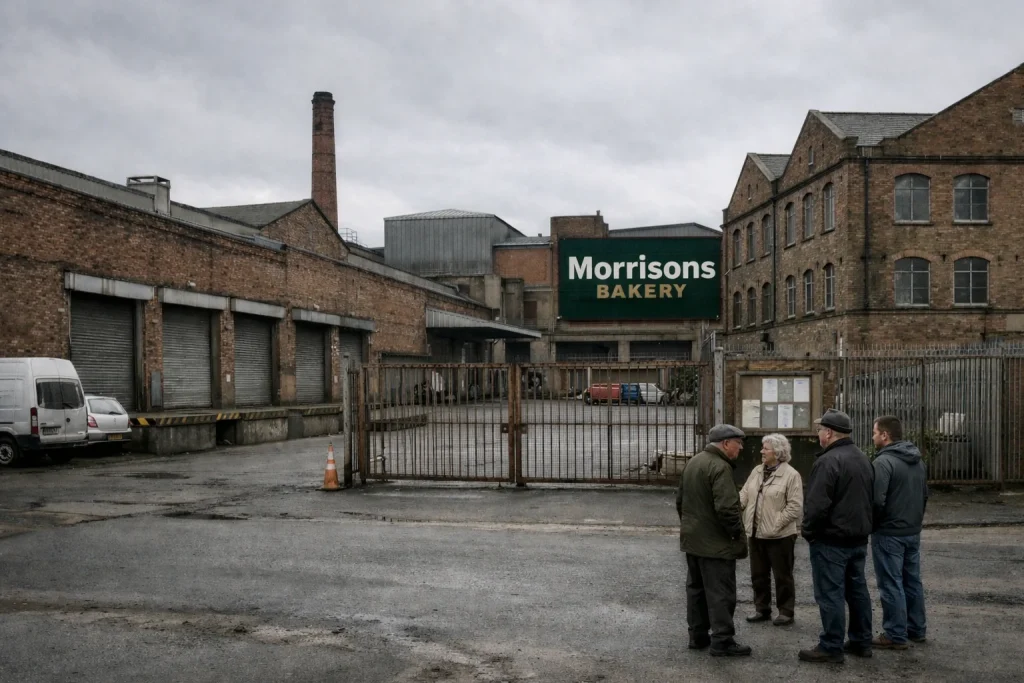
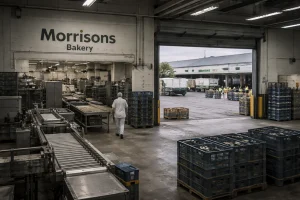
Morrisons has confirmed the closure of its Rathbones Bakery facility in Wakefield, bringing an end to a 100‑year‑old operation and placing around 115 jobs at risk. The announcement marks the second time in just over a year that the future of the historic bakery has been called into question, and it signals another tough decision for the UK supermarket sector.
The news landed close to home. Yesterday, my colleague Jennifer mentioned it in passing, “I can’t believe the Wakefield bakery is closing; it was one of our favourites when we visited.”
That small comment summed up what many customers are feeling. This isn’t just a business update; it’s about a familiar brand disappearing, a workplace shutting its doors, and a local employer leaving a lasting gap.
Key Takeaways: Rathbones Bakery Closure
- 📍 Location: Wakefield, West Yorkshire (Thornes Trading Estate).
- ⚠️ Jobs at Risk: Approximately 115 roles (Redeployment options being explored).
- 📉 Reason: Significant losses and declining sales following the loss of a major third-party customer.
- 🛒 Store Impact: None. Morrisons “Market Street” in-store bakeries remain unaffected.
- 📅 Timeline: 45-day consultation began January 5, 2026.
I’m Hannah, and in this article I break down what Morrisons has announced, why the Rathbones Bakery closure matters, and what it could mean for workers, shoppers, and the wider UK grocery market clearly, calmly, and with the context this story deserves.
What Did Morrisons Announce About the Bakery Closure?
Morrisons confirmed that it will shut down the Rathbones Bakery facility in Wakefield, West Yorkshire. This is a 100‑year‑old facility and a brand that has appeared on supermarket shelves for decades.
The closure puts around 115 staff at risk of losing their jobs, marking a major change for a business that has been part of the local economy and British food production for more than a century.
This isn’t the first time closure plans have surfaced. In late 2024, the bakery was operating on the brink of being shut down, but at that time, Morrisons opted to restructure and keep it open at a much-reduced capacity.
The hope was that a new focus on specialist products might return the business to profitability by 2027. But despite what the company described as “tremendous efforts” to broaden output, the site continued to make losses, and no path back to breakeven could be found.
According to a Morrisons spokesperson:
“Regrettably, having thoroughly reviewed all alternatives, we can no longer see a way back to breakeven and have taken the difficult decision to close the remaining facility.”
For many of us who grew up with the Rathbones’ name on bread and baked goods, this feels like the end of an era.
What was the History of Rathbones Bakery and Why Did It Struggle?
Rathbones Bakery began life in 1893, long before supermarkets dominated the high street. In 2005, Morrisons acquired the business, rescuing it from administration and integrating it into its own supply chain.
Despite that long heritage, recent years were tough. In an attempt to save the bakery, Morrisons abandoned white bread production entirely, shifting the site’s focus to products such as pita bread, crumpets, pancakes and specialty rolls. These items were seen as having potential for higher margins and more stable demand.
However, even with this refocus, the bakery’s performance did not improve enough. Earlier projections suggested the site could break even by 2027, but that target has since been abandoned. Loss‑making continued, and the decision was made that ongoing investment could not justify the financial returns.
Key Timeline of Rathbones Bakery (Summary)
| Year | Event |
| 1893 | Rathbones Bakery founded |
| 2005 | Acquired by Morrisons |
| 2024 | Near closure; restructured to speciality production |
| Jan 2026 | Closure announced due to continued losses |
Are Morrisons’ In‑Store Bakeries Affected by This Closure?
One question I hear a lot from customers is whether this means fewer freshly baked goods in store. The answer is no, Morrisons has confirmed that in‑store bakeries will not be impacted by the closure of the Wakefield manufacturing site.
That means the bread, buns and bakery counters you see when you shop will still operate normally. The supermarket plans to supply these from other facilities or through third‑party partners, helping to keep the shelves filled and the quality consistent.
So when Jennifer sighed and said, “I really hope we can still get our favourite fresh rolls on a Saturday,” the reassurance was simple: your local store’s bakery won’t disappear just because the factory is closing.
What Does This Closure Mean for the Workers and Local Community?
This is, without doubt, the human side of the story. With 115 roles at risk, the closure will affect people and their families directly, colleagues who have dedicated years, even decades, of work to the business.
Morrisons has said it will do everything it can to help those affected, including trying to find suitable roles elsewhere within the Myton Group, the company’s broader manufacturing division. But redeployment is not guaranteed for everyone, and that uncertainty weighs heavily on workers and their neighbours.
One local resident told me, echoing the feelings of many customers in Wakefield:
“We’re all hearing about it at the shops and bus stops. People are saying it feels like losing part of the town’s identity. The bakery was more than just a workplace, it was part of the local fabric.”
Closures like this can also have a knock‑on effect on nearby businesses that provided services or supplies to the site, contributing to broader economic challenges in the area.
Why Is This Closure Significant for Morrisons’ Business Strategy?
The Rathbones closure comes at a time when supermarkets are under intense pressure. Discounters have reshaped shopper expectations around price, and major chains have had to adapt both operations and offerings.
Interestingly, Morrisons has recently announced major price cuts on over 2,500 products across its stores and online. These reductions cover everyday essentials – from fresh fruit and vegetables to cupboard staples and cleaning products.
A spokesman for Morrisons, Alex Paver, Pricing and Customer Director, said:
“At Morrisons, we believe great quality should be affordable for everyone. That’s why we’ve freshly cut 1000s of prices … so customers can trust they’re getting real value every time they shop with us.”
Those price cuts signal a commitment to value, but they also put pressure on margins. Closing the loss‑making Rathbones plant is part of a broader plan to reduce fixed costs and simplify operations, freeing up resources that can help protect profitability even as prices come down.
It’s a delicate balance – lower prices to attract shoppers while trimming costs in areas that don’t drive direct customer experience.
What Are the Next Steps for the Site and Production?
At this stage, Morrisons has not confirmed a final plan for the physical site in Wakefield. Options being considered include selling the property or repurposing it, but no decisions have been made public yet.
Production previously done at Rathbones is expected to shift to alternative facilities or third‑party suppliers. This will require changes in logistics, contracts and scheduling, but the intention is to maintain service levels and product availability even as the manufacturing footprint changes.
Industry watchers and investors will be paying close attention to how smoothly this transition occurs, particularly regarding shelf availability of bakery products and whether supply chain performance is maintained without increased waste or delays.
What Does This Closure Say About the Broader UK Grocery and Manufacturing Market?
The closure of a century‑old bakery underscores broader trends in the UK food industry. Many traditional manufacturing sites are facing challenges from rising costs, intense competition, and evolving consumer preferences.
From a market perspective, supermarkets are under pressure to keep prices competitive, particularly at a time when many consumers are cost‑conscious. Strategic closures like this help companies reallocate resources and focus on areas of strength, but they also remind us that the landscape of food production is shifting.
For investors, analysts will be watching key signals such as:
- Whether price cuts drive higher volumes without hurting profitability
- How efficiently production is reallocated
- Whether customer perception of value strengthens brand loyalty
This kind of strategic reshuffle could strengthen a retailer’s resilience if managed carefully.
Conclusion: A Loss of Heritage with Wider Implications
The news of the Rathbones Bakery closure is not just a business announcement; it’s a moment that resonates with customers, workers and communities alike. As someone who’s heard friends and colleagues reflect on their favourite products and memories associated with the brand, it’s clear this is more than just a manufacturing shift.
For shoppers, your local bakery counter should remain unchanged. But for the workers and families connected to the Wakefield site, and for all of us who see familiar brands as part of our daily lives, this closure feels significant.
From a strategic standpoint, Morrisons’ move to close a loss‑making site while cutting grocery prices shows the tough choices retailers are making in a competitive market. Whether this approach strengthens the company’s position in the long term will depend on execution and how well the transition is managed.
Frequently Asked Questions (FAQ)
Why is Morrisons closing the Rathbones Bakery in Wakefield?
Because the site continued to operate at a loss, despite efforts to restructure production around specialty products.
Will this affect freshly baked items in stores?
No, in‑store bakery counters will continue, with products supplied from other facilities or partners.
How many jobs are at risk due to the closure?
About 115 roles are at risk of redundancy as a result of the closure.
Why did Rathbones stop making white bread?
To pivot the business toward higher‑margin specialty items in hopes of improving financial performance.
Is Morrisons offering support to affected workers?
Yes, the company says it will explore redeployment options elsewhere in the Myton Group where possible.
Did the bakery closure influence the grocery price cuts?
They form part of an overarching strategy: reducing costs in operations to support more competitive pricing for customers.
What happens next to the Wakefield site?
Morrisons is considering options, including sale or repurposing, but no firm decision has been announced.
{
“@context”: “https://schema.org”,
“@type”: “BlogPosting”,
“mainEntityOfPage”: {
“@type”: “WebPage”,
“@id”: “https://www.prestonblog.co.uk/morrisons-bakery-closure/”
},
“headline”: “Morrisons Confirms Rathbones Bakery Closure in Wakefield, Putting 115 Jobs at Risk”,
“description”: “Morrisons has confirmed the closure of its 100-year-old Rathbones Bakery facility in Wakefield, placing around 115 jobs at risk. The decision follows continued financial losses despite restructuring efforts and reflects wider pressures in the UK supermarket and food manufacturing sector.”,
“image”: “https://www.prestonblog.co.uk/wp-content/uploads/2026/01/Morrisons-Bakery-Closure.webp”,
“author”: {
“@type”: “Person”,
“name”: “Hannah”
},
“publisher”: {
“@type”: “Organization”,
“name”: “Preston Blog”,
“logo”: {
“@type”: “ImageObject”,
“url”: “https://www.prestonblog.co.uk/wp-content/uploads/2025/12/Preston-Blog-Logo.png”
}
},
“datePublished”: “2026-01-13”,
“dateModified”: “2026-01-13”,
“articleSection”: “UK Retail News”,
“keywords”: [
“Morrisons bakery closure”,
“Rathbones Bakery Wakefield”,
“Morrisons job losses”,
“UK supermarket news”,
“Wakefield jobs at risk”,
“UK food manufacturing”
],
“wordCount”: “1750”,
“isAccessibleForFree”: true
}
{
“@context”: “https://schema.org”,
“@type”: “NewsArticle”,
“mainEntityOfPage”: {
“@type”: “WebPage”,
“@id”: “https://www.prestonblog.co.uk/morrisons-bakery-closure/”
},
“headline”: “Morrisons Confirms Closure of 100-Year-Old Rathbones Bakery in Wakefield”,
“description”: “Morrisons has confirmed it will close its historic Rathbones Bakery facility in Wakefield, placing around 115 jobs at risk. The decision follows continued financial losses despite restructuring efforts and highlights wider pressures facing the UK grocery and manufacturing sector.”,
“image”: [
“https://www.prestonblog.co.uk/wp-content/uploads/2026/01/Morrisons-Bakery-Closure.webp”
],
“author”: {
“@type”: “Person”,
“name”: “Hannah”
},
“publisher”: {
“@type”: “Organization”,
“name”: “Preston Blog”,
“logo”: {
“@type”: “ImageObject”,
“url”: “https://www.prestonblog.co.uk/wp-content/uploads/2025/12/Preston-Blog-Logo.png”
}
},
“datePublished”: “2026-01-13”,
“dateModified”: “2026-01-13”,
“articleSection”: “UK Retail & Business News”,
“keywords”: [
“Morrisons”,
“Rathbones Bakery”,
“Wakefield bakery closure”,
“UK supermarket closures”,
“Morrisons job losses”,
“UK grocery sector”
],
“isAccessibleForFree”: true
}
{
“@context”: “https://schema.org”,
“@type”: “FAQPage”,
“mainEntity”: [
{
“@type”: “Question”,
“name”: “Why is Morrisons closing the Rathbones Bakery in Wakefield?”,
“acceptedAnswer”: {
“@type”: “Answer”,
“text”: “Morrisons is closing the Rathbones Bakery because the site continued to operate at a financial loss, despite efforts to restructure production around higher-margin specialty products.”
}
},
{
“@type”: “Question”,
“name”: “Will this affect freshly baked items in Morrisons stores?”,
“acceptedAnswer”: {
“@type”: “Answer”,
“text”: “No, the closure will not affect freshly baked items in Morrisons stores. In-store bakery counters will continue to operate as normal, with products supplied from other facilities or third-party partners.”
}
},
{
“@type”: “Question”,
“name”: “How many jobs are at risk due to the Rathbones Bakery closure?”,
“acceptedAnswer”: {
“@type”: “Answer”,
“text”: “Approximately 115 roles are at risk of redundancy as a result of the Rathbones Bakery closure in Wakefield.”
}
},
{
“@type”: “Question”,
“name”: “Why did Rathbones Bakery stop making white bread?”,
“acceptedAnswer”: {
“@type”: “Answer”,
“text”: “Rathbones Bakery stopped producing white bread in order to pivot the business towards higher-margin specialty items, with the aim of improving its financial performance.”
}
},
{
“@type”: “Question”,
“name”: “Is Morrisons offering support to affected workers?”,
“acceptedAnswer”: {
“@type”: “Answer”,
“text”: “Yes, Morrisons has said it will explore redeployment options for affected workers elsewhere within the Myton Group, where suitable roles are available.”
}
},
{
“@type”: “Question”,
“name”: “Did the bakery closure influence Morrisons’ grocery price cuts?”,
“acceptedAnswer”: {
“@type”: “Answer”,
“text”: “The closure and the grocery price cuts are part of a broader strategy to reduce operational costs and support more competitive pricing for customers.”
}
},
{
“@type”: “Question”,
“name”: “What happens next to the Wakefield bakery site?”,
“acceptedAnswer”: {
“@type”: “Answer”,
“text”: “Morrisons is currently considering options for the Wakefield site, including a potential sale or repurposing, but no final decision has been announced.”
}
}
]
}