
🔴 TRAVEL DISRUPTION ALERT
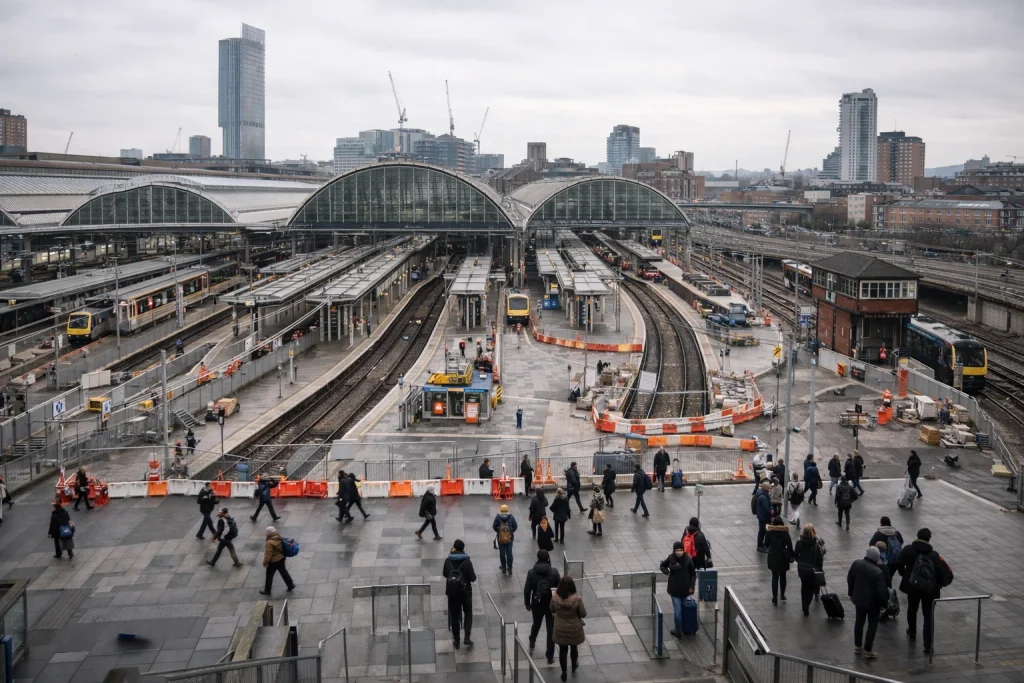
As part of a £7.9 million infrastructure upgrade, Manchester Piccadilly will face a major nine-day closure during the February half-term. No trains will operate from the south or east into the station, and services will be heavily reliant on replacement buses and diversions via Stockport, Manchester Victoria, and Oxford Road.
⏱️ Quick Check: Platforms 1–12 will be fully closed from 14 to 22 February 2026 with further closures on 1 and 22 March (until 13:00).
⚠️ Replacement buses are running between Piccadilly and Stockport, Airport, and Chesterfield. Use Metrolink or Bee Network buses for local travel. Expect queues, allow extra time, and check live updates via National Rail Enquiries.
Key Facts:
- Closure Dates: 14–22 February 2026
- Impact: Platforms 1–12 closed; major service diversions
- Travel Advice: Plan ahead, use trams or alternative stations, and check for delays
Located in the heart of Manchester, Piccadilly is the North West’s busiest station. The closure affects all main routes from the south and east, including Avanti, CrossCountry, and TPE services. Platforms 13–14 will remain open for limited westbound trains to Liverpool, Blackpool, and Chester (Sundays only).
This essential upgrade aims to modernise the southern approach to the station and reduce long-term delays across Greater Manchester. While the disruption is temporary, the improvements will benefit thousands of daily passengers for years to come.
Why Is Manchester Piccadilly Closing in February 2026?
The planned closure of Manchester Piccadilly station in February 2026 is part of a “once-in-a-generation” infrastructure upgrade to revitalise one of the UK’s most vital railway hubs. The focus is on the southern approach, a heavily-used section of track and signalling infrastructure that dates back to the early 1980s.
In recent years, performance has suffered. In 2024 alone, 35 faults were recorded on this stretch, causing delays, disruptions, and cascading effects across the North West rail network. To resolve this, Network Rail, in collaboration with TfGM and Manchester City Council, is investing £7.9 million into essential renewal work.
“You can’t do a job like this over one weekend. It needs a blockade,” said Paul Malaney from Central Rail Systems Alliance, leading the works. “We’ll be working around the clock with up to 80 engineers on site each night.”
The core upgrade includes:
- Replacement of 11 sets of points
- Upgrading timber sleepers to modern concrete
- Laying 9,000 metres of new cabling
- Overhaul of lineside signalling equipment
- Renewal of over 5,500 tonnes of track ballast
This extensive work will not only enhance the reliability of services through Piccadilly but also support long-term rail performance across the West Coast Main Line and wider Greater Manchester network.
What Are the Key Dates for the Manchester Piccadilly Closure in February 2026?
The closure will take place across a nine-day period, coinciding with the February half-term, one of the busiest times for family travel and student movement. This was strategically chosen to concentrate the disruption into a single, intensive work period.
| Closure Period | Dates | Impact |
| Full Closure | 14–22 February 2026 | Platforms 1–12 closed, no trains from south or east |
| Partial Closure | 1 March 2026 | Morning services affected until 13:00 |
| Partial Closure | 22 March 2026 | Additional disruption until 13:00 |
Although the concourse at Manchester Piccadilly will remain open during the works, passengers are strongly advised to plan ahead, check alternative stations, and be prepared for longer journey times.
Which Train Services Will Be Affected During the Closure?
With platforms 1–12 closed, a significant portion of rail traffic in and out of Manchester Piccadilly will be suspended or rerouted.
Services Severely Affected
- Avanti West Coast and CrossCountry: All services will terminate at Stockport, not enter Manchester Piccadilly.
- TransPennine Express (TPE) from the east: Will terminate at Preston or Manchester Victoria, depending on origin.
- Northern Rail: Services from the east and south will be either shortened or rerouted.
Platform 13 and 14 at Manchester Piccadilly will remain open, but will operate reduced westbound services to:
- Liverpool Lime Street
- Blackpool North
- Chester (Sundays only)
“This work will improve the reliability of trains running into the region’s busiest station. We appreciate your patience as we make these vital upgrades,” said a spokesperson from Network Rail.
Travellers using long-distance, regional, or airport services will be especially impacted and should consult National Rail Enquiries or their operator’s website.
What Are the Alternative Train Routes and Terminating Stations?
Understanding where your train now starts or ends is critical.
Below is a full breakdown of revised terminating stations based on direction:
Service Termination Points by Direction
| Origin Direction | New Termination Points |
| South (Avanti, CrossCountry) | Stockport |
| South West / South Wales | Crewe |
| East (Glossop, Sheffield) | Guide Bridge / Stockport |
| Leeds, Huddersfield | Manchester Victoria |
| North & West (Liverpool, Chester, North Wales) | Manchester Oxford Road |
| Scotland (TPE) | Preston |
| Chester via Northwich | Altrincham |
Passengers are advised to allow for additional travel time and check live updates via their train operator or the National Rail Enquiries website.
Where Can You Catch Replacement Buses?
To bridge the disruption, rail replacement buses will operate on multiple routes. These services will be heavily used, so early arrival and patience are recommended.
Key Bus Connections:
| Rail Replacement Route | Notes |
| Piccadilly ↔ Stockport | Non-stop express buses |
| Piccadilly ↔ Manchester Airport | Via East Didsbury, Gatley, or Burnage |
| Piccadilly ↔ Chesterfield | For diverted long-distance travel |
| Manchester Airport ↔ Warrington / Preston / Bolton | Extended coverage |
| Manchester Victoria ↔ Guide Bridge / Rose Hill Marple | Eastern diversion |
Passengers heading to Altrincham are advised to use the Metrolink tram network instead.
“We expect queues, especially at peak times,” said Simon Elliott, Network Director Rail at TfGM. “Our teams will be on hand to guide passengers and keep services moving.”
Be sure to arrive early, especially at Piccadilly and Victoria, and consider off-peak travel when possible.
Which Routes Are Diverted or Terminating Elsewhere?
The scale of the upgrade means widespread rerouting. Many services will no longer pass through Manchester Piccadilly and will end earlier or reroute through alternative stations.
Diversions and Reroutes – Summary:
| Train Operator | Usual Destination | New Route / Termination |
| Avanti / CrossCountry | Piccadilly | Terminate at Stockport |
| Northern (Sheffield) | Piccadilly | Guide Bridge or Stockport |
| TPE (Scotland) | Piccadilly | Preston |
| Northern (Leeds) | Piccadilly | Manchester Victoria |
| Chester (via Northwich) | Piccadilly | Altrincham (Metrolink link) |
This large-scale rerouting has also affected Airport connections, with most rail links replaced by bus services and only one limited train via Crewe.
Are Metrolink and Other Local Services Still Running?
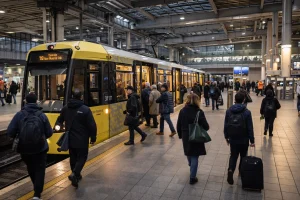
Yes. The Metrolink tram system is fully operational during the works and will act as a critical alternative for many passengers.
The station concourse at Piccadilly remains open, allowing easy access to tram connections, ticketing, and customer service desks.
Bee Network Services Accepting Rail Tickets
| Mode | Routes / Destinations |
| Bus | 192, 42, 43, 103, 263, 142, 201/202, 330, 219/220/221 |
| Tram | Links to Airport, East Didsbury, Altrincham, Victoria, Oxford Road, Deansgate |
“If you usually take the train, consider the tram instead. It’s direct, reliable and part of the city’s integrated Bee Network,” said TfGM’s Simon Elliott.
Passengers are encouraged to use the Bee Network journey planner and check route-specific advice, especially for Altrincham, Airport, and East Didsbury.
How Can Passengers Best Prepare for the February Disruptions?
Whether commuting daily, visiting family, or travelling to events, advance preparation will be essential during the Manchester Piccadilly closure.
With reduced services, replacement buses, and increased passenger numbers, planning ahead can significantly reduce stress and delays.
Plan and Check Your Journey in Advance
Passengers are strongly advised to check their journeys before travelling and again on the day of travel. Timetables and routes will change frequently throughout the closure period, and real-time updates are the most reliable way to avoid disruption.
Using trusted tools such as the National Rail Enquiries journey planner, Transport for Greater Manchester (TfGM) travel updates, and individual train operator apps (such as Avanti West Coast, Northern, or TPE) will help passengers identify replacement services, altered routes, and alternative stations with accuracy.
Allow Extra Time and Travel Light
Journeys will take longer than usual due to diversions, queues, and busy replacement services. Leaving earlier than normal is essential, particularly during morning and evening peak times.
Travelling light will also make transfers between trains, buses, and trams far easier, especially at busy hubs such as Manchester Victoria, Stockport, and Piccadilly concourse.
Key practical considerations include:
- Allowing extra time for connections and boarding
- Being prepared to queue at rail replacement stops
- Keeping luggage minimal to move easily between services
Use Local Transport and Consider Accessibility Needs
For shorter journeys, local transport options such as Metrolink trams, Bee Network buses, cycling, or walking may prove quicker and more reliable than replacement rail services.
Passengers with reduced mobility or accessibility needs should contact their train operator in advance to confirm assistance arrangements, as accessible buses and additional staff support will be available.
Real-time example:
Lucy, a university student in Manchester, experienced similar disruption during a trial closure in 2025. She explained:
“I gave myself an hour extra and still barely made it on time due to long queues at the bus stop outside Victoria. Planning ahead was essential.”
Her experience highlights why allowing extra time and checking updates regularly can make a crucial difference during the February 2026 disruptions.
What Events Coincide with the Closure and Could Affect Travel Further?
The timing of the closure means it overlaps with major city events and school half-term, adding extra pressure to transport networks.
Anticipated Events:
- Manchester City football matches at Etihad Campus
- Concerts at Co-op Live
- Half-term tourism & student travel
In response, ten additional buses per day have been added to route 192, one of Manchester’s busiest corridors. Expect road congestion, crowded replacement services, and busy Metrolink routes, especially during evenings and weekends.
Hotspot Areas Likely to See Congestion:
- Oxford Road Station area
- Deansgate Interchange
- Manchester Airport corridor
- Tram stops near Piccadilly and Etihad Campus
Those attending events during this time should consider arriving much earlier than usual, or use alternative travel modes such as car shares, park-and-ride schemes, or even cycling for inner-city transport.
What Long-Term Benefits Will the Piccadilly Upgrade Bring?
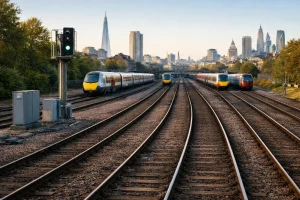
While the temporary closure presents real inconvenience, the upgrade is strategic, necessary, and overdue. Manchester Piccadilly is a vital link in both the regional and national rail network, and its ageing southern approach has become a chronic source of delays.
Once completed, the £7.9 million improvements will deliver lasting gains to commuters, long-distance passengers, freight operators, and even neighbouring stations through improved service integration.
Expected Long-Term Benefits:
- Reduced delays across Greater Manchester: Upgraded track and signalling remove key fault areas that caused repeated service delays.
- Better punctuality on long-distance routes: Smoother operations improve reliability for Avanti West Coast, CrossCountry, and TPE services.
- Prepared for future rail upgrades: The work supports capacity growth, service expansion, and future infrastructure projects.
- Stronger freight and network resilience: More reliable rail improves freight movement, easing road congestion and cutting emissions.
“We know this will cause disruption, but the long-term gains are vital for the city and region,” said Rebecca Rathore, Route Strategy Director at Network Rail.
“This investment prepares Manchester’s rail for decades to come and supports the wider goals of sustainable urban transport.”
The project also aligns with Greater Manchester’s vision for a fully integrated public transport network, reducing car dependency, enhancing city connectivity, and supporting economic resilience throughout the region.
Conclusion
The Manchester Piccadilly closure in February 2026 is a major undertaking aimed at reshaping the future of travel through the city. With platforms 1–12 closed, replacement services running, and many routes redirected, it’s essential to plan ahead, stay informed, and allow for delays.
Though temporary, this disruption is a strategic investment to build a faster, more reliable, and future-ready railway for Manchester and beyond.
Check before you travel, and stay patient; it’s progress in motion.
FAQs
How do I check if my train is affected by the Piccadilly closure?
Visit www.nationalrail.co.uk or your train operator’s website/app for up-to-date journey info.
Can I use the same train ticket on Bee Network buses or trams?
Yes, valid rail tickets will be accepted on selected Bee Network bus and Metrolink routes during the closure period.
Are other Manchester stations like Oxford Road or Victoria still open?
Yes. Both stations remain open and are critical alternatives during the closure, with services diverted accordingly.
What is the best way to travel from Manchester Airport to the city during the closure?
Use rail replacement buses or Metrolink trams. Direct train services will be extremely limited or unavailable.
Will the ticket office and station facilities remain open at Piccadilly?
Yes. The station concourse, ticket offices, and toilets will remain accessible, even as platforms 1–12 are closed.
Are there any accessibility arrangements for disabled passengers during the disruption?
Yes. Staff will be on-site to assist, and accessible rail replacement buses will be available. Check with your operator in advance.
What should students or university staff know about commuting during this period?
Allow extra time, consider cycling or trams, and check university travel advisories for updates.