
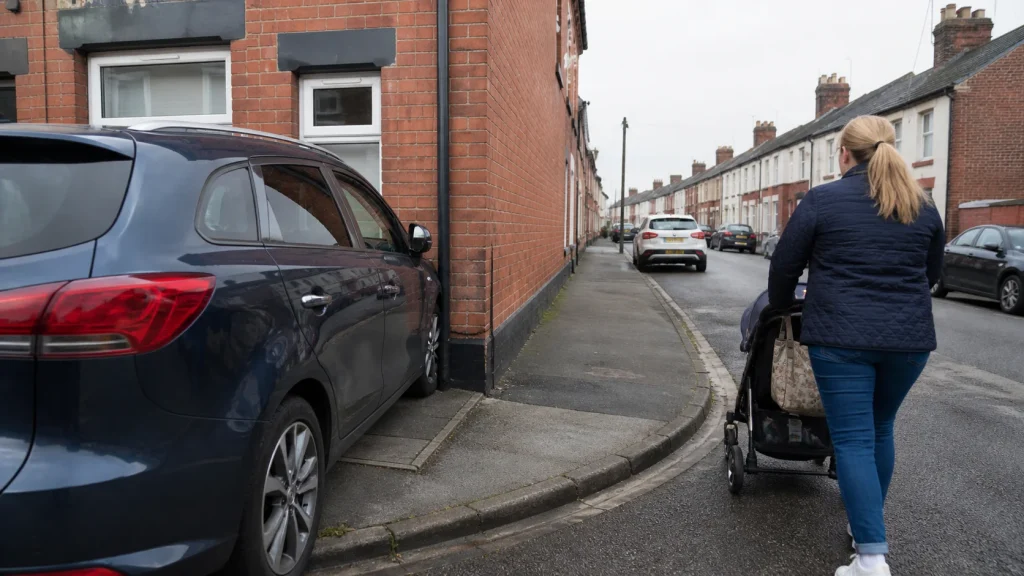
What Is the England Pavement Parking Ban?
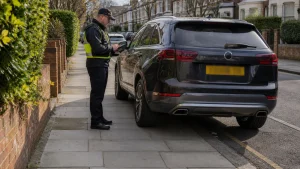
The England pavement parking ban is a new legislative measure designed to restrict vehicles from parking on pavements where it creates danger or obstruction.
It forms part of a wider reform under the English Devolution and Community Empowerment Bill, which enhances local authority powers across multiple sectors, including transport.
The key difference with this approach is that it does not impose a universal ban across every street. Instead, it introduces a flexible enforcement model where councils can identify problem areas and take action accordingly.
This ensures that enforcement is both effective and proportionate, addressing real-world challenges rather than applying rigid national rules.
How Do These Rules Differ from London?
While pavement parking has been strictly prohibited in London since 1974, the rest of England has historically operated under a patchwork of local bylaws.
This new legislation bridges that gap by granting local councils the specific power to mirror London-style enforcement without the need for individual, complex Traffic Regulation Orders for every street. It transitions the country from a “permissive” environment to one where local authorities have the ultimate say on pedestrian right-of-way.
“Unlike the mandatory nationwide bans seen in Scotland, England’s approach is closer to the Welsh model, which focuses on empowering local authorities to target ‘unnecessary obstruction’ rather than a total ban on every suburban street.”
Overview of the New Legislation
The legislation replaces older enforcement systems that required lengthy legal processes to introduce restrictions. Previously, councils had to rely on Traffic Regulation Orders, which were time-consuming and often delayed action.
Under the new system, councils can directly issue fines and manage restrictions more efficiently. This marks a significant shift towards proactive governance, allowing quicker responses to public safety concerns.
Why Is Pavement Parking Being Banned in England?
Pavement parking has been a long-standing issue across England, particularly in urban areas where road space is limited. Vehicles parked on pavements often block pedestrian pathways, forcing individuals into the road and increasing the risk of accidents.
The ban is primarily driven by safety concerns and the need to create more inclusive public spaces. Vulnerable groups, including people with disabilities, parents with prams, and elderly individuals, are disproportionately affected by obstructed pavements.
Key Safety and Accessibility Concerns
Obstructed pavements disrupt mobility and independence for many individuals. For someone using a wheelchair or mobility aid, even a single parked car can completely block access.
Additionally, visually impaired pedestrians face heightened risks when navigating around obstacles. The unpredictability of pavement obstructions makes it difficult to travel safely and confidently.
“Dr Helen Morris, Accessibility Specialist: ‘Blocked pavements aren’t just inconvenient they fundamentally restrict freedom of movement. This legislation acknowledges accessibility as a basic right, not a privilege.’”
What Problems Has Pavement Parking Caused for Pedestrians?
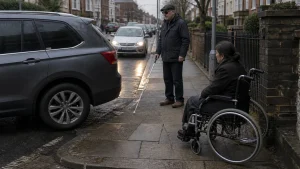
Pavement parking creates daily challenges that extend beyond simple inconvenience. It alters how pedestrians interact with their environment, often forcing them into unsafe situations.
In many cases, individuals must step into busy roads to bypass parked vehicles. This exposes them to traffic hazards and significantly increases the likelihood of accidents, particularly in high-density areas.
Beyond physical risks, there is also a psychological impact. Repeated exposure to unsafe conditions can discourage people from walking altogether, reducing independence and limiting access to essential services.
How Will the New Law Improve Accessibility and Safety?
The new law aims to ensure that pavements remain clear and usable for all. By introducing enforceable penalties, it creates a strong deterrent against unsafe parking practices.
Improved accessibility benefits not only vulnerable groups but also the wider public. Clear pavements support smoother pedestrian flow, reduce accidents, and encourage walking as a safe mode of transport.
Impact on Disabled and Vulnerable Road Users
For disabled individuals, the changes are particularly significant. Clear pathways allow uninterrupted movement, reducing reliance on assistance and improving overall quality of life.
Parents with pushchairs and elderly pedestrians will also experience safer and more predictable journeys, making everyday activities less stressful.
Accessibility Improvements After the Ban
| User Group | Before Ban | After Ban |
| Wheelchair users | Blocked routes | Clear navigation |
| Visually impaired | High risk | Safer movement |
| Parents with prams | Restricted access | Easier mobility |
| Elderly | Trip hazards | Safer walking |
When Will the Pavement Parking Ban Come Into Force?
The legislation is expected to receive Royal Assent on May 13, marking the beginning of its implementation phase. However, enforcement will not be immediate across all regions.
Local authorities will need time to assess their areas, define enforcement zones, and communicate the changes to the public. This phased approach ensures that the transition is manageable and effective.
What Is the English Devolution and Community Empowerment Bill?
The English Devolution and Community Empowerment Bill is a broader legislative framework aimed at strengthening local governance. It includes measures that go beyond parking regulations, focusing on community rights and regional development.
The bill empowers local leaders to make decisions that better reflect the needs of their communities, ensuring more responsive and effective governance.
Key Features of the Bill
Beyond parking regulations, the bill introduces several measures aimed at regional development and community autonomy:
- Transport Innovation: It provides councils with new regulations for managing modern transport systems, such as rental e-bikes and scooters, ensuring they integrated safely into urban environments.
- Community Right to Buy: This scheme empowers local groups to rescue and assets of community value, such as historic pubs or local shops, from being permanently lost to redevelopment.
- Enhanced Local Authority Powers: The bill streamlines how councils manage their local economies, allowing for faster implementation of regional growth strategies.
- Strategic Transport Control: It grants local leaders the authority to tailor transport policy, including pavement parking enforcement to the specific geographic and social demands of their region.
How Does the New Law Change Existing Parking Regulations?
The previous system for managing pavement parking was widely criticised for being inefficient. Councils faced significant barriers when attempting to introduce restrictions, often resulting in inconsistent enforcement.
The new law removes these barriers by granting direct authority to local authorities. This allows for quicker decision-making and more consistent enforcement across different areas.
What Enforcement Powers Will Local Authorities Receive?
The most significant change under the new legislation is the transfer of enforcement power from the police to local authority civil enforcement officers.
By reclassifying pavement parking as a civil offence rather than a criminal one, councils can manage their streets with the same efficiency they use for standard yellow-line parking violations.
Council Authority and Fixed Penalty Notices
The ability to issue Penalty Charge Notices (PCNs) directly eliminates the historical requirement for the police to prove “willful obstruction,” a legal hurdle that previously made enforcement nearly impossible.
- Direct Fine Issuance: Councils can now issue fines of up to £100 immediately upon identifying a violation.
- Camera Enforcement: In high-density urban areas, local authorities may use CCTV and mobile enforcement vehicles to monitor and penalize persistent offenders.
- Local Tailoring: Councils have the autonomy to prioritize enforcement in specific “hotspots,” such as near schools, hospitals, or narrow high streets where pedestrian safety is most at risk.
- Streamlined Appeals: The new system utilizes an independent adjudicator, providing a clear and faster path for drivers to contest fines without involving the court system.
“Mark Reynolds, Transport Policy Expert: ‘This shift gives councils the tools they’ve needed for years. Enforcement becomes practical rather than procedural, which is essential for creating a real, lasting impact on road safety and accessibility.’”
Will All Roads Be Affected by the Pavement Parking Ban?
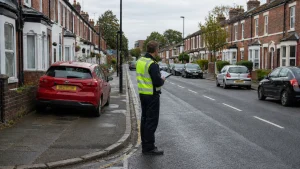
Not all roads will fall under the ban. Local authorities will assess their areas and determine where restrictions are necessary based on safety and accessibility concerns.
This targeted approach ensures that enforcement is proportionate and avoids unnecessary restrictions in areas where pavement parking does not pose significant risks.
Are There Any Exemptions?
The legislation is designed to be practical rather than a total prohibition on all vehicular activity. While the primary goal is clear pavements, certain exceptions are expected to remain consistent with standard UK traffic laws:
- Emergency Services: Police, fire, and ambulance vehicles remain exempt when responding to incidents.
- Loading and Unloading: In specific zones, delivery drivers may be permitted a short window of time to unload heavy goods, provided they do not leave the vehicle unattended or completely block the path for wheelchair users.
- Breakdowns: Vehicles that have suffered a mechanical failure and are awaiting recovery may be granted leniency, provided they are not creating an immediate safety hazard.
“A major concern for residents in older, narrow terraced streets is where they will park if pavement access is restricted. While the law prioritizes pedestrians, councils have the discretion to create designated ‘Pavement Parking Permitted’ zones in areas where road width makes traditional parking impossible without blocking emergency vehicle access.”
What Are the Penalties for Parking on the Pavement?
Drivers who park on pavements in restricted areas can face fines of up to £100. These penalties are designed to deter unsafe behaviour and encourage compliance.
Penalty Notices and the Appeals Process
Enforcement will be handled through Civil Parking Enforcement (CPE). When a vehicle is found in violation, a Penalty Charge Notice (PCN) will be issued either by a civil enforcement officer or via post if caught by camera.
The standard fine is set at £100, though this is reduced to £50 if paid within 14 days of the issue date. Drivers who feel a fine was issued unfairly such as in cases of a medical emergency or incorrect signage will have the right to appeal through the standard independent adjudicator process used for all council-issued parking tickets.
Penalty Structure
| Offence | Fine | Discount |
| First offence | £100 | £50 early payment |
| Repeat offence | Higher scrutiny | Possible increase |
Is This Ban a Turning Point for Road Safety in England?
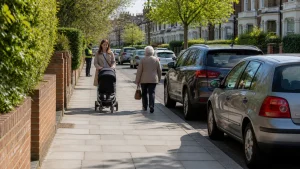
The introduction of the pavement parking ban represents a significant shift in how public spaces are managed. It places greater emphasis on pedestrian safety and accessibility.
“Emma Lewis, Road Safety Analyst: ‘This reform signals a cultural shift roads are no longer just for cars. Pedestrian safety is finally being prioritised in policy decisions.’”
“Once enforcement begins, pedestrians can typically report obstructions directly to their local council’s parking enforcement team via an online portal or dedicated app.
Because the new law utilizes Civil Parking Enforcement (CPE), councils can respond to public reports much faster than the previous police-led system.”
Conclusion
The England pavement parking ban marks a crucial step towards safer and more accessible streets. By empowering local authorities and simplifying enforcement, the law addresses long-standing issues that have affected pedestrians for years. While challenges may arise during implementation, the overall benefits are clear.
Improved safety, better accessibility, and more inclusive public spaces make this a significant development in transport policy. As the law comes into effect, its success will depend on both effective enforcement and public cooperation.
FAQs
Will pavement parking be illegal everywhere in England?
No. The legislation allows local councils to decide where restrictions are necessary based on specific safety needs rather than a blanket national rule.
How much can drivers be fined?
Violators face a Penalty Charge Notice (PCN) of up to £100, usually reduced to £50 if paid within 14 days.
Can councils decide their own enforcement areas?
Yes. Local authorities have the authority to determine where the ban applies, allowing them to protect narrow footways while permitting parking in wider areas.
How does this help disabled people?
It ensures pavements remain clear, preventing wheelchair users and the visually impaired from being forced into live traffic to bypass obstacles.
Is Scotland already enforcing a similar ban?
Yes. Scotland has implemented a nationwide ban with strict enforcement, whereas England’s version focuses on local council flexibility.
When will enforcement begin?
Following Royal Assent on May 13, councils will gradually implement measures as they finish safety assessments and install signage.
Will I be fined for parking with just two wheels on the pavement?
Yes. If a road is in a restricted zone, any part of the vehicle overhanging the footway can trigger a fine to ensure a clear width for pedestrians.