
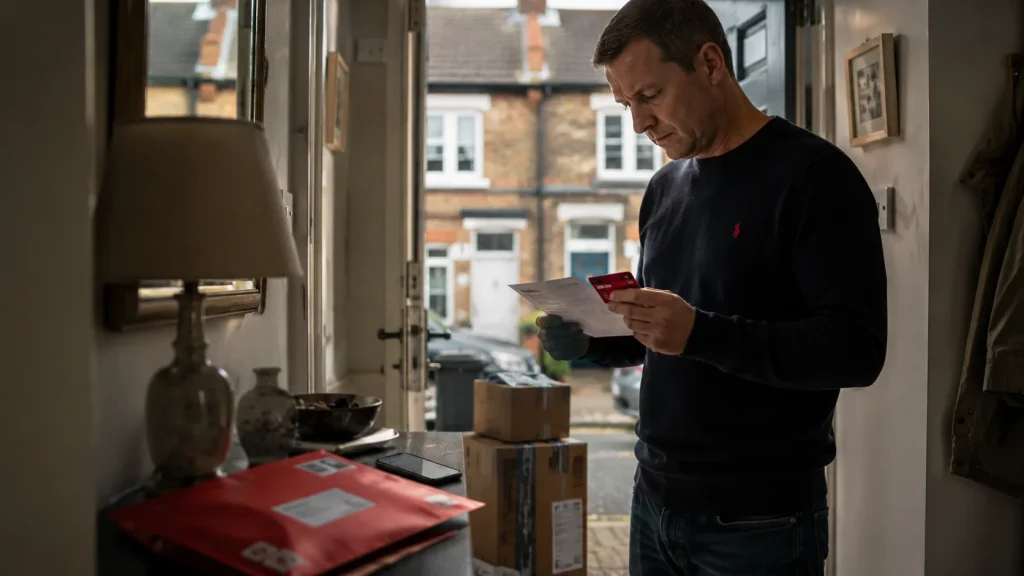
What Is a Genuine Royal Mail Fee to Pay Card?
A genuine Royal Mail Fee to Pay card is an official notice informing the recipient that additional payment is required before a parcel or letter can be delivered.
These cards are commonly left when insufficient postage has been applied, customs charges are due, or handling fees have been added.
The card usually includes important information such as:
- A reference or barcode number
- The amount owed
- Delivery office details
- Instructions for payment
- Collection or redelivery options
Royal Mail may issue these notices for domestic and international deliveries. Parcelforce Worldwide also uses similar fee notices for customs-related deliveries.
Customers should carefully examine the card before making payment because fraudulent payment notices and scam text messages have become increasingly sophisticated in recent years.
Why Has Royal Mail Sent a Fee to Pay Card?
Royal Mail sends a Fee to Pay card whenever the sender has not fully covered the delivery costs or when government customs fees apply to imported goods.
The most common reasons include:
- Insufficient postage
- No postage applied
- Counterfeit stamps
- Use of invalid or non-compliant stamps
- Customs duty and VAT charges
- Incorrect parcel dimensions or weight
Even small pricing differences can trigger a surcharge. For example, a parcel posted as a large letter may exceed Royal Mail’s thickness limits, resulting in additional fees for the recipient.
Common Reasons for Receiving a Fee to Pay Notice
| Reason for Fee Notice | Explanation | Typical Charge |
| Insufficient postage | Sender did not pay the full delivery cost | £1.50–£3.50 |
| No postage paid | Item entered the system without valid postage | £5–£7 |
| Counterfeit stamp used | Fake or copied stamp detected | £5–£7 |
| Customs charges | VAT or import duty applied to international goods | Varies |
| Oversized parcel | Parcel exceeded size or weight restrictions | Additional surcharge |
A large number of UK customers receive these notices after online marketplace purchases or international deliveries where shipping labels are incorrectly applied.
How Can Someone Identify a Genuine Royal Mail fee-to-pay card?
A genuine Royal Mail Fee to Pay card contains several identifiable features designed to confirm authenticity. The official card normally uses Royal Mail branding, clear payment instructions, and a valid barcode or reference number.
Customers should always verify the following:
- Official Royal Mail or Parcelforce logo
- Accurate delivery office details
- Secure payment website
- Clear fee breakdown
- Valid tracking or reference number
Scam versions often attempt to create urgency by requesting immediate payment through suspicious websites or text links.
Martin Lewis, Financial Consumer Commentator: “Fraudsters increasingly target parcel deliveries because people expect online orders. Customers should never click payment links from unknown texts without verifying them through the official Royal Mail website.”
Customers should avoid entering payment information into unofficial websites that mimic Royal Mail branding.
What Are the Royal Mail Fee to Pay Charges in 2026?

Royal Mail’s 2026 charges depend on the item category and the type of postage issue involved. Fees may include handling charges, unpaid postage differences, or customs administration costs.
The current pricing structure reflects Royal Mail’s updated operational and processing fees.
Updated Royal Mail Postage Surcharges
| Item Type | Issue | Current Charge |
| Letter/Large Letter | No postage or counterfeit stamp | £5.00 |
| Letter/Large Letter | Insufficient postage | £1.50 |
| Letter/Large Letter | Non-barcoded stamp | £2.50 |
| Small Parcel | No postage or counterfeit stamp | £7.00 |
| Small Parcel | Insufficient postage | £3.50 |
| Small Parcel | Non-barcoded stamp | £3.50 |
| Medium Parcel | Oversized dimensions or overweight | £10.00 |
These charges apply in addition to any missing postage costs. Royal Mail may also round postage differences to the nearest 10 pence depending on parcel classification.
How Much Does Royal Mail Charge for Underpaid Postage?
Underpaid postage charges vary depending on the size and category of the mail item. Small pricing differences may still result in administrative handling fees being applied.
Letter and Large Letter Charges
Letters and large letters usually attract lower surcharge fees because they are easier to process within Royal Mail’s automated systems.
If insufficient postage is detected, the recipient may need to pay:
- £1.50 for underpaid postage
- £5.00 where no postage was used
- £2.50 for invalid non-barcoded stamps
The final amount may increase if the item exceeds permitted dimensions.
Small Parcel Charges
Small parcels carry higher charges due to handling and sorting costs.
Recipients may be charged:
- £3.50 for insufficient postage
- £7.00 where no postage was paid
- Additional fees for counterfeit or invalid stamps
Many online sellers accidentally underpay by selecting incorrect parcel dimensions when purchasing shipping labels.
Medium Parcel Fees and Size Rules
Medium parcels may attract significant surcharges if they exceed Royal Mail’s approved dimensions or weight limits.
Royal Mail currently applies a £10 fee where parcels exceed:
- Length: 61cm
- Width: 46cm
- Depth: 46cm
- Weight: 20kg
Packaging materials are included when measuring parcel dimensions.
Why Are Customs Charges Added to Royal Mail Deliveries?
Customs charges apply when goods entering the UK exceed HMRC import thresholds. Royal Mail acts as the delivery partner responsible for collecting these fees before releasing the parcel.
Charges may include:
- VAT
- Customs duty
- Excise duty
- Royal Mail handling fees
International online shopping has significantly increased the number of customs-related Fee to Pay notices issued across the UK.
Claire Sanderson, UK Customs Adviser: “Many recipients assume the sender has already covered all delivery costs. In reality, import VAT and customs charges are often calculated only after the parcel reaches the UK.”
The exact customs amount depends on the item value, declared category, and country of origin.
How Can Customers Pay a Royal Mail Fee Online?

Royal Mail allows customers to pay fees online through its official payment portal. The process is designed to reduce delays and simplify redelivery arrangements.
Customers usually need:
- The Fee to Pay card or letter
- Barcode or reference number
- Debit card, credit card, or PayPal account
Steps to Pay Using the Royal Mail Website
The standard process involves:
- Visiting the official Royal Mail payment portal
- Selecting the type of fee
- Entering barcode details
- Confirming the payment amount
- Choosing delivery or collection options
After payment is completed, Royal Mail normally arranges delivery within a few working days.
Customers should ensure the website address begins with the official Royal Mail domain before entering payment details.
What Should Parcelforce Customers Do if the Barcode Does Not Work?
Some Parcelforce customers may encounter barcode recognition errors when attempting to pay customs charges online.
Royal Mail and Parcelforce have acknowledged that certain barcode references may not immediately register within the system.
Alternative Payment Method for Barcode Errors
If the barcode does not work, customers should:
- Select “Customs Charge”
- Choose “Enter Card Details in red”
- Manually enter the requested information
- Follow the payment instructions provided
This alternative process normally resolves most barcode recognition issues without requiring customer service intervention.
Can a Royal Mail Fee to Pay Card Be Fake?
Yes, fake Royal Mail Fee to Pay cards and text scams are increasingly common across the UK. Fraudsters often exploit public familiarity with parcel deliveries and online shopping.
Scammers may send:
- Fake SMS delivery texts
- Fraudulent email payment requests
- Counterfeit payment cards
- Fake customs charge notices
Warning Signs of Royal Mail Fee Scams
Customers should remain cautious if they notice:
- Suspicious website links
- Poor grammar or spelling
- Requests for urgent payment
- Unusual bank transfer requests
- Unofficial website domains
David Green, Cybersecurity Consultant: “Scam delivery notifications work because people are expecting parcels. Verifying payment requests directly through Royal Mail’s official website remains the safest approach.”
Legitimate Royal Mail messages rarely pressure customers into immediate payment through unfamiliar links.
What Happens if a Royal Mail Fee Is Not Paid?
If the required payment is not made, Royal Mail will normally hold the item for a limited collection period.
After this period expires:
- The item may be returned to the sender
- International parcels could be destroyed if undeliverable
- Refunds are generally not issued for unpaid items
Recipients should act promptly to avoid losing important deliveries.
How Long Does Royal Mail Hold an Item Awaiting Payment?
Royal Mail usually holds unpaid items for approximately 18 calendar days, although exact timelines may vary depending on the service type and delivery office.
During this holding period, customers can:
- Pay online
- Arrange redelivery
- Collect the item in person
If the item remains unpaid after the holding period, it is normally returned to the sender.
Where Can Customers Collect Their Parcel After Payment?
After paying the required fee, customers may collect the item from the delivery office listed on the card.
Most collection offices require:
- Proof of identity
- Proof of address
- The original Fee to Pay card
Some delivery offices may offer extended opening hours, while others require advance collection booking.
What Is the Difference Between Customs Charges and Unpaid Postage Fees?
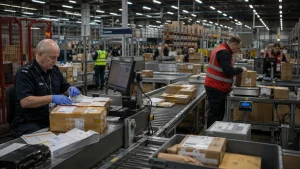
Although both charges require payment before delivery, they are applied for different reasons.
Unpaid postage fees occur when the sender has not paid enough for delivery services. Customs charges apply when imported goods become liable for UK taxes or duties.
Understanding this distinction helps customers determine whether the issue originated from postal pricing or international import regulations.
How Does Royal Mail Calculate Handling and Surcharge Fees?
Royal Mail calculates handling fees based on operational costs associated with processing unpaid or non-compliant mail items.
Factors Affecting Royal Mail Charges
| Factor | Impact on Fee |
| Item size | Larger parcels attract higher fees |
| Weight | Excess weight may trigger surcharges |
| Missing postage | Administrative handling fee added |
| Customs processing | Additional import handling charges |
| Invalid stamps | Penalty fee may apply |
Sorting delays, manual processing, and customs verification all contribute to Royal Mail’s surcharge structure.
What Should Customers Do if They Believe the Charge Is Incorrect?
Customers who believe a fee has been applied incorrectly should contact Royal Mail Customer Services before making payment.
It may help to provide:
- Proof of postage
- Parcel dimensions
- Tracking details
- Customs declarations
In some situations, Royal Mail may review the charge and issue corrections where errors are identified.
Customers should avoid ignoring the notice while disputing the charge because holding periods still apply.
Conclusion
A genuine Royal Mail Fee to Pay card is an official request for unpaid postage, customs charges, or handling fees before a delivery can be completed.
In 2026, these notices remain common due to underpaid postage, incorrect parcel sizing, and increasing international deliveries. Customers should carefully verify all payment requests to avoid scams and use only the official Royal Mail or Parcelforce payment portals.
Understanding the latest fees, customs rules, and collection procedures can help recipients resolve payment issues quickly while reducing the risk of future delivery delays or returned parcels.
FAQs
Is a Royal Mail Fee to Pay card always genuine?
No, not every Fee to Pay notice is genuine. Scam texts and fake delivery payment requests are increasingly common in the UK, so customers should always verify payment requests directly through the official Royal Mail website.
Can Royal Mail fees be paid without a barcode?
Yes, some customers can manually enter their card details if the barcode fails to work. Parcelforce customers experiencing barcode issues can use the alternative payment option available on the payment portal.
How much is the Royal Mail handling fee in 2026?
The fee depends on the type of item and the issue involved. Charges can range from £1.50 for underpaid letters to £10 for oversized medium parcels exceeding Royal Mail limits.
What happens if someone ignores a Royal Mail Fee to Pay notice?
If the fee remains unpaid, Royal Mail will normally hold the parcel temporarily before returning it to the sender. International items may also be disposed of if they remain unclaimed.
Can customs charges be refunded by Royal Mail?
Refunds are sometimes possible if customs charges were incorrectly applied. Customers generally need to contact Royal Mail or HMRC and provide supporting documentation for review.
How can someone verify a Royal Mail payment link?
Customers should check that the website uses the official Royal Mail domain and avoid clicking suspicious links from text messages or emails. Visiting the official website directly is usually the safest option.
Are fake Royal Mail fee text messages common in the UK?
Yes, delivery-related scams are now extremely common throughout the UK. Fraudsters frequently imitate Royal Mail notifications to trick users into entering payment or banking details on fake websites.