
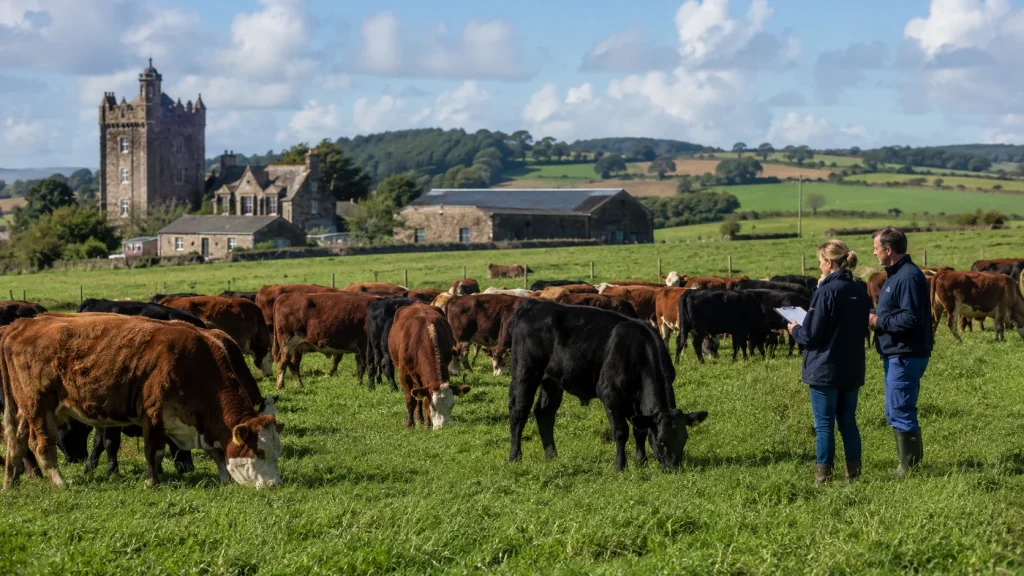
Key Takeaways:
What Happened During the Falkland Estate Cattle Inspection?
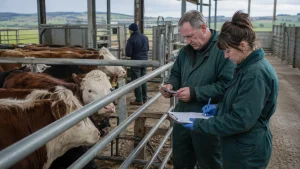
When I started looking into the Falkland Estate cattle inspection breach, I quickly discovered that the issue emerged during a routine Cattle Identification and Traceability Inspection conducted by Scottish Government officials.
According to the information released after the inspection, inspectors found that 271 cattle could not be properly identified or linked to the records required under Scotland’s livestock regulations. This immediately raised concerns because traceability forms a key part of the country’s disease prevention and food safety framework.
Although routine inspections are common, findings involving hundreds of animals naturally attract greater attention. Once the cattle were deemed unidentifiable and untraceable, they became subject to permanent movement restrictions, preventing them from entering the food chain.
As I reviewed the details, it became clear that the inspection itself was not linked to a known disease outbreak. Instead, the focus was on compliance with traceability requirements that all livestock businesses are expected to follow.
Why Were 271 Cattle Declared Unidentifiable and Untraceable?
As I examined the reasons behind the decision, I found that Scottish regulations require every bovine animal to have a traceable history from birth onwards.
This means inspectors must be able to connect each animal to identification tags, registration records, and movement information. If that chain cannot be verified, authorities may classify the animal as unidentifiable or untraceable.
Importantly, this classification does not automatically suggest the animals were unhealthy. The issue is that regulators could not establish their traceability history to the standard required under the law.
The distinction matters because many readers may assume the cattle were removed due to disease concerns. Based on the information available, the reported problem relates to record verification rather than animal health.
| Traceability Requirement | Purpose |
| Ear Tags | Provides unique animal identification |
| Birth Registration | Records origin and ownership |
| Movement Reporting | Tracks transfers between locations |
| Death Records | Maintains complete livestock history |
| ScotEID Entries | Supports national traceability monitoring |
How Did the Falkland Estate Cattle Inspection Dispute Develop?
The inspection did not immediately lead to the slaughter decision. The dispute developed over an extended period as Scottish Government officials reviewed cattle identification records and concluded that a significant number of animals could not be reliably linked to the required traceability history.
As concerns escalated, restrictions were placed on the affected cattle. Falkland Estate challenged the findings and maintained that the animals were known to the farm and that the situation was more complex than a simple identification failure.
The disagreement eventually became one of the most closely watched livestock compliance cases in Scotland because of the number of cattle involved and the potentially severe consequences for the estate.
What Did Scottish Government Inspectors Discover at the Fife Farm?
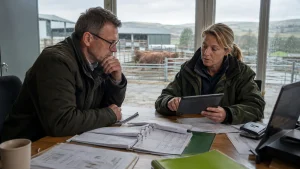
During my review of official statements, I found that inspectors identified non-compliance with cattle identification and traceability regulations.
The key issue was that regulators could not confidently verify the identity and movement history of 271 animals. Once that determination was made, enforcement procedures followed.
What Was Falkland Estate’s Response to the Findings?
Reports surrounding the case indicate that Falkland Estate disputed aspects of the regulatory findings and expressed frustration at the outcome.
From the estate’s perspective, the issue was not necessarily about unknown animals but about whether the available records met the strict legal requirements needed to satisfy inspectors.
The estate argued that the consequences were disproportionate considering the value of the cattle involved and the years invested in managing the herd.
The situation became highly emotional because the affected animals represented significant breeding and farming investment rather than simply commercial assets.
Livestock Identification Requirements in Scotland
While reviewing Scotland’s livestock regulations, I found that cattle owners must ensure every animal remains individually identifiable.
This generally involves approved ear tags, timely reporting of births and movements, and accurate updates to official databases. Together, these requirements create a traceability chain that regulators can review during inspections.
Livestock compliance adviser Andrew McLaren explained the significance clearly: “When inspectors cannot verify an animal’s records, they lose confidence in its traceability history. That’s why record-keeping is treated as a critical part of livestock management rather than simply paperwork.”
Why Could the Cattle Not Simply Be Retagged or Reidentified?
One of the most common questions raised after the inspection was why the cattle could not simply receive replacement identification tags.
The challenge was not necessarily the physical tagging of the animals. Instead, the issue centred on the historical traceability records that regulators require.
Scottish livestock rules are designed to establish a complete and verifiable history for each animal. If inspectors cannot confidently verify that history, issuing new identification tags does not automatically restore compliance.
Regulators argued that once the historical chain of identification could not be verified to the required legal standard, permanent restrictions became necessary.
This aspect of the case generated considerable debate because many farmers questioned whether alternative solutions could have been explored before the cattle were removed from commercial use.
What Happens When Cattle Cannot Be Traced?
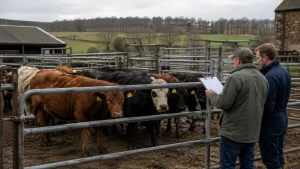
As I examined the regulatory consequences, it became clear that untraceable cattle present a challenge for authorities.
If regulators cannot establish where an animal has come from or where it has moved, they lose a critical layer of oversight. This uncertainty can affect disease investigations, food chain controls, and broader livestock management systems.
As a result, enforcement action often follows when traceability requirements cannot be met.
| Regulatory Concern | Potential Consequence |
| Missing Identification | Compliance investigation |
| Incomplete Records | Traceability concerns |
| Unverified History | Movement restrictions |
| Permanent Restrictions | Exclusion from food chain |
| Enforcement Action | Additional regulatory oversight |
In serious cases, permanent movement restrictions may be imposed, which is what occurred in the Falkland Estate case.
Why Are Untraceable Animals Prevented from Entering the Food Chain?
When I looked into this aspect of the story, I found that food safety systems rely heavily on traceability.
If an issue is discovered after meat has entered the supply chain, authorities need to know exactly where the animal originated and where related livestock may have travelled.
When that information cannot be verified, regulators are unable to provide the same level of assurance expected under food safety legislation.
For that reason, untraceable animals are generally prevented from entering the food chain regardless of their apparent health status.
What Restrictions Were Placed on the Cattle at Falkland Estate?
As I continued examining the inspection findings, I found that the 271 cattle were placed under permanent movement restrictions. This meant the animals could no longer be moved through normal livestock channels or enter the food supply chain.
From a regulatory perspective, movement restrictions are designed to protect the integrity of the traceability system. Once inspectors determine that an animal’s history cannot be verified, authorities must limit what can happen to those animals to prevent further uncertainty within the system.
What stood out to me was the permanence of the restriction. Unlike some compliance issues that can be corrected through updated records or follow-up inspections, the official position in this case meant the cattle could not return to normal commercial use.
For any farm business, such restrictions can create immediate operational challenges, especially when hundreds of animals are involved.
Why Did the Farm Decide to Slaughter the Animals?
As I reviewed the outcome of the case, I found that Falkland Estate ultimately chose to slaughter the affected cattle.
While no farm wants to make that decision, the options available become extremely limited once animals are permanently restricted from entering the food chain.
Keeping hundreds of cattle indefinitely would involve ongoing feeding, housing, and management costs without the prospect of recovering their commercial value.
Based on the information available, the decision appears to have been driven by the practical realities created by the regulatory restrictions.
The situation highlights how compliance issues can quickly move beyond paperwork and have real consequences for farm operations, finances, and livestock management decisions.
Could the Falkland Estate Face Financial Losses from the Inspection Breach?

When I assessed the financial side of the story, it quickly became apparent that the consequences could extend far beyond the loss of the animals themselves.
Reports have suggested that the cattle involved may collectively be worth as much as £500,000. If those estimates are accurate, the financial impact on the estate could be substantial.
However, livestock value is only one part of the equation. Compliance failures can also lead to additional costs associated with animal management, regulatory oversight, operational disruption, and potential reputational damage.
| Potential Financial Impact | Possible Consequence |
| Loss of Livestock Value | Significant reduction in farm assets |
| Slaughter Costs | Additional operational expense |
| Business Disruption | Impact on future planning |
| Compliance Reviews | Administrative burden |
| Reputation Concerns | Potential industry scrutiny |
Agricultural economist James Robertson offered a practical perspective on situations like this: “The value of the livestock is often what attracts headlines, but the wider costs can be equally significant. Compliance failures can affect operational planning, cash flow, and long-term business confidence.”
What Are the Wider Implications for Scottish Farmers?
While researching the case, I found that many within the agricultural sector view incidents like this as a reminder of the importance of maintaining accurate records.
The regulations that applied to Falkland Estate apply to livestock businesses across Scotland. As a result, the case is likely to attract attention from farmers who want to ensure their own systems remain compliant.
It also demonstrates how traceability requirements are becoming increasingly important as governments and consumers demand greater transparency within food production systems.
For the wider industry, the story serves as a warning that record-keeping should never be viewed as a secondary task.
How Did the Farming Industry React to the Falkland Estate Case?
The case prompted discussion throughout Scotland’s agricultural community.
Many farmers viewed the incident as a reminder of the importance of maintaining accurate identification records and ensuring compliance systems remain up to date.
Others questioned whether more flexibility should exist in situations where livestock are physically present and known to the farm but documentation issues emerge.
The debate highlighted the continuing challenge regulators face in balancing strict traceability requirements with the practical realities of livestock farming.
Regardless of differing opinions, the incident reinforced the importance of routine compliance reviews and accurate record management.
Does This Case Indicate a Disease Outbreak or a Regulatory Compliance Failure?
One of the first questions I asked while investigating this story was whether the slaughter decision was linked to a disease outbreak.
After reviewing the available information, I found no indication that authorities have described the incident as a confirmed disease event. Instead, the issue appears to centre on compliance with identification and traceability regulations.
This distinction is important because the words “outbreak” and “slaughter” can understandably create concern among readers.
Based on the information released so far, the enforcement action stems from the inability to verify the animals’ traceability history rather than evidence of disease among the cattle themselves.
Understanding this difference helps provide a more accurate picture of what happened at Falkland Estate.
What Does the Falkland Estate Cattle Inspection Breach Mean for Public Confidence in Food Safety?
As I considered the wider public reaction, I realised that cases like this can raise questions about food safety and agricultural oversight.
However, another way to view the incident is as evidence that inspection systems are working as intended. Regulators identified a compliance issue, investigated it, and implemented measures designed to protect the integrity of the food chain.
Food safety depends on reliable systems, and traceability forms an important part of those systems. When problems are discovered, authorities are expected to act.
From that perspective, the Falkland Estate case highlights both the importance of compliance and the role of inspections in maintaining public confidence.
Conclusion
After investigating the Falkland Estate cattle inspection breach, I found that the case centres on livestock traceability rather than a confirmed disease outbreak.
Scottish Government inspectors identified 271 cattle that could not be properly traced, leading to permanent movement restrictions and the farm’s decision to slaughter the animals. Beyond the immediate impact on Falkland Estate, the incident highlights the critical role that identification records, movement reporting, and traceability systems play within modern agriculture.
For farmers across Scotland, the case serves as a reminder that effective record-keeping is not simply an administrative obligation but a key part of protecting livestock businesses, public health, and confidence in the food supply chain.
Frequently Asked Questions
Why were 271 cattle affected by the Falkland Estate inspection breach?
Scottish Government inspectors concluded that the animals could not be fully traced through the required livestock identification and record-keeping system.
Did the cattle have a disease?
There is no indication that the cattle were affected by a confirmed disease outbreak. The issue related to traceability compliance rather than animal health.
Why could the cattle not enter the food chain?
Animals must have a complete and verifiable traceability history before they can legally enter the food supply chain. The affected cattle did not meet that requirement.
Did Falkland Estate agree with the inspectors’ findings?
Falkland Estate challenged aspects of the decision and argued that the situation was more complex than a simple identification failure.
Why were the cattle not simply given new identification tags?
Regulators stated that the issue involved historical traceability records rather than the physical tags themselves. New tags could not recreate missing or unverifiable records.
How much could the incident cost Falkland Estate?
Contemporary reports suggested the affected cattle could be worth up to £500,000, although the total financial impact may extend beyond livestock value alone.
What does this case mean for other Scottish farmers?
The case highlights the importance of maintaining accurate livestock records and ensuring compliance with cattle identification and traceability regulations.