

Last updated: 8 July 2026
Yes, in most practical situations, a British dual citizen should travel to the UK with a valid British passport.
When I inspected the official UK passport rules for dual citizenship, the clearest finding was this: a dual national can travel to the UK using a valid UK passport or Irish passport, or a certificate of entitlement showing the right of abode.
My professional note is simple: if I were checking this before travel, I would not rely on my second passport alone unless it had the correct UK proof attached to it.
For most British dual citizens, the British passport is the cleanest document because it directly proves British citizenship at the airline check-in desk and at the UK border.
If a person is a British or Irish dual citizen, they cannot get an ETA. Instead, GOV.UK says they can prove their citizenship with a valid British passport, a valid Irish passport, or another valid passport with a certificate of entitlement proving right of abode.
Key Takeaways:
The main point I took from the official guidance is that UK passport rules for dual citizenship are about proof. It is not enough to simply say, “I am British.” The traveller needs a recognised document that proves their British citizenship, Irish citizenship, or right of abode.
A valid British passport is usually the most straightforward document for a British dual citizen entering the UK. It tells the carrier and Border Force that the person is British and does not need visitor permission.
British and Irish dual citizens do not need an ETA. In fact, they cannot get one. This matters because many dual citizens are now confused by ETA checks and assume they need to apply like a visitor. That is not how the official guidance treats British or Irish dual citizens.
A foreign passport alone may cause problems if it does not show the person’s UK status. In my notes, this is the point most likely to affect real travellers, because airlines often check documents before a person even reaches the UK border.
A certificate of entitlement can be an alternative to a British passport, but it is not the same as simply carrying a non-UK passport. It is official evidence of right of abode placed in, or linked to, another valid passport.
What Do UK Passport Rules for Dual Citizenship Mean?
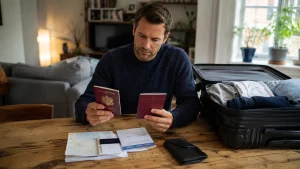
UK passport rules for dual citizenship mean that a person who has British citizenship and another nationality needs to think carefully about which document they use to travel to the UK. Dual citizenship itself is allowed in the UK, but travel still depends on proving the correct status.
When I inspected the topic, I separated it into two questions. First, “Am I British?” Second, “Can I prove it with the right travel document?” Those are not the same question.
A person may be British in law, but if they arrive at an airport with only a foreign passport and no UK proof, the carrier may not be able to confirm that they can travel without an ETA, visa or other permission.
In practical terms, dual citizenship means a person is legally recognised as a citizen of two countries at the same time.
For example, someone may be a British citizen and also a Canadian, Indian, American, Australian, Pakistani, Nigerian, South African or European citizen, depending on the rules of the other country.
The UK side of the issue is clear: the UK allows dual nationality, but the traveller should still use the correct document when entering the UK. The safest document is usually a valid British passport.
If the person is also Irish, a valid Irish passport may also be used. If they are using another passport, a certificate of entitlement may be needed to prove right of abode.
My investigator’s note here is that many people confuse citizenship with travel clearance. British citizenship is a legal status. A passport is the travel document that proves it. ETA is permission to travel for certain non-British and non-Irish visitors. These are separate things.
Can I Enter the UK on My Other Passport If I Am a British Dual Citizen?
In some cases, a British dual citizen may travel using another passport, but the key issue is whether that other passport proves the right to enter the UK. A foreign passport by itself does not automatically show that the traveller is British.
GOV.UK says British citizens can enter the UK with a valid UK passport, a Gibraltar identity card, or a certificate of entitlement showing right of abode.
It also says dual citizens might be able to travel with an expired UK passport, emergency travel document, or a non-UK passport or national identity card in certain EU Settlement Scheme circumstances.
My note from inspecting this is that “might be able to” should not be read as “always safe”. Travel problems often happen before the UK border, especially when a carrier must decide whether to let someone board.
If the airline system sees a foreign passport from a nationality that normally needs an ETA, but the traveller says they are British, the airline may need proof.
That is why a British passport matters. It removes much of the doubt. A foreign passport with a certificate of entitlement can also work because the certificate proves the right of abode. But a foreign passport alone may not give the airline or border officer enough immediate evidence.
Do British Dual Citizens Need an ETA to Travel to the UK?

No. British dual citizens do not need an ETA to travel to the UK. Irish dual citizens do not need one either. In fact, GOV.UK states that dual citizens with British or Irish citizenship cannot get an ETA.
This is one of the most important points in the whole investigation. The ETA system is designed for eligible non-British and non-Irish travellers who need digital permission to travel. A British citizen is not travelling to the UK as a visitor who needs permission in that way. They are proving their citizenship.
The confusion comes from the fact that many dual citizens hold a second passport from a country whose nationals may need an ETA. For example, a British dual citizen may also have a passport from another country.
If they try to travel using only that passport, the system may treat them as a traveller under that nationality unless they can prove British or Irish citizenship.
The Home Office has also strongly advised dual British citizens to make sure they have a valid British passport or certificate of entitlement to avoid problems such as being denied boarding when travelling to the UK from 25 February 2026.
My professional reading is that British dual citizens should not try to solve the problem by applying for an ETA. The better route is to carry the document that proves they do not need one.
What Documents Can Dual Citizens Use to Enter the UK?
When I checked the official documents, I found four document categories that matter most for British dual citizens.
Valid British Passport
A valid British passport is usually the best document for a British dual citizen entering the UK. It proves British citizenship clearly and avoids most confusion around ETA checks, visa checks and airline boarding systems.
If a British dual citizen has time before travel, renewing or applying for a British passport is usually the most practical step. This is especially important for families, children born abroad, and people who have not travelled to the UK for a long time.
Valid Irish Passport
A valid Irish passport is accepted for Irish citizens. British and Irish citizens are treated differently from other travellers in UK entry rules, and Irish citizens do not need an ETA for travel to the UK.
If someone is both British and Irish, a valid Irish passport can be used as proof of Irish citizenship. However, if a person is British but not Irish, they should not assume that another non-UK passport works in the same way.
Foreign Passport with Certificate of Entitlement
A foreign passport with a certificate of entitlement can be used to prove right of abode in the UK. This is the main alternative I found for British citizens who are travelling on a non-British passport.
A certificate of entitlement is not just a supporting letter. It is official proof of right of abode. GOV.UK explains that right of abode means a person can live or work in the UK without immigration restrictions and does not need a visa or ETA to come to the UK.
Expired British Passport or Emergency Travel Document
Some British dual citizens might be able to travel with an expired UK passport or emergency travel document, but I would treat this carefully.
GOV.UK says a carrier may allow travel with an expired UK passport issued in 1989 or later, together with a valid passport for one of the nationalities that can get an ETA, but it is the carrier’s decision.
My note here is practical: if the airline has discretion, the traveller has uncertainty. An expired British passport may help prove identity or previous British passport status, but it should not be treated as the safest plan when there is time to renew.
What Is a Certificate of Entitlement for UK Entry?

A certificate of entitlement is official proof that a person has the right of abode in the UK. It can be used by someone who holds a foreign passport but needs to prove that they can enter the UK without immigration restrictions.
When I inspected the GOV.UK right of abode guidance, the important point was that right of abode means the person is allowed to live or work in the UK without immigration restrictions. It also means they do not need a visa or ETA to come to the UK.
A certificate of entitlement may be relevant for a British citizen who has a foreign passport and does not want to, or cannot, travel with a British passport. GOV.UK says a person can only apply if they are a British citizen with a foreign passport, or a Commonwealth citizen with right of abode.
There is also a practical limitation. GOV.UK says not to apply for a certificate of entitlement if you already have a valid British passport or a vignette sticker certificate of entitlement in a foreign passport. The application cost shown on GOV.UK is £589.
My professional note is that a certificate of entitlement can be useful, but it is not necessarily simpler or cheaper than using a British passport.
For many British dual citizens, a British passport will be the more direct option. However, for some people using a foreign passport, the certificate may be the right proof of UK entry rights.
British Passport, Irish Passport, ETA and Certificate of Entitlement
| Document | Who it is for | Does it prove UK entry rights? | ETA needed? | My practical note |
| Valid British passport | British citizens, including British dual citizens | Yes | No | Usually the simplest and safest document for UK entry |
| Valid Irish passport | Irish citizens, including Irish dual citizens | Yes | No | Accepted proof for Irish citizens travelling to the UK |
| Foreign passport with certificate of entitlement | British citizens using another passport, or certain Commonwealth citizens with right of abode | Yes | No | Useful alternative if not using a British passport |
| Foreign passport only | Travellers relying only on their other nationality | Depends | Possibly | May cause problems if it does not prove British or Irish citizenship |
| ETA | Eligible non-British and non-Irish travellers | Permission to travel, not citizenship proof | N/A | British and Irish dual citizens cannot get an ETA |
The note I would write under this table is straightforward: for British dual citizens, the question is not simply “which passport do I own?” It is “which document proves my right to enter the UK?”
What Should I Do Before Travelling to the UK as a Dual Citizen?

Before travelling, I would start by checking whether I am definitely a British citizen. This matters for children born abroad, people with British parents, people who naturalised many years ago, and people who hold more than one nationality but are unsure what their UK status actually is.
Next, I would check whether my British passport is valid. If it has expired and there is enough time before travel, renewing it is usually a safer choice than hoping the airline will accept alternative evidence.
If I wanted to travel on a foreign passport, I would check whether I needed a certificate of entitlement. This is especially important if my second passport is from a country whose nationals normally need an ETA or visa to travel to the UK.
I would also check the name and personal details across my documents. GOV.UK guidance on passport details says that where someone has dual citizenship and a non-British passport, the name and gender on the non-British passport must match the British passport details, unless there are limited exceptions.
Finally, I would check GOV.UK before booking or travelling. UK travel rules, ETA enforcement, carrier systems and document checks can change. For a sensitive topic like UK passport rules for dual citizenship, official guidance is more reliable than old travel forum posts or social media advice.
Conclusion: UK Passport Rules for Dual Citizenship
After inspecting the official guidance, my conclusion is that dual citizens do not always need a British passport in every possible situation, but British dual citizens should usually treat a valid British passport as the clearest and safest document for entering the UK.
The UK passport rules for dual citizenship are mainly about proof. If I am British, I need to prove that status when I travel. A valid British passport does that directly. A valid Irish passport works for Irish citizens.
A foreign passport with a certificate of entitlement can prove right of abode. But a foreign passport alone may not be enough if it does not show my UK status.
My final note is practical: do not wait until check-in to discover that your documents are unclear. If you are a British dual citizen, check your passport, check your citizenship evidence, and check GOV.UK before travelling. That is the safest way to avoid confusion around ETA rules, airline boarding checks and UK border entry.
FAQs
Can a British dual citizen enter the UK without a British passport?
Yes, in some cases. A British dual citizen may be able to enter using another valid passport with a certificate of entitlement proving right of abode. If the person is also an Irish citizen, they can use a valid Irish passport. However, a valid British passport is usually the clearest option.
Can I use my foreign passport to enter the UK if I am British?
You should be careful. A foreign passport alone may not prove that you are British. If you use another passport, you may need a certificate of entitlement showing that you have the right of abode in the UK.
Do British dual citizens need an ETA?
No. British dual citizens do not need an ETA and cannot get one. They should prove their British citizenship using a valid British passport or another accepted document, such as a passport with a certificate of entitlement.
What if my British passport has expired before travel?
If your British passport has expired, you should renew it before travel where possible. GOV.UK says a carrier may allow travel in certain circumstances with an expired UK passport and another valid passport, but this is the carrier’s decision, so it is not the safest plan.
Is a certificate of British citizenship enough to enter the UK?
A certificate of British citizenship can help prove that a person became British, but it is not the same as a travel document. For travel, a British citizen should usually use a British passport or another accepted document proving right of abode.
Do children with British dual citizenship need a British passport?
A child who is a British dual citizen also needs suitable proof when travelling to the UK. In many cases, a British passport is the clearest document. Parents should check whether the child is British and apply for the correct document before travel.
Can an airline refuse boarding if I do not have the right document?
Yes, there can be a risk of boarding problems if the airline cannot confirm that you have the right document to travel to the UK. This is why British dual citizens are strongly advised to carry a valid British passport or certificate of entitlement.
Editorial note: I inspected the latest GOV.UK guidance on dual citizenship, ETA rules, right of abode, UK border documents and certificate of entitlement rules before preparing these notes.
How We Edited It?
We edited this article by starting with the keyword “uk passport rules dual citizenship” and shaping the content around the title “Do Dual Citizens Need a British Passport to Enter the UK?”
The article was written in British English for a UK audience, using a professional first-person perspective. To match the requested style, we gave the content an investigator-style voice, where the writer inspects the official guidance, records key findings, and explains the rules through practical notes and experience-based observations.
Source links
GOV.UK — Dual citizenship
https://www.gov.uk/dual-citizenship
GOV.UK — Who does not need an ETA
https://www.gov.uk/eta/when-not-need-eta
GOV.UK — Entering the UK before you leave
https://www.gov.uk/uk-border-control/before-you-leave-for-the-uk
GOV.UK — Right of abode
https://www.gov.uk/right-of-abode
GOV.UK — Apply for a certificate of entitlement
https://www.gov.uk/right-of-abode/apply-for-a-certificate-of-entitlement