

The UK Armed Forces are set to receive a confirmed 3.8% pay rise in 2026, effective from January. This increase applies across the Army, Royal Navy, Royal Air Force, and the Space Command, marking a continued effort by the UK Government to keep military pay competitive and inflation-aligned.
Key highlights:
- 3.8% basic pay rise effective from January 2026 for all active-duty personnel.
- Pensions also increasing by 3.8% from April 2026.
- Pay update backed by AFPRB recommendations and Forces Pension Society CPI data.
- The government is committed to earlier pay announcements through 2026/27 and beyond.
- The pay award builds upon the 4.5% increase granted in 2025.
What Is the Confirmed Pay Rise for UK Armed Forces in 2026?

In 2026, all active members of the UK Armed Forces will receive a 3.8% increase in basic pay, with changes reflected in January 2026 paychecks. This rise spans across all branches, Army, Navy, RAF, and Space Force, ensuring parity for personnel regardless of role or rank.
The government’s implementation of this increase follows a structured approach coordinated with the Armed Forces’ Pay Review Body (AFPRB) and aligns with the broader public sector commitment to fair compensation.
The pay adjustment also includes increases in armed forces pensions, which will go up by 3.8% in April 2026 based on the Consumer Price Index (CPI) metrics released by the Forces Pension Society.
This rise builds upon the 4.5% increase introduced in 2025, forming part of a multi-year compensation enhancement strategy, helping maintain morale, retention, and financial well-being among service members.
How Does the 2026 Pay Rise Compare to Previous Years?
The 2026 increase marks the third consecutive year of inflation-conscious military pay adjustments. Understanding how this year’s rise compares requires looking at recent trends and government priorities.
Comparison to the 4.5% Rise in 2025
In 2025, the UK government approved a 4.5% pay rise, which exceeded the inflation rate at the time and offered a meaningful boost to all personnel. That announcement was made significantly earlier than in prior years, allowing service members more financial certainty.
It also aligned with the government’s objective to support junior ranks by ensuring all full-time personnel earned at least the National Living Wage.
Compared to 2025’s 4.5%, the 3.8% rise in 2026 is slightly lower, but it still maintains alignment with economic conditions and cost-of-living changes.
As RT HON John Healey MP stated in his 2025 letter:
“The headline increase of 4.5% delivered a pay award above inflation for the second year in a row and ensured that our most junior sailors, soldiers and aviators who choose a full-time career in the Armed Forces continue to receive the National Living Wage.”
Pay Progression Trends in the Last 5 Years
In the last five years, the UK Armed Forces have transitioned from a period of pay freezes and minimal uplifts to significant, above-inflation pay awards, reflecting increased government efforts to boost recruitment, retention, and morale.
These progressive rises have been part of a broader shift in defence policy to enhance the attractiveness of a military career and ensure fairer remuneration across ranks.
Here’s a detailed overview of the annual pay changes from 2020 to 2025:
- 2025/26: A 4.5% headline increase (and 3.75% for senior officers) was awarded. This continued the government’s commitment to keeping military pay above inflation and supporting service personnel financially.
- 2024/25: A record 6% pay rise (5% for senior officers), the largest in over two decades, was implemented. Entry-level pay saw a significant 35% uplift to ensure all new recruits earned at least the National Living Wage.
- 2023/24: A 5% consolidated base pay increase was awarded, along with a £1,000 one-off consolidated payment for all regular personnel. In practical terms, this averaged to a 7.5% total compensation boost for most service members.
- 2022/23: A 3.75% increase in base pay was provided, following modest inflation levels, and continued the trend toward reversing earlier pay stagnation.
- 2021/22: Pay was frozen for most personnel due to a public sector pay restraint policy post-COVID-19. However, those earning below £24,000 received a £250 uplift to mitigate hardship at lower pay bands.
- 2020/21: A 2% increase in basic pay was issued, reflecting conservative public sector policy at the time and marking the final year before major defence spending changes took place.
These annual changes show a clear shift from restrained pay strategies toward more generous, inflation-beating awards, especially in recent years. The data underlines how military pay has increasingly been used as a strategic tool to support force sustainability, morale, and operational readiness.
Commitment to Aligning with Inflation and ECI
Military pay rises are often determined using the Employment Cost Index (ECI), which measures the change in labour costs in the private sector. The government uses ECI and CPI data to set pay targets, ensuring parity with civilian wage trends.
Though the automatic increase is suggested by ECI changes, Parliament retains the power to adjust it further based on broader defence strategies and fiscal conditions.
The 3.8% figure reflects both the inflation outlook and affordability within the defence budget framework up to 2029. With early pay round launches, the government aims to offer more predictable financial planning for forces personnel.
Why Has the UK Government Approved a 3.8% Military Pay Increase?
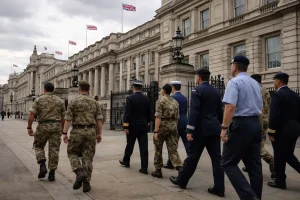
The government’s decision to raise military pay by 3.8% in 2026 is rooted in multiple policy drivers, ranging from economic indicators to public sector alignment and defence strategy.
Cost of Living and Inflation Context (CPI Data)
The Consumer Price Index (CPI) has remained a core metric in shaping pay policy. The Forces Pension Society confirmed that pensions will increase by 3.8% in April 2026, aligning with CPI figures. Similarly, the 3.8% pay rise reflects the government’s intent to protect personnel from rising living costs, ensuring the armed forces’ salaries retain their value.
Maintaining Competitive UK Military Salaries
In a world where skilled labour is increasingly mobile, competitive pay is crucial to attracting and retaining top military talent. The 3.8% increase ensures that UK military pay remains competitive with civilian roles, especially in technical and operational fields.
Furthermore, service personnel benefit from non-taxable allowances, adding further value to their compensation.
Maintaining parity also supports long-term workforce planning, particularly in operational branches facing higher retention challenges.
Forces Pension Society Inputs
The Forces Pension Society, which advocates for fair treatment of service veterans and retirees, has confirmed that pensions in payment will also see a 3.8% uplift from April 2026.
Their data and advocacy play a key role in influencing how CPI-linked benefits evolve, and their role is especially vital as the Armed Forces compensation package increasingly includes pension sustainability.
This ensures that those retiring from the Armed Forces continue to receive income that reflects real-world economic conditions.
Will Armed Forces Pensions and Allowances Increase Too?
Yes, Armed Forces pensions in payment will increase by 3.8% from April 2026, in alignment with the CPI. This ensures that retired personnel maintain purchasing power as living costs rise.
Additionally, tax-free allowances such as Basic Allowance for Housing (BAH) and special duty pay remain a significant component of the military benefits package. These allowances are not only vital for active-duty personnel but are also periodically reviewed to reflect location-based cost differences and changing operational demands.
Such updates underline the government’s wider effort to deliver financial fairness beyond just base pay increases.
What Role Does the Armed Forces’ Pay Review Body (AFPRB) Play in 2026/27?

The Armed Forces’ Pay Review Body (AFPRB) plays a central role in advising the government on military remuneration. In the 2026/27 round, its responsibilities have expanded, reflecting a broader strategy to centralise and streamline pay decision-making.
Explanation of AFPRB Remit
The AFPRB is responsible for collecting evidence from the Ministry of Defence (MOD), HM Treasury, and other stakeholders to assess affordability, recruitment pressures, and morale levels.
Their remit includes making independent recommendations on pay, accommodation charges, allowances, and other elements of the total compensation package.
Their proposals are not legally binding, but the government has consistently accepted their recommendations in full in recent years.
Inclusion of Senior Ranks (Two-Star and Above)
Previously, senior military officers (two-star and above) fell under the Senior Salaries Review Body (SSRB). However, due to changes in the Terms and Conditions of Service, responsibility for these ranks now shifts to the AFPRB, creating a unified pay review structure across all ranks.
This structural update reflects the government’s commitment to transparency and fairness at all command levels.
Timeline of Review Process and Submission Deadlines
The 2026/27 pay round was launched in July 2025, two months earlier than the 2025 process. This allows the AFPRB more time to review submissions, gather data, and make informed recommendations.
John Healey MP emphasised the importance of early action in his letter:
“We remain committed to bringing 2026–27 pay announcements forward further… I would be grateful if you could support an earlier pay announcement by submitting your report at the earliest point.”
The Ministry of Defence has pledged full cooperation in bringing forward evidence submissions and coordinating with AFPRB timelines.
The government aims to receive the AFPRB’s report early enough to ensure timely announcements, allowing personnel and departments to plan ahead. The Ministry of Defence has pledged full cooperation in bringing forward evidence submissions and coordinating with AFPRB timelines.
This renewed approach strengthens trust in the annual pay process and demonstrates the government’s intent to reduce uncertainty for service members.
How Does the 2026/27 Pay Round Reflect Government Defence Spending Plans?
The UK’s defence strategy plays a critical role in shaping military pay and benefits. The Strategic Defence Review (SDR) and Spending Review 2025 have set out long-term goals to modernise defence capabilities and prioritise national security.
- The UK has committed to spending 2.6% of GDP on NATO-qualifying defence expenditure by 2027, with an ambition to raise this to 3% in the next Parliament.
- A total of 5% of GDP is allocated to national security, with defence forming the majority of that.
- These investments support workforce retention, technology modernisation, and global deployment readiness.
As stated by RT HON John Healey MP:
“This is a generational increase in defence and security spending, underlining the UK’s commitment to national security and honouring our commitment to be a leader in NATO.”
Such funding ensures the armed forces are not only well-equipped but also fairly compensated, highlighting the importance of pay in maintaining an effective fighting force.
How Will the 2026 Military Pay Be Structured Across Ranks?

Military pay varies by rank and years of service, and the 3.8% increase applies proportionally across all levels. Here’s a snapshot of expected monthly basic pay figures for 2026, based on the US-influenced model adapted by UK defence data:
| Rank/Grade | Years of Service | Monthly Basic Pay (£) |
| Enlisted E-1 | 0–2 years | £1,900 approx |
| Enlisted E-6 | 10+ years | £3,700 approx |
| Officer O-1 | 0–2 years | £3,300 approx |
| Officer O-4 | 10+ years | £7,500 approx |
Higher-ranked officers may receive a lower percentage rise if their total pay reaches capped legal thresholds. Additionally, many service members receive allowances and bonuses based on qualifications, deployments, and housing requirements.
This structure is designed to reward experience and leadership, ensuring upward mobility is financially meaningful.
How Is UK Military Pay Determined Each Year?
The process behind military pay setting involves economic modelling, review body recommendations, and parliamentary decisions. The Employment Cost Index (ECI) is used to benchmark private sector salary movements, while CPI reflects inflation trends affecting cost of living.
Each year, the AFPRB reviews MOD evidence, considering recruitment and retention challenges, and proposes pay changes accordingly. The government can choose to accept or modify these recommendations based on broader budgetary constraints and national priorities.
Ultimately, pay increases are designed to ensure military readiness, personnel retention, and economic parity.
What Does This Mean for Recruitment and Retention in the Armed Forces?

The consistent increase in pay and benefits sends a clear signal that the UK values its service personnel. In recent years, recruitment and retention have faced pressures due to competition from civilian jobs, especially in skilled technical fields.
The 3.8% rise in 2026 supports the MOD’s broader workforce strategy, which aims to build a modern, flexible, and loyal force. Providing fair pay helps reduce early exits from service, improves morale, and makes the military a more attractive long-term career choice.
Additionally, benefits like housing allowances, pension growth, and education incentives contribute to an overall positive service environment.
Where Can Personnel Get Updates or Report Pay Issues?
Staying informed about pay changes and ensuring correct compensation is crucial for all service members. Multiple resources are available to support personnel in understanding and addressing their pay.
Accessing LES (Leave and Earnings Statement)
The Leave and Earnings Statement (LES) provides detailed information on:
- Pay entitlements
- Allowances
- Deductions
- Tax withholdings
- Retirement plan (RETPLAN)
- Thrift Savings Plan (TSP) contributions
Personnel can log in via the myPay system to access current and past statements. It’s recommended to review LES statements after every pay cycle to ensure accuracy.
Contacting Payroll or Finance Offices
If discrepancies or questions arise:
- Army, Navy, Air Force, Space Force (active or reserve): 1-888-332-7411
- Retirees and survivors: 1-800-321-1080
- Former spouses or creditors: 1-888-332-7411
Useful Helplines (MOD Specific)
- MOD Employee Services: Reach out via internal HR channels
- Veterans UK: 0808 1914 2 18 (for pensions and allowances)
- AFPRB Enquiries: Accessible through gov.uk contact forms
Monitoring official portals and newsletters is key to keeping up with evolving pay structures.
Conclusion
The UK Armed Forces pay rise for 2026/27 represents a strategic and economic commitment to supporting those who serve. With a 3.8% increase in basic pay and matching pension uplift, the government aims to strengthen recruitment, retention, and financial stability across the services.
As defence priorities shift and global pressures grow, timely and transparent pay processes, supported by bodies like the AFPRB, are more vital than ever. Service members and their families can expect continued improvements in pay structures, aligned with economic realities and national defence goals.
FAQs
When will the 3.8% pay increase appear in military paychecks?
The increase will reflect in January 2026 paychecks, starting from the first pay period of the year.
Does the 2026 pay increase apply to all branches equally?
Yes, it applies to Army, Navy, RAF, and Space Command personnel who are actively serving.
How does this rise compare to civilian public sector wages?
The 3.8% increase aligns closely with public sector pay trends and is designed to match inflation.
Will allowances such as BAH increase in 2026?
While base pay is increasing, allowances like BAH are reviewed separately and may also be adjusted.
Who decides on annual pay changes for the Armed Forces?
The Armed Forces’ Pay Review Body (AFPRB) recommends changes based on evidence from MOD and other stakeholders.
What if a service member doesn’t receive the correct pay?
They should immediately contact their unit’s payroll or finance office and review their LES for discrepancies.
Are there plans for further pay adjustments beyond 2026/27?
The government plans to continue aligning pay with inflation and may consider further increases in line with GDP targets.
{
“@context”: “https://schema.org”,
“@type”: “FAQPage”,
“mainEntity”: [
{
“@type”: “Question”,
“name”: “When will the 3.8% pay increase appear in military paychecks?”,
“acceptedAnswer”: {
“@type”: “Answer”,
“text”: “The increase will reflect in January 2026 paychecks starting from the first pay period of the year.”
}
},
{
“@type”: “Question”,
“name”: “Does the 2026 pay increase apply to all branches equally?”,
“acceptedAnswer”: {
“@type”: “Answer”,
“text”: “Yes it applies to Army Navy RAF and Space Command personnel who are actively serving.”
}
},
{
“@type”: “Question”,
“name”: “How does this rise compare to civilian public sector wages?”,
“acceptedAnswer”: {
“@type”: “Answer”,
“text”: “The 3.8% increase aligns closely with public sector pay trends and is designed to match inflation.”
}
},
{
“@type”: “Question”,
“name”: “Will allowances such as BAH increase in 2026?”,
“acceptedAnswer”: {
“@type”: “Answer”,
“text”: “While base pay is increasing allowances like BAH are reviewed separately and may also be adjusted.”
}
},
{
“@type”: “Question”,
“name”: “Who decides on annual pay changes for the Armed Forces?”,
“acceptedAnswer”: {
“@type”: “Answer”,
“text”: “The Armed Forces’ Pay Review Body (AFPRB) recommends changes based on evidence from MOD and other stakeholders.”
}
},
{
“@type”: “Question”,
“name”: “What if a service member doesn’t receive the correct pay?”,
“acceptedAnswer”: {
“@type”: “Answer”,
“text”: “They should immediately contact their unit’s payroll or finance office and review their LES for discrepancies.”
}
},
{
“@type”: “Question”,
“name”: “Are there plans for further pay adjustments beyond 2026/27?”,
“acceptedAnswer”: {
“@type”: “Answer”,
“text”: “The government plans to continue aligning pay with inflation and may consider further increases in line with GDP targets.”
}
}
]
}