
🛍️
Primary Causes Behind the Collapse:
- Weak Christmas trading and reduced footfall
- Rising operational and employment costs
- Intense competition from online retailers such as SHEIN and Temu
- Landlord and lease negotiation challenges
The Claire’s Accessories collapse reflects ongoing structural change on the UK high street,
where inflation, digital competition, and shifting consumer habits continue to challenge traditional retail models.
Who Are Claire’s Accessories and What Is Their Presence in the UK?
Claire’s Accessories is a global fashion accessories retailer best known for affordable jewellery, hair accessories, cosmetics, and its popular in-store ear-piercing service. The brand has historically targeted tweens and teenagers, building a strong identity around trend-led, colourful products at accessible price points.
In the UK, Claire’s became a fixture of shopping centres and high streets, often occupying mid-sized retail units in busy locations. Prior to the most recent administration process, the retailer operated more than 150 stores nationwide and employed approximately 1,300–1,400 staff, according to various reports.
For many families, Claire’s represented a rite of passage. As one shopper recently reflected, “It was the first shop I was allowed to go into on my own as a teenager.” That emotional connection has amplified public reaction to the news of the Claire’s Accessories collapse.
However, the retailer’s journey in the UK has been turbulent in recent years, with prior financial distress and ownership changes shaping its current position.
What Has Happened in the Claire’s Accessories Collapse in January 2026?
In late January 2026, Claire’s Accessories UK & Ireland formally entered administration. Insolvency specialists from Kroll were appointed to manage the process. Administration provides temporary protection from creditors while options for rescue, restructuring, or sale are explored.
Despite the headline news, stores remain open and trading as normal at the time of writing. The goal of the administration is to stabilise operations and potentially secure a buyer, either for the entire business or for parts of it.
The table below summarises the key facts surrounding the Claire’s Accessories collapse:
| Category | Details |
| Administration Date | January 2026 |
| Regions Affected | UK and Ireland |
| Administrator | Kroll |
| Stores at Risk | 150+ |
| Jobs at Risk | 1,000+ |
| Current Status | Trading as normal while buyer sought |
| Owner | Modella Capital |
The administration followed reports of weak Christmas trading and ongoing cash flow pressures. According to statements from the owner, the retailer faced “very tough” trading conditions and an “alarming” drop-off in pre-Christmas footfall.
Why Has Claire’s Entered Administration Again?
The current Claire’s Accessories collapse is not the first time the business has faced insolvency. It previously entered administration in 2025 following financial struggles linked to its US parent company’s bankruptcy.
Several factors contributed to the latest downturn:
- Weak Christmas trading during what is traditionally the most important retail period.
- High inflation and rising operating costs, including wages, energy, and logistics.
- Intense competition from fast-fashion and online retailers such as SHEIN and Temu.
- The rapid rise of social commerce platforms like TikTok Shop.
- Reduced consumer confidence amid cost-of-living pressures.
One retail analyst described the situation bluntly:
“The margins in mid-market accessories have been squeezed from every direction.”
The combination of these pressures meant that even after a previous rescue deal, the business struggled to rebuild sufficient cash reserves. When festive sales underperformed expectations, the financial position quickly became untenable.
How Did Landlord Support and Lease Agreements Contribute to the Collapse?

While consumer behaviour and competition played significant roles, landlord relations proved equally decisive in the Claire’s Accessories collapse.
The Importance of Rent Negotiations in Retail Survival
Retailers operating physical stores rely heavily on flexible lease agreements, particularly during downturns. Company Voluntary Arrangements (CVAs) are often used to renegotiate rents and close underperforming locations.
In this case, reports suggest that Claire’s was unable to secure sufficient landlord support to make its store portfolio viable.
Without rent reductions or favourable lease terms, maintaining a nationwide estate of over 150 stores becomes increasingly expensive. Fixed property costs can quickly outpace declining revenues.
Store Footfall and Shopping Centre Pressures
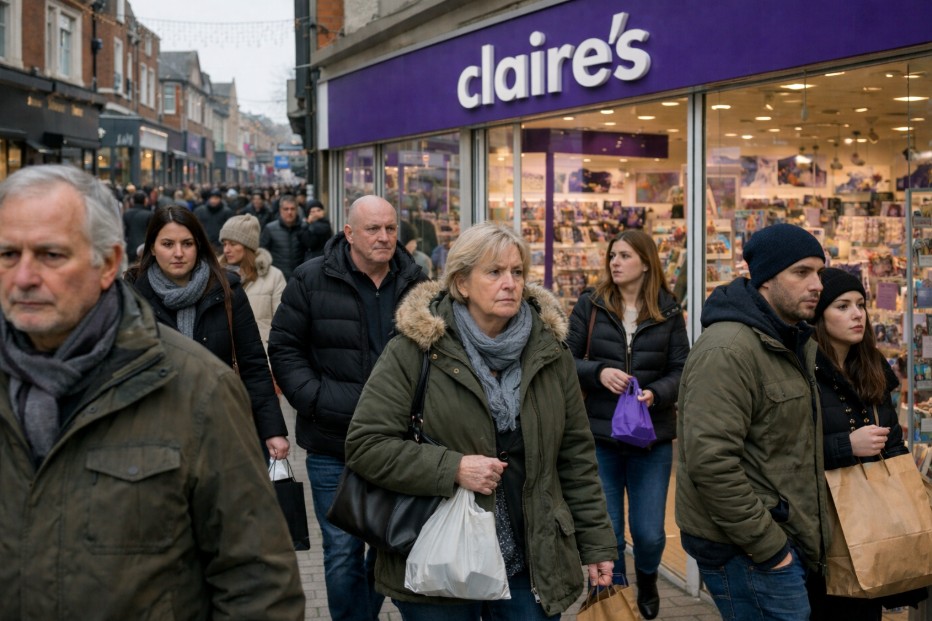
Many Claire’s stores are located within shopping centres that have experienced declining footfall in recent years. As shoppers shift online, landlords themselves face pressure, creating a challenging negotiation environment.
A retail property consultant explained the wider issue:
“If a retailer’s turnover falls but rent stays the same, the numbers simply stop working.”
The inability to restructure lease obligations appears to have been a key tipping point.
How Many Jobs and Stores Are at Risk Following the Claire’s Accessories Collapse?
The human impact of the Claire’s Accessories collapse is significant. Reports indicate that more than 1,000 jobs are at risk in the UK alone, with approximately 150 stores facing uncertainty.
Estimates vary slightly between sources, but figures commonly cited include:
- Around 154 stores operating prior to administration.
- Approximately 1,355 employees.
- Potential closure of underperforming locations if a buyer cannot be secured.
The table below outlines reported employment and store data:
| Metric | Approximate Figure |
| Total UK Stores | 150–154 |
| UK Employees | 1,300–1,355 |
| Jobs at Risk | 1,000+ |
| Previous Store Closures (2025) | 145 (during earlier restructuring) |
For employees, administration does not automatically mean immediate redundancy. However, uncertainty remains high, particularly for staff working in stores with weaker sales performance.
What Does Administration Actually Mean for Claire’s Customers and Employees?
Administration is a legal process designed to protect a company from creditor action while restructuring options are explored. It does not automatically mean closure or liquidation.
For customers, this typically means:
- Stores remain open during the administration period.
- Gift cards and returns policies may be subject to change.
- Online orders usually continue to be processed unless otherwise stated.
For employees, administrators assess store profitability and operational viability. If a buyer is found, jobs may be transferred under TUPE regulations. If not, redundancies could follow.
The primary objective is to rescue the company as a going concern where possible. However, outcomes vary depending on buyer interest and financial viability.
What Happened During Claire’s Previous Financial Difficulties?
The 2026 Claire’s Accessories collapse follows earlier turmoil in 2025. After its US parent company filed for bankruptcy, the UK business entered administration. Modella Capital acquired a significant portion of the UK estate shortly afterwards.
At that time:
- Approximately 1,000 jobs were reportedly saved.
- Around 145 stores were closed.
- A turnaround plan was introduced.
Despite initial optimism, the business remained vulnerable. Legacy cost structures and weakened consumer demand meant the recovery was fragile from the outset.
What Role Has Modella Capital Played in the Claire’s Collapse?

Modella Capital acquired Claire’s during its previous administration, positioning itself as a rescuer of struggling high street brands. However, the investment firm also owns several other retail chains facing headwinds.
Modella’s Acquisition Strategy on the UK High Street
In recent years, Modella has expanded its retail portfolio, acquiring:
- The Original Factory Shop (TOFS)
- Hobbycraft
- The high street arm of WH Smith (rebranded as TG Jones)
- Other heritage retail brands
This aggressive acquisition strategy aimed to consolidate and revitalise established names.
Why the Turnaround Plan Failed?
Despite efforts to restructure operations, Claire’s reportedly ran out of cash. According to statements attributed to the owner, both Claire’s and TOFS were “highly vulnerable” even before acquisition.
Factors cited include:
- Weak consumer confidence.
- Continued cost inflation.
- Structural changes in shopping habits.
- Government fiscal policies increasing employer costs.
As one insider noted, “The turnaround window was simply too short for the scale of the challenge.”
Is Claire’s Closing Down in the UK or Can the Business Be Saved?
Claire’s stores are currently trading as normal while administrators explore rescue options. Administration offers temporary breathing space, allowing time to assess buyer interest, review finances and restructure operations where possible rather than forcing immediate closures.
Several outcomes remain possible. The business could be sold as a going concern, selected stores may be acquired by another retailer, or underperforming locations could close as part of a restructuring. If no buyer emerges, eventual liquidation cannot be ruled out.
The final decision will depend on investor appetite and the success of renegotiating leases. Administrators will prioritise profitable sites and long-term sustainability, as some brands emerge stronger from administration while others exit the high street entirely.
What Does the Claire’s Accessories Collapse Signal for the Future of the UK High Street?
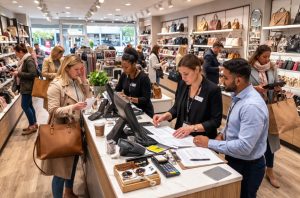
The Claire’s Accessories collapse is part of a broader pattern affecting British retail. Rising costs, online competition, and cautious consumer spending have reshaped the landscape.
The table below places Claire’s within a wider context:
| Factor | Impact on High Street Retail |
| Online Competition | Increased price pressure and convenience advantage |
| Inflation | Higher wages, rent, and energy costs |
| Consumer Confidence | Reduced discretionary spending |
| Footfall Decline | Lower in-store sales volumes |
| Fiscal Policy Changes | Increased employer National Insurance and wage bills |
Retailers reliant on physical stores face the challenge of balancing fixed property costs against increasingly unpredictable sales patterns.
However, not all is bleak. Strong omnichannel strategies and differentiated in-store experiences can still drive resilience. The question remains whether Claire’s can adapt quickly enough.
Key Facts About the Claire’s Accessories Collapse at a Glance
For clarity, here is a consolidated summary of the current position:
| Summary Point | Details |
| Collapse Type | Administration |
| Date | January 2026 |
| Stores Threatened | 150+ |
| Jobs at Risk | 1,000+ |
| Administrator | Kroll |
| Owner | Modella Capital |
| Immediate Cause | Weak Christmas trading and cash shortfall |
| Wider Causes | Inflation, competition, landlord issues |
Together, these figures illustrate the scale of the challenge facing Claire’s and the broader pressures shaping the UK retail environment in 2026.
Conclusion
The Claire’s Accessories collapse marks another difficult chapter for the UK high street. With over 1,000 jobs at risk and more than 150 stores facing uncertainty, the administration highlights the ongoing pressures confronting bricks-and-mortar retailers.
Weak Christmas trading, rising costs, landlord negotiations, and fierce online competition combined to create a challenging environment that even recent restructuring efforts could not overcome. While stores continue trading and a buyer may yet emerge, the outcome remains uncertain.
For now, Claire’s future rests in the hands of administrators and potential investors. Whether the brand can once again reinvent itself will depend on adapting to a retail landscape that has fundamentally changed.
Frequently Asked Questions About the Claire’s Accessories Collapse
Can a retailer continue trading during administration?
Yes. Administration is designed to allow businesses to keep operating while restructuring options are explored. Many retailers remain open throughout the process.
Are staff made redundant immediately when administrators are appointed?
Not necessarily. Employees typically remain in post while administrators assess viability. Redundancies may occur later depending on store performance and buyer interest.
What usually happens to gift cards during administration?
Policies can change. Some retailers continue accepting gift cards temporarily, while others suspend them. Customers should check in-store notices or official announcements.
How long does administration typically last in the UK?
It varies widely. Some cases conclude within weeks if a buyer is found quickly, while others may extend for several months.
Can a brand recover after entering administration more than once?
It is possible, but repeat insolvencies make recovery more challenging. Success depends on sustainable restructuring and improved trading conditions.
What determines whether stores close permanently?
Profitability, lease agreements, location performance, and buyer negotiations all influence closure decisions.
Does administration affect suppliers and landlords?
Yes. Suppliers may face payment delays, and landlords often renegotiate lease terms as part of restructuring efforts.