Reading Emissions-Based Parking Charges – At a Glance
Start Date
February 2024
Emissions Threshold
150g/km CO₂
Higher-Emission Vehicles
Pay Up to Double
Cleaner Vehicles
Lower Parking Rates
Key Points:
- Charges apply to on-street pay-and-display and resident permits.
- Vehicles under 150g/km CO2 remain on current rates.
- Higher-emission vehicles will pay up to double for the same parking duration.
- Electric and hybrid vehicles benefit from lower tariffs.
- The scheme supports Reading’s goal of becoming carbon neutral by 2030.
- This aligns with the UK’s national clean air initiatives.
- Motorists are encouraged to check their emissions and explore greener alternatives.
This policy introduces financial incentives to adopt cleaner transport choices in Reading.
What Is Emissions-Based Parking in Reading?
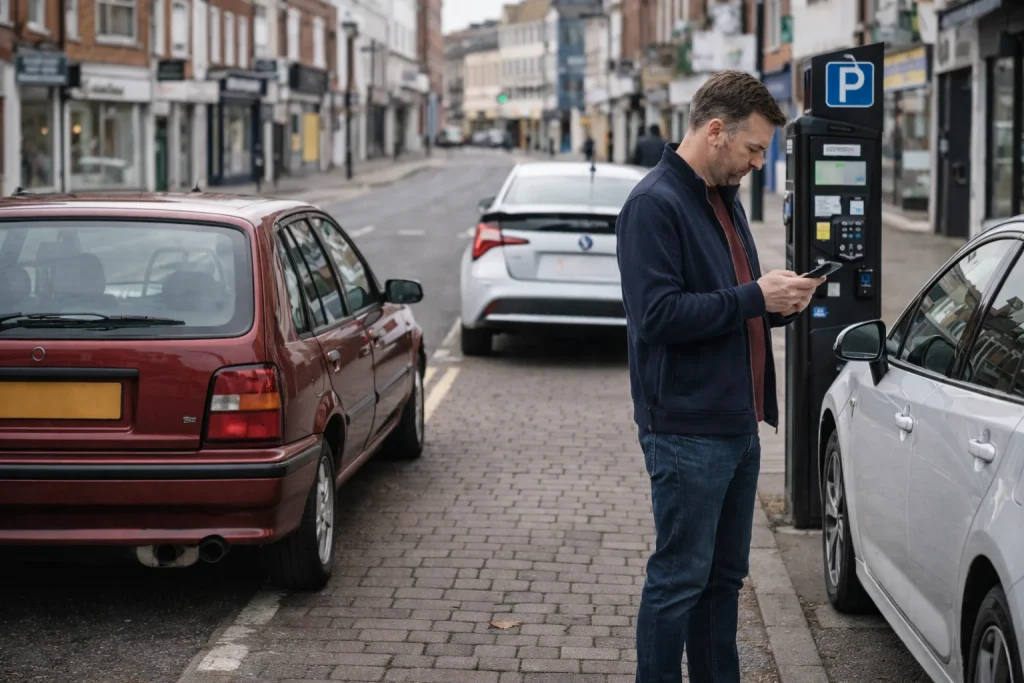
Emissions-based parking is the new pricing model that Reading Borough Council is implementing for its on-street pay-and-display and residential permit schemes. The system determines the cost of parking based on the vehicle’s CO2 emissions. The higher the emissions, the higher the parking charges a driver will face.
This shift is significant because it links environmental responsibility directly to everyday activities such as parking. Reading is becoming one of the first towns outside of London to introduce a structured emissions-linked parking charge system.
According to the council, the policy will take effect in February 2024 and will affect thousands of motorists, especially those driving older or less environmentally friendly vehicles.
The emission thresholds are based on grams of CO2 emitted per kilometre. Charges start increasing once a vehicle produces more than 150g/km. Cars with emissions below this threshold will continue to pay the current rates. For those above it, tariffs rise gradually in increments based on CO2 output.
A Look at Reading Borough Council’s Climate Goals
Reading Borough Council’s emissions-based parking system is not a standalone effort. It forms part of the borough’s wider sustainability strategy, which aims to make Reading a carbon-neutral town by 2030. A major part of this involves reducing emissions from transport, one of the leading contributors to poor air quality and climate change.
By adjusting the cost of parking to reflect the emissions produced by a vehicle, the council wants to encourage behaviour change without enforcing a ban or strict regulation.
This model is designed to nudge drivers toward more sustainable habits, such as:
- Choosing lower-emission vehicles
- Avoiding unnecessary short trips
- Using public transport or active travel options
The pricing strategy works as an incentive. If a driver wants to avoid paying more, switching to a cleaner car becomes a practical solution.
Why Emissions-Based Charges Are Being Introduced?
This policy reflects a broader trend in the UK where local councils are seeking to influence driver behaviour by linking everyday costs to environmental performance. Instead of targeting all drivers equally, the council is focusing on emissions output, which places the burden on vehicles that contribute the most to air pollution.
The logic behind this is both environmental and behavioural. The goal is not to punish drivers, but to create financial consequences that make cleaner choices more attractive in the long run.
Reading Borough Council explained that the scheme is “designed to encourage people to think about their choices when purchasing a new vehicle or making a short journey.”
The transition to low-emission transport isn’t just about electric vehicles. It also includes hybrids and modern petrol cars with improved fuel efficiency. The parking tariff system supports this shift without enforcing a sudden or drastic change, instead applying pressure gradually through tiered pricing.
How Will the New Parking Charges Be Calculated?
Parking charges in Reading will now be calculated based on your vehicle’s emissions band. The bands are structured in 20% increments starting from vehicles emitting more than 150g/km of CO2. The higher your emissions, the more you’ll pay per time interval.
When using a parking machine or mobile app, you will enter your registration number. The system will automatically retrieve your vehicle’s emissions data from the DVLA and assign the appropriate charge.
Emissions Band Structure and Rate Increase
The new tariff system breaks down vehicles into six emission categories:
| Emissions Band | CO2 Emission Range (g/km) |
| Existing Tariff | 131–150 g/km |
| Band 1 | 151–170 g/km |
| Band 2 | 171–190 g/km |
| Band 3 | 191–225 g/km |
| Band 4 | 226–255 g/km |
| Band 5 | Over 255 g/km |
Each band results in a parking rate that is approximately 20% higher than the one below it. The actual charges are rounded to the nearest 10 pence to simplify implementation.
As someone who lives in the borough and drives regularly into the town centre, I’ve been closely tracking these changes.
“I initially assumed this would only affect a handful of drivers,” I thought. “But when I checked my own vehicle’s emissions, I realised I’d fall into Band 2, meaning a regular trip would now cost me significantly more over the course of the month.”
This realisation is exactly what the policy aims to provoke awareness and a shift in decision-making.
Full Inner Central Zone Tariffs by Emissions Band and Duration
| Duration | Existing Tariff (131–150g/km) | 151–170g/km | 171–190g/km | 191–225g/km | 226–255g/km | Over 255g/km |
| 20 mins | £1.00 | £1.20 | £1.40 | £1.60 | £1.80 | £2.00 |
| 40 mins | £2.00 | £2.40 | £2.80 | £3.20 | £3.60 | £4.00 |
| 1 hr | £3.00 | £3.60 | £4.20 | £4.80 | £5.40 | £6.00 |
| 1 hr 20 | £4.50 | £5.40 | £6.30 | £7.20 | £8.10 | £9.00 |
| 1 hr 40 | £5.00 | £6.00 | £7.00 | £8.00 | £9.00 | £10.00 |
| 2 hrs | £6.00 | £7.20 | £8.40 | £9.60 | £10.80 | £12.00 |
| 2 hr 20 | £7.00 | £8.40 | £9.80 | £11.20 | £12.60 | £14.00 |
| 2 hr 40 | £8.00 | £9.60 | £11.20 | £12.80 | £14.40 | £16.00 |
| 3 hrs | £9.00 | £10.80 | £12.60 | £14.40 | £16.20 | £18.00 |
Who Will Be Affected by the New Parking Charges?
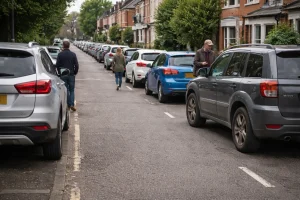
The policy will affect a wide range of motorists in Reading, but the level of impact will depend on the vehicle they drive. Reading Borough Council estimates that:
- Around 50% of vehicles fall within the lowest emissions band (131–150g/km)
- 25% will fall into Band 1 (151–170g/km)
- The remaining 25% will fall into higher bands and pay the most
This means that one in four drivers in Reading will likely experience significant increases in parking charges.
The impact is especially pronounced for:
- Drivers of older diesel vehicles
- Owners of larger petrol SUVs
- Households with multiple high-emission vehicles
Notably, these changes will only apply to on-street pay-and-display parking and residential parking permits. Off-street parking, such as council-owned car parks and private driveways, is not currently affected.
There’s also the question of enforcement. According to a council representative during a recent consultation session:
“The system will use automatic number plate recognition and DVLA data to calculate the charge instantly. There’s no manual input needed. It’s seamless and fair.”
Will Petrol and Diesel Drivers Really Pay More?
Yes, and the pricing makes this very clear. Drivers of petrol or diesel cars emitting over 150g/km will begin to see parking charges increase incrementally based on how polluting their vehicle is.
To illustrate, here’s a comparison of costs for a 2-hour parking session in the inner central zone:
| Emissions Band | Emissions (g/km) | 2-Hour Charge |
| Band 0 | 131–150 | £6.00 |
| Band 1 | 151–170 | £7.20 |
| Band 2 | 171–190 | £8.40 |
| Band 3 | 191–225 | £9.60 |
| Band 4 | 226–255 | £10.80 |
| Band 5 | Over 255 | £12.00 |
A high-emission vehicle driver could pay double what a low-emission driver would pay for the same time duration. The difference is not marginal. Over time, this could significantly affect the budgets of families and individuals who rely on their vehicles daily.
A transport emissions consultant I spoke with recently said:
“What this policy does well is put the cost where the pollution is. Drivers are now paying for the environmental impact of their cars. It’s a simple but powerful pricing signal.”
What About Electric and Hybrid Vehicle Owners?
Electric and hybrid vehicle owners will continue to pay for parking, but the rate will be the lowest available under the emissions-based pricing model. These vehicles typically fall under the 131–150g/km or lower bands, so they won’t be affected by the increased tariffs.
The council has clarified that while they want to reward low-emission vehicles, they also recognise that road space is still being used regardless of emissions. Therefore, all vehicles will continue to pay something.
For hybrid owners like myself, the difference is significant:
“My previous diesel car would have placed me in Band 3 or 4. With my new hybrid, I fall under the lowest tariff, which saves me money weekly and aligns with my goals of reducing my carbon footprint.”
Estimated Weekly Parking Costs by Vehicle Type (2 Hours/Day)
| Vehicle Type | Emissions Band | Daily Cost | Weekly Cost |
| Electric Vehicle | Band 0 | £6.00 | £30.00 |
| Modern Hybrid | Band 0–1 | £6.00–£7.20 | £30–£36 |
| Petrol Hatchback | Band 2 | £8.40 | £42.00 |
| Older Diesel | Band 4–5 | £10.80–£12 | £54–£60 |
This table demonstrates how significant the long-term financial incentive is for switching to a lower-emission vehicle.
Are There Any Exceptions to These New Parking Charges?
While the policy is comprehensive, it does not apply universally. Here’s what remains unaffected:
- Off-street parking (council or privately owned car parks)
- Private driveways and garages
- Visitor parking permits (currently)
- Motorcycles (case-by-case depending on emissions)
All other vehicle types will be subject to emissions-based pricing when using on-street parking within Reading’s designated tariff zones. The enforcement and calculation system will be digital and fully integrated with DVLA databases.
You won’t need to do anything extra. Just enter your number plate at the machine or in the app, and the appropriate charge will be calculated automatically.
How Does This Fit into the UK’s Broader Push for Cleaner Air?
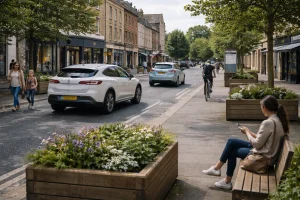
Reading Borough Council’s decision to implement emissions-based parking aligns with national strategies to address climate change and local air pollution. This move isn’t happening in isolation, it’s a piece of the wider UK puzzle for improving urban air quality and cutting emissions from road transport.
The UK government’s target of achieving net zero carbon emissions by 2050 requires strong action across all levels. Since local authorities are closest to community travel behaviours, they’re playing a key role in implementing change through practical measures like clean air zones, vehicle restrictions, and now emissions-based parking charges.
Cities already rolling out similar schemes include:
- London: Ultra Low Emission Zone (ULEZ) charges high-emission vehicles across most boroughs
- Oxford: Pilot Zero Emission Zone (ZEZ), where even hybrids face restrictions
- Birmingham: Clean Air Zone (CAZ) that charges non-compliant vehicles entering the city centre
What makes Reading’s model unique is that it applies environmental pricing at the street level, through something as ordinary as parking. This approach targets daily behaviour, which is arguably more effective at shifting long-term habits.
Types of Emission-Based Local Schemes in the UK
| City | Scheme Type | Main Focus | Charging Mechanism |
| London | Ultra Low Emission Zone | City-wide emissions control | Daily entry charge |
| Oxford | Zero Emission Zone | Pollution-free zones | Pay-per-use vehicle restrictions |
| Birmingham | Clean Air Zone | NO2 and particulate matter | Entry fee for older vehicles |
| Reading | Emission-Based Parking | CO2 emissions & behaviour | Tariff based on emissions |
“We’re shifting from asking people to change to designing systems that encourage change by default,” a sustainability officer told me during a transport event. That idea resonated with me because it recognises that people respond best when change is built into daily routines like parking, not imposed in abstract ways.
Reading’s approach may seem subtle, but when rolled out over months and years, it can reshape how people think about vehicle ownership, emissions, and urban mobility.
What Should Motorists in Reading Do Next?
If you’re a regular driver or commuter in Reading, it’s worth preparing now for how the emissions-based parking changes will affect you. These steps can help you plan better and potentially save money in the long run.
Key Actions to Take:
- Check your vehicle’s emissions band using your registration number on the DVLA website
- Understand your parking habits: How often you park and for how long will directly affect how much you pay
- Review your costs: Calculate how your daily or weekly parking expenses could change
- Explore alternative options for short trips, such as walking, cycling, or buses
- Start considering lower-emission vehicles if your current car falls into a high-emission band
Many residents, like myself, are re-evaluating whether certain trips are even necessary by car. A quick walk to the shops or a cycle to the train station has not only saved money but made the day a bit less stressful.
Let’s look at the difference in weekly parking costs between different emissions bands for a driver parking 2 hours a day, 5 days a week:
Weekly Parking Cost Comparison (2 hrs/day)
| Emissions Band | CO2 (g/km) | Daily Rate | Weekly Cost |
| Band 0 | 131–150 | £6.00 | £30.00 |
| Band 1 | 151–170 | £7.20 | £36.00 |
| Band 2 | 171–190 | £8.40 | £42.00 |
| Band 3 | 191–225 | £9.60 | £48.00 |
| Band 4 | 226–255 | £10.80 | £54.00 |
| Band 5 | Over 255 | £12.00 | £60.00 |
Even at a basic level, the cost differences are significant. A switch to a lower-emission vehicle or choosing to walk or cycle on some days could reduce weekly parking bills by £10–£30, which adds up over months.
“I made the switch to a hybrid last year and the benefits are stacking up now,” a colleague told me. “The lower fuel cost was great, but seeing how much less I’ll pay for parking this year really makes it worthwhile.”
Now is the right time to make smart adjustments before the new pricing goes into effect.
Frequently Asked Questions About Emissions-Based Parking in Reading
Will I have to pay the new parking charges if I drive a company car?
Yes, the system uses DVLA data based on the vehicle’s registration. If the company car falls into a higher emissions category, you’ll be charged accordingly.
How can I find out my car’s CO2 emissions rating?
You can check your car’s emissions band using the DVLA’s vehicle enquiry tool online. The system fetches this data automatically when you enter your number plate at parking machines.
Will diesel vehicles always be charged more than petrol?
Not always. The charges are based on CO2 emissions, not fuel type. Some diesel vehicles may emit less than certain petrol cars and therefore fall into a lower band.
Do residents with parking permits also face emissions-based rates?
Yes, residents’ parking permits are also being adjusted based on emissions. Details of these changes are available through Reading Borough Council’s website.
Are these changes permanent or part of a trial?
This is a permanent policy, passed by the council in November 2023. However, like any policy, it may be reviewed based on public feedback and environmental data.
Will off-street council car parks introduce similar pricing?
Currently, the new charges apply only to on-street parking. There’s been no confirmation about extending them to council-owned car parks, but it’s possible in future.
Is there any financial support for switching to a low-emission vehicle?
While Reading Council doesn’t currently offer direct grants, there are national and manufacturer-led schemes offering discounts or tax breaks for EVs and hybrids.