
If you’re considering a flexible courier job in the UK, chances are you’ve come across Evri, formerly Hermes. The company often promotes its parcel delivery work as a great opportunity for those looking to earn income on their own terms. But one of the most important questions to ask before jumping in is: how much does Evri actually pay per parcel?
On the surface, the numbers might seem promising, but the reality of being a self-employed courier is far more layered. From varying pay rates based on parcel types and routes to hidden costs like fuel and unpaid hours, understanding the full picture is essential.
Let’s break it down, not just with data, but also through the real experience of Emma, a part-time Evri courier and freelance journalist who has been documenting her delivery journey.
What Is the Real Pay Per Parcel at Evri?
The base pay at Evri typically ranges from 50p to £1.20 per parcel. However, the exact amount a courier earns depends on numerous variables including location, route density, parcel size, and delivery type.

For example, small packets such as clothing items in soft packaging often earn significantly less, as low as 35p. In some situations, mislabelled parcels can further reduce your pay, especially if larger or heavier items are categorised as small packets but pay out at the lower rate.
Despite advertised rates sometimes quoting up to 75p or more for certain areas, many couriers report that their actual earnings lean toward the lower end.
After accounting for fuel and time spent loading and sorting, some have calculated that their net earnings per parcel can fall to between 32p and 45p.
Emma, who delivers part-time in Greater Manchester, puts it into perspective:
“I’ve seen the advertised rates and thought they looked decent, but once you’re out on the road dealing with app glitches, fuelling your car, and working through unpaid prep time, the reality sets in. It’s not just about how many parcels you deliver, but how smartly and efficiently you can manage the whole process.”
How Does Pay Vary Across Major Cities in England?
Evri parcel rates can differ significantly depending on the city you’re working in. Higher-density urban areas allow for more deliveries in a shorter time, though they may come with lower per-parcel rates. In contrast, rural and suburban areas often offer higher per-parcel payments but require more travel time.
Here’s a comparative table outlining the average gross pay per parcel for Evri couriers in some of England’s major cities:
| City | Average Pay per Parcel | Average Parcels/Day | Estimated Daily Gross |
| London | £0.52 | 90 | £46.80 |
| Birmingham | £0.60 | 85 | £51.00 |
| Manchester | £0.55 | 80 | £44.00 |
| Liverpool | £0.58 | 75 | £43.50 |
| Leeds | £0.57 | 78 | £44.46 |
| Bristol | £0.62 | 80 | £49.60 |
| Newcastle | £0.60 | 72 | £43.20 |
| Sheffield | £0.59 | 76 | £44.84 |
| Nottingham | £0.61 | 77 | £46.97 |
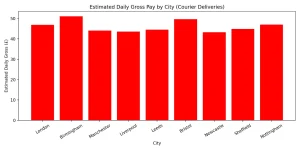
These figures represent gross earnings and do not take into account expenses such as fuel, vehicle maintenance, insurance, or unpaid time, all of which can reduce the courier’s net income considerably.
What Factors Influence How Much a Courier Earns?
There’s no single answer to how much a courier will earn, as multiple variables come into play. Parcel size plays a critical role, with smaller items generating less income. Standard parcels, like shoe boxes or packages from popular retailers, typically pay more than mailer packets. However, any inconsistency in labelling, which is not uncommon, can lead to being underpaid for larger deliveries.
Another major factor is route density. Urban routes in areas like central London or Birmingham may offer lower pay per parcel but allow couriers to complete deliveries faster due to shorter travel distances.
Conversely, rural routes in places like the outskirts of Newcastle or Devon may have fewer deliveries spaced farther apart, which means more fuel and time but slightly higher parcel rates to compensate.
Parcel types also differ; some drivers may deliver to parcel shops or handle collections, both of which can offer varied rates depending on the volume and area.
Vehicle type can influence the kind of route you’re assigned. Couriers with larger vans may receive rounds involving bulkier parcels or longer routes, which may pay more per drop but come with increased operational costs.
Are There Costs That Reduce a Courier’s Take-Home Pay?
Absolutely, and these costs can be substantial. As a self-employed courier, you’re responsible for all expenses. Fuel, vehicle insurance, and maintenance are just the beginning. Add in the unpaid time spent sorting parcels at the depot, organising them into delivery order, and driving to your first drop-off, and your actual hourly earnings can drop significantly.

On some days, Emma has calculated that she works over five hours but brings home less than £25 after costs. That’s an effective hourly rate below £5, which is far below the UK minimum wage.
“What you don’t see in the job ads is the time you spend loading, the hours driving without pay, and how much you lose when fuel prices jump. You might see £50 at the end of the day, but that doesn’t mean £50 in your pocket,” she explains.
There are tools and communities that can help couriers better manage their costs. For example, the Courier Exchange Blog provides resources and advice for independent drivers trying to optimise their income.
Does the Evri App Help or Hinder Courier Productivity?
Evri couriers rely on the company’s delivery app to manage their rounds. It handles parcel scanning, routing, and customer notifications. When it works smoothly, the app is an essential tool for efficient deliveries.
However, many couriers report issues with lagging, inaccurate routing, and occasional crashes, all of which can reduce the number of parcels delivered per hour.
For instance, if the app sends a courier on an inefficient route or requires repeated restarts, delivery time increases and earnings per hour drop. Emma has encountered days where app issues have reduced her total deliveries by 20%, significantly affecting her income.
Can You Realistically Earn a Living Wage with Evri?
In most cases, earning a full-time, consistent living wage as an Evri courier is difficult unless you’re operating in a high-density area, during peak season, with a fuel-efficient vehicle, and are highly organised.
Let’s look at a real example:
| Metric | Value |
| Parcels Delivered | 80 |
| Pay Per Parcel | £0.55 |
| Gross Daily Pay | £44.00 |
| Fuel Cost | £12.00 |
| Vehicle Wear & Tear | £4.00 |
| Insurance (Daily Estimate) | £2.00 |
| Unpaid Prep Time | 60 minutes |
| Net Take-Home Pay | £26.00 |
| Hourly Rate (5 hours) | £5.20/hr |
As seen above, once expenses and unpaid time are factored in, the courier’s actual hourly rate is often far below what many would consider a sustainable income.
For those considering courier work around these times, Evri often posts bonus opportunities and rate increases on its official careers page.
How Does Evri Pay Compare to Other UK Delivery Companies?
When compared with its major competitors, Evri tends to fall short in terms of per-parcel pay, though it offers easier access and lower entry requirements than services like DPD or Amazon Flex.
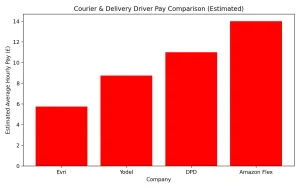
| Company | Avg. Pay per Parcel | Avg. Hourly Rate (est.) | Payment Frequency | Self-employed |
| Evri | £0.50 – £1.20 | £4.50 – £7.00/hr | Weekly | Yes |
| Yodel | £1.20 – £1.50 | £7.50 – £10.00/hr | Weekly | Yes |
| DPD | £1.50+ | £10.00 – £12.00/hr | Monthly | Yes |
| Amazon Flex | £13 – £15/hr (block) | £13.00 – £15.00/hr | Bi-weekly | Yes |
While Evri provides more flexibility and lower entry barriers, it also requires careful management of time, routes, and vehicle costs to make the job financially viable.
Is Working for Evri Worth It in the Long Run?
The answer largely depends on what you’re hoping to get from the job. For those seeking part-time, flexible work, Evri can offer a short-term income boost. Students, parents, or people between jobs may find the freedom appealing, especially if they live in cities where delivery zones are compact and easy to cover.

However, those looking for consistent, full-time income might find the lack of guaranteed pay, the variability in per-parcel rates, and the burden of vehicle costs too challenging. Couriers must treat the role like running a small business, calculating profits, minimising losses, and constantly optimising routes and time.
FAQs
How much can you earn per week with Evri in London or Manchester?
In London, weekly gross earnings may reach £250–£300, while in Manchester they often fall around £220–£270, before expenses.
Does Evri pay for petrol or insurance?
No. All operational expenses, including fuel and insurance, are the responsibility of the courier.
Can you earn more with a van than a car?
Potentially yes, but vans cost more to run. Higher-paying rounds may be given to those with vans, but expenses can cancel out the benefit.
What happens if a parcel is mislabelled?
You may still get paid the lower rate, even if the item is heavier or larger. It’s a common issue and hard to contest.
Is Evri a good weekend job?
Yes, for those seeking flexible part-time work. It’s popular with students and those supplementing other income sources.
Do couriers get penalised for late deliveries?
Evri uses performance tracking, and consistent lateness may result in fewer round offers or account reviews.
How do I become an Evri courier?
You’ll need a valid UK driving licence, a suitable vehicle, insurance, a smartphone, and proof of right to work in the UK.