

Key Takeaways:
- Most Britons now expect Keir Starmer to resign before the next election.
- Starmer has negative ratings on trust, leadership and competence.
- Labour-affiliated union figures have started calling for him to step down.
- Pat McFadden and senior Labour ministers continue to defend him.
- The Peter Mandelson controversy has added to the political pressure.
- Opposition parties claim the Labour Government is losing control.
- A resignation could trigger a major Labour leadership battle.
| Metric | Latest Figure (Feb-April 2026) | Trend since 2024 Election |
| Resignation Favorability | 55% of Britons believe he should resign | Up from 32% |
| Net Approval Rating | -44 to -48 | Net drop of over 60 points |
| Competence Rating | -24 | Significant decline |
| Key Opposition Leader | Nigel Farage (-39) / Kemi Badenoch (-25) | Both outperforming Starmer |
Why Are Most Brits Calling for Keir Starmer to Resign?

The latest Keir Starmer resignation poll paints a bleak picture for the Prime Minister. Large numbers of voters believe he has lost touch with the public and no longer represents what ordinary people think.
Compared with the optimism that followed the General Election, support for Starmer has dropped dramatically in less than two years.
Many voters appear frustrated by what they see as broken promises and poor judgement. Rising energy bills, ongoing cost of living concerns and controversy around key appointments have all weakened confidence in his leadership.
Rather than appearing as a fresh start for the country, Starmer is increasingly being seen by critics as another Westminster politician failing to deliver.
| Poll Question | Net Rating |
| In touch with ordinary people | -44 |
| Represents what most people think | -44 |
| Strong leader | -31 |
| Trustworthy | -29 |
| Competent | -24 |
| Acts in the nation’s best interests | -22 |
Political analysts argue that the speed of the decline is especially damaging. A Prime Minister can survive one or two controversies, but when negative views spread across every major leadership quality, it becomes far harder to regain public trust.
“Professor Tim Bale, political analyst at Queen Mary University of London: ‘When a Prime Minister starts losing public confidence on trust, competence and leadership all at the same time, it usually marks the beginning of a much deeper political problem. Voters may forgive one mistake, but they rarely forgive a pattern of them.’”
What Does the Keir Starmer Resignation Poll Reveal About Public Opinion?
The poll suggests that voters are no longer simply unhappy with specific policies. Instead, there appears to be a wider rejection of Starmer himself. For many Britons, the issue is no longer whether Labour can govern effectively, but whether Starmer is the right person to lead the country.
One of the most damaging findings is the belief that he no longer understands ordinary people. Being “in touch” is often one of the most important qualities for any Prime Minister. If voters feel ignored or disconnected, it becomes difficult for any government to maintain support.
Declining Trust, Competence and Leadership Ratings
Trust has become one of Starmer’s biggest weaknesses. Voters who once believed he would bring honesty and stability now question whether he can be relied upon. The poll shows negative ratings not only for trustworthiness, but also for being competent and making the right decisions for the country.
These figures are particularly significant because they affect every aspect of government. If the public believes a Prime Minister is not trustworthy or capable, even popular policies can struggle to gain support.
Starmer’s image as a “strong leader” has also weakened considerably. Critics argue that he often appears reactive rather than decisive, especially when facing controversy. Instead of taking control of difficult situations, he has been accused of allowing them to drag on and damage his authority.
| Leadership Attribute | Before General Election | Current Rating |
| Strong leader | +12 | -31 |
| Trustworthy | +8 | -29 |
| Competent | +15 | -24 |
| Understands ordinary people | +5 | -44 |
The collapse in these figures explains why so many people now expect him to leave office. Once a leader loses authority, even loyal supporters can begin to question whether change is needed.
Why Have Views of Keir Starmer Changed Since the General Election?
At the time of the General Election, Starmer was viewed by many as a calm and practical alternative to previous governments. Labour promised change, economic stability and a better standard of living. However, many voters now believe those promises have not been met.
The cost of living remains a major issue across the UK. Energy bills are still high, food prices continue to rise and many families feel financially worse off. Critics argue that Starmer has failed to deliver the improvements that Labour promised during the election campaign.
There has also been growing anger over decisions that appear to conflict with Labour’s message. Opponents point to tax changes, spending reductions and disputes involving pensioners, disabled people and small businesses. These issues have created the impression that Starmer’s government is not acting in the interests of the people who voted for it.
“Sir John Curtice, polling expert: ‘Governments are judged less on what they promise and more on whether people feel their lives are improving. At the moment, many voters simply do not believe that Keir Starmer has delivered the change they expected.’”
Why Are Labour Figures and Union Leaders Calling for Starmer to Go?
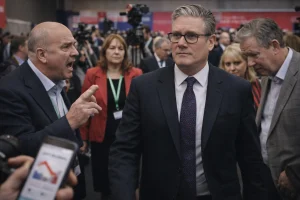
Pressure on Starmer is no longer coming only from opposition parties. Some of the strongest criticism is now emerging from figures who would normally support Labour.
Steve Wright, general secretary of the Fire Brigades Union, became the first Labour-affiliated union leader to publicly call for Starmer to resign. His intervention was particularly important because trade unions have traditionally been among Labour’s closest allies.
Wright argued that Starmer had lost the confidence of both the public and the wider labour movement. By making such a public statement, he signalled that dissatisfaction within Labour may be becoming more serious.
Steve Wright and Growing Pressure Within Labour
The fact that union leaders are criticising Starmer raises difficult questions for Labour. Trade unions often provide financial support, campaign help and political backing. If more unions begin to turn against the Prime Minister, the pressure could become impossible to ignore.
There are also signs of concern among Labour MPs. Although few have openly called for Starmer to resign, there is growing discussion about whether he can recover before the next election. Some MPs may fear losing their seats if Labour’s popularity continues to fall.
At the moment, there is no formal leadership challenge. However, political pressure often builds gradually. If more poor polls follow, internal opposition within Labour could become much stronger.
The most significant blow from within the Labour movement came in February 2026 when Steve Wright, General Secretary of the Fire Brigades Union (FBU), stated that the “last week has been the final bullet for Keir Starmer.”
Wright’s public declaration of “no confidence” marks a turning point; it is the first time a major Labour-affiliated union leader has broken ranks to demand a resignation before the May elections. This internal friction signals a broader disconnect between the Labour leadership and its traditional working-class base.
Why Is Pat McFadden Still Backing Keir Starmer?
Despite growing criticism, senior Labour figures continue to defend the Prime Minister. Work and Pensions Secretary Pat McFadden rejected calls for a no-confidence vote and argued that Starmer should remain in office.
McFadden compared the situation to “not dropping the pilot after 18 months”. In his view, Labour needs more time to deliver on its promises. He argued that changing leader too quickly could make the situation even worse and create greater instability.
For many Labour supporters, there is still hope that Starmer can recover if the economy improves and the government becomes more focused. They believe replacing him now could damage Labour even further.
However, this defence may become harder if public anger continues to rise. Prime Ministers often survive difficult periods, but only if voters believe things are likely to improve. At present, many people appear unconvinced.
How Are the SNP and Scottish Greens Responding to the Poll?
The SNP and Scottish Greens have reacted strongly to the Keir Starmer resignation poll. Both parties argue that the Prime Minister has lost authority and no longer has the support of the public.
SNP Westminster deputy leader Pete Wishart described Starmer as a “lame duck Prime Minister”. He claimed that Labour is in chaos and that the current crisis is damaging not only England but also Scotland.
Claims of Broken Promises and Government Failure
Wishart accused Starmer of making a series of poor decisions and breaking important election promises. He pointed to rising living costs, higher unemployment and worsening public finances as evidence that Labour has failed to improve the country.
The Scottish Greens made similar arguments. Co-leader Gillian Mackay said that every day Starmer remains in office is “an insult to the voters that put him there”. According to critics, the Prime Minister is now clinging to power despite losing public confidence.
“Dr Ailsa Henderson, Professor of Political Science at Edinburgh University: ‘When opposition parties start speaking about a Prime Minister as though their time is already over, it shows how far their authority has fallen. The danger for Keir Starmer is that this perception can quickly become reality.’”
| Political Figure | Main Criticism |
| Pete Wishart | Starmer has become a lame duck Prime Minister |
| Gillian Mackay | He has lost public authority |
| Steve Wright | He should resign because confidence has collapsed |
| Pat McFadden | He should remain and continue governing |
Why Is Peter Mandelson’s Appointment Adding to the Crisis?
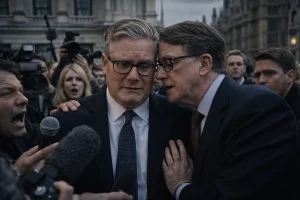
The controversy surrounding Peter Mandelson has become one of the most damaging issues for Starmer. Critics argue that appointing him despite previous scandals showed poor judgement and raised questions about who the Prime Minister chooses to trust.
Opponents believe the appointment undermined Labour’s image of honesty and change. For a government that promised to do politics differently, bringing back such a controversial figure appeared to many voters like a return to the past.
The issue has become even more serious because it reinforced existing concerns about Starmer’s leadership. Voters who already doubted his judgement saw the Mandelson appointment as further evidence that he was making the wrong decisions.
For opposition parties, the controversy has provided another opportunity to challenge the Prime Minister. They argue that it proves Starmer is more interested in protecting political allies than listening to the public.
Could Keir Starmer Survive Growing Calls to Resign?
Keir Starmer could still survive if he manages to improve public confidence in the coming months. Prime Ministers have recovered from poor polling before, especially if the economy improves or political opponents fail to offer a stronger alternative.
However, the current situation is serious. The Keir Starmer resignation poll shows that dissatisfaction is no longer limited to one issue. Voters are questioning his trustworthiness, competence and ability to lead. That combination is extremely difficult to reverse.
Labour’s Path Forward: Local Election Risks and Potential Leadership Successors
Political analysts, including Sir John Curtice, point to the upcoming local elections on May 7, 2026, as the ultimate survival test for the Prime Minister. With over 4,800 council seats contested across England, London, Scotland, and Wales, the results will dictate Starmer’s future.
- The Welsh & Scottish Risk: Polling suggests Labour could lose its lead in Wales to Plaid Cymru for the first time, while in Scotland, Anas Sarwar has already faced pressure to distance himself from the UK leadership.
- The Replacement Scenario: If Labour fails to hold its majorities in London and the Midlands, senior MPs are reportedly eyeing Angela Rayner or Wes Streeting as potential successors to rebuild public trust before the 2029 General Election.
What a Resignation Could Mean for Labour and UK Politics?
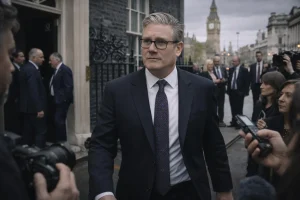
If Starmer resigned, Labour would almost certainly face a leadership contest. Senior ministers and rising political figures could compete to replace him. Such a contest could either help Labour renew itself or deepen divisions within the party.
A resignation would also have wider consequences for UK politics. Opposition parties would try to use the crisis to their advantage, while voters could become even more uncertain about the future direction of the country.
For now, Starmer remains Prime Minister. But unless his government can rebuild trust and convince voters that things are improving, the calls for him to resign are unlikely to disappear anytime soon.
FAQ
How many people think Keir Starmer should resign?
Recent polling suggests that a majority of Britons now believe Keir Starmer is more likely to leave office before the next General Election than remain as Prime Minister. Public dissatisfaction with his leadership has increased sharply.
Why has Keir Starmer’s popularity fallen so quickly?
His popularity has fallen because many voters believe Labour has failed to deliver the change promised at the General Election. Concerns over the cost of living, trust, competence and controversial decisions have all damaged his reputation.
Which Labour figures have criticised Keir Starmer?
The most notable criticism has come from Steve Wright, general secretary of the Fire Brigades Union, who became the first Labour-affiliated union leader to call publicly for Starmer to resign.
Why is the Peter Mandelson appointment controversial?
Critics argue that appointing Peter Mandelson despite previous scandals showed poor judgement. They believe it damaged Starmer’s image and reinforced concerns about his leadership.
Could Keir Starmer face a no-confidence vote?
There is currently no formal no-confidence vote planned, but growing pressure from unions, opposition parties and poor polling could increase the chances of one taking place in the future.
Who could replace Keir Starmer if he resigned?
Possible replacements could include senior Labour ministers and well-known figures within the party. However, no official leadership contest has been announced.
Would Keir Starmer resigning help Labour?
Some believe a new leader could improve Labour’s popularity and rebuild public trust. Others argue that changing Prime Minister too quickly could make Labour appear divided and unstable.
{
“@context”: “https://schema.org”,
“@graph”: [
{
“@type”: “BlogPosting”,
“mainEntityOfPage”: {
“@type”: “WebPage”,
“@id”: “https://www.prestonblog.co.uk/keir-starmer-resignation-poll”
},
“author”: {
“@type”: “Person”,
“name”: “Justin”
},
“publisher”: {
“@type”: “Organization”,
“name”: “Preston Blog”,
“logo”: {
“@type”: “ImageObject”,
“url”: “https://www.prestonblog.co.uk/wp-content/uploads/2025/12/Preston-Blog-Logo.png”
}
},
“headline”: “Keir Starmer Resignation Poll: Most Brits Expect PM to Go?”,
“image”: “https://www.prestonblog.co.uk/wp-content/uploads/2026/04/Keir-Starmer-Resignation-Poll.webp”,
“datePublished”: “2026-04-10”,
“dateModified”: “2026-04-10”
},
{
“@type”: “FAQPage”,
“mainEntity”: [
{
“@type”: “Question”,
“name”: “How many people think Keir Starmer should resign?”,
“acceptedAnswer”: {
“@type”: “Answer”,
“text”: “Recent polling suggests that a majority of Britons now believe Keir Starmer is more likely to leave office before the next General Election than remain as Prime Minister. Public dissatisfaction with his leadership has increased sharply.”
}
},
{
“@type”: “Question”,
“name”: “Why has Keir Starmer’s popularity fallen so quickly?”,
“acceptedAnswer”: {
“@type”: “Answer”,
“text”: “His popularity has fallen because many voters believe Labour has failed to deliver the change promised at the General Election. Concerns over the cost of living, trust, competence and controversial decisions have all damaged his reputation.”
}
},
{
“@type”: “Question”,
“name”: “Which Labour figures have criticised Keir Starmer?”,
“acceptedAnswer”: {
“@type”: “Answer”,
“text”: “The most notable criticism has come from Steve Wright, general secretary of the Fire Brigades Union, who became the first Labour-affiliated union leader to call publicly for Starmer to resign.”
}
},
{
“@type”: “Question”,
“name”: “Why is the Peter Mandelson appointment controversial?”,
“acceptedAnswer”: {
“@type”: “Answer”,
“text”: “Critics argue that appointing Peter Mandelson despite previous scandals showed poor judgement. They believe it damaged Starmer’s image and reinforced concerns about his leadership.”
}
},
{
“@type”: “Question”,
“name”: “Could Keir Starmer face a no-confidence vote?”,
“acceptedAnswer”: {
“@type”: “Answer”,
“text”: “There is currently no formal no-confidence vote planned, but growing pressure from unions, opposition parties and poor polling could increase the chances of one taking place in the future.”
}
},
{
“@type”: “Question”,
“name”: “Who could replace Keir Starmer if he resigned?”,
“acceptedAnswer”: {
“@type”: “Answer”,
“text”: “Possible replacements could include senior Labour ministers and well-known figures within the party. However, no official leadership contest has been announced.”
}
},
{
“@type”: “Question”,
“name”: “Would Keir Starmer resigning help Labour?”,
“acceptedAnswer”: {
“@type”: “Answer”,
“text”: “Some believe a new leader could improve Labour’s popularity and rebuild public trust. Others argue that changing Prime Minister too quickly could make Labour appear divided and unstable.”
}
}
]
}
]
}