
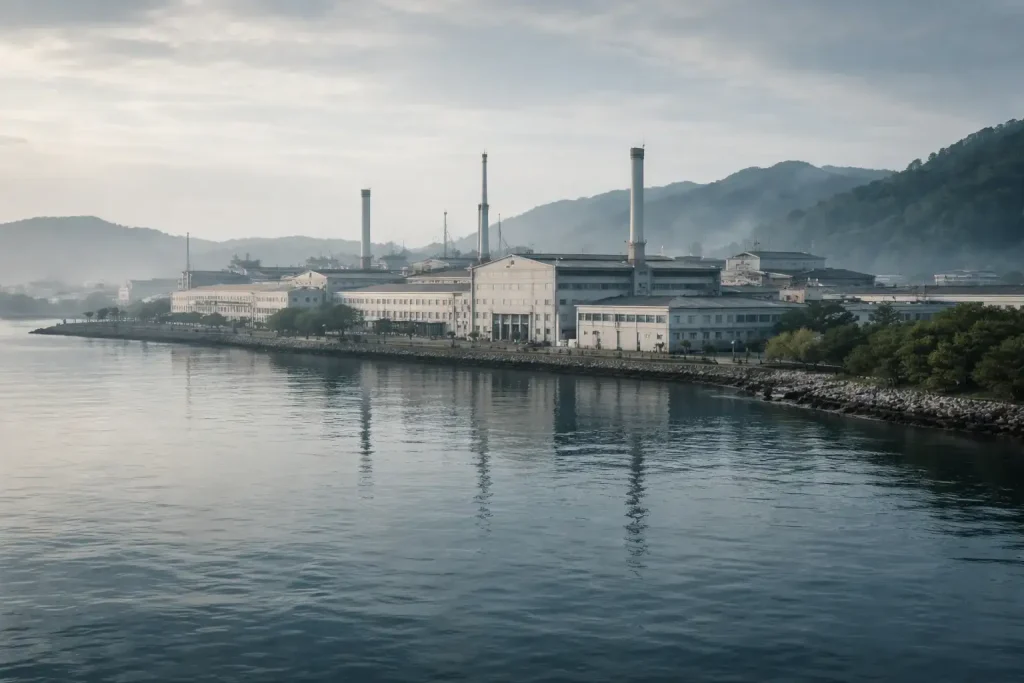
Can a company move forward without turning its back on the past? This is the difficult balancing act that Nissan Motor Co., Ltd. now faces with its decision to close the Oppama vehicle production plant in Yokosuka, Japan, by the end of fiscal year 2027 (March 2028).
As one of the automaker’s oldest and most historically significant facilities, Oppama has produced over 17.8 million vehicles since it began operations in 1961.
The closure is part of “Re:Nissan”, a wider global restructuring strategy aimed at reducing manufacturing capacity, cutting operational costs, and preparing the company for the evolving demands of the global automotive industry.
The plan comes in the wake of prolonged financial challenges, falling vehicle sales in key markets, and increasing pressure to transition to leaner, more resilient production models.
Nissan’s move is both strategic and symbolic. It marks a turning point for a company that has long been a symbol of Japanese automotive excellence.
What is the Re: Nissan recovery strategy, and how does it affect global operations?
The Re: Nissan plan is more than a cost-cutting exercise; it’s a foundational overhaul of the company’s global footprint. The restructuring is designed to reduce Nissan’s annual production capacity from 3.5 million to 2.5 million units globally (excluding China) and raise plant utilisation to around 100%.
This shift in manufacturing philosophy represents a move away from scale and volume towards profitability and sustainability. The company will also reduce the total number of global production plants from 17 to 10, streamlining operations across continents.

CEO Ivan Espinosa described the move as “a tough but necessary decision”, acknowledging the emotional weight it carries, especially for long-standing employees and communities connected to the Oppama facility. He further added:
“It wasn’t easy for me or for the company, but I believe it’s a vital step toward overcoming our current challenges and building a sustainable future. The Oppama Plant is a proud part of our history, and its legacy will endure.”
Through this transformation, Nissan aims to become more agile, better positioned to respond to shifts in the industry, especially the shift toward electric vehicles (EVs).
When will vehicle production end at the Oppama Plant?
The official closure of the Oppama plant is set for the end of fiscal year 2027, which concludes in March 2028. Nissan has confirmed that until then, the plant will continue to operate at its usual capacity, focusing on the production of models such as the Nissan Note and Note Aura.
This extended timeline allows the company to manage the transition in a measured and strategic way. It also provides Nissan with the flexibility to transfer production gradually to its Kyushu plant in Fukuoka Prefecture, which is better equipped to handle newer and more sustainable manufacturing processes.
The timeline for the closure is outlined in the table below:
| Event | Date |
| Announcement | December 2025 |
| Final Year of Production | Fiscal Year 2027 |
| Full Production Shutdown | By March 2028 |
| Model Production Transfer | To Nissan Motor Kyushu (FY2027–FY2028) |
Why was the Oppama plant chosen for closure instead of other Nissan facilities?
Nissan’s decision to close the Oppama plant was not arbitrary. It was the result of an extensive internal analysis considering factors such as operational costs, plant utilisation rates, and investment potential.
Despite its historical legacy, the Oppama plant was deemed less cost-effective and less adaptable for future vehicle manufacturing needs. Nissan concluded that consolidating production at the Kyushu plant would deliver a stronger return on investment, while also supporting higher output efficiency and environmental targets.
This strategic relocation will allow Nissan to build both current and next-generation models under more technologically advanced, automated, and energy-efficient conditions.
How will the closure affect employees and the local community in Yokosuka?
The closure will have a significant social and economic impact. Approximately 2,400 employees currently work at the Oppama plant, many of whom have served Nissan for decades. The company has promised that all existing staff will remain employed until the end of fiscal year 2027, and it has pledged to communicate clearly about future employment options once a final decision has been reached.

Nissan plans to consult with the employee union and establish transparent employment transition policies. These may include retraining, redeployment to other Nissan facilities, or early retirement packages.
The local community in Yokosuka, which has long benefited economically from the presence of the plant, will undoubtedly feel the effects of the closure. Local businesses that rely on plant activity, from suppliers to cafes and small services, will also experience a downturn.
Nonetheless, Nissan has made it clear that it will retain its other facilities in the Oppama district, including the Nissan Research Center, GRANDRIVE test track, the crash test facility, and Oppama Wharf, ensuring that some economic activity continues in the area.
What will happen to the production models and operations currently at Oppama?
The plant currently manufactures two key models: the Nissan Note and the Note Aura. These vehicles will continue to be produced at Oppama until the end of fiscal year 2027, after which all manufacturing will be moved to the Kyushu plant.
In addition, Nissan has also confirmed:
- The NV200 model, currently produced at the Shonan Plant, will end production in FY2026.
- A successor to the NV200 is planned for release in FY2027.
- The AD model consignment will end in October 2025.
This transition represents the final stage of Nissan’s production consolidation in Japan under the Re:Nissan plan. Once completed, all strategic consolidations will have been executed.
How does this closure align with Nissan’s electric vehicle and sustainability goals?
Oppama’s closure is as much about environmental strategy as it is about economics. As Nissan intensifies its efforts in the electric vehicle space, modernising its facilities becomes essential. Older plants like Oppama were not originally designed for the specific demands of EV production, such as battery assembly lines, lightweight component manufacturing, and modular production platforms.
By moving operations to newer facilities like Kyushu, Nissan can align more closely with its target to become carbon-neutral by 2050. The company’s EV roadmap includes:
- 19 new electric vehicle models by 2030
- Major investments in solid-state battery technology
- Stronger integration of renewable energy in its plants
The closure enables Nissan to reallocate resources more effectively and invest in green production infrastructure. It also supports the brand’s global repositioning as a leader in sustainable automotive manufacturing.
What will become of the Oppama site after production ends?
As for the physical site of the plant, Nissan has not yet made any final announcements. However, company officials have confirmed that they will explore a range of future uses for the space.
Possibilities under consideration include:
- Establishing a technology or R&D centre
- Leasing the site to external industrial tenants
- Developing a training campus or EV education hub
The plant’s location, scale (over 547,000㎡), and infrastructure make it a valuable asset for Nissan, even post-production. Whether it remains an industrial hub or transforms into something entirely new, its strategic significance will likely remain intact.
How significant is the Oppama Plant in Nissan’s history?
The Oppama Plant has a storied past, one that is deeply interwoven with Nissan’s growth as a global manufacturer. Opened in October 1961, the plant was responsible for producing some of the most iconic vehicles in Nissan’s line-up, from the Datsun Bluebird to the Nissan Leaf, which made history as one of the world’s first mass-market electric vehicles.
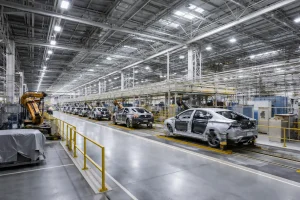
Select Historical Milestones of the Oppama Plant:
| Year | Milestone |
| 1961 | Operations begin with Datsun Bluebird |
| 1978 | 5 million vehicles produced |
| 1992 | Crosses 10 million vehicles mark |
| 2007 | Completes GRANDRIVE testing facility |
| 2010 | Begins production of Nissan Leaf |
| 2021 | Starts production of Note Aura |
Beyond numbers, the plant has played a key role in technological innovation, safety testing, and workforce development. It has been a training ground for engineers and a symbol of Japanese industrial strength.
As CEO, Espinosa noted:
“The legacy of the Oppama plant will live on in the products we build, the people we’ve trained, and the technologies we’ll carry forward into the next generation.”
Frequently Asked Questions
What is the exact date the Oppama plant will close?
Nissan plans to stop vehicle production at the Oppama plant by March 2028, the end of fiscal year 2027.
How many employees will be affected?
Approximately 2,400 employees currently work at the plant. Nissan has pledged to retain all employees until closure and to develop a clear transition policy.
Will the Oppama site be reused?
While Nissan has not announced specific plans, it will explore multiple redevelopment options for the site, potentially involving R&D or logistics.
What are the current models produced at Oppama?
As of now, the plant produces the Nissan Note and Note Aura. These will transition to the Kyushu plant.
Will other plants in Japan also close?
No further closures in Japan have been announced. With the closure of Oppama, Nissan concludes its domestic plant consolidation under Re:Nissan.
What happens to the other facilities in the Oppama district?
Facilities such as the Nissan Research Centre, GRANDRIVE, and Oppama Wharf will continue operations as usual.
How does this affect Nissan’s electric vehicle strategy?
The closure allows Nissan to concentrate EV production in more modern, efficient facilities, supporting its goal of becoming carbon neutral by 2050.