
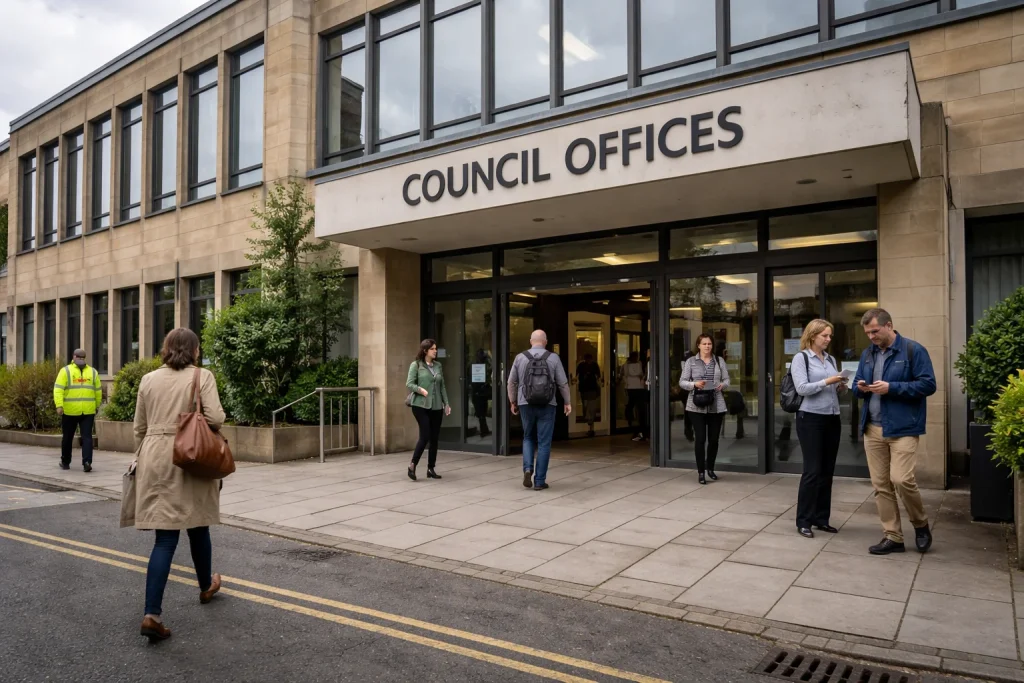
🔴 NJC PAY UPDATE ALERT
Last Updated: February 2026
2026/27 NJC Pay Claim Under Negotiation: Unions requesting £3,000 or 10% rise, £15 minimum hourly rate, and improved working conditions.
Negotiations between UNISON, GMB and Unite and the National Employers are ongoing. No final pay award has been confirmed yet, but any agreed increase is expected to be backdated to 1 April 2026. Employers’ formal response is anticipated in late February or early spring.
⏱️ Quick Overview: Unions have submitted a substantial claim, citing severe real-terms pay loss and recruitment pressures.
⚠️ Members are advised to stay updated through union communication channels and employer briefings. Industrial action may be considered if the final offer falls short of expectations.
Key Facts:
- Claim Submitted: 1 December 2025
- Main Ask: £3,000 or 10% rise (whichever is greater)
- Minimum Pay: £15 per hour proposal
- Other Elements: 2-hour working week reduction, extra annual leave, improved rights for support staff
The NJC covers around 1.4 million council and school employees. With pay having fallen by over 26% in real terms since 2010, unions argue that a significant uplift is essential to protect service quality and workforce stability.
This year’s negotiations come at a critical moment for local government, with rising costs, staffing shortages, and tightening council budgets shaping what could be one of the most pivotal pay rounds in more than a decade.
What Is the NJC Pay Award 2026/27 and Why Does It Matter?

The NJC Pay Award 2026/27 matters because it directly affects your pay and working conditions if you are employed in local government or schools across England, Wales, or Northern Ireland. Covering around 1.4 million workers, the award applies to roles such as teaching assistants, refuse collectors, social workers, and library staff.
This year’s negotiations are especially important for you because they come amid rising living costs, staff shortages, and increasing financial pressure on councils. The outcome will influence not only your earnings and household budget but also how well councils can recruit, retain, and support staff.
With strong union demands and limited public funding, the final decision will play a key role in shaping job security, morale, and long-term workforce planning across the sector.
What Are the Trade Unions Asking for in the 2026/27 Pay Claim?
The proposals for the NJC pay award 2026/27 show that trade unions are pushing for a settlement that tackles the financial pressure you and your colleagues have faced for years.
The claim aims to boost take-home pay, improve working conditions, and recover value lost to below-inflation rises. If rising living costs and heavier workloads have affected you, these demands reflect what many frontline workers are experiencing.
Headline demand: £3,000 or 10% increase
The joint trade unions, UNISON, GMB and Unite, have put forward one of their most ambitious claims in recent years, calling for a minimum uplift of £3,000 or 10%, whichever is greater. This structure ensures that lower-paid staff receive meaningful support while higher spinal column points still benefit proportionally.
The unions argue that years of below-inflation settlements have significantly eroded the value of your pay, leaving many staff unable to keep pace with rising household expenses. Their message is clear: this uplift is necessary to restore dignity, retain experienced workers and maintain reliable public services.
One union negotiator described the situation succinctly:
“We’ve reached the point where doing nothing is no longer an option.”
Additional conditions affecting working time and leave
Alongside the salary uplift, unions are calling for improvements that would reshape your working conditions for the better. These include:
- A two-hour reduction in the standard working week
- One additional day of annual leave
- The right for school support staff to take one paid leave day during term-time
- The abolition of the Level 1 Teaching Assistant role, upgrading all staff to Level 2
These proposals aim to address rising workloads, acknowledge the growing complexity of support roles and offer you a healthier work-life balance, especially in environments where stress and burnout have become common concerns.
How Does the 2026/27 Pay Claim Compare With Previous Pay Awards?
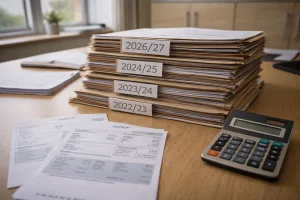
The context for the NJC pay award 2026/27 becomes clearer when you compare it with the pay outcomes local government staff have received in recent years.
Pay outcomes from 2023 to 2025
Over recent years, local government pay awards have provided limited relief but have largely failed to keep pace with inflation and rising living costs.
| Year | Pay Award | Notes |
| 2023 | Flat-rate £2,226 increase | Helped lower-paid staff most, but quickly eroded by inflation |
| 2024 | Average uplift of 3.6% | Fell short of cost-of-living increases |
| 2025 | 3.2% increase | Accepted reluctantly due to ballot turnout rules |
While these increases offered some short-term support, many staff continued to feel financially stretched.
Real-terms wage erosion across NJC roles
Union-backed research highlights the longer-term impact on pay:
- NJC pay has fallen 26% in real terms since 2010
- Average pay value has dropped by around £13,800
- Several lower pay points now sit below the Real Living Wage
As a result, many frontline workers report struggling to cover basic household costs, even in full-time roles, strengthening the case for a pay settlement that reflects modern living expenses.
Why Are Unions Calling for a £15 Minimum Hourly Rate?
Unions are calling for a £15 minimum hourly rate because the gap between NJC pay and everyday living costs has widened significantly. With inflation still high, lower-paid staff are finding it harder to maintain a basic standard of living.
The expected rise in the National Living Wage to around £12.71 in 2026 brings it close to the lowest NJC pay point, reducing councils’ ability to compete for workers.
Impact on NJC Pay Structure and Frontline Roles
- In-work poverty: Many lower spinal column points no longer provide enough income to cover essential household costs, even in full-time roles.
- Recruitment and retention pressures: Councils are struggling to attract staff as NJC rates fall behind comparable roles in the wider labour market.
- Competitive pay positioning: Raising the minimum rate above £15 would help re-establish NJC roles as viable, respected, and sustainable careers.
For unions, £15 represents a realistic floor for dignity at work. This shift could mark a turning point for councils reliant on entry-level staff to deliver essential community services.
What Economic Pressures Are Shaping the 2026/27 NJC Pay Claim?

Rising living costs continue to place sustained pressure on local government workers while also stretching council budgets. These economic conditions are a major factor shaping the scale and urgency of the NJC pay claim for 2026/27.
Inflation, energy prices, and household expenses remain stubbornly high. In 2025 alone:
- Water bills increased by 26%
- Food prices rose by 5.9%
- Rents jumped 5.7%
- Energy costs remained volatile
With RPI forecast to average 3.5% in 2026, workers need pay rises that genuinely protect real earnings. At the same time, the government’s funding settlement provides councils with a 5.8% cash increase, equivalent to 3.5% in real terms, which is insufficient to fund a 10% pay rise without extra support.
However, analysis from Landman Economics suggests that over 50% of any pay award would return to the Treasury through taxation and reduced welfare spending, indicating that higher pay is economically sustainable.
How Is the Recruitment and Retention Crisis Affecting Local Government?
Local government is facing a growing recruitment and retention crisis that is placing serious strain on council services. Long-term pay restraint, rising workloads, and competition from other sectors have made it harder for councils to attract and keep skilled staff.
The Scale of the Staffing Challenge
Local authorities are dealing with severe workforce pressures:
- Workforces are 31.5% smaller than in 2012, reducing service capacity
- Fewer than 5% of employees are under 25, creating long-term sustainability risks
- Social care vacancy rates exceed 8%, leaving critical roles unfilled
- Turnover in outsourced care reaches 24%, disrupting continuity of care
Impact on Frontline Services
These shortages are affecting social work, adult and children’s care, housing support, education, and environmental services.
A council manager warned:
“Every unfilled role increases pressure on remaining staff and directly impacts the quality of services residents rely on.”
Without a competitive pay offer, councils risk deepening shortages and weakening frontline service delivery.
Could a Multi-Year NJC Pay Deal Offer More Stability?

A multi-year NJC pay deal is being considered as a way to bring greater stability to both councils and workers. Unions have indicated they are open to a three-year settlement, provided it includes safeguards that protect pay against future economic shocks.
This approach could reduce the uncertainty of annual negotiations while offering clearer long-term planning for local authorities.
Under the proposed framework:
- Year one would deliver either a £3,000 increase or a 10% rise, alongside a £15 minimum hourly rate
- Years two and three would link pay rises to RPI, with additional uplifts of 3% and 2% respectively
A crucial element would be a reopener clause, allowing talks to resume if inflation rises sharply. This structure could give councils budget certainty while reassuring staff that pay will keep pace with living costs.
When Will the Final NJC Pay Award for 2026/27 Be Announced and Backdated?
The NJC pay award process follows a fairly consistent annual timetable, although negotiations can extend depending on employer and union positions. For 2026/27, the expected schedule suggests that discussions will run well into 2026 before a final agreement is reached.
Once a settlement is agreed, the pay award is almost always backdated to 1 April 2026, ensuring employees receive the correct pay for the full financial year. Councils typically apply the uplift within one to three payroll cycles, depending on internal approval processes and HR systems.
Expected Timeline for the NJC Pay Award 2026/27
| Stage | Expected Timing |
| Claim formally submitted | December 2025 |
| Employer consultation period | December 2025 – January 2026 |
| National Employers meeting | Late February 2026 |
| Initial pay offer expected | Spring 2026 |
| Agreement and implementation | Summer 2026 |
While exact dates may shift, this timeline provides a realistic indication of when staff can expect clarity on pay and backdated payments.
What Happens If Negotiations Fail and Employers Reject the Claim?

If employers refuse to move beyond an initial pay offer, unions may escalate their response to increase pressure and secure further negotiations. This escalation usually follows a staged process designed to demonstrate member support and influence decision-makers.
Potential union actions include:
- Online and workplace member consultations
- Formal industrial action ballots
- Strike action or action short of a strike
- Increased political pressure on the central government
Recent ballots suggest strong support for action, with some unions reporting approval rates of up to 90% for industrial measures. This level of backing strengthens unions’ negotiating positions and signals the depth of concern among staff.
If no agreement is reached, talks can extend well into the summer, delaying implementation of any pay rise. However, once a settlement is eventually agreed, pay awards are typically backdated, ensuring workers receive the full increase for the relevant financial year.
Conclusion
The NJC pay award 2026/27 will shape the future of local government employment at a pivotal moment. With inflation pressures, recruitment challenges and decades of real-terms decline, this pay round carries exceptional significance.
Whether through a one-year settlement or a multi-year framework, unions are pressing for meaningful investment in staff, fair wages and improved working conditions.
As negotiations progress, the outcome will influence not only workers’ livelihoods but also the long-term health of essential public services. For now, council and school staff can expect robust debate, intense scrutiny and a strong push for a settlement that reflects both economic realities and social needs.
FAQs About NJC Pay Award 2026/27
How will the 2026/27 pay award apply to part-time and term-time staff?
Part-time and term-time workers receive the same percentage or flat-rate uplift, applied pro rata according to contracted hours.
Will the proposed working-week reduction affect contracted hours across all councils?
Yes, if agreed, the reduction would apply across all NJC contracts, although implementation timelines may vary locally.
Are school support staff entitled to the same uplifts under NJC conditions?
Yes, school support staff covered by NJC arrangements would receive the same pay increase and contractual improvements.
Do higher spinal column points benefit differently from a flat-rate £3,000 increase?
Higher scales gain a smaller percentage uplift from a flat amount, which is why unions specify “£3,000 or 10%, whichever is higher.”
How are local authority budgets influencing the speed of negotiations?
Councils are assessing affordability based on the 2026/27 funding settlement, which may delay employer responses.
Will any changes be implemented automatically or require council-level approval?
Once the NJC reaches agreement, councils must apply the award, but some implementation steps, such as local HR updates, can vary.
How would the NJC award interact with Real Living Wage adjustments in 2026?
If the NJC minimum remains below the Real Living Wage, councils that are accredited Living Wage employers may need to top up pay rates.
{
“@context”: “https://schema.org”,
“@graph”: [
{
“@type”: “FAQPage”,
“mainEntity”: [
{
“@type”: “Question”,
“name”: “How will the 2026/27 pay award apply to part-time and term-time staff?”,
“acceptedAnswer”: {
“@type”: “Answer”,
“text”: “Part-time and term-time workers receive the same percentage or flat-rate uplift as full-time staff applied pro rata according to their contracted hours.”
}
},
{
“@type”: “Question”,
“name”: “Will the proposed working-week reduction affect contracted hours across all councils?”,
“acceptedAnswer”: {
“@type”: “Answer”,
“text”: “Yes. If agreed, the working-week reduction would apply across all NJC contracts although implementation timelines may vary between councils.”
}
},
{
“@type”: “Question”,
“name”: “Are school support staff entitled to the same uplifts under NJC conditions?”,
“acceptedAnswer”: {
“@type”: “Answer”,
“text”: “Yes. School support staff covered by NJC arrangements would receive the same pay increase and contractual improvements as other NJC employees.”
}
},
{
“@type”: “Question”,
“name”: “Do higher spinal column points benefit differently from a flat-rate £3,000 increase?”,
“acceptedAnswer”: {
“@type”: “Answer”,
“text”: “Yes. Higher spinal column points receive a smaller percentage uplift from a flat-rate increase which is why unions propose “£3,000 or 10%, whichever is higher.””
}
},
{
“@type”: “Question”,
“name”: “How are local authority budgets influencing the speed of negotiations?”,
“acceptedAnswer”: {
“@type”: “Answer”,
“text”: “Local authorities are assessing affordability based on the 2026/27 funding settlement which may slow employer responses during negotiations.”
}
},
{
“@type”: “Question”,
“name”: “Will any changes be implemented automatically or require council-level approval?”,
“acceptedAnswer”: {
“@type”: “Answer”,
“text”: “Once the NJC reaches an agreement councils must apply the award but some implementation steps, such as local HR updates, may vary at council level.”
}
},
{
“@type”: “Question”,
“name”: “How would the NJC award interact with Real Living Wage adjustments in 2026?”,
“acceptedAnswer”: {
“@type”: “Answer”,
“text”: “If the NJC minimum pay rate remains below the Real Living Wage councils accredited as Living Wage employers may need to top up pay rates accordingly.”
}
}
]
},
{
“@type”: “BlogPosting”,
“mainEntityOfPage”: {
“@type”: “WebPage”,
“@id”: “https://www.prestonblog.co.uk/njc-pay-award-2026-27/”
},
“headline”: “NJC Pay Award 2026/27 Explained: Latest Updates, Claims and Timelines”,
“image”: “https://www.prestonblog.co.uk/wp-content/uploads/2026/02/NJC-Pay-Award-2026-27-Explained-Latest-Updates-Claims-and-Timelines.webp”,
“datePublished”: “2026-02-10”,
“dateModified”: “2026-02-10”,
“author”: {
“@type”: “Person”,
“name”: “Jennifer”
},
“publisher”: {
“@type”: “Organization”,
“name”: “Preston Blog”,
“logo”: {
“@type”: “ImageObject”,
“url”: “https://www.prestonblog.co.uk/wp-content/uploads/2025/12/Preston-Blog-Logo.png”
}
}
}
]
}