

- Authority: Police Remuneration Review Body (PRRB)
- Main Debate: 2.5%, 3.5%, or 7% police pay rise
- Coverage: England and Wales police officers
- Key Focus: Salary changes, allowances, and pay reform
Is There a Police Pay Rise in 2026?

Discussions about the police pay rise for 2026 are currently ongoing, with several organisations involved in reviewing potential salary increases for officers across England and Wales.
Police pay is set through a national pay structure, meaning decisions are not negotiated locally by individual forces. Instead, the Police Remuneration Review Body (PRRB) assesses evidence submitted by police leaders, government representatives, and staff associations before making recommendations.
In early 2026, the National Police Chiefs’ Council (NPCC) submitted its proposal, arguing that pay should reflect the increasing complexity of modern policing and the responsibilities officers carry while protecting the public.
Deputy Chief Officer Philip Wells, who leads on pay and conditions for the NPCC, explained the reasoning behind the proposal:
“We are calling for a settlement that keeps pace with the cost of living, recognises the unique demands of policing, and properly rewards officers for the increasingly complex work they carry out to keep the public safe.”
However, the final decision will only be made once the PRRB completes its review and the government considers its recommendations.
How Much Is the Proposed Police Pay Rise for 2026?
The current debate around the police pay rise 2026 centres on several possible outcomes. Different organisations have proposed varying figures depending on financial pressures, workforce needs, and broader economic conditions.
Main Pay Rise Proposals
The proposals currently being discussed include:
- 3.5% pay increase proposed by the National Police Chiefs’ Council
- 2.5% increase if funding is limited, according to the NPCC submission
- 7% minimum pay uplift requested by the Police Federation of England and Wales
While these figures differ significantly, they all aim to address challenges facing modern policing, including recruitment, retention, and officer wellbeing.
Why Police Leaders Proposed 3.5%?
Police leaders have argued that a 3.5% uplift across all ranks would strike a balance between rewarding officers and maintaining sustainable police budgets.
Forces across the country are dealing with rising operational costs, increased demand, and limited funding. Any salary increase above a certain level must therefore be fully funded by government resources to avoid placing pressure on frontline services.
The NPCC submission highlights that if the pay rise is not fully funded, forces may only be able to support a 2.5% increase without affecting policing operations.
Why the Federation Wants 7%?
The Police Federation of England and Wales has taken a stronger position, calling for a minimum 7% pay increase for the next three years.
According to the Federation, officer pay has declined significantly in real terms since 2010. Many officers now report financial difficulties due to rising living costs and stagnant wages over the past decade.
Jess Davies, chair of the West Midlands Police Federation, emphasised the urgency of addressing these concerns:
“A rise of 3.5 per cent amounts to another real-terms pay cut and is going to do nothing to stem the number of officers leaving policing.”
The Federation argues that without a more substantial pay rise, the profession could face an ongoing retention crisis.
When Could the 2026 Police Pay Increase Start?

If approved, the proposed police pay rise for 2026 would likely take effect from 1 September 2026. This timeline follows the standard review cycle used by the PRRB.
Each year, evidence is submitted early in the year, allowing the review body to analyse economic conditions, workforce data, and budget considerations. After this process, the PRRB provides recommendations to the government, which then determines the final pay award.
Although the process may appear lengthy, it ensures that police salaries are reviewed within a structured national framework.
The key stages typically include:
| Stage | Description |
| Evidence Submission | Police leaders and staff associations submit pay proposals |
| PRRB Review | The review body examines economic and workforce evidence |
| Government Decision | Ministers consider recommendations and confirm pay award |
| Implementation | The approved pay rise is applied to the police salary scales |
If the current proposals move forward without significant delays, officers could begin receiving updated salaries from September 2026.
How Much Will Police Officers Earn After the Pay Rise?
One of the most common questions surrounding the police pay rise is how much officers could actually earn after the increase.
While exact salary figures will depend on rank, experience, and location, it is possible to estimate potential outcomes using the proposed percentages.
Estimated Salary Increase Examples
The following table illustrates how salaries might change depending on the final pay award.
| Current Salary | After 2.5% Rise | After 3.5% Rise | After 7% Rise |
| £30,000 | £30,750 | £31,050 | £32,100 |
| £40,000 | £41,000 | £41,400 | £42,800 |
| £50,000 | £51,250 | £51,750 | £53,500 |
These figures are simplified examples designed to show the difference between each proposal. Actual pay scales may vary depending on individual career progression within the national salary structure.
Typical Police Salary Progression
Police officers progress through several pay points during their career. The following table shows approximate salary levels across different ranks.
| Rank | Approximate Salary Range |
| Police Constable | £28,000 – £50,000 |
| Police Sergeant | £45,000 – £55,000 |
| Police Inspector | £55,000 – £65,000 |
A confirmed pay rise would increase these figures proportionally across the entire pay structure.
What Would a 2.5%, 3.5%, or 7% Police Pay Rise Mean in Real Money?
The percentage increase often discussed in pay negotiations can sometimes feel abstract. In practice, even small percentage differences can significantly affect annual earnings.
To understand the impact of the police pay rise, it helps to look at how each proposed figure translates into real income changes.
| Salary | 2.5% Increase | 3.5% Increase | 7% Increase |
| £35,000 | +£875 | +£1,225 | +£2,450 |
| £45,000 | +£1,125 | +£1,575 | +£3,150 |
| £50,000 | +£1,250 | +£1,750 | +£3,500 |
For many officers, these increases can influence everyday living costs, mortgage payments, and long-term financial stability.
However, critics argue that smaller increases may still fail to match inflation or restore the value of salaries lost over previous years.
Why Are Police Leaders Asking for 3.5% While the Federation Wants 7%?
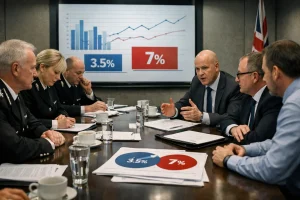
The difference between the 3.5% proposal and the 7% demand reflects contrasting priorities within policing.
Police leaders must balance officer pay with the financial realities of running police forces. Budgets are stretched across various areas, including technology, equipment, recruitment, and operational costs.
At the same time, staff associations such as the Police Federation focus primarily on the welfare and financial wellbeing of officers.
This difference in perspective explains why the two groups have suggested different pay figures. Leaders aim for a figure they believe is affordable and sustainable, while the Federation emphasises the need to reverse long-term pay erosion.
Jess Davies highlighted the potential consequences of failing to address the issue:
“We are facing losing more and more experienced officers if the Government doesn’t commit to sustained investment in officer pay.”
Is the Proposed Police Pay Rise Enough for UK Officers?
The question of whether the police pay rise 2026 is sufficient depends largely on economic conditions and the experiences of officers on the ground.
Research from the Police Federation suggests that officers are now around 21% worse off in real terms than they were in 2010. Rising housing costs, energy bills, and everyday expenses have placed significant pressure on many households.
Some officers have reported financial difficulties, with surveys indicating that a portion of the workforce struggles to cover basic living expenses.
Police leaders recognise these challenges but must also consider the wider public sector pay environment and UK government spending limits.
Deputy Chief Officer Philip Wells summarised the balancing act facing policymakers:
“Full funding is vital to protect frontline services while ensuring officers are supported and motivated in their roles.”
Ultimately, the PRRB will need to weigh these competing factors when making its recommendation.
What Other Police Pay and Allowance Changes Are Being Discussed?
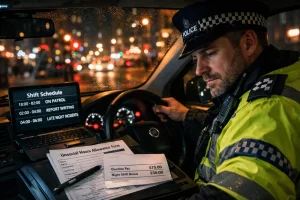
In addition to the base police pay rise, several proposals have been put forward to reform allowances and improve working conditions for officers.
Some of the key suggestions include:
- Doubling the unsocial hours allowance from 10% to 20% for night and weekend work
- Introducing a military-style “P Factor” to recognise the risks associated with policing
- Expanding annual leave and long-service leave options
- Providing paid compensation or time off in lieu for court appearances with short notice
These proposals aim to recognise the unique challenges faced by police officers, particularly those working irregular shifts or dealing with high-risk situations.
Why Does Police Pay Matter for Recruitment, Retention and Public Safety?
Police pay levels can have a direct impact on the long-term stability of the workforce.
Recent evidence submitted to the PRRB highlights several concerning trends within policing. Nearly half of all constables have five years of service or less, suggesting that many experienced officers are leaving the profession earlier than expected.
At the same time, forces have reported increasing levels of:
- Mental health-related sickness absence
- Physical assaults on officers
- Pressure from the rising demand for policing services
When experienced officers leave, forces must rely more heavily on newly recruited staff who may still be developing their skills and experience.
Over time, this can affect operational effectiveness and place additional pressure on remaining officers.
Ensuring competitive pay is therefore seen as a key factor in maintaining a strong and stable police workforce.
What Happens Next in the Police Pay Review Process?
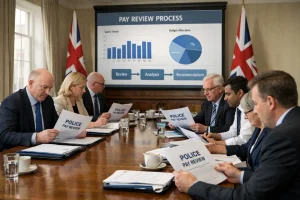
The next step in determining the police pay rise for 2026 is the completion of the PRRB review process.
After examining submissions from police leaders, staff associations, and government representatives, the review body will produce a set of recommendations.
These recommendations are then considered by the government before a final decision is announced.
Once confirmed, the updated pay award is applied to the national police salary framework, ensuring that all forces across England and Wales implement the same changes.
What Should Police Officers Watch for Next?
Officers interested in the police pay rise 2026 should monitor several key developments over the coming months.
Important updates may include announcements related to the PRRB decision, confirmation of government funding, and the publication of updated salary scales.
Until a final decision is announced, the current figures remain proposals rather than confirmed pay awards.
However, the ongoing debate highlights the growing recognition that police pay will continue to play an important role in shaping the future of the profession.
Conclusion
The police pay rise 2026 debate highlights growing concerns about officer wellbeing, recruitment, and long-term policing sustainability in the UK.
Police leaders have proposed a 3.5% pay increase from September 2026, while the Police Federation is pushing for 7% to address years of real-terms pay decline. The final decision will depend on the Police Remuneration Review Body and the government.
For officers across England and Wales, the outcome could significantly affect earnings, morale, and long-term financial stability.
FAQs About Police Pay Rise
When will the police pay rise for 2026 be confirmed?
The final decision is expected after the Police Remuneration Review Body completes its review and the government announces the official pay award.
Will all police ranks receive the same percentage increase?
Yes, police pay awards typically apply across the entire national pay structure, meaning all ranks receive the same percentage uplift.
Can police officers strike if they disagree with the pay decision?
No. Police officers in the UK are not allowed to strike, which is why the national pay review process is used instead.
Does the police pay rise include allowances?
The base pay rise is separate from allowances, although some proposals include changes to unsocial hours payments and other benefits.
How often are police salaries reviewed?
Police salaries are normally reviewed annually through the Police Remuneration Review Body process.
Why is there a debate about police pay increases?
The debate arises from concerns about officer retention, rising living costs, and the need to balance pay increases with police budgets.
Will the police pay rise affect pensions?
Yes, any increase in salary can influence pension contributions and future pension calculations because police pensions are linked to pay levels.