
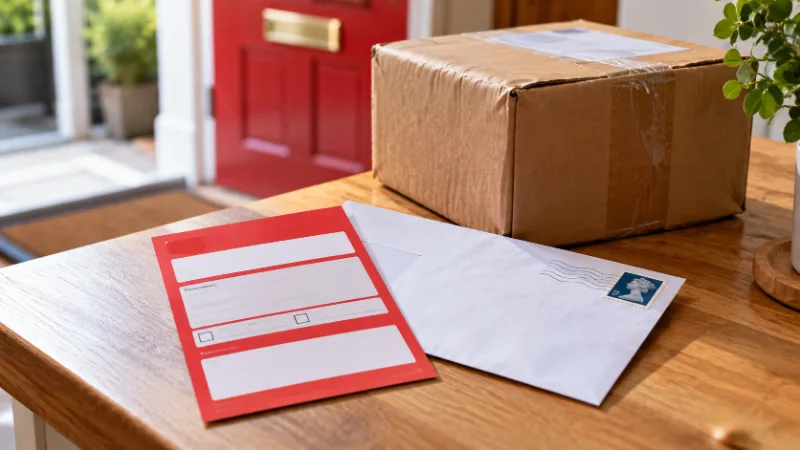
If you have received a Royal Mail Fee to Pay card but were not expecting a letter or parcel, one of the first questions is likely to be: Royal Mail Fee to Pay, who is the sender?
Unfortunately, the sender may not always be obvious from the Fee to Pay notice itself.
Royal Mail’s official Fee to Pay guidance explains the charge and payment process, but it does not guarantee that the card will identify who posted the item. Before paying, it is sensible to check your recent purchases, dispatch emails and tracking information for clues.
A Fee to Pay notice can be issued when insufficient postage was paid, no valid postage was attached, an invalid or non-barcoded stamp was used, or customs charges are due on an international item.
How to Find Out Who Sent the Royal Mail Item?
Receiving an unexpected Royal Mail Fee to Pay card does not automatically mean something is wrong.
The sender could be an online retailer, marketplace seller, family member, overseas business or another organisation you have recently dealt with.
The easiest way to identify the likely sender is to work backwards from your recent activity.
Check Orders, Emails And Tracking
Start by checking anything you have ordered recently. An item may have been dispatched several days or even weeks earlier, making it easy to forget about.
Useful places to check include:
- Online Retailer Accounts: Review your recent purchases and delivery status.
- Marketplace Accounts: Check orders placed through platforms such as eBay, Etsy or other marketplaces.
- Dispatch Emails: Search your inbox for terms such as “dispatched”, “shipped”, “Royal Mail” or “tracking”.
- Payment History: Check recent card, bank or PayPal transactions if you cannot remember the retailer.
- Household Members: Ask whether someone at your address ordered something using your name or address.
If you have a tracking or barcode number, checking Royal Mail tracking may also help you connect the item with an expected delivery.
Tracking information will not necessarily reveal the sender’s identity, but it can provide useful clues about when the item entered the network or its delivery progress.
If you are expecting something from outside the UK, also check whether the Fee to Pay relates to customs rather than missing postage. Royal Mail says customs charges can depend on the contents of the item, its origin and who sent it.
Can Royal Mail Tell You Who the Sender Is?
Royal Mail’s published Fee to Pay guidance does not promise that customers will be given the sender’s identity before paying.
You can contact Royal Mail if the notice is unclear, particularly if you have a reference number or barcode. However, you should not assume customer service will always be able to identify the sender for you.
If you cannot identify the sender, check whether you are genuinely expecting anything before deciding whether to pay. Avoid assuming that an unfamiliar Fee to Pay notice must relate to an important parcel.
How Much Is a Royal Mail Fee to Pay in 2026?
The amount depends on the size of the item and why the charge was applied.
As of 25 September 2026, Royal Mail publishes the following charges for unpaid or insufficient postage.
| Reason For Charge | Current Published Fee |
| Letter or Large Letter With No Postage or Counterfeit Stamp | £5.00 |
| Letter or Large Letter With Insufficient Postage | £1.50 |
| Letter or Large Letter With A Non-Barcoded Stamp | £2.50 |
| Small Parcel With No Postage or Counterfeit Stamp | £7.00 |
| Small Parcel With Insufficient Postage | £3.50 |
| Small Parcel With A Non-Barcoded Stamp | £3.50 |
| Medium Parcel | £1.50 Plus Incremental Postage Rounded To The Nearest 10p |
| Oversized Or Overweight Medium Parcel Within The Stated Category | £10.00 Fee |
| Royal Mail Customs Handling | £8.00 |
| Parcelforce Customs Handling | £12.00 |
| Full Customs Declaration For Goods Valued Over £900 | £25.00 Handling Fee |
For an oversized or overweight Medium Parcel, Royal Mail currently states that the £10 fee can apply where the parcel exceeds 61cm in length, 46cm in width, 46cm in depth or 20kg in weight, with packaging included in the measurement.
Will Fee to Pay Prices Increase in 2026?
Royal Mail has announced a number of wider price changes taking effect from 5 October 2026. These include changes affecting certain online and Post Office services, domestic parcel products, surcharges and correction charges.
However, that does not automatically mean every Royal Mail Fee to Pay charge shown above will increase on 5 October.
As of 25 September 2026, Royal Mail’s live Fee to Pay page continues to publish the charges shown in the table above. Royal Mail’s October announcement does not clearly state that every recipient Fee to Pay amount will change.
For that reason, someone receiving a card after a Royal Mail price change should check the amount printed on the notice and compare it with Royal Mail’s current Fee to Pay information.
Postal prices and correction charges can change over time, so an amount mentioned in an older article or forum discussion may no longer be current.
How Have Royal Mail Fee to Pay Rules Changed in 2026?
Several Royal Mail changes are taking place during 2026, although not all of them directly change the amount a recipient pays after receiving a grey Fee to Pay card.
One notable development is the October update to Royal Mail’s surcharges and correction charges. Royal Mail says some of these charges will change from 5 October 2026.
There is also an important change to how long certain items are kept for collection.
Changes To Holding And Collection Periods
Royal Mail currently states that items are generally held for 18 calendar days before being returned to the sender.
From 18 October 2026, the retention period will change for certain items delivered to a Post Office branch or Royal Mail Parcelshop at the request of the sender or recipient.
Those items will generally be available for collection for 10 days instead of 18 days.
Royal Mail says items held at a Customer Service Point will continue to be held for 18 days. This also includes a Post Office branch when it is acting as a Customer Service Point.
This distinction matters because simply saying that “Royal Mail now holds everything for 10 days” would be incorrect.
The location and type of collection arrangement can affect the applicable retention period.
If you receive a Fee to Pay notice, check the instructions and dates shown on your particular card rather than relying on an old retention period you have seen online.
How to Tell If a Royal Mail Fee to Pay Notice Is Genuine or a Scam?
Unexpected parcel payment requests are commonly used in phishing scams, so it is important to distinguish a genuine Royal Mail Fee to Pay request from a fake message.
Royal Mail’s current security guidance provides a particularly useful distinction.
For an item with an underpaid postage surcharge, Royal Mail says it normally leaves a grey Fee to Pay card and does not request that surcharge payment by email or text.
Customs charges are different. Royal Mail says it may send an email or SMS when a customs fee is due, but a grey Fee to Pay card will also be left.
Signs Of A Genuine Notice
A genuine situation may include:
- A Grey Card: Royal Mail says underpaid postage charges are normally communicated using a grey Fee to Pay card.
- A Recognisable Reference: Genuine notices should contain information connected with the item or payment process.
- A Matching Tracking Number: Where tracking information is provided, checking it independently can help confirm that the item exists.
- A Plausible Delivery: Consider whether you recently ordered something or are expecting an international parcel.
Warning Signs Of A Scam
Be cautious if you receive:
- An Unexpected Payment Text: Particularly when it claims ordinary postage is underpaid but no physical card has arrived.
- An Unfamiliar Website: Do not enter payment or personal details into a website simply because it displays Royal Mail branding.
- Requests For Sensitive Information: Be suspicious of requests for passwords, banking credentials or unusual personal information.
- Urgent Threats: Scam messages often claim that a parcel will immediately be destroyed or permanently lost unless you pay within a very short period.
- Unusual Spelling Or Formatting: Poor grammar and strange formatting can be warning signs, although professionally written messages can also be fraudulent.
Royal Mail advises customers who are unsure about a message to verify the tracking or barcode details independently. It also says it will not ask customers to send passwords, account details or credit card information by email.
If you are uncertain, avoid using the payment link in the message. Access Royal Mail independently and check the information there.
What Happens If You Don’t Pay the Royal Mail Fee?
You are not required to immediately pay an unexpected charge simply because a card arrives through your letterbox.
If you do not recognise the sender, you can first investigate whether the item is something you actually expect.
Royal Mail currently states that it generally holds items for 18 calendar days before returning them to the sender.
As explained above, this is changing for some collection arrangements from 18 October 2026, when certain items sent or redirected to a Post Office branch or Royal Mail Parcelshop will have a 10-day collection period.
Items held at Customer Service Points will continue to have an 18-day period.
If the relevant retention period expires without collection or another arrangement being made, the item may be returned.
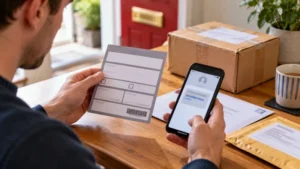
There are several reasons why someone might decide not to pay:
- Unknown Sender: You have checked your orders and cannot identify the item.
- No Expected Delivery: Nobody in your household is waiting for a parcel or letter.
- Suspicious Notice: The payment request does not match Royal Mail’s official guidance.
- Unwanted Item: You believe you know what the parcel is but do not wish to pay the charge to receive it.
Before ignoring a genuine Fee to Pay notice, remember that the item could still be something important, such as a replacement product, gift, document or delayed purchase.
Conclusion: Royal Mail Fee to Pay – Who Is the Sender?
If you are wondering “Royal Mail Fee to Pay, who is the sender?”, the important point is that the Fee to Pay notice may not clearly identify the person or company that posted the item.
Start by checking recent orders, dispatch emails, marketplace purchases, payment history and tracking information.
If the item remains unidentified, Royal Mail may be able to help with information relating to the notice, although its published guidance does not guarantee that it will disclose the sender before payment.
You should also verify that the Fee to Pay request is genuine. Royal Mail says ordinary underpaid-postage surcharges are normally communicated through a grey Fee to Pay card rather than a payment request sent solely by email or text.
Customs charges are an exception, although Royal Mail says a grey card should also be issued.
The current Fee to Pay amounts vary according to the item and the reason for the charge.
Royal Mail has announced wider pricing and surcharge changes during October 2026, but readers should not assume that every Fee to Pay charge is increasing unless the current Royal Mail guidance confirms it.
Checking the sender clues, verifying the notice and reviewing the current charge can help you decide what to do without paying an unfamiliar request blindly.
Frequently Asked Questions
Can I Find Out Who Sent A Royal Mail Parcel Before Paying?
Sometimes. Tracking information, online orders and dispatch emails may help you identify the likely sender, but Royal Mail does not guarantee that a Fee to Pay notice will reveal the sender.
Does A Royal Mail Fee to Pay Card Show The Sender’s Name?
Not necessarily. Royal Mail’s Fee to Pay guidance focuses on the charge and payment details rather than promising that the sender will be identified on the card.
Can Royal Mail Tell Me Who Sent The Parcel?
Royal Mail may be able to provide information relating to the item, but its published Fee to Pay guidance does not guarantee that it can identify or disclose the sender before payment.
How Do I Know If A Royal Mail Fee to Pay Notice Is A Scam?
A genuine underpaid-postage surcharge is normally notified using a grey Fee to Pay card. Be cautious about unexpected texts, emails or payment links and verify the details independently.
Will Royal Mail Fee to Pay Charges Increase In 2026?
Royal Mail has announced wider price, surcharge and correction-charge changes from October 2026, but it has not confirmed that every current Fee to Pay amount will increase. Check the latest charge before paying.
What Happens If I Don’t Pay The Royal Mail Fee?
Royal Mail generally holds relevant items for a limited period before returning them. Current guidance states 18 days in many cases, although some collection locations move to a 10-day period from 18 October 2026.
Is A Royal Mail Fee to Pay The Same As A Customs Charge?
Not always. A Fee to Pay can relate to missing or insufficient postage, while customs charges can include import VAT, Customs Duty and Royal Mail or Parcelforce handling fees.