

📌
SPRING STATEMENT HIGHLIGHTS 2026 – FAST FACTS FOR UK READERS
A forecast-led update from the OBR, delivered amid global uncertainty and energy price risks.
Core takeaway:
2026 growth forecast lowered, inflation expected to ease, and fiscal headroom improves—yet risks remain.
Why it matters:
These projections shape expectations for interest rates, household budgets, business confidence, and the Autumn Budget.
⚠️ Watch-outs after the statement:
Energy shocks can lift inflation • higher rates can squeeze mortgages & borrowing • weak growth can soften hiring
Quick highlights snapshot:
- Growth (2026): downgraded to around 1.1% in the latest OBR view
- Unemployment: forecast to peak near 5.3% before easing later in the decade
- Borrowing: projected to trend down across the forecast period
- Fiscal headroom: estimated around £23.6bn against the government’s rules
- Tax burden: expected to reach a postwar high near 38% of national income by 2030–31
Use the spring statement highlights as a guide to what may come next—especially if energy prices shift or the Autumn Budget brings tougher choices.
What is the Spring Statement and Why is It Important for the UK Economy?

The Spring Statement is a financial update delivered by the UK Chancellor of the Exchequer to Parliament. Unlike the Autumn Budget, which usually includes major tax and spending changes, the Spring Statement focuses mainly on updating economic forecasts and reviewing the country’s fiscal position.
It allows the government to present the latest economic outlook based on analysis from the Office for Budget Responsibility (OBR).
These forecasts assess several key indicators, including:
- Economic growth
- Inflation
- Government borrowing
- Employment trends
Although the Spring Statement rarely introduces major policy changes, it still plays an important role in shaping expectations for the UK economy. Businesses, financial markets, and policymakers closely analyse the update to understand current economic conditions.
In recent years, the government has moved toward a “single fiscal event” approach, meaning the Autumn Budget typically contains the most significant policy decisions.
Speaking in Parliament during the statement, Chancellor Rachel Reeves emphasised the importance of economic stability amid global uncertainty:
“It is incumbent on me and on this government to chart a course through that uncertainty, to secure our economy against shocks and protect families from the turbulence that we see beyond our borders.”
This message of stability formed the central theme of the spring statement highlights in 2026.
What Were the Key Spring Statement Highlights in 2026?
The spring statement highlights for 2026 were largely centred around economic forecasts rather than new fiscal policies.
The OBR provided updated projections for growth, inflation, borrowing, and employment, giving a clearer picture of the UK’s economic trajectory over the next several years.
Several major developments stood out:
- Economic growth for 2026 has been downgraded to 1.1%, reflecting weaker economic momentum.
- Inflation is expected to fall to around 2.3% during 2026 before reaching the Bank of England’s target.
- Unemployment is forecast to rise to approximately 5.3% before gradually declining later in the decade.
- Government borrowing is projected to fall steadily over the coming years.
- The UK’s tax burden is expected to reach around 38% of GDP, the highest level since the Second World War.
Another key theme of the statement was the government’s emphasis on long-term economic stability rather than short-term interventions.
Prime Minister Sir Keir Starmer echoed this message when commenting on the government’s economic strategy:
“Security and strength for our country starts with a strong economy – and a stronger economy puts us in a place to better withstand global tensions.”
Overall, the spring statement highlights point to a cautious economic outlook. While inflation appears to be easing and borrowing forecasts have improved slightly, slower growth and rising unemployment present ongoing challenges.
Why Did Rachel Reeves Avoid Major Tax or Policy Announcements in the Spring Statement?

Many observers expected new tax or spending measures in the 2026 Spring Statement, but Rachel Reeves intentionally kept the announcement limited in scope.
This reflects the government’s “single fiscal event” strategy, where the Autumn Budget is the main occasion for introducing major tax and policy changes. As a result, the Spring Statement is primarily intended to update economic forecasts rather than announce new legislation.
The decision also reflects the current economic environment. With global uncertainty increasing and growth forecasts weakening, policymakers may prefer to wait for more economic data before introducing significant reforms.
Another important factor is the government’s strict fiscal rules, which aim to keep borrowing and public finances sustainable.
Because of these constraints, the Spring Statement functioned mainly as an economic progress update rather than a policy-heavy announcement.
How Has the UK Economic Growth Forecast Changed for 2026 and the Coming Years?
The spring statement highlights revealed a significant update to the UK’s economic outlook, with the Office for Budget Responsibility (OBR) revising its growth forecasts for 2026 and the following years.
Updated OBR growth projections
The most notable economic update in the spring statement highlights was the revision to the UK’s growth forecast.
The Office for Budget Responsibility downgraded its projection for economic growth in 2026 from 1.4% to 1.1%, reflecting weaker economic activity toward the end of the previous year.
However, the OBR expects growth to improve slightly in the following years.
| Year | UK GDP Growth Forecast |
| 2026 | 1.1% |
| 2027 | 1.6% |
| 2028 | 1.6% |
| 2029 | 1.5% |
| 2030 | 1.5% |
These forecasts suggest that while growth may remain modest in the short term, the economy could stabilise over the rest of the decade.
What Slower Growth Could Mean for Businesses and Employment?
Slower economic growth typically affects multiple areas of the economy, including investment, job creation, and wage growth.
When economic expansion slows, businesses may become more cautious about hiring or expanding operations. This can reduce employment opportunities and slow wage growth.
Economists have also warned that external factors, such as rising energy prices or global economic disruptions, could push growth even lower than currently forecast.
What Does the Spring Statement Reveal About Inflation and Interest Rates in the UK?
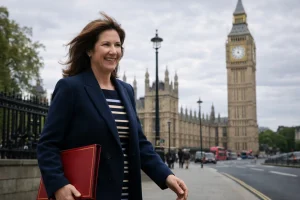
One of the more positive elements in the spring statement highlights is the outlook for inflation.
According to the OBR, inflation is expected to decline significantly over the next two years as supply chain pressures ease and energy prices stabilise. After averaging around 3.4% in 2025, inflation is projected to fall to approximately 2.3% in 2026, eventually reaching the Bank of England’s target rate of 2%.
The table below illustrates the projected inflation trend.
| Year | Inflation Forecast |
| 2025 | 3.4% |
| 2026 | 2.3% |
| 2027 onward | Around 2% |
Lower inflation can improve household finances by increasing real wages, meaning income grows faster than prices.
However, the inflation outlook remains uncertain due to geopolitical developments. Rising energy prices linked to international conflicts could push inflation higher again, forcing the Bank of England to maintain higher interest rates for longer.
Will Unemployment Rise in 2026 According to the Latest Forecasts?
Labour market forecasts were another important aspect of the spring statement highlights.
The OBR expects unemployment to rise slightly in the short term as economic growth slows and businesses become more cautious about hiring.
| Year | Unemployment Rate Forecast |
| 2025 | 4.7% |
| 2026 | 5.3% |
| 2030 | 4.1% |
The unemployment rate is expected to peak at around 5.3% in 2026 before gradually declining to approximately 4.1% by the end of the decade.
Although these figures are not considered unusually high by historical standards, economists have expressed concern about the challenges facing younger workers and those entering the labour market for the first time.
Is Government Borrowing Falling According to the Spring Statement Forecasts?

Government borrowing was another key focus in the spring statement highlights, with updated forecasts suggesting that the UK’s public finances may gradually improve over the coming years.
Borrowing Projections for the Coming Years
Another notable element of the spring statement highlights is the improvement in the UK’s borrowing outlook.
Public sector borrowing is forecast to fall gradually as government revenues increase and spending growth slows.
| Year | Borrowing as % of GDP |
| 2026 | 4.3% |
| 2027 | 3.6% |
| 2028 | 2.9% |
| 2029 | 2.5% |
| 2030 | 1.8% |
Overall, borrowing is expected to be £18 billion lower than previously predicted.
What Lower Borrowing Means for the UK’s Fiscal Position?
Lower borrowing can strengthen investor confidence and improve the stability of public finances. It also helps governments maintain credibility in financial markets.
The Spring Statement revealed that the government’s fiscal headroom, the margin between spending plans and fiscal rules, has increased to around £23.6 billion.
However, this buffer could quickly disappear if economic conditions worsen.
Why is the UK Tax Burden Expected to Reach a Post-war High?

The OBR forecasts that the UK’s tax burden will reach approximately 38% of national income by 2030–31, marking the highest level since the Second World War.
This increase does not necessarily result from new tax rises. Instead, several policy decisions made in previous budgets are gradually increasing tax revenues.
Key contributing factors include:
- Frozen income tax thresholds
- Higher employer National Insurance contributions
- Stronger tax enforcement measures
- Rising wages are pushing more workers into higher tax bands
As wages increase while tax thresholds remain frozen, more people are pulled into higher tax brackets, a phenomenon known as fiscal drag.
However, economists have warned that very high tax levels may have unintended consequences.
One OBR official cautioned that higher taxation could affect economic behaviour, stating that such levels may “distort or constrain economic activity more than expected.”
How Could Rising Welfare Spending Shape the UK’s Future Economic Outlook?
Another significant element of the spring statement highlights involves the projected growth in welfare spending.
Government welfare expenditure is forecast to rise significantly over the coming years, increasing from around £330 billion to £407 billion by 2030–31.
Much of this increase is driven by higher spending on disability and incapacity benefits.
The OBR estimates that:
- The number of people claiming disability benefits could rise from 6.5 million to 8.8 million by the end of the decade.
- Claims for incapacity-related benefits could increase from 3.4 million to 4 million.
These trends could create additional pressure on public finances and make it more difficult for the government to balance its budget.
How Might Global Tensions and Energy Prices Affect the UK Economy After the Spring Statement?
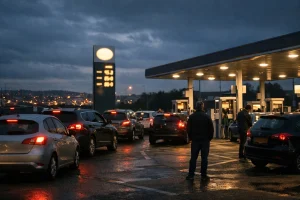
Global geopolitical tensions and volatile energy markets could significantly influence the UK’s economic outlook following the Spring Statement, potentially affecting inflation, growth, and household finances.
Geopolitical Risks Affecting the UK Economy
Global political developments have added another layer of uncertainty to the UK’s economic outlook.
The Spring Statement was delivered during a period of escalating tensions in the Middle East, which could potentially disrupt global energy markets and increase oil and gas prices.
The OBR warned that these developments could have a “very significant impact on the global and UK economies.”
Potential Consequences for Inflation and Growth
If energy prices rise sharply, inflation could increase again. Higher inflation would likely lead to higher interest rates, slowing economic growth and increasing borrowing costs for households and businesses.
Economist Paul Dales of Capital Economics highlighted the potential risk:
“The conflict in the Middle East has changed the outlook, and the risks are that higher energy prices will mean inflation and interest rates are higher than currently forecast.”
What Do the Spring Statement Highlights Mean for Households and Businesses Across the UK?
For households and businesses, the spring statement highlights provide a mixed outlook.
Lower inflation may gradually improve living standards by increasing real wages and reducing pressure on household budgets. The government has also argued that families could be financially better off by the next general election.
Chancellor Rachel Reeves told Parliament:
“By the end of this Parliament, working people will be over £1,000 a year better off after inflation.”
However, the outlook remains uncertain for many businesses. Some industry leaders have warned that rising costs, such as higher wages, business rates, and taxes, could continue to weigh on investment and hiring decisions.
For many small businesses, the economic environment remains challenging.
Conclusion
The Spring Statement highlights for 2026 show a UK economy that is stabilising but still facing notable challenges. Inflation is expected to decline and borrowing forecasts have improved slightly, offering some reassurance to policymakers and financial markets.
However, economic growth has been downgraded, unemployment could rise in the short term, and the tax burden is projected to reach historically high levels.
The statement also reflects how global factors, including geopolitical tensions and energy market volatility, can influence the UK’s economic outlook.
Overall, it provides a snapshot of the nation’s finances, with major policy changes expected in the Autumn Budget.
Frequently Asked Questions
What is the difference between the Spring Statement and the Autumn Budget?
The Spring Statement updates economic forecasts and government finances, while the Autumn Budget usually introduces major tax and spending changes.
Who produces the economic forecasts used in the Spring Statement?
Economic forecasts for the Spring Statement are produced by the Office for Budget Responsibility (OBR), an independent body analysing the UK’s public finances.
Why do governments use fiscal rules in economic planning?
Governments use fiscal rules to control borrowing and public debt while maintaining long-term financial stability.
How can global events influence the UK economy?
Global events such as conflicts, supply chain disruptions, or energy price shocks can impact inflation, economic growth, and government finances in the UK.
What is fiscal headroom in government budgeting?
Fiscal headroom is the gap between the government’s planned spending and the limits set by its fiscal rules, acting as a financial buffer.
How do economic forecasts affect businesses?
Economic forecasts help businesses plan investment, hiring, and expansion based on expected growth, inflation, and interest rates.
When will the next UK Budget take place?
The next major fiscal announcement is expected during the Autumn Budget, when new tax or spending policies may be introduced.