
Key Takeaways:
- HD Food and Fuel Ltd entered liquidation after operating since 2017.
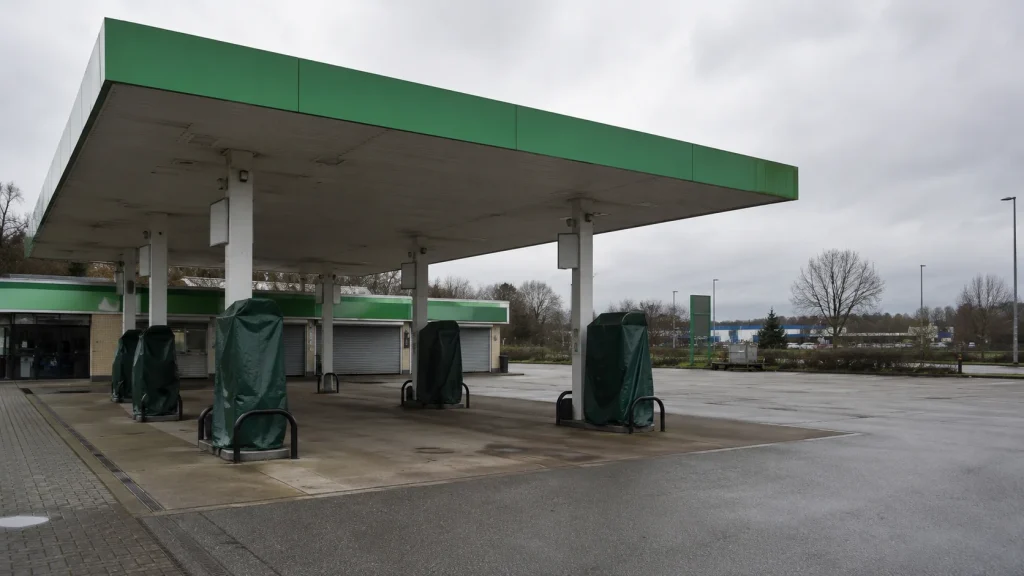
- The closure has affected a well-known petrol station serving motorists in Leigh.
- Independent forecourts face increasing financial and operational pressures.
- Rising fuel prices have created challenges for both consumers and retailers.
- Liquidation involves the sale of company assets to repay creditors.
- Industry experts believe more independent garage sell-offs could occur in the coming years.
- The closure reflects broader changes taking place within the UK fuel retail sector.
Why Has a UK Petrol Station Entered Liquidation After Nine Years of Trading?
The liquidation of a petrol station that has operated for nearly a decade naturally raises concerns among local residents and business owners alike. Our investigation into the closure of HD Food and Fuel Ltd reveals a situation that extends beyond a single forecourt. Instead, it provides an insight into the increasingly difficult environment facing many independent fuel retailers across the UK.
The company, which operated a petrol station on Firs Lane in Leigh, entered liquidation after approximately nine years in business. While no official explanation has been released regarding the specific reasons behind the closure, the timing coincides with a period of significant economic pressure affecting the fuel retail industry.
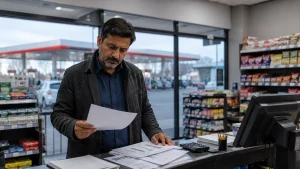
Independent petrol stations often operate on relatively narrow margins. Although motorists may assume that fuel retailers generate substantial profits from petrol and diesel sales, industry data consistently shows that fuel itself often delivers limited returns. Many forecourt operators rely heavily on convenience stores, food-to-go offerings and ancillary services to supplement their income.
Our review of the wider market suggests that many independent forecourts are reassessing their future. Some have opted to sell their businesses, while others have sought restructuring solutions. Unfortunately, in some cases, liquidation becomes the final outcome when financial pressures become unsustainable.
What Happened to the First Lane Petrol Station in Leigh?
For local residents, the closure appeared to happen with little warning. Our investigation found that motorists first began questioning the station’s status after noticing that it was no longer operating. Discussions on local community platforms suggested that the site had been closed for around a week before the liquidation became more widely known.
The petrol station occupied a strategic position serving motorists travelling around Leigh and neighbouring areas. While alternative filling stations remain available nearby, many customers had become accustomed to using the Firs Lane site due to its convenience and familiarity.
The closure also illustrates how quickly business circumstances can change. A forecourt that had served the community for years suddenly ceased trading, leaving customers seeking answers and employees facing uncertainty.
Impact on Local Motorists and the Community
The impact of a petrol station closure extends beyond simply losing a place to purchase fuel. Modern forecourts frequently serve as community hubs, providing convenience shopping, refreshments and everyday essentials.
Residents who regularly used the Firs Lane site now need to rely on alternative filling stations. While larger supermarket forecourts are located nearby, convenience remains an important consideration for many drivers.
The closure may also affect local traffic patterns and surrounding businesses. Petrol stations often generate customer footfall that benefits nearby retailers and service providers.
| Area Affected | Potential Impact |
| Motorists | Longer journeys to alternative stations |
| Local Economy | Reduced customer activity nearby |
| Employees | Potential job uncertainty |
| Community Services | Loss of convenience facilities |
| Local Businesses | Reduced passing trade |
When Did the First Lane Petrol Station Closure Become Public?
Although the exact date the business ceased trading has not been formally confirmed, local residents began discussing the station’s closure after noticing that fuel pumps were no longer operating and the site appeared inactive. Community conversations suggested the forecourt had been closed for several days before news of the liquidation became more widely known.
The closure attracted significant attention because the station had served motorists in Leigh for almost a decade. For many customers, the sudden disappearance of a familiar local forecourt raised questions about the future of the site and the broader challenges facing independent petrol retailers.
How Does Petrol Station Liquidation Work in the UK?

When a company enters liquidation, it begins a legal process designed to bring its affairs to an orderly conclusion. For many business owners, liquidation represents a difficult but necessary step when debts can no longer be managed and continuing to trade is no longer viable.
Our investigation found that petrol station liquidations can be particularly complex because these businesses often possess a mix of specialised assets, including fuel pumps, underground storage tanks, convenience store stock and commercial property.
Once a liquidator is appointed, their role is to take control of the company’s affairs and ensure that creditors are treated fairly under insolvency law.
The process involves evaluating assets, identifying liabilities, communicating with creditors and ultimately distributing any available funds according to legal priorities.
The Role of a Licensed Liquidator
A licensed insolvency practitioner is responsible for managing the liquidation process. Their duties extend far beyond simply selling assets.
The liquidator must review company records, investigate financial affairs and ensure compliance with insolvency legislation. They also communicate with creditors and oversee the distribution of any recovered funds.
| Liquidator Task | Purpose |
| Asset Valuation | Determine available value |
| Creditor Communication | Provide updates and information |
| Asset Sales | Generate funds for repayment |
| Financial Review | Assess company affairs |
| Business Closure | Complete dissolution process |
Martin Reeves, a licensed insolvency practitioner specialising in retail insolvencies, explained: “Forecourt businesses often involve significant infrastructure investments. When financial difficulties emerge, directors need to act quickly because the costs associated with maintaining operations can continue accumulating even when revenue is under pressure.”
The liquidation process can vary considerably depending on the size and complexity of the business involved.
Why Are Independent Petrol Stations Struggling to Survive?
Rising Operating Costs
Independent forecourts face increasing costs across almost every area of their business. Energy bills, wages, insurance premiums and maintenance expenses have risen significantly in recent years.
Many operators must also invest in upgraded security systems, environmental compliance measures and modern payment technology, placing additional strain on already tight margins.
Fuel Price Volatility
Fuel retailers often purchase stock in large quantities, meaning sudden changes in wholesale fuel prices can create immediate cash-flow pressures. While motorists may assume retailers benefit from higher pump prices, profit margins on fuel sales remain relatively small, making it difficult to absorb prolonged market volatility.
Competition From Larger Operators
Supermarket forecourts and national fuel groups benefit from stronger purchasing power and larger customer volumes. This allows them to compete aggressively on pricing, making it increasingly difficult for smaller independent stations to maintain profitability.
Why Are Independent Garage Sell-Offs Becoming More Common?
Across the UK, more independent garage owners appear to be considering exit strategies than in previous years. While every business has its own circumstances, industry observers point to several common factors driving this trend.
One important consideration is succession planning. Many independent petrol stations are family-run businesses, and not every owner has a clear successor willing to take over operations. Combined with rising costs and changing market conditions, some owners view selling their business as the most practical option.
At the same time, larger forecourt groups continue expanding their networks by acquiring independent sites. These organisations often have greater financial resources and operational efficiencies, making acquisitions an attractive route for growth.
As a result, the sector is experiencing a gradual shift towards consolidation, with fewer independently owned sites remaining in operation.
Trends Across the UK Fuel Retail Sector
The industry has changed significantly over the last decade. Forecourts are increasingly evolving into convenience retail destinations rather than purely fuel-focused businesses.
Many successful sites now generate substantial revenue from:
- Convenience stores
- Food-to-go services
- Parcel collection points
- Car washing facilities
- Electric vehicle charging infrastructure
Businesses that fail to adapt to these changing consumer expectations may find it increasingly difficult to remain competitive.
How Is the UK Forecourt Industry Changing in 2026?
The UK’s petrol station sector is undergoing significant transformation. Many forecourts are investing in electric vehicle charging points, expanded convenience stores and food-to-go services to reduce dependence on fuel sales. Industry analysts believe future profitability will increasingly come from retail and service offerings rather than petrol and diesel alone.
Larger operators continue acquiring independent sites, creating a more consolidated market. As electric vehicle adoption grows and consumer habits change, smaller operators may face increasing pressure to modernise their facilities and diversify revenue streams
What Happens to Petrol Station Assets During Liquidation?
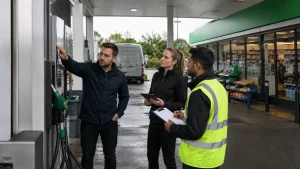
When a petrol station enters liquidation, the company’s assets are reviewed and valued to determine how much money can be recovered for creditors. Unlike many other businesses, forecourts often possess specialised infrastructure that can hold considerable value.
The process begins with an assessment of all assets owned by the company. These may include land, buildings, fuel pumps, storage tanks, shop equipment and remaining stock.
Some assets may be sold individually, while others may attract interest from buyers looking to acquire an operational forecourt site.
Property, Equipment and Business Assets
The value of a petrol station often extends beyond the fuel itself.
| Asset Category | Examples |
| Property | Forecourt land and buildings |
| Fuel Equipment | Pumps, tanks and pipework |
| Retail Assets | Shelving, tills and refrigeration |
| Inventory | Fuel and shop stock |
| Technology | CCTV and payment systems |
The final value recovered depends on market demand, the condition of the assets and the location of the site.
Can Petrol Station Owners Avoid Liquidation?
Liquidation is often viewed as a last resort. In many cases, business owners explore alternative options before deciding to close their company.
Early intervention is often critical. Seeking professional advice when financial difficulties first emerge can provide more opportunities to restructure operations or negotiate with creditors.
Possible alternatives may include refinancing existing debts, reducing operating costs or implementing formal restructuring arrangements.
For some businesses, these measures can provide enough breathing space to restore stability and continue trading.
Alternative Business Recovery Options
Business owners facing financial pressure may consider:
- Company Voluntary Arrangements (CVAs)
- Debt restructuring plans
- Refinancing agreements
- Asset sales
- Operational cost reductions
The effectiveness of these solutions depends largely on the severity of the financial challenges and how quickly action is taken.
Rachel Thornton, a business recovery adviser working with retail operators, said: “Many struggling businesses wait too long before seeking advice. The earlier directors address cash flow concerns, the more options they typically have available to protect the business.”
Is the Closure of HD Food and Fuel Ltd Part of a Wider Industry Trend?
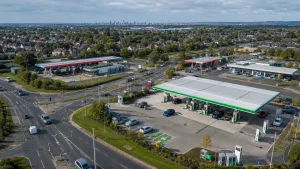
Based on our investigation, the closure appears to reflect broader challenges facing independent fuel retailers rather than an isolated incident.
Across the UK, businesses in multiple sectors have experienced rising operating costs and increasing economic uncertainty. The forecourt industry has been particularly exposed due to its reliance on fuel markets and substantial infrastructure requirements.
Many analysts believe the sector will continue to evolve over the coming years. Larger operators are expected to expand further, while independent businesses may face increasing pressure to modernise, diversify or consider alternative ownership arrangements.
Andrew Foster, a fuel retail market analyst, explained: “We’re seeing a gradual restructuring of the forecourt sector. Independent operators still play an important role, but the market is becoming increasingly competitive and capital intensive.”
Although petrol and diesel demand remains significant, the business environment surrounding fuel retail is changing rapidly.
Conclusion
The liquidation of HD Food and Fuel Ltd highlights the challenges facing many independent petrol stations across the UK. While the closure affects local motorists in Leigh, it also reflects broader industry changes, including rising operating costs, market consolidation and evolving consumer expectations.
As the sector continues to adapt, forecourts that diversify their services and manage financial pressures effectively are likely to be best placed for future success.
FAQs
What is petrol station liquidation?
Petrol station liquidation is a formal insolvency process where a company closes and its assets are sold to repay creditors. Once the process is completed, the company is usually dissolved.
Why did HD Food and Fuel Ltd enter liquidation?
The exact reason has not been publicly confirmed. However, the closure comes at a time when many independent fuel retailers are facing rising costs and challenging market conditions.
What happens to employees when a petrol station closes?
Employees may face redundancy if the business ceases trading. Depending on their circumstances, they may be eligible for statutory payments and support.
Can a petrol station continue operating during liquidation?
In some cases, limited trading may continue temporarily. However, many sites stop operating once liquidation proceedings begin.
What happens to petrol station assets after liquidation?
Assets such as pumps, tanks, buildings and stock are assessed and sold by the liquidator to help repay creditors.
Are independent petrol stations becoming less common in the UK?
Industry consolidation has reduced the number of independent operators in some areas, although many continue to play an important role in local communities.
Can a liquidated petrol station reopen under new ownership?
Yes. If a buyer acquires the site and necessary assets, the petrol station may reopen under a different ownership structure.
How can petrol station owners reduce the risk of insolvency?
Regular financial monitoring, diversification of income streams, cost control and seeking professional advice early can all help reduce financial risks.