
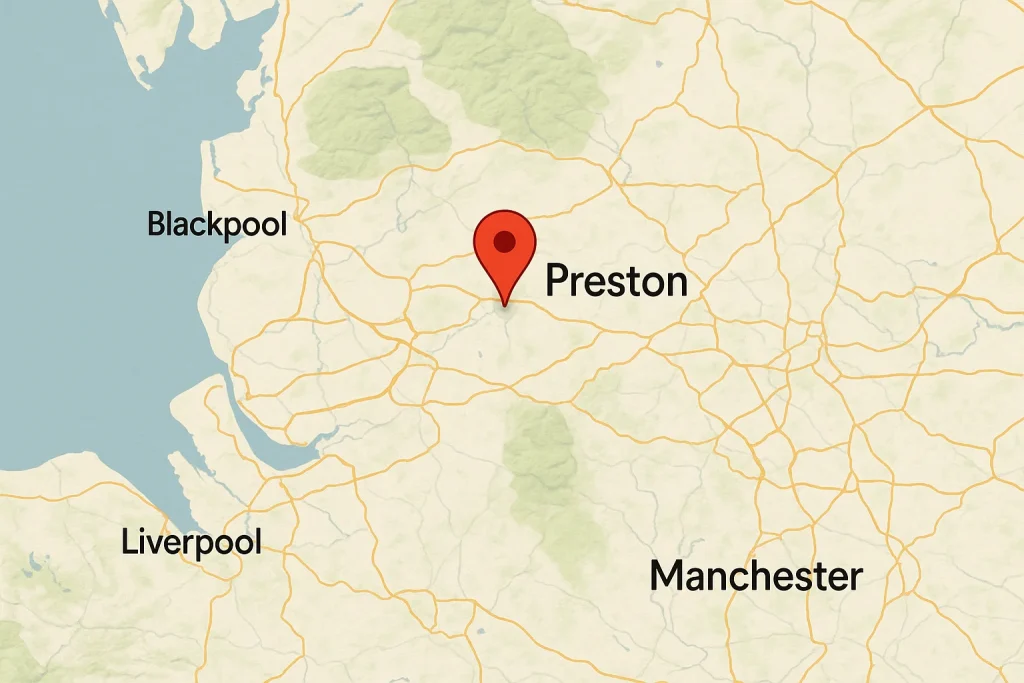
Preston is a historic city located in Lancashire, North West England, known for its rich heritage, vibrant culture, and strategic location.
Often overlooked in favour of larger cities, it offers a unique blend of tradition and modern development. From its Roman roots to its role in the Industrial Revolution, Preston has grown into a regional centre for education, transport, and commerce.
This guide explores where Preston is, what it offers, and why it’s worth understanding its significance in the UK.
Where Exactly Is Preston Located in the UK?
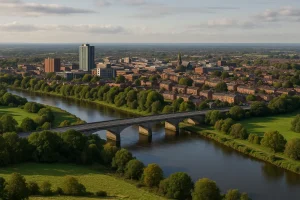
Preston is located in Lancashire, in the North West region of England. It sits on the north bank of the River Ribble and is positioned roughly halfway between London and Glasgow, making it a strategically placed city in terms of both road and rail access.
Geographically, it lies at latitude 53.7632° N and longitude 2.7031° W. The city is well connected via the M6 motorway, which runs to the east of the city and links Preston to the national road network.
It also intersects with the M55, providing direct access to Blackpool, and the M61 and M65, connecting it to Manchester, Leeds, and other parts of the North West.
In terms of rail transport, Preston railway station is a key stop on the West Coast Main Line, offering direct services to:
- London (approx. 2 hours 10 minutes)
- Manchester (approx. 40 minutes)
- Glasgow (approx. 2 hours 30 minutes)
- Liverpool (approx. 1 hour)
Its location between larger metropolitan areas such as Manchester, Liverpool, and Blackpool positions Preston as a practical and well-situated city for commuters, students, businesses, and travellers.
The city is also located close to natural attractions such as the Forest of Bowland, Lake District, and the Yorkshire Dales, making it a convenient base for exploring Northern England.
What Makes Preston Notable in the UK?
Preston is notable for its combination of historical depth, civic importance, and evolving urban character.
While it may not have the population size of neighbouring cities like Manchester or Liverpool, it plays a key role within Lancashire and the broader North West region. The city was granted official city status in 2002, becoming England’s 50th city. This milestone was a recognition of its historical legacy, cultural contribution, and administrative influence.
It continues to serve as the county town of Lancashire and houses the main offices for Lancashire County Council and Preston City Council. Preston’s industrial heritage is another reason for its notability. During the Industrial Revolution, the city was a leading centre of textile manufacturing and engineering.
It also played a significant part in social reform movements, including the temperance movement led by local campaigner Joseph Livesey.
Education is another area where Preston stands out. The University of Central Lancashire (UCLan), based in the city, is one of the largest universities in the UK and attracts students from across the globe.
The university’s focus on research, innovation, and industry partnerships has helped position Preston as a forward-thinking academic hub.
Culturally, the city holds onto its unique traditions, particularly the Preston Guild, a celebration dating back to 1179 and held once every 20 years. It is the only civic guild of its kind in the country and is a source of pride and identity for the local community.
Preston is also recognised for its transport connections, relatively affordable cost of living, and proximity to natural beauty like the Forest of Bowland and the Lake District. All these factors combine to make Preston a city of both historical significance and modern relevance in the UK.
| Area of Significance | Details |
| City Status | Became England’s 50th city in 2002 during Queen Elizabeth II’s Golden Jubilee |
| Administrative Role | County town of Lancashire; headquarters of Lancashire County Council and Preston City Council |
| Industrial Heritage | Major textile and engineering hub during the Industrial Revolution |
| Social Reform | Centre of the 19th-century temperance movement, led by Joseph Livesey |
| Higher Education | Home to the University of Central Lancashire (UCLan), one of the UK’s largest universities |
| Cultural Identity | Hosts the Preston Guild every 20 years – the only celebration of its kind in the UK |
| Transport Connectivity | Well-connected via M6 motorway and West Coast Main Line; links to London, Glasgow, Manchester |
| Cost of Living | More affordable than major cities nearby, making it attractive for students and professionals |
| Natural Proximity | Close to the Forest of Bowland, Lake District, and Ribble Valley |
What County Is Preston In and Why Is It Significant?
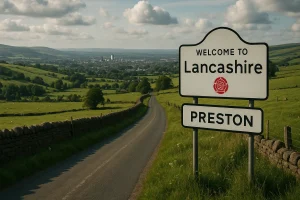
Preston is in Lancashire and serves as its administrative centre. It is the county town and headquarters of both Lancashire County Council and Preston City Council.
These institutions manage not only the city itself but many surrounding areas within the county. As a county town, Preston plays an important role in the legal, civic and educational framework of Lancashire.
The city also falls within the City of Preston local government district, which includes neighbouring communities such as Fulwood and Ribbleton. Preston’s significance comes from a blend of historical importance, strategic location, and modern contributions to education, infrastructure, and local government.
How Does Preston’s History Shape Its Identity Today?
The earliest records of settlement in Preston date back to Roman Britain, where a road passed through the area connecting Carlisle and Manchester. Later, Anglo-Saxon settlers established a town known as “Prestune”, meaning “Priest’s Town”, which was documented in the Domesday Book of 1086.
By 1179, King Henry II granted Preston a Guild Merchant charter, allowing it to operate as a market town.
The town prospered through the wool and textile trades, particularly during the Industrial Revolution when the city became known for cotton production and engineering.
Notable figures such as Sir Richard Arkwright, who invented the water frame, were born in Preston. The town also became a centre for the temperance movement in the 19th century, led by Joseph Livesey.
Key historical developments:
- First English town outside London to be lit by gas
- A centre of labour movements and trade unions
- Known as “Proud Preston” due to its civic pride and elegant architecture
The preservation of historic buildings and monuments continues to reflect the city’s deep historical roots and evolving urban identity.
What Are the Main Attractions and Landmarks in Preston?
| Attraction | Description | Location | Notable Feature |
| Harris Museum and Art Gallery | Cultural centre with art, history and rotating exhibitions | Market Square, City Centre | Grade I listed; free admission |
| Avenham & Miller Parks | Victorian landscaped parks by the River Ribble | South of city centre | Japanese garden, riverside walk, amphitheatre |
| St Walburge’s Church | Gothic Revival church with the tallest spire on a non-cathedral in England | Weston Street | Spire height of 309 feet (94 metres) |
| Preston North End (Deepdale) | Historic football stadium and home to PNE FC | Deepdale Road | One of the oldest professional football grounds |
| Preston Covered Market | Recently refurbished historic market hall | Earl Street, City Centre | Traditional and street food, artisan stalls |
| Ribble Steam Railway | Heritage railway with museum and steam rides | Riversway Docklands | Family-friendly, educational experiences |
| Winckley Square | Georgian garden square surrounded by historical buildings | City Centre | Conservation area; popular with local professionals |
| Guild Hall | Events venue for music, theatre and conferences | Lancaster Road | Central entertainment venue |
Preston offers a rich mix of attractions that reflect its diverse cultural, historical and recreational appeal. The Harris Museum and Art Gallery is one of the city’s most prominent landmarks, offering exhibitions that span archaeology, fine art, and local history.
A short walk away lies Avenham and Miller Parks, ideal for scenic strolls and public events, with the River Ribble running alongside. Religious and architectural interest is found in St Walburge’s Church, whose spire dominates the skyline.
For football fans, Deepdale Stadium, home of Preston North End, is a key site of sporting heritage, recognised as one of the world’s oldest continuously used professional football grounds.
Shopping and street culture blend at the Preston Covered Market, where visitors can enjoy everything from artisan food to vintage goods. Just beyond the city centre, the Ribble Steam Railway offers steam train rides and an engaging museum, especially popular with families.
Green spaces such as Winckley Square and multi-purpose venues like the Guild Hall ensure that Preston remains both historically rooted and actively modern in its appeal.
Whether visiting for a day or staying longer, the city offers a broad selection of well-preserved landmarks and dynamic attractions.
What’s On in Preston for Visitors and Locals Alike?
Preston hosts a variety of public events throughout the year, blending community traditions with modern entertainment. The Preston Guild is perhaps the most well-known, a celebration held once every 20 years, with the last event taking place in 2012.
Ongoing and seasonal events include:
- Artisan and food markets at the Covered Market
- Free outdoor concerts and cinema events in Avenham Park
- Exhibitions and workshops at Harris Museum and Library
- Street festivals along Fishergate and Church Street
Regular updates on what’s on in Preston can be found on local listings sites, community bulletin boards and VisitPreston.com.
The city is also home to the “Preston Passion”, a BBC-broadcast event blending music, faith and local storytelling, and frequently attracts major cultural festivals, touring shows, and sports events.
How Is the Population and Demographics of Preston Shaped?

The City of Preston had a recorded population of approximately 147,835 in the 2021 census. Including the wider urban and travel-to-work area, this figure increases to over 300,000. The population has steadily grown, reflecting Preston’s role as a regional employment and educational centre.
Demographically, the city has a diverse and youthful population, in part due to the presence of the University of Central Lancashire (UCLan). The student population significantly influences local business, rental markets and the cultural landscape.
Ethnic and religious diversity is also notable:
- A strong South Asian community, particularly of Gujarati descent
- A Muslim population making up around 8% of residents
- Representation from Hindu, Sikh, Christian and Buddhist faiths
- A visible Catholic heritage, reflected in churches and schools
This diversity is evident in the city’s food, places of worship, cultural events and community organisations.
How Can You Travel to and Around Preston?
Preston is known for its excellent transport infrastructure. Key options include:
By Road
- M6, M55, M65, and M61 motorways serve the city.
- Preston Western Distributor connects to key business zones.
By Rail
- Preston railway station is a major stop on the West Coast Main Line.
- Regular trains connect to London, Manchester, Glasgow, Edinburgh, Liverpool, and Blackpool.
By Bus
- Preston Bus Station is one of Europe’s largest and serves both local and national routes.
- Park and Ride facilities help reduce inner-city congestion.
By Air
- Manchester and Liverpool airports are under an hour away.
- Blackpool Airport caters to private and charter flights.
Cycling and Walking
- The Guild Wheel, a 21-mile loop around the city, offers a scenic walking and cycling route.
Travel Time to Preston from Key Cities
| City | Approx Distance | Travel Time (By Train) | Travel Time (By Car) |
| London | 190 miles | 2h 10m | 4h 00m |
| Manchester | 30 miles | 40m | 55m |
| Liverpool | 27 miles | 1h | 1h 10m |
| Glasgow | 180 miles | 2h 30m | 3h 45m |
What Is the Economy of Preston Like Today?
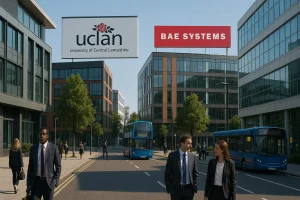
Preston’s economy has transitioned from textiles and heavy industry to services, education, and defence technology. Major employers include:
- BAE Systems, with two facilities on either side of the city
- University of Central Lancashire (UCLan), supporting over 4,000 jobs
- NHS and Royal Preston Hospital, a major regional health employer
- Retail hubs such as Fishergate Centre and Deepdale Retail Park
The city has also developed a growing presence in:
- Logistics and distribution, due to its motorway access
- Engineering and advanced manufacturing
- Public administration and civil services
Recent data from 2018 showed Preston as the “Most Improved City” in the UK in areas such as employment, skills development, and transport connectivity.
What Educational Opportunities Does Preston Offer?
Education in Preston is anchored by the University of Central Lancashire. UCLan has more than 36,000 students and offers a wide range of undergraduate and postgraduate programmes. It is also known for its Engineering Innovation Centre and active research profile.
Other educational providers include:
- Cardinal Newman College, specialising in A-level and vocational education
- Preston College, with technical and apprenticeship training
- Lancaster University School of Mathematics, for advanced STEM students
Secondary schools across the city serve diverse communities, and several faith-based institutions continue to play a prominent role.
What Is the Climate Like in Preston?
Preston experiences a temperate maritime climate, characterised by moderate seasonal variation and relatively high rainfall. Being close to the Irish Sea, the city receives more precipitation than areas further inland.
Key climate details:
- Average annual rainfall: Just under 1000 mm
- Warmest months: July and August, with average highs of 19°C to 22°C
- Coldest months: January and February, with lows around 1°C to 2°C
- Snowfall: Occasional during winter, typically between December and February
In 2014, Preston was reported as the wettest city in England, although this title has since been overtaken by Lancaster. Nevertheless, the city is known for frequent cloud cover and a cooler, damp climate overall.
How Does Religion Influence the Culture of Preston?
Religion has historically played a significant role in Preston’s development. The city’s name itself is derived from its religious roots as a “Priest’s Town.” The influence is visible in the architecture, festivals and even in Preston’s crest, which includes a lamb symbol linked to St Wilfrid.
Current religious features:
- Over 70 churches and chapels from various denominations
- 12 mosques, primarily serving Sunni Muslim communities
- A Catholic cathedral for the Syro-Malabar Church, the first of its kind in Britain
The city’s religious diversity contributes to community cohesion and cultural vibrancy. Multifaith events and interreligious organisations actively work across education, welfare and youth development.
What Are the Main Transport Developments and Future Plans in Preston?
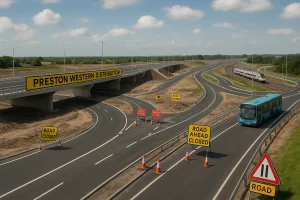
Infrastructure development in Preston continues to be a high priority for both the city and county councils. Ongoing and planned projects aim to improve movement, reduce congestion and encourage economic investment.
Notable projects:
- Preston Western Distributor Road, a new route connecting the M55 to key business zones
- Proposed new railway station in Lea to support housing expansion
- Upgrades to existing road networks and junctions to ease commuter traffic
- Improved cycling infrastructure, including extended Guild Wheel access
Although the larger Tithebarn redevelopment scheme was cancelled, Preston continues to focus on smaller, sustainable development projects across housing, commercial spaces and public services.
Why Should Tourists and Locals Explore Preston’s Nature and Parks?
Green space is a vital part of life in Preston, and the city offers multiple parks, gardens, and nature reserves for public enjoyment.
Key destinations include:
- Avenham and Miller Parks, riverside parks with walking paths, Japanese gardens and open lawns
- Moor Park, located north of the city centre and home to sports facilities and mature trees
- Brockholes Nature Reserve, a 250-acre reserve with floating visitor centre and walking trails
Other options include:
- Lancaster Canal, ideal for walking and narrowboat trips
- Fishwick Local Nature Reserve, suitable for casual walks and birdwatching
These spaces are well-maintained and supported by active community groups and local councils.
What Sports and Leisure Activities Are Popular in Preston?
Preston’s most famous sports club is Preston North End F.C., whose Deepdale Stadium is recognised as the oldest continuously used football league ground in the world.
Other sports and leisure activities include:
- UCLan Sports Arena, which offers athletics, football, rugby and cycling
- Golf courses at Fulwood and Ashton and Lea
- Preston Harriers, one of Lancashire’s leading athletics clubs
- Cricket, rugby and cycling, supported by local clubs and facilities
Recreational cycling has grown due to the Guild Wheel, which connects green spaces, parks and residential areas.
What Is the Cultural and Media Scene in Preston Like?
Culture in Preston is rooted in both tradition and modern expression. The city hosts a wide variety of events and festivals that reflect its heritage and evolving creative identity.
Cultural highlights:
- Harris Museum and Art Gallery, offering free access to exhibitions and collections
- Live performances at Guild Hall and other smaller venues
- Preston Markets, supporting independent traders and community events
Media and communication are served by local platforms such as Blog Preston, the Lancashire Evening Post and BBC Radio Lancashire. The city has also become a base for local television production and arts funding initiatives.
FAQs About Preston
Is Preston officially a city in the UK?
Yes, Preston was granted city status in 2002, making it the 50th city in England.
What’s the best way to get to Preston from London?
The fastest option is by train via Avanti West Coast from London Euston, taking approximately 2 hours and 10 minutes.
What are the top things to do in Preston for tourists?
Visit Harris Museum, Avenham Park, Preston Market, Deepdale Stadium, and take a stroll along the Lancaster Canal.
Is Preston a good place to live?
Yes, Preston offers affordable housing, excellent transport, diverse culture, and access to nature, making it ideal for families and professionals.
What events are held in Preston throughout the year?
Events include Preston Pride, Harris Nights, the Vintage Guild Festival, and regular market activities.
Does Preston have a university?
Yes, the University of Central Lancashire (UCLan) is one of the UK’s largest universities and a key part of the city’s growth.
Where can I find what’s on in Preston?
Visit websites like VisitPreston.com and Blog Preston for updated listings of current and upcoming events.