
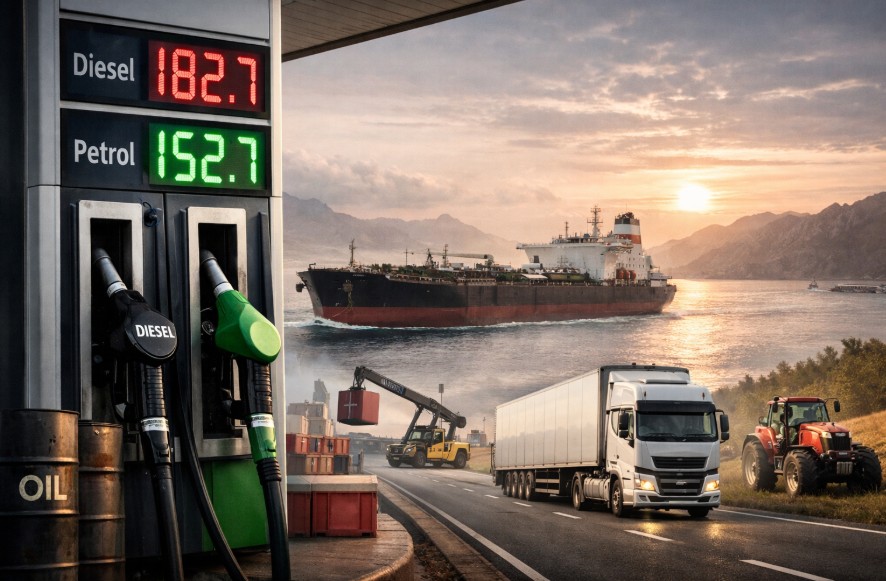
Why Has Diesel Gone Up More Than Petrol in the UK?
Diesel prices are rising faster because the UK imports more diesel, refining costs are higher and global supply has tightened.
Quick Summary
The recent rise in fuel prices began after global oil markets were disrupted. Diesel increased more sharply than petrol because it is more dependent on imported supply and is used by more industries.
- Diesel rose by around 40p per litre
- Petrol rose by around 20p per litre
- The gap between the two fuels is now close to 30p per litre
Diesel has gone up more than petrol in the UK because diesel is more expensive to refine, the UK imports more diesel than petrol, and global supply disruption has hit diesel harder.
Since the Middle East conflict intensified and fears grew around shipping through the Strait of Hormuz, wholesale diesel prices have risen far faster than petrol prices.
Key points drivers need to know:
- Diesel prices rose by around 40p per litre in March, compared with roughly 20p for petrol.
- The UK depends heavily on imported diesel, making it more vulnerable to global shortages.
- Diesel is used not only in cars and vans, but also in haulage, farming, generators and heating.
- Pump prices usually take around two weeks to react to wholesale fuel changes.
- The current gap between diesel and petrol is now close to a record high in the UK.
Why Has Diesel Gone Up More Than Petrol in the UK?
The simplest answer to why diesel has gone up more than petrol in UK is that diesel is under greater pressure across the global market.
While both fuels come from crude oil, diesel has become much more expensive because there is less supply available and more demand for it.
When oil prices rise, petrol and diesel usually both increase. However, diesel tends to react more sharply because the UK imports much of its diesel from abroad. If global supply chains are disrupted, diesel prices rise faster and by larger amounts.
At the same time, diesel has wider uses than petrol. It powers lorries, delivery vans, buses, agricultural machinery and some heating systems. That means when supplies tighten, more industries compete for the same fuel.
An official from the motoring industry recently said:
“March has been truly unprecedented. Fuel prices have never risen this fast in a single month.”
That pressure is exactly why diesel prices have moved far more dramatically than petrol prices.
What Has Caused Fuel Prices to Rise So Sharply in Recent Weeks?
The sharp rise in both petrol and diesel prices began after conflict in the Middle East disrupted oil markets. Concerns around the Strait of Hormuz, one of the world’s most important oil shipping routes, caused wholesale oil prices to surge.
Brent crude, the global benchmark oil price, increased from about $73 per barrel (around £58) to over $110 (about £87). By the end of March, it eased slightly to just above $100 (around £79). Even so, this was enough to trigger the fastest monthly rise in UK fuel prices in years.
Analysts estimate that every $10 rise in oil prices (around £8) can add about 7p per litre to pump prices. Diesel, already under more pressure than petrol, rose much more sharply.
| Fuel Type | Price at Start of March | Price at End of March | Total Increase |
| Petrol | 132.83p per litre (£1.33) | 152.83p per litre (£1.53) | +20p |
| Diesel | 142.38p per litre (£1.42) | 182.77p per litre (£1.83) | +40p |
The difference between petrol and diesel has now widened to nearly 30p per litre, compared with roughly 10p before the latest disruption.
Why Does Diesel React More Sharply Than Petrol When Oil Markets Are Disrupted?
The UK imports a large proportion of its diesel from abroad, particularly from Europe, Norway and the United States.
This means any disruption to shipping routes, refinery output or transport costs can quickly push UK diesel prices higher.
When supply routes become uncertain, importers often pay more for shipping, insurance and storage. Those extra costs eventually feed through to motorists at the pump.
Why Diesel Supply is More Vulnerable?
The UK imports a large share of its diesel from abroad, particularly from Europe and other international markets. If shipping routes become uncertain or refining capacity falls, the UK can quickly feel the impact.
Why Diesel Demand Remains Higher?
Unlike petrol, diesel is not only used by motorists. It is essential for:
- HGVs and freight transport
- Vans and commercial fleets
- Agricultural machinery
- Backup generators
- Heating oil in some rural areas
Because so many industries depend on diesel, demand stays high even when prices rise.
Why Shortages Affect Diesel First?
When global supplies tighten, diesel is often the first fuel to face shortages because there is less spare capacity available. Petrol supplies tend to be more flexible.
| Reason Diesel Rises Faster | Effect on UK Prices |
| Greater reliance on imports | More vulnerable to international disruption |
| Broader industrial use | Demand stays high even during price rises |
| Limited refining capacity | Less diesel available in global markets |
| Shipping disruption | Diesel imports become more expensive |
This explains why diesel is dearer than petrol in the UK during periods of global uncertainty.
Is Diesel More Expensive to Produce Than Petrol?
Diesel is generally more expensive to produce than petrol. Both come from crude oil, but diesel is a heavier, denser fraction that requires more processing to become road-ready fuel.
Refineries must use additional stages, especially to remove sulphur and meet strict environmental standards, which raises production costs. When energy prices rise or refining capacity drops, diesel becomes even more costly to produce.
Petrol, in contrast, is easier and cheaper to refine in large quantities, so its price often increases more slowly. Limited refinery output in Europe has also reduced diesel supply.
An industry analyst explained the situation clearly:
“Diesel is a thicker, heavier fuel and there is simply less of it available globally. When supply chains are disrupted, the price moves faster than petrol.”
Why Does the UK Rely More on Imported Diesel?
The UK relies heavily on imported diesel because domestic refineries cannot produce enough to meet demand.
While the country extracts crude oil from the North Sea, much of it is exported for refining and later re-imported as diesel. This creates a stronger dependence on global diesel markets compared to petrol.
Where the UK gets its diesel?
- European refineries (main source)
- Additional supply from Norway and the United States
Any disruption, reduced output, or higher shipping costs in these regions quickly impacts UK diesel prices.
Petrol is less exposed because more of it is refined domestically, keeping supply relatively stable and price increases more gradual.
Current tensions in the Middle East have increased transport risks. Higher tanker insurance and shipping costs are now being passed on to drivers, pushing prices further up.
| Fuel Type | UK Reliance on Imports | Exposure to Global Disruption |
| Petrol | Moderate | Lower |
| Diesel | High | Much higher |
Overall, the UK’s reliance on imported diesel makes it far more vulnerable to global disruptions, which is why diesel prices tend to rise faster and more sharply than petrol.
How Much More Has Diesel Risen Than Petrol?
The gap between diesel and petrol prices is now one of the widest ever seen in the UK. Diesel rose by nearly 40p per litre during March, while petrol rose by around 20p.
That means diesel has increased at almost double the rate of petrol.
For drivers, the impact is significant. Filling a typical 55-litre petrol car now costs around £84. A similar diesel vehicle costs more than £100 to fill.
| Vehicle Type | Approximate Cost Before March | Approximate Cost Now | Extra Cost |
| Petrol Car (55 litres) | £73 | £84 | +£11 |
| Diesel Car (55 litres) | £78 | £100 | +£22 |
The gap between the two fuels has now reached nearly 30p per litre. During previous fuel crises, such as in 2022, the difference was much smaller.
Why is There a Delay Between Oil Prices Rising and Pump Prices Increasing?
Many drivers wonder why fuel prices continue rising even after oil prices begin to fall. The reason is that there is normally a delay between changes in wholesale markets and what appears on forecourts.
Fuel retailers buy stock in advance. That means if they purchased diesel at a higher wholesale cost two weeks ago, they still need to sell that fuel before prices can come down.
Typically, there is a lag of around 10 to 14 days between movements in the oil market and changes at the pump. This is why diesel prices may continue rising for a short period, even if crude oil prices begin to ease.
Some drivers have accused retailers of taking advantage of the situation, but the main driver of higher prices remains the wholesale cost of fuel.
Are Fuel Retailers to Blame for Diesel Costing More?
Retailers have faced criticism because the gap between diesel and petrol has become so large. Some drivers believe forecourts are making excessive profits.
However, most evidence suggests the biggest reason for the rise is the wholesale price that retailers themselves must pay.
A markets regulator is now investigating whether some forecourts have increased prices more than necessary. Even so, the wider issue is the global cost of diesel.
A transport industry spokesperson recently warned:
“Rising fuel prices continue to be a huge challenge for businesses that already operate on thin margins. The knock-on effect will be felt across the supply chain.”
While some retailers may charge more than others, the current rise in diesel is being driven mainly by global shortages, higher import costs and more expensive refining.
How Do Higher Diesel Prices Affect Households and Businesses?

The effect of expensive diesel goes far beyond motorists filling up their cars. Diesel powers much of the UK economy, so when prices rise, the impact spreads into transport, food prices, business costs and inflation.
Impact on Transport and Deliveries
Most delivery vans, HGVs and commercial vehicles run on diesel. When fuel becomes more expensive, transport firms often increase their prices to cover the additional cost.
This affects courier companies, online shopping deliveries, public transport and businesses that rely on regular transport.
Impact on Food and Shopping
Supermarkets, farmers and suppliers all depend on diesel-powered vehicles. As a result, higher diesel prices can make it more expensive to move goods around the country.
This can lead to:
- Higher supermarket prices
- More expensive online deliveries
- Increased costs for businesses
- Greater pressure on household budgets
Impact on Inflation and Interest Rates
Rising diesel prices can also push inflation higher. If inflation stays above expectations, the Bank of England may keep interest rates higher for longer.
That would affect mortgages, loans and borrowing costs across the UK. Households could therefore feel the impact of higher diesel prices even if they do not drive a diesel vehicle themselves.
Although there are concerns about shortages, the government says the UK still has more than 90 days of oil reserves available, which should help protect supplies in the short term.
Could Diesel Prices Fall Back Soon?
Diesel prices could fall if global oil markets stabilise and shipping routes become safer. If tensions ease and crude oil falls back, wholesale diesel prices should eventually follow.
However, diesel is unlikely to return to previous levels immediately. The market remains volatile and there is still concern about future supply.
Several factors could keep diesel prices high through the rest of 2026:
- Ongoing disruption in oil shipping routes
- High demand from transport and industry
- Limited diesel refining capacity
- Possible future increases in fuel duty
The government has already confirmed that fuel duty is frozen until September 2026, but increases are planned later in the year unless policy changes.
What Should UK Drivers Do While Diesel Remains High?
Drivers cannot control global oil prices, but they can reduce the impact by being more careful about where and how they buy fuel.
Checking prices locally is now more important than ever because there can be large differences between nearby forecourts. Supermarkets are often 5p to 10p per litre cheaper than motorway service stations, which could save between £2.75 and £5.50 on a 55-litre tank.
Drivers may also want to:
- Use fuel comparison apps to find cheaper stations
- Combine journeys to reduce mileage
- Avoid rapid acceleration and heavy braking
- Fill up earlier if local prices begin rising sharply
For businesses that depend heavily on diesel, reviewing delivery routes, vehicle use and fuel contracts may help reduce costs while prices remain unstable.
Conclusion
The answer to why has diesel gone up more than petrol in UK comes down to three key issues: diesel costs more to produce, the UK imports more of it, and global supply disruption has hit diesel much harder than petrol.
Recent tensions in the Middle East have pushed up crude oil prices and created concern around fuel shipments. Because diesel is already in shorter supply and is used across more sectors of the economy, it has become far more expensive than petrol.
Unless global conditions improve, diesel is likely to remain significantly dearer than petrol for some time.
Frequently Asked Questions
Why is diesel usually more expensive than petrol in the UK?
Diesel is more expensive because it costs more to refine and the UK imports a larger proportion of it from overseas.
Does the UK import most of its diesel?
The UK imports a significant amount of diesel, mainly from Europe, Norway and the United States.
Why did diesel rise by more than petrol this month?
Diesel rose more because wholesale diesel prices increased faster after oil market disruption and fears over supply shortages.
Is diesel more affected by global conflicts?
Yes. Diesel markets are tighter than petrol markets, so global conflicts and shipping disruption often affect diesel more severely.
Could diesel prices reach the highs seen in 2022?
They could if oil prices continue rising sharply, although current prices remain below the record levels reached in 2022.
Will higher diesel prices increase food costs?
Potentially yes. More expensive diesel raises transport and delivery costs, which can eventually increase supermarket prices.
Are diesel prices likely to stay high through 2026?
Diesel prices may remain high if global supply disruption continues and planned fuel duty increases go ahead.