
⚖️
WAYNE COUZENS PENSION – KEY LEGAL UPDATE
Estimated CNC Pension: ~£7,000 per year (inflation-linked) plus a potential £20,000 tax-free lump sum.
The pension relates to his previous service with the Civil Nuclear Constabulary and could be accessed from December 2027 (age 55), subject to scheme rules.
📌 Why Is the Wayne Couzens Pension Controversial?
- Legal Test: Offence must be “in connection with” CNC employment
- Ministerial Role: Secretary of State must issue forfeiture certificate
- Scheme Control: Administered by UK Atomic Energy Authority
- Human Rights: Pension rights protected as property under law
Why It Matters: The Wayne Couzens pension dispute highlights the tension between public outrage and strict pension forfeiture laws. Any decision could shape future rules for stripping public servants of retirement benefits.
Legal Snapshot:
- Annual Pension Estimate: ~£7,000
- Lump Sum: ~£20,000
- Earliest Access: December 2027
- Scheme: Civil Nuclear Constabulary (CNC)
- Administrator: UK Atomic Energy Authority
- Status: Under legal review
“Determination alone does not override statutory pension protections — the law ultimately decides.”
Who is Wayne Couzens?
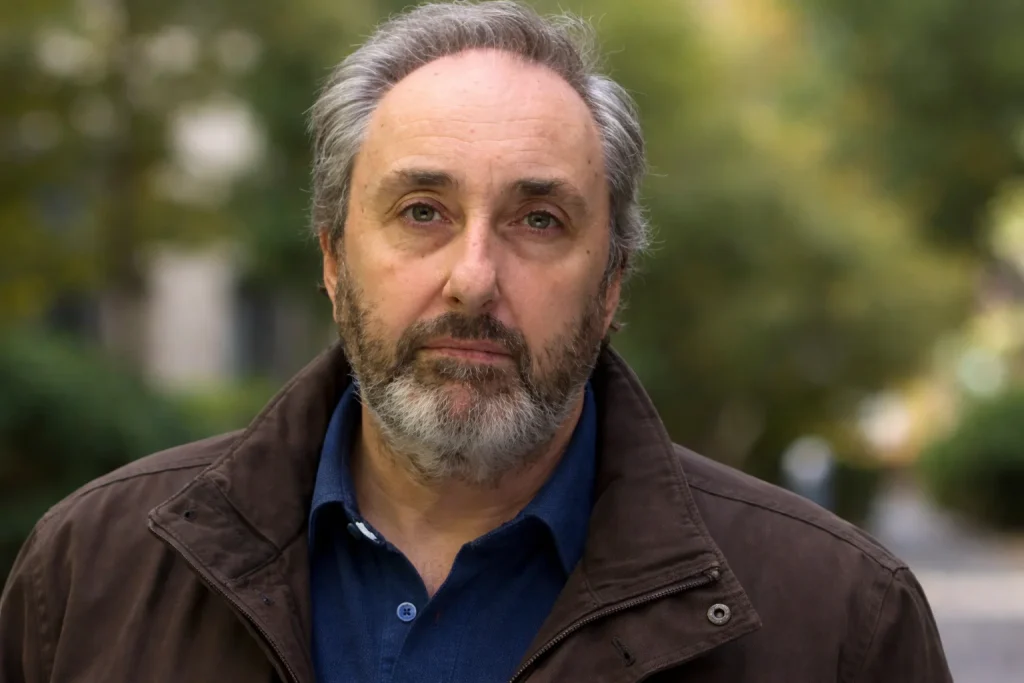
Wayne Couzens is a former Metropolitan Police officer who was convicted in 2021 of the abduction, rape and murder of Sarah Everard. His crimes, committed while he was a serving police officer, shocked the nation and led to widespread scrutiny of policing standards and vetting procedures.
Before joining the Metropolitan Police in 2018, Couzens served for approximately seven and a half years with the Civil Nuclear Constabulary (CNC), a specialist armed police force responsible for protecting nuclear sites across England and Scotland.
His Policing Career
- Joined the Civil Nuclear Constabulary in 2011
- Transferred to the Metropolitan Police in 2018
- Served as an armed officer
- Convicted in 2021 and given a whole-life order
Although he will never be released from prison, the issue now dominating headlines concerns pension rights accrued during his public service.
The Crime and Sentencing
In March 2021, Couzens abducted Sarah Everard in south London, falsely arresting her by misusing his police warrant card and handcuffs. He later pleaded guilty and received a whole-life order in September 2021.
The severity of the crime and abuse of police authority intensified public outrage. It also triggered immediate calls for any public benefits linked to his service to be revoked.
Why is Wayne Couzens Still in Line for a Pension at All?
The core of the Wayne Couzens pension controversy lies in the difference between moral outrage and legal entitlement.
While public reaction has been overwhelmingly emotional and critical, pension law operates on statutory criteria rather than public sentiment.
Couzens is reportedly in line for a Civil Nuclear Constabulary pension worth approximately:
- Around £7,000 per year (inflation-linked)
- A potential tax-free lump sum of about £20,000
- Earliest reduced access from December 2027 (when he turns 55)
This entitlement stems from his service with the CNC before joining the Metropolitan Police.
It is important to understand that occupational pensions are generally considered deferred earnings. They are built up over years of service and protected by specific scheme rules and legislation. Unlike the state pension, which prisoners cannot claim while incarcerated, there is no automatic legal ban preventing prisoners from receiving occupational pensions.
This legal reality explains why the CNC pension has not automatically been cancelled despite the severity of Couzens’ crimes.
What Exactly is the Civil Nuclear Constabulary Pension, and Who Runs It?
The Civil Nuclear Constabulary is not a standard territorial police force. It operates under different governance structures and falls under the Department for Energy Security and Net Zero (DESNZ), rather than the Home Office.
What is the CNC?
The CNC is a specialist armed police force responsible for protecting civil nuclear sites and nuclear materials. Its role is focused on national infrastructure security rather than general policing duties.
Officers are highly trained and operate in sensitive environments linked to national energy and security policy.
Because of its specialist status, the CNC sits within a different departmental framework compared to forces such as the Metropolitan Police.
Who Oversees the Pension Scheme?
The CNC pension scheme is administered by the UK Atomic Energy Authority (UKAEA). This distinction is crucial because:
- The CNC itself does not control pension forfeiture decisions.
- The relevant Secretary of State must approve any forfeiture certificate.
- The legal framework differs from that governing Metropolitan Police pensions.
Simon Chesterman, Chief Constable of the CNC, stated:
“The CNC is not the pensions authority or administrator of the pension scheme. Immediately after Couzens’ conviction in 2021 we made a formal recommendation that any pension entitlements arising from his CNC employment should be forfeited.”
This confirms that the CNC recommended forfeiture, but final authority lies elsewhere.
What Happened With the Metropolitan Police Pension and Why Didn’t Forfeiture Apply?
Following Couzens’ conviction, London Mayor Sir Sadiq Khan applied to the Home Office to revoke his Metropolitan Police pension.
That application was approved. However, it later emerged that Couzens had not accrued sufficient pension benefits within the Met scheme for forfeiture rules to meaningfully apply. In effect, there was little or nothing to revoke.
The CNC pension, however, is different. It relates to seven and a half years of prior service and is estimated to be worth around £7,000 annually at retirement age.
This distinction between the Met pension and the CNC pension is central to the dispute.
What Are “Pension Forfeiture” Rules, and Why Are They So Hard to Use?
Public service pension forfeiture in the UK is governed by strict statutory criteria. It is not a discretionary political decision but a legal mechanism with high thresholds.
For a public sector pension to be forfeited:
- The offence must be committed “in connection with” the individual’s employment as a public servant; and
- A Minister of the Crown must certify that the offence was gravely injurious to the interests of the state or likely to lead to serious loss of confidence in the public service.
Why is the threshold high?
Pensions are considered property rights. Removing them engages legal protections, including potential human rights considerations under Article 1 of Protocol 1 of the European Convention on Human Rights (protection of property).
Forfeiture is extremely rare. Since the 1970s, only 33 NHS workers, including Harold Shipman, have lost their pensions. Recent high-profile cases demonstrate how uncommon forfeiture is, even in severe criminal matters.
The rarity reflects legal caution rather than political reluctance.
Is the Crime “in Connection With” His Cnc Service, and Why is That the Legal Battleground?
This is arguably the most legally complex element of the Wayne Couzens pension case.
Couzens committed his crimes while serving as a Metropolitan Police officer, not during his employment with the CNC. That timing creates a potential legal gap.
Legal experts have suggested two possible interpretations:
- A broad interpretation: His service as a public servant spans his entire policing career, including the CNC period.
- A narrow interpretation: The offence must relate specifically to the employment tied to the pension being forfeited — in this case, his CNC service.
CNC scheme rules reportedly state that forfeiture applies where the offence is committed “in connection with any employment to which this scheme applies.”
If interpreted narrowly, this would require a direct link between the crime and his CNC duties, something that may be difficult to establish.
Government lawyers have reportedly been engaged in a prolonged legal review of this issue since at least 2024.
Who Has the Power to Strip the CNC Pension and What Does the Process Involve?
The CNC does not have unilateral authority to cancel pension entitlements. The process involves multiple institutional steps:
- A recommendation from the force
- Consideration by the scheme administrator (UKAEA)
- Certification by the relevant Secretary of State
Because the CNC falls under DESNZ, the Secretary of State for Energy Security and Net Zero plays a central role in the certification process.
A government spokesperson stated:
“We are absolutely determined that Wayne Couzens does not receive a Civil Nuclear Constabulary pension, and are actively working on it.”
This statement signals political determination. However, determination alone does not override statutory requirements. The decision must align with scheme rules and broader pension legislation.
What Has Been Done So Far, and What’s the Timeline to Possible Payment?
The timeline helps clarify the urgency:
| Event | Date | Significance |
| Conviction and whole-life order | 2021 | Triggered calls for forfeiture |
| CNC recommendation to revoke pension | 2021 | Formal request initiated |
| Political pressure renewed | 2023 | Mayor urged government action |
| Legal review ongoing | 2024 onwards | Complex statutory interpretation |
| Earliest reduced pension access | December 2027 | Potential payment start |
Couzens could reportedly access a reduced pension at age 55 in December 2027, or full entitlement at retirement age (around 60).
Why Are People Calling It “taxpayer-funded”, and is That Accurate?

The phrase “taxpayer-funded pension” has featured heavily in media coverage. Technically, public sector pensions are funded through a combination of:
- Employee contributions
- Employer contributions (from public funds)
- Scheme investment structures
In simple terms, the employer contribution ultimately comes from public finances. This explains the “taxpayer-funded” label.
However, occupational pensions are accrued rights based on service. They are not discretionary benefits that can be removed without legal grounds.
This tension between public funding and legal entitlement fuels much of the controversy.
Why is There Public and Political Outrage, and What Are Campaigners Arguing?
The emotional force behind the Wayne Couzens pension dispute is clear. Many argue that allowing any pension payment undermines public trust in policing.
Sir Sadiq Khan stated:
“After committing such heinous crimes, Wayne Couzens should not receive a penny in a taxpayer-funded pension. Londoners would be furious if he did.”
Campaign groups have also argued that if existing rules create loopholes, they must be closed to prevent similar situations in the future.
Public anger is not merely financial; it reflects concerns about accountability and confidence in public institutions.
Could Changing the Rules Be Blocked by Human Rights or Property-right Protections?
Changing pension rules retrospectively can face legal limits because pension entitlements are treated as accrued financial interests rather than simple administrative benefits.
Any reform connected to cases like the Wayne Couzens pension must comply with UK statutory law, European Convention on Human Rights obligations, and principles of proportionality and legal certainty.
Article 1 of Protocol 1 of the ECHR protects property rights, meaning interference with pension benefits must be lawful, justified, and proportionate.
Courts would likely consider the seriousness of the offence, whether legislation clearly allows forfeiture, and whether dependants could be unfairly affected.
Retrospective changes attract greater scrutiny, so governments must draft reforms carefully to avoid legal challenges or unintended consequences across other public sector pension schemes.
How Rare is Pension Forfeiture in the Uk, and What Examples Shape the Debate?
Forfeiture of public sector pensions remains exceptionally rare in practice, even in cases involving serious criminal convictions. The power exists in law, but its application is tightly constrained.
| Sector | Reported Forfeitures Since 1970s | Notable Cases |
| NHS | 33 | Harold Shipman |
| CNC | 0 (2020–2025 FOI period) | None reported |
| Other sectors | Rare | Case-specific |
The rarity reflects the legal safeguards built into public service pension schemes.
What Options Does the Government Realistically Have Next?
The Government has three potential routes, each carrying legal and political risk. None provides a quick or guaranteed resolution to the Wayne Couzens pension dispute.
Use Existing Forfeiture Law
Ministers could attempt to secure forfeiture under current legislation by proving the offence was committed “in connection with” his employment. This hinges on how broadly that statutory test is interpreted and whether the required ministerial certification can lawfully be justified.
Interpret Scheme Rules Broadly
Another approach would rely on a wider reading of the CNC pension scheme rules, arguing that his status as a public servant creates sufficient linkage. However, restrictive wording may limit this path.
Introduce New Legislation
Parliament could clarify or expand forfeiture powers. Yet any reform must comply with property-right protections and human rights law, making careful drafting essential.
Each route carries legal and political risk. Legislative reform, in particular, would require careful drafting to ensure compliance with property-right protections.
What Would a “fair” Policy Look Like Without Breaking the Law?
A balanced policy approach would aim to restore public confidence while respecting established legal safeguards. The challenge lies in creating rules that are robust enough to address extreme cases without undermining the integrity of public sector pension systems more broadly.
Potential elements of a revised framework could include:
- Clearer statutory wording defining what counts as being “in connection with employment.”
- Explicit provisions addressing the most serious criminal offences committed by public servants
- Independent oversight or review mechanisms to ensure decisions are legally sound
- Safeguards protecting innocent dependants from unintended financial harm
Such measures could help reduce ambiguity in future cases while maintaining compliance with property-right protections.
However, striking this balance is inherently difficult. Overly broad forfeiture powers could create uncertainty across the public sector, potentially affecting recruitment and morale. Conversely, rules that are too narrow may fail to address public expectations in cases involving extreme abuse of public trust.
Conclusion
The Wayne Couzens pension case represents a clash between moral outrage and legal structure. On one side is overwhelming public sentiment that a convicted murderer who abused police powers should not receive public money in retirement. On the other is a tightly defined statutory framework designed to protect accrued pension rights.
Ministers have made clear their intention to prevent payment. Whether they can lawfully do so remains uncertain.
The outcome will likely shape future pension forfeiture debates, clarifying how far the state can go in withdrawing retirement benefits from public servants convicted of the most serious crimes.
FAQs About Wayne Couzens Pension Dispute
Can a prisoner receive an occupational pension while in prison?
Yes. While prisoners cannot claim the state pension during incarceration, occupational pensions are not automatically cancelled and depend on scheme rules.
What is the difference between a police pension and a Civil Nuclear Constabulary pension?
The Metropolitan Police pension falls under Home Office oversight, while the CNC pension is overseen by DESNZ and administered by the UK Atomic Energy Authority.
What does pension forfeiture mean in UK public service schemes?
It refers to the legal process of removing pension rights under specific statutory conditions, typically involving serious misconduct connected to employment.
Does a conviction automatically cancel public sector pension rights?
No. There is no automatic cancellation. Legal thresholds must be met, and ministerial certification is required.
What does “in connection with employment” mean in forfeiture law?
It generally requires a direct link between the criminal offence and the employment tied to the pension scheme.
Could Parliament change the law to prevent payment?
Yes, but changes must comply with human rights protections and avoid unlawful retrospective interference with property rights.
Who ultimately decides whether the CNC pension is forfeited?
The decision involves the pension scheme administrator and requires certification by the relevant Secretary of State.