

🐕
DOG BREEDS TO BE BANNED IN BRITAIN – WHAT THE CLAIM REALLY MEANS
Current Legal Position: Despite headlines about 67 dog breeds being banned in Britain, there is currently no law that prohibits these breeds. The discussion relates to proposed welfare assessments for breeding standards, not ownership bans.
📌 Key Points About the 67 Dog Breeds Debate
- No Current Ban: The 67 breeds listed in reports are not illegal to own in the UK
- Welfare Assessment: A proposed 10-point health checklist may influence breeding standards
- Focus on Health: Traits such as breathing issues or extreme body proportions are under scrutiny
- Ownership Unaffected: Existing pets would remain legal even if stricter breeding rules were introduced
Why This Matters: Understanding the difference between Breed bans and welfare-based breeding rules help UK dog owners avoid unnecessary concern while following evolving animal welfare guidance.
Quick Facts:
- Topic: Dog breeds potentially affected by welfare assessments
- Number Mentioned: 67 dog breeds
- Key Policy Tool: Innate Health Assessment (IHA)
- Main Focus: Health-based breeding standards
- Current Status: No confirmed ban on these breeds
- Country: United Kingdom
“The aim of the assessment is to promote healthier dogs, not to eliminate entire breeds.”
Are 67 Dog Breeds Really Being Banned in Britain?

The short answer is no, 67 dog breeds are not currently banned in Britain. The claim originates from discussions about a welfare tool designed to improve breeding standards rather than from a confirmed legal ban.
Media reports highlighted that if stricter welfare assessments were enforced for breeding licences, dozens of dog breeds could potentially fail health-based criteria due to exaggerated physical traits. These concerns led to the widely shared headline that 67 dog breeds might be banned.
In reality, the proposal relates mainly to breeding standards rather than ownership. Existing pets would not suddenly become illegal, and the focus of the discussion is on preventing the continuation of traits linked to health problems.
As Marisa Heath, director of the All-Party Parliamentary Group for Animal Welfare, explained:
“The Innate Health Assessment is a voluntary welfare tool designed to encourage breeding from dogs with healthy conformations. It does not target particular breeds or aim to make them extinct.”
Understanding this distinction is crucial for separating sensational headlines from the current legal reality.
What Does UK Law Actually Say About Banned Dog Breeds?
Under UK law, certain dog types are restricted due to concerns about safety. These rules apply to ownership, breeding, selling, advertising, and transferring dogs that fall under the restricted categories.
The law was introduced after several high-profile dog attacks in the late 20th century and remains the foundation of the UK’s approach to dangerous dogs.
Over time, enforcement has evolved, but the overall aim of the legislation remains focused on public safety and responsible ownership.
Dangerous Dogs Act and Breed Restrictions in Britain
Under UK law, certain dog types are restricted due to concerns about safety. These rules apply to ownership, breeding, selling, and transferring dogs considered dangerous.
The law was introduced after several high-profile attacks in the late 20th century and remains the foundation of the UK’s approach to dangerous dogs.
How does UK Law Regulate Dangerous Dogs?
The law primarily targets specific breeds or types that authorities believe pose a greater risk. The table below summarises the legal framework.
| UK Legislation | Purpose | Key Focus |
| Dangerous Dogs Act 1991 | Public safety and control of dangerous dogs | Restricts certain dog types |
| Animal Welfare Act 2006 | Prevents cruelty and suffering | Regulates breeding conditions |
| Breeding Regulations | Licensing and welfare standards | Ensures responsible dog breeding |
While these laws already regulate dog ownership and breeding, they do not reference the 67-breed list currently circulating online.
Why Are Reports Claiming That 67 Dog Breeds Could Be Banned?
The claim largely stems from discussions around improving welfare standards for pedigree dogs. Campaigners argue that selective breeding for appearance has led to health problems in certain breeds.
Some media outlets interpreted proposed health checks as meaning entire breeds might disappear if breeders cannot produce dogs that pass the new standards.
However, critics argue that framing the issue as a “ban on dog breeds” is misleading.
Beverley Cuddy, founder of the Union of Good Dog People, commented on the debate:
“It’s going to be the most shocking thing to happen to dog lovers in this country if people believe their pets could suddenly be banned. The reality is far more complicated than the headlines suggest.”
The controversy, therefore, centres on animal welfare reforms rather than breed prohibition.
What Is the Innate Health Assessment and Why Was It Introduced?
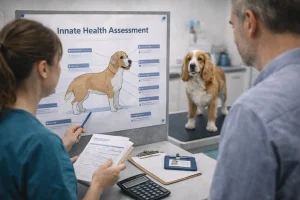
The Innate Health Assessment (IHA) is a proposed welfare tool designed to evaluate whether a dog has been bred with healthy physical characteristics. It was developed by the All-Party Parliamentary Group for Animal Welfare (APGAW).
The assessment includes 10 visual health checks that identify traits associated with suffering or reduced life expectancy.
Physical Traits That May Affect Dog Welfare
Certain physical features have been linked to health issues in dogs. These traits can occur across multiple breeds, which is why campaigners focus on characteristics rather than specific dogs.
Common examples include:
- Flat or shortened noses that restrict breathing
- Excessive skin folds leading to infections
- Bulging or outward-turning eyes
- Drooping eyelids
- Underbite or overbite affecting feeding
- Extremely short legs relative to body size
Dogs exhibiting several of these features could fail the assessment, meaning breeders may not receive licences to continue breeding them.
How could the Assessment Influence Breeding Standards?
If implemented widely, the IHA could affect how breeders select dogs for breeding programmes.
| Assessment Outcome | Meaning for Breeders | Potential Impact |
| Pass (8–10 criteria met) | Dog considered healthy | Breeding likely allowed |
| Partial pass | Some concerns identified | Breeding decisions reviewed |
| Fail | Significant health concerns | Breeding discouraged or restricted |
Supporters argue that this approach encourages healthier breeding practices without banning specific dogs.
Which 67 Dog Breeds Are Mentioned in the Proposed List?
Reports frequently reference 67 dog breeds believed to be potentially affected by welfare criteria. These breeds are mentioned because they sometimes display physical traits that could fail the assessment.
Importantly, this does not mean the breeds themselves are illegal or guaranteed to disappear. The list simply reflects breeds that may require careful health assessments before breeding.
To better understand how these breeds might be affected, it helps to look at common health-related features.
| Trait Category | Example Breeds Often Mentioned |
| Flat-faced breeds | Pug, French Bulldog |
| Short-legged breeds | Dachshund, Corgi |
| Heavy skin folds | Shar Pei |
| Eye protrusion issues | Pekingese |
These characteristics vary widely within breeds, which is why experts emphasise evaluating individual dogs rather than banning entire categories.
What Is the Full List of 67 Dog Breeds That Could Be Affected?
According to reports and campaign groups discussing welfare assessments, the following breeds are often included in discussions about potential restrictions:
- Affenpischer
- American Cocker Spaniel
- Australian Cattle Dog
- Australian Shepherd
- Basset
- Basset Bleu
- Basset Fauve
- Beagle
- Beauceron
- Bergamasco
- Bloodhound
- Border Collie
- Boston Terrier
- Boxer
- Bracco
- Brittany
- Brussels Griffon
- Bull Mastiff
- Bulldog
- Cairn Terrier
- Cardigan Welsh Corgi
- Cavalier King Charles Spaniel
- Cesky Terrier
- Chihuahua
- Chow Chow
- Clumber Spaniel
- Dachshund
- Dandie Terrier
- Dogue de Bordeaux
- French Bulldog
- Glen of Imaal Terrier
- Grand Basset
- Great Dane
- Japanese Chin
- King Charles Spaniel
- Lancashire Heeler
- Lhasa Apso
- Mastiff
- Mudi
- Neapolitan Mastiff
- Newfoundland
- Norfolk Terrier
- Norwich Terrier
- Old English Sheepdog
- Pekingese
- Pembroke Welsh Corgi
- Petit Basset
- Polish Lowland
- Pug
- Pyr Mastiff
- Pyr Shep
- Rough Collie
- Schipperke
- Scottish Terrier
- Sealyham Terrier
- Shar Pei
- Shetland Sheepdog
- Shih Tzu
- Skye Terrier
- Smooth Collie
- Spanish Water Dog
- St Bernard
- Staffordshire Terrier
- Sussex Spaniel
- Swedish Vallhund
- Tibetan Mastiff
- West Highland White Terrier
These breeds have been highlighted in discussions because some may display physical characteristics linked to health concerns, but it is important to remember that they are not currently banned in Britain and remain legal to own under existing UK law.
Would These Dog Breeds Become Illegal to Own in the UK?

One of the biggest misconceptions about the discussion is that owning these breeds could become illegal. In reality, the proposals focus on breeding practices rather than ownership.
Even if stricter regulations were introduced, the likely consequences would be related to:
- Breeding licences
- Welfare standards for pedigree dogs
- Health requirements for breeding animals
Existing pets would still be allowed to live with their owners and receive the same care and protection under current animal welfare laws.
| Scenario | Ownership Impact | Breeding Impact |
| Current law | No change | Existing regulations |
| Stricter welfare rules | Pets remain legal | Breeding may face new checks |
| Hypothetical ban | Highly unlikely | Would affect breeding programmes |
Therefore, pet owners who already have these dogs would not lose their pets under proposed welfare measures.
Why Are Popular Breeds Like Pugs, Corgis, and Dachshunds Included in Discussions?
Many of the breeds appearing in headlines are beloved family pets across the UK. However, they are often mentioned in welfare debates because certain physical traits can lead to health complications.
For example, flat-faced breeds such as Pugs and French Bulldogs can experience breathing difficulties. Similarly, short-legged dogs like Dachshunds and Corgis may be more prone to spinal issues due to their body structure.
However, breed organisations argue that these problems depend heavily on breeding practices rather than the breed itself.
Margaret Hoggarth, secretary of the Welsh Corgi League, addressed the issue directly:
“They are trying to say any dogs with a certain look are unhealthy, but anyone who has worked with corgis knows they are a very healthy breed.”
This ongoing debate highlights the balance between protecting animal welfare and preserving established breeds.
What Should UK Dog Owners and Breeders Understand About These Reports?
For dog owners, the most important takeaway is that there is no confirmed ban on 67 dog breeds in Britain. Instead, discussions revolve around improving health standards within breeding programmes.
Responsible breeding practices already play a key role in preventing inherited health problems. Many kennel clubs and veterinary groups encourage genetic testing, careful pair selection, and regular health checks.
For breeders and owners alike, the key priorities remain:
- prioritising health over appearance
- supporting responsible breeding standards
- ensuring dogs live active and healthy lives
As the conversation around animal welfare continues, experts emphasise that better breeding standards, not breed bans, are the primary goal.
Conclusion
The discussion around dog breeds to be banned in Britain has generated significant attention, but the reality is often misunderstood. Reports about 67 dog breeds stem from concerns over health and welfare linked to selective breeding rather than confirmed legal bans.
Current UK laws focus mainly on public safety and responsible breeding standards, not outlawing popular pets. Proposed assessments aim to encourage healthier breeding practices and reduce harmful physical traits in dogs.
For owners and breeders, the key takeaway is clear: these discussions are about improving animal welfare, not making beloved family dogs illegal across Britain.
FAQs
Could future UK animal welfare laws restrict dog breeding?
Future reforms could introduce stricter health checks for breeding dogs, but they would focus on welfare standards rather than banning specific pets.
Why are flat-faced dogs often criticised by welfare groups?
Flat-faced breeds can experience breathing problems because their shortened skull shape restricts airflow, which may affect exercise and temperature regulation.
Are councils already using health assessments for breeding licences?
Some councils have started considering health assessments when issuing breeding licences, although the system is not yet mandatory nationwide.
Do other European countries restrict certain dog breeds or breeding practices?
Yes. Countries such as Norway and the Netherlands have introduced regulations targeting breeding practices that cause health problems in dogs.
Can unhealthy physical traits shorten a dog’s lifespan?
Yes. Traits such as breathing impairments, severe joint issues, and spinal deformities can significantly reduce a dog’s quality of life and lifespan.
Why do some experts oppose breed-specific restrictions?
Critics argue that targeting entire breeds ignores the role of responsible breeding and individual health variations within a breed.
How can responsible breeding improve dog welfare in the UK?
Responsible breeding focuses on genetic testing, health screening, and avoiding exaggerated physical traits that may cause suffering.