
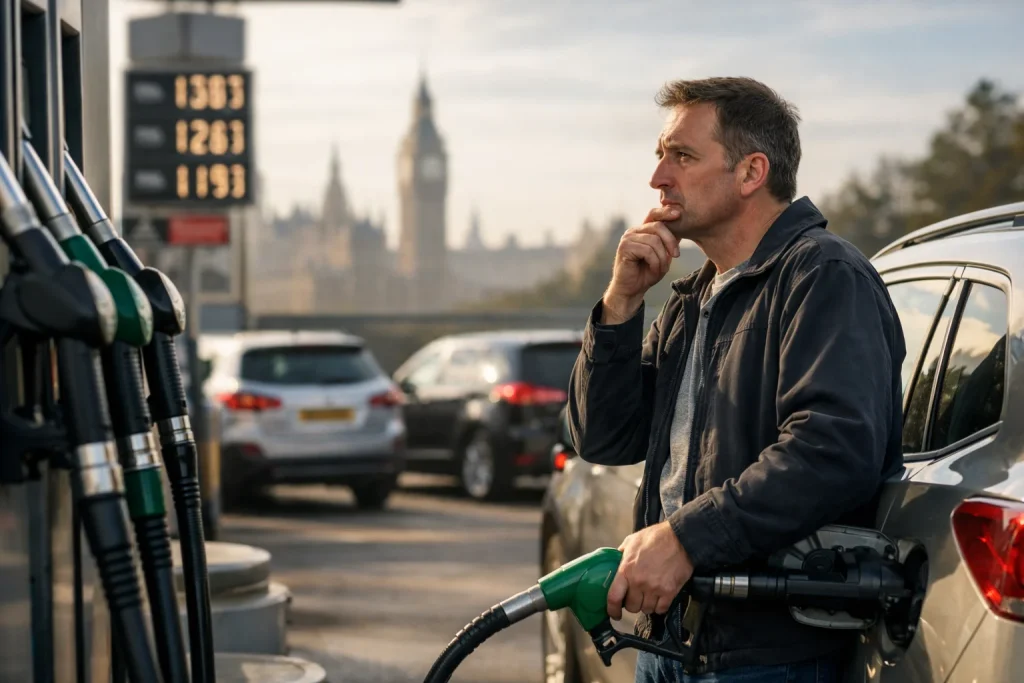
Why Are Iran Tensions Affecting the UK Fuel Duty Debate?
Although the UK does not import most of its oil directly from Iran, tensions in the Middle East can still influence global energy markets. Oil prices are set internationally, meaning geopolitical instability can quickly push prices higher worldwide.
Recent military developments involving the United States and Israel in Iran have raised concerns about possible supply disruptions.
A key risk involves the Strait of Hormuz, a narrow shipping route through which about one-fifth of the world’s oil supply passes.
If shipments through this corridor were disrupted, crude oil prices could rise rapidly. This could lead to higher petrol prices across the UK.
Key concerns driving the debate include:
- Potential disruption to global oil supply routes
- Rising crude oil prices are affecting petrol costs
- Pressure on governments to ease tax burdens during energy shocks
With motorists already facing higher pump prices, many policymakers argue that raising fuel duty now could further strain household budgets.
Is Fuel Duty Going Up in the UK in 2026?
The short answer is not immediately. Fuel duty in the UK is currently frozen, but there is a planned change scheduled for later this year.
At present, the tax rate on petrol and diesel remains reduced due to a temporary cut introduced in 2022. That reduction is expected to be phased out unless the government decides to extend it.
Prime Minister Keir Starmer addressed the issue directly during PMQs, telling MPs:
“Fuel duty is frozen. It’s going to remain frozen until September, and we will keep the situation under review in light of what’s happening in Iran.”
This means that while the planned tax increase still exists on paper, the government has not confirmed whether it will go ahead.
The final decision will likely depend on how fuel prices and global oil markets develop over the coming months.
What Did the Prime Minister Say About Fuel Duty at PMQs?

The issue was raised repeatedly during Prime Minister’s Questions, as opposition MPs sought clarity on whether the government would cancel the planned increase.
Conservative leader Kemi Badenoch criticised the policy and argued that the government should abandon the rise entirely due to cost-of-living pressures. She warned that raising fuel duty could worsen financial strain for motorists already facing rising prices.
Prime Minister Keir Starmer defended the government’s cautious approach, emphasising that the situation remains uncertain due to geopolitical tensions.
“In light of what’s happening in Iran, of course we will look carefully at the situation,” he told MPs in the House of Commons.
The exchange highlights how the debate over fuel duty has become both an economic and political issue. While the government insists that no immediate changes are planned, opposition parties continue to push for a permanent extension of the current tax cut.
How Could the Planned Fuel Duty Rise Affect UK Drivers?
If the planned changes go ahead later this year, the cost of fuel for motorists could increase slightly due to higher tax rates. The proposed change involves gradually removing the 5p per litre fuel duty cut introduced in 2022.
Current Fuel Duty Rates on Petrol and Diesel
The UK currently charges one of the highest fuel duties in Europe. Fuel duty is a fixed tax applied to each litre of petrol or diesel sold at forecourts.
| Fuel Type | Current Fuel Duty Rate | Share of Pump Price |
| Petrol | 53p per litre | About 40% |
| Diesel | 53p per litre | Around 38% |
These figures mean that a significant portion of what drivers pay at the pump is tax rather than the cost of the fuel itself.
What Was the 5p Fuel Duty Cut Means for Motorists?
The temporary reduction introduced in 2022 lowered the tax burden on drivers during a period of exceptionally high energy prices following Russia’s invasion of Ukraine.
If that reduction is phased out as planned:
- Fuel duty would gradually rise from 53p to around 58p per litre
- The change would be implemented over several months
- The full increase is expected to be in place by March 2027
While the rise may appear small per litre, it can add up over time for frequent drivers.
Why Was the 5p Fuel Duty Cut Introduced in the First Place?

The government originally introduced the 5p cut to fuel duty in 2022 during a period of global economic turbulence. Energy prices surged after Russia’s invasion of Ukraine disrupted global oil and gas supplies.
At the time, fuel prices in the UK reached record levels, putting significant pressure on households and businesses. Cutting fuel duty was intended to provide immediate relief for drivers and transport industries.
Several factors influenced the decision:
- Rapid increases in global oil prices
- Rising inflation and cost-of-living pressures
- Concerns about transport costs affecting the wider economy
The cut was always described as a temporary measure, which is why its eventual removal is now being discussed.
What Has Chancellor Rachel Reeves Said About the Possible Fuel Duty Increase?
The UK Chancellor, Rachel Reeves, has emphasised that the government is monitoring the situation closely before making any final decisions.
During discussions with MPs, Reeves acknowledged that energy markets are currently highly unpredictable. Oil prices have fluctuated sharply since tensions escalated in the Middle East.
“Nothing is off the table at this stage,” Reeves said when asked whether the planned fuel duty increase could be reconsidered.
She also noted that it remains too early to determine where petrol prices will be later in the year. According to the Chancellor, the government does not want to intervene unnecessarily if market conditions stabilise.
Reeves also stressed the importance of ensuring competition in the fuel market, stating:
“I am very loath to spend government money on something that the market should be doing itself.”
This cautious stance suggests that ministers may wait several months before deciding whether to extend the current tax cut.
Why Are Opposition Parties Pressuring the Government to Cancel the Rise?

The debate around fuel duty has quickly become a political battleground. Opposition parties argue that increasing the tax during a period of economic uncertainty could harm households and businesses.
Critics claim the government should permanently cancel the planned rise rather than simply reviewing it.
Campaign groups and political opponents have highlighted several concerns:
- Rising fuel costs could increase inflation
- Higher transport costs affect businesses and logistics
- Motorists already pay substantial taxes on fuel
Some campaigners also argue that drivers in the UK already face some of the highest fuel taxes in Europe.
How Do Global Oil Prices and Middle East Conflict Influence UK Fuel Costs?
Global oil markets are extremely sensitive to geopolitical developments. Even the threat of disruption to major shipping routes can cause crude prices to rise quickly.
Oil Supply Risks and the Strait of Hormuz
The Strait of Hormuz is one of the most important oil transit routes in the world. Around 20% of global oil shipments pass through this narrow waterway between Iran and the Gulf states.
Any disruption to shipping in this area could limit global supply, causing crude oil prices to spike.
How Oil Price Volatility Reaches UK Petrol Pumps?
Fuel prices in the UK are influenced by several factors beyond taxation.
- Global crude oil prices
- Currency exchange rates
- Refining and distribution costs
- Retail competition between fuel stations
When oil prices rise internationally, petrol and diesel prices at UK forecourts usually follow within weeks.
Could the Government Reverse the Planned Fuel Duty Increase?
It remains possible that the government could cancel or delay the planned increase. Ministers have repeatedly emphasised that all options remain under review.
If fuel prices rise significantly in the coming months, political pressure to extend the current tax cut may intensify.
According to analysis from the TaxPayers’ Alliance, the UK already ranks among the countries with the highest fuel taxes in Europe.
| Country/Region | Average Petrol Duty |
| UK | 53p per litre |
| EU Average | Around 50p per litre |
| Malta | Around 31p per litre |
If the planned increase goes ahead, the UK could move even higher in European rankings for fuel taxation.
Campaign groups argue that cancelling the rise would help protect drivers from further financial strain.
What Should UK Drivers Expect Before the September Fuel Duty Decision?

For now, the most important point is that fuel duty will remain frozen until at least September. No immediate tax changes are expected.
However, several factors will influence what happens next:
- Global oil price trends
- Developments in the Iran conflict
- UK inflation and economic conditions
- Political pressure from opposition parties
If fuel prices rise sharply, the government may decide to extend the current tax cut or introduce targeted support for households.
Until then, motorists should expect continued uncertainty as policymakers monitor developments in both global energy markets and domestic economic conditions.
Conclusion
In summary, the debate over whether fuel duty will increase in the UK is closely tied to global events, particularly rising tensions involving Iran and the potential disruption of key oil supply routes such as the Strait of Hormuz.
While fuel duty remains frozen until September, the government is monitoring energy markets carefully before making a final decision.
For now, UK drivers face continued uncertainty as policymakers weigh global oil risks, economic pressures, and the potential impact of higher fuel taxes on household budgets.
FAQs
What is fuel duty and how does it affect petrol prices in the UK?
Fuel duty is a tax applied to every litre of petrol or diesel sold in the UK. It forms a large portion of the final price motorists pay at the pump, alongside VAT and the base cost of fuel.
How much fuel duty do UK drivers currently pay per litre?
Drivers currently pay about 53p per litre in fuel duty on both petrol and diesel. This tax makes up roughly 40% of the price of petrol in the UK.
Why does the UK charge VAT on top of fuel duty?
VAT is applied after fuel duty has been added to the base price of fuel. This means drivers effectively pay VAT on both the fuel cost and the tax itself, which critics often describe as a “tax on a tax”.
How does fuel duty in the UK compare with EU countries?
The UK has one of the higher fuel duty rates in Europe. Even with the temporary reduction introduced in 2022, the UK still sits above the EU average for petrol and diesel taxation.
Could rising fuel prices increase UK inflation in 2026?
Yes. Higher fuel prices can increase transport costs for businesses, which may raise the prices of goods and services across the economy. This can contribute to higher inflation.
How much tax is included in the price of a litre of petrol?
Taxes account for more than half of the price of petrol in the UK. Fuel duty and VAT together can make up roughly 54–57% of the total pump price.
Will the government introduce financial support if fuel prices surge?
Government ministers have said that targeted support measures could be considered if energy prices rise sharply. However, officials say it is currently too early to determine whether such support will be needed.
{
“@context”: “https://schema.org”,
“@graph”: [
{
“@type”: “BlogPosting”,
“@id”: “https://www.prestonblog.co.uk/is-fuel-duty-going-up/#blogpost”,
“mainEntityOfPage”: {
“@type”: “WebPage”,
“@id”: “https://www.prestonblog.co.uk/is-fuel-duty-going-up/”
},
“headline”: “Is Fuel Duty Going Up After Iran Tensions? – The PM’s Statement at PMQs”,
“image”: “https://www.prestonblog.co.uk/wp-content/uploads/2026/03/Is-Fuel-Duty-Going-Up-After-Iran-Tensions-The-PMs-Statement-at-PMQs.webp”,
“datePublished”: “2026-03-12”,
“dateModified”: “2026-03-12”,
“author”: {
“@type”: “Person”,
“name”: “Jennifer”
},
“publisher”: {
“@type”: “Organization”,
“name”: “Preston Blog”,
“logo”: {
“@type”: “ImageObject”,
“url”: “https://www.prestonblog.co.uk/wp-content/uploads/2025/12/Preston-Blog-Logo.png”
}
}
},
{
“@type”: “FAQPage”,
“@id”: “https://www.prestonblog.co.uk/is-fuel-duty-going-up/#faq”,
“mainEntity”: [
{
“@type”: “Question”,
“name”: “What is fuel duty and how does it affect petrol prices in the UK?”,
“acceptedAnswer”: {
“@type”: “Answer”,
“text”: “Fuel duty is a tax applied to every litre of petrol or diesel sold in the UK. It forms a large portion of the final price motorists pay at the pump, alongside VAT and the base cost of fuel.”
}
},
{
“@type”: “Question”,
“name”: “How much fuel duty do UK drivers currently pay per litre?”,
“acceptedAnswer”: {
“@type”: “Answer”,
“text”: “Drivers currently pay about 53p per litre in fuel duty on both petrol and diesel. This tax makes up roughly 40 percent of the price of petrol in the UK.”
}
},
{
“@type”: “Question”,
“name”: “Why does the UK charge VAT on top of fuel duty?”,
“acceptedAnswer”: {
“@type”: “Answer”,
“text”: “VAT is applied after fuel duty has been added to the base price of fuel. This means drivers effectively pay VAT on both the fuel cost and the tax itself, which critics often describe as a tax on a tax.”
}
},
{
“@type”: “Question”,
“name”: “How does fuel duty in the UK compare with EU countries?”,
“acceptedAnswer”: {
“@type”: “Answer”,
“text”: “The UK has one of the higher fuel duty rates in Europe. Even with the temporary reduction introduced in 2022, the UK still sits above the EU average for petrol and diesel taxation.”
}
},
{
“@type”: “Question”,
“name”: “Could rising fuel prices increase UK inflation in 2026?”,
“acceptedAnswer”: {
“@type”: “Answer”,
“text”: “Yes. Higher fuel prices can increase transport costs for businesses, which may raise the prices of goods and services across the economy and contribute to higher inflation.”
}
},
{
“@type”: “Question”,
“name”: “How much tax is included in the price of a litre of petrol?”,
“acceptedAnswer”: {
“@type”: “Answer”,
“text”: “Taxes account for more than half of the price of petrol in the UK. Fuel duty and VAT together can make up roughly 54 to 57 percent of the total pump price.”
}
},
{
“@type”: “Question”,
“name”: “Will the government introduce financial support if fuel prices surge?”,
“acceptedAnswer”: {
“@type”: “Answer”,
“text”: “Government ministers have said that targeted support measures could be considered if energy prices rise sharply. However, officials say it is currently too early to determine whether such support will be needed.”
}
}
]
}
]
}