

GP Pay Rise 2026 Explained
Latest NHS Update on GP Salaries, Contracts, and Earnings
The UK government has confirmed a 3.5% GP pay rise for 2026, but the real impact on earnings depends on your role, contract type, and practice costs.
3.5% uplift for GPs and contract funding
From 1 April 2026 (backdated)
Salaried GPs, partners, and practice staff
Real earnings vs rising costs and workload
| Key Detail | Information |
|---|---|
| Pay Rise Percentage | 3.5% for 2026/27 |
| Applies To | GP contracts and NHS doctors |
| Payment Timing | Backdated to April 2026 |
What Has the UK Government Announced About the GP Pay Rise in 2026?
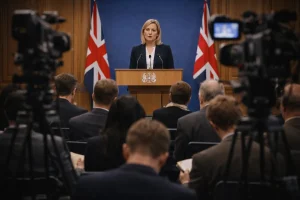
The UK government has officially accepted the recommendation from the Review Body on Doctors’ and Dentists’ Remuneration (DDRB) to implement a 3.5% GP pay rise for the 2026/27 financial year.
This uplift applies to:
- General practitioners
- Doctors and most dentists
- Pay elements within general practice contracts
Health Secretary Wes Streeting confirmed the decision, stating:
“General practitioners and practice staff are expected to receive a 3.5% uplift to the pay elements of GP contracts.”
The increase is part of a broader NHS pay award strategy, where multiple staff groups, including nurses and midwives, are also receiving pay adjustments.
Importantly, the government has positioned this as an above-inflation pay rise, marking the third consecutive year of such increases.
How Does the 3.5% GP Pay Rise Work in Practice?
Understanding how the 3.5% GP pay rise works requires looking beyond the headline figure, as it is not a straightforward salary increase applied equally to all GPs across the UK.
Instead, the uplift is applied to overall contract funding, which is distributed to GP practices and then influences earnings based on roles and practice structures.
In practice, salaried GPs may see a more direct and predictable increase in their income, while GP partners experience indirect changes through practice profits and financial performance. Locum GPs, however, are influenced more by market demand than fixed contract rates.
As a result, the financial impact varies widely, with some GPs benefiting more clearly than others, depending on costs, workload, and local conditions
When Will the GP Pay Rise Take Effect and Be Paid?
The timing of the GP pay rise is another key detail that directly affects when you will see the benefit.
The government has confirmed that:
- The uplift takes effect from 1 April 2026
- Payments will be backdated to this date
- Implementation may vary depending on payroll systems, contracts, and administrative processes
Unlike previous years, there is a stronger push to ensure earlier and more efficient processing of pay adjustments across NHS systems. This is intended to reduce delays and improve transparency for healthcare staff.
For many GPs, this means that even if there is a delay in receiving the updated pay, it should still result in a lump-sum backdated payment, ensuring no financial loss over time.
How Much Will Salaried GPs Earn After the 2026 Pay Rise?
For salaried GPs, the GP pay rise is relatively straightforward compared to other roles within general practice. The 3.5% uplift is more directly reflected in annual salary increases.
Estimated Salary Impact
| Current Salary | 3.5% Increase | New Salary (2026) | Monthly Increase |
| £65,000 | £2,275 | £67,275 | ~£189 |
| £75,000 | £2,625 | £77,625 | ~£218 |
| £90,000 | £3,150 | £93,150 | ~£262 |
While these increases may appear modest at first glance, they still represent a steady improvement in take-home pay, especially when considered alongside previous annual uplifts.
However, it is important to factor in rising living costs and inflation, which may reduce the overall impact of the increase in real terms. For some GPs, the rise may feel more like financial stability rather than a significant boost.
How Will the GP Pay Rise Affect GP Partners’ Income?
Unlike salaried GPs, GP partners do not receive a fixed salary. Instead, their income is closely tied to practice profits, which are shaped by funding levels, operational expenses, and patient demand within their surgery. This makes their earnings more variable and often less predictable than those of salaried doctors.
GP partners are essentially running small businesses within the NHS framework. As a result, any increase in funding, such as the GP pay rise, must first cover rising operational costs before it translates into personal income
Factors Influencing GP Partner Earnings
- Practice income from NHS contracts
- Staff salaries and operational costs
- Patient list size and service delivery
- Local funding variations
Why Profit and Expenses Matter More Than Headline Uplift?
Even with a 3.5% contract uplift, rising costs such as energy bills, staffing, and equipment can reduce the actual benefit.
Example Income Impact:
| Scenario | Practice Income Change | Expense Increase | Net Impact |
| Stable costs | +3.5% | 0% | Positive gain |
| Moderate inflation | +3.5% | +2% | Small gain |
| High cost pressure | +3.5% | +4% | Reduced income |
This highlights a key reality: the gp pay rise does not guarantee higher earnings for all partners.
For many practices, especially those facing rising operational costs, the increase may simply help maintain financial stability rather than deliver a noticeable income boost.
Will Locum GPs Benefit From the 3.5% GP Pay Rise?

Locum GPs operate outside traditional NHS employment contracts, meaning the GP pay rise does not directly apply to their daily or hourly rates.
Instead, locum earnings are shaped by:
- Supply and demand within local healthcare markets
- Workforce shortages and the availability of permanent staff
- Individual negotiation power, experience, and flexibility
However, indirect effects may still occur. As GP practices receive increased funding, some may be more willing, or able, to offer slightly higher locum rates to secure cover, especially in high-demand areas.
Typical Locum Rate Changes
| Year | Average Daily Rate | Potential Change |
| 2025 | £600–£800 | – |
| 2026 | £620–£830 | Slight increase |
In reality, locum GPs may benefit, but not consistently across the board. Rates can vary significantly depending on region, demand, and short-term staffing pressures.
Is the 3.5% GP Pay Rise Enough to Keep Up with Inflation?
This is one of the most debated aspects of the gp pay increment. The government maintains that the increase is above forecast inflation, but many professionals remain sceptical.
“Every group is receiving an above forecast inflation pay rise for the third year in a row,” according to the Department of Health and Social Care.
However, real-world conditions suggest a more complex reality. Rising costs in housing, utilities, insurance, and practice operations continue to place significant pressure on GP finances.
Real GP Perspective (Current Worker Review):
A salaried GP in Manchester recently shared:
“On paper, a 3.5% rise looks positive. But when you factor in workload and living costs, it doesn’t feel like a significant improvement.”
This reflects a broader sentiment across the NHS workforce, where pay increases are often judged not just by percentage, but by their real-world impact on financial wellbeing and workload balance.
How Does the 2026 GP Pay Rise Compare with Other NHS Staff Pay Awards?

The GP pay rise for 2026 sits within a broader NHS pay framework, where different staff groups receive varying levels of increases based on independent recommendations and workforce priorities.
Comparison With Nurses, Dentists and Resident Doctors
- Doctors and GPs: 3.5%
- Dentists (community services): 3.75%
- Nurses and NHS staff: 3.3%
- Proposed resident doctor uplift: ~4.9% (not accepted)
At a glance, GP pay sits slightly above that of nurses and general NHS staff but below certain dental roles. The proposed higher uplift for resident doctors also highlights ongoing negotiations and tensions within different parts of the workforce.
Differences Between DDRB and Agenda for Change Pay Structures
- DDRB governs pay recommendations for doctors and dentists
- Agenda for Change covers nurses, midwives, and allied health professionals
- Each system uses different evidence, workforce data, and economic considerations when determining pay
These structural differences are a key reason why NHS pay awards are not uniform. While the pay rise may appear competitive in percentage terms, the real impact varies depending on role, responsibilities, and underlying pay frameworks.
Overall, this creates noticeable differences in pay outcomes across the NHS, reinforcing ongoing debates around fairness, workforce retention, and long-term sustainability.
What Does the GP Pay Rise Mean for NHS Services and Patients?
The GP pay rise extends beyond individual earnings and has important implications for the wider NHS and patient care.
A better-funded GP workforce can:
- Improve access to GP appointments and reduce waiting times
- Support staff retention and reduce burnout
- Enhance the overall quality and continuity of patient care
However, challenges remain, particularly around how funding is distributed within practices. Not all staff, especially those employed directly by GP surgeries, are guaranteed to receive proportional pay increases.
“General practice nursing staff are essential… yet they continue to be let down when it comes to pay,” said Professor Nicola Ranger.
This highlights ongoing concerns about fairness, consistency, and whether funding uplifts are fully reaching all members of the primary care workforce.
What Could Happen Next After the 2026 GP Pay Rise Announcement?

Looking ahead, the recent pay rise is unlikely to be the final development in GP earnings for 2026 and beyond. Further changes are expected as discussions continue between the UK government, the British Medical Association (BMA), and other healthcare bodies regarding fair pay and funding.
Future developments may include additional funding adjustments in response to economic conditions, as well as potential reforms to GP contracts and workforce planning.
There is also a growing focus on tackling workforce shortages, improving recruitment, and retaining experienced GPs within the NHS.
As a result, the current 3.5% uplift should be seen as part of a longer-term strategy rather than a one-off fix to the financial challenges facing general practice.
Conclusion
The confirmed GP pay rise of 3.5% for 2026 represents a continued effort by the UK government to support NHS staff. However, the real impact varies widely depending on whether you are a salaried GP, partner, or locum.
While the increase offers some financial improvement, it does not fully resolve ongoing concerns about workload, inflation, and workforce sustainability.
Ultimately, if you are asking how much GPs will earn in 2026, the answer depends on multiple factors, but one thing is clear: the headline figure only tells part of the story.
Frequently Asked Questions
Do all GPs automatically receive the full 3.5% pay increase?
Not necessarily. While the uplift applies to contract funding, actual earnings depend on employment type and how funds are distributed within practices.
Is the GP pay rise the same across England, Scotland, Wales, and Northern Ireland?
No, each nation has its own system. England and Wales have confirmed similar uplifts, but implementation may vary elsewhere.
How is GP pay decided in the UK each year?
Pay is recommended by the DDRB, which reviews evidence from government, employers, and unions before making independent suggestions.
Will GP practices receive extra funding to cover the pay rise?
Yes, funding adjustments are included, including support through schemes like ARRS, but distribution is not always guaranteed.
Does the pay rise include bonuses or only base pay?
The uplift mainly applies to base contract funding rather than bonuses or additional incentives.
Are newly qualified GPs affected differently by the pay rise?
New GPs benefit proportionally, but their overall earnings depend on starting salaries and contract terms.
Could GP pay rise further later in 2026?
It is possible, especially if economic conditions or workforce pressures lead to further negotiations.