Prison Officer Pay Rise 2026 Confirmed
Operational Support Grades also receive a temporary 25% unsocial hours uplift and National Living Wage adjustment.
📈 Who BenefitsAll Operational Support Grades to Governors (Bands 2–11) are included in the pay award.
💰 Extra AllowancesBand 2 staff receive a National Living Wage uplift plus a temporary 25% unsocial hours allowance until 2027.
The pay rise is intended to help retention and recruitment, but officers highlight that rising living costs and unsocial hours still present challenges, making allowances and backdated pay essential.
The 2026 prison officer pay rise has been officially confirmed, bringing a minimum 3.5% increase for most staff in the UK prison service, including frontline officers, managerial grades, and operational support staff.
The Government has accepted all Prison Service Pay Review Body (PSPRB) recommendations, and the rise will be backdated to 1 April 2026 and paid by the end of June.
This award also includes additional measures for lower-paid staff and those working unsocial hours.
Key points:
- Who benefits: Operational Support Grades to Governors (Bands 2–11)
- Extra allowances: Temporary 25% unsocial hours uplift for Band 2
- Impact: Backdated pay, higher take-home salary, improved recognition
- Government aim: Support recruitment, retention, and frontline service delivery
This rise addresses both immediate pay concerns and ongoing workforce challenges.
What Has Been Confirmed in the Prison Officer Pay Rise 2026 Announcement?

On 26 March 2026, Justice Secretary David Lammy publicly confirmed that the Government has accepted all 12 recommendations made by the Prison Service Pay Review Body (PSPRB) for the 2026/27 pay award.
This decision covers a broad spectrum of staff and demonstrates official recognition of the dedication and professionalism of the prison workforce.
Lammy emphasised in his statement:
“Prison Service staff are some of our finest public servants. The role that prison staff play in keeping communities safe and supporting rehabilitation is crucial.”
The award guarantees a minimum 3.5% increase of base pay for all eligible staff, ranging from Operational Support Grades to Governors (Bands 2–11).
This includes frontline prison officers, senior officers, and managerial staff. The announcement also confirmed that the rise would be backdated to 1 April 2026 and paid in full by the end of June 2026, ensuring staff see immediate financial benefits for work performed during the first quarter of the year.
This decision represents a significant step in stabilising the prison service workforce, particularly amid concerns about retention, the ageing prison estate, and growing prison populations.
Who Will Receive the 3.5% Prison Officer Pay Rise in 2026?
The 3.5% pay increase is structured to benefit the majority of prison service staff, although the exact impact depends on the grade.
Key beneficiaries include:
- Prison Officer grades (Bands 3–5): Standard 3.5% increase applied across all base pay.
- Managerial and Governor grades (Bands 7–12): 3.5% increase reflects the higher responsibility and leadership duties.
- Operational Support Grades (Band 2): Receive 3.5% plus a National Living Wage adjustment and a temporary 25% unsocial hours allowance.
Staff in highly specialised or atypical roles may receive separate adjustments, but this pay structure ensures a fair approach across the service while prioritising support for the lowest-paid members.
By targeting resources in this way, the Government aims to support frontline staff while maintaining budget discipline.
The announcement represents the first substantial step in years towards aligning staff pay with the value of their work and addressing long-standing concerns about wage stagnation.
How Much More Will Prison Officers Earn After the 2026 Pay Rise?

While 3.5% might appear modest on paper, the practical increase can make a real difference for staff, especially when combined with allowances.
To illustrate the impact, the following table shows approximate salary changes for key grades:
| Staff Grade | Band | Current Annual Salary | 2026 Pay Rise | New Annual Salary |
| Operational Support | 2 | £22,000 | £770 + NLW adjustment | £22,770+ |
| Prison Officer | 3 | £27,000 | £945 | £27,945 |
| Prison Officer | 4 | £30,000 | £1,050 | £31,050 |
| Senior Officer | 5 | £33,000 | £1,155 | £34,155 |
| Governor | 7 | £45,000 | £1,575 | £46,575 |
| Senior Governor | 12 | £65,000 | £2,275 | £67,275 |
As the table demonstrates, although the percentage increase is uniform, the absolute monetary benefit rises with base pay, giving higher-paid staff a more substantial cash increase.
Operational Support Grade staff, however, benefit from the additional National Living Wage adjustment and unsocial hours allowance, making their effective increase proportionally higher relative to their starting salary.
Understanding these nuances helps staff plan for the financial changes on their payslips and better anticipate how the pay rise will affect their take-home pay.
Why Are Operational Support Grade Staff Receiving More Than a Standard 3.5% Increase?
Operational Support Grade (OSG) staff are receiving special consideration due to their lower starting salaries and challenging working hours. Their pay structure includes a combination of increases beyond the headline 3.5% figure.
National Living Wage Increase for Band 2 Staff
Band 2 staff already receive an automatic National Living Wage adjustment from 1 April 2026. When combined with the 3.5% pay award, this ensures that OSG staff see a higher overall pay increase relative to peers in higher bands.
Lammy stated:
“This targeted focus on the lowest-paid staff recognises their dedication and the essential work they do.”
This dual approach ensures fairness, supporting staff in lower pay bands while acknowledging the pressures they face.
Temporary 25% Unsocial Hours Uplift
OSG staff will also continue to benefit from a temporary 25% allowance on base pay until the 2027 PSPRB report is published.
This allowance compensates staff for unsociable working hours, which include night shifts, weekends, and public holidays.
Key points about this temporary uplift:
- Ensures frontline staff are financially recognised for challenging shifts
- Remains in effect until a permanent solution is agreed upon
- Supports staff morale and safety by providing additional compensation
This layered approach demonstrates an effort to reward those working in the most demanding roles while maintaining transparency in pay structure.
When Will the Prison Officer Pay Rise Be Paid and Backdated?
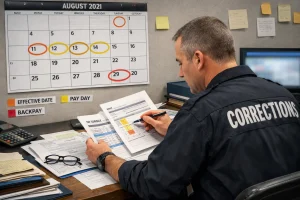
The Government has confirmed that the 2026 pay rise will be paid by the end of June 2026 and will be backdated to 1 April 2026. This means staff will receive a lump sum covering the difference for the first three months of the year.
It is important for staff to carefully review their payslips to ensure allowances, overtime, and temporary uplifts are accurately reflected.
Backdated payments may appear as separate entries, and any discrepancies should be raised promptly with HR or line managers.
The backdating ensures that staff are compensated fairly for work already performed, helping to offset rising living costs and demonstrating the Government’s commitment to supporting prison officers financially.
Why Does the Government Believe the 2026 Prison Service Pay Rise Is Necessary?
The government believes the 2026 prison service pay rise is necessary to strengthen recruitment, retention, and overall operational stability.
The Ministry of Justice presents the 3.5% increase as a strategic response to ongoing workforce pressures and the need to maintain effective prison operations.
Several factors support this decision. High staff turnover remains a major concern, with many officers leaving within their first two years.
At the same time, rising prison populations require more staff to maintain safety and security, while aging facilities add further operational challenges. Budget constraints also mean the increase must be carefully managed within existing resources.
Lammy stated:
“Accepting these recommendations in full reflects our commitment to ensure that prison staff are able to continue delivering this essential frontline service.”
The Government also highlights that the award aims to stabilise recruitment and reduce early staff departures, though critics argue that further steps are needed.
Why Has the POA Criticised the Prison Officer Pay Rise 2026?

Despite official approval, the Prison Officers’ Association (POA) has voiced strong criticism of the award.
Their key concerns include:
- Real-terms pay loss: Staff pay has fallen behind inflation by an estimated 12.6% over the past 11 years.
- Insufficient increase: The 3.5% rise does not adequately reflect cost-of-living pressures, particularly for low-paid staff.
- Comparison with MPs: While MPs will see a 5% increase, prison officers face only 3.5%, which the POA calls “nauseating hypocrisy.”
The Gap Between Inflation and Prison Officer Pay
While the Government emphasises the benefits, POA representatives argue that staff continue to struggle with rising living costs, including energy, fuel, and food.
This has created a growing disparity between the responsibilities of prison officers and their remuneration.
Union Demands and Staff Morale
The POA had requested a 6.3% increase for Bands 2–5, highlighting the need to restore real-terms pay.
Mark Fairhurst, National Chair of the POA, warned:
“If prison officers in England and Wales had their industrial rights restored, I would now be balloting them for strike action over this insulting award.”
These statements underline the continuing tension between the Government’s perspective and staff expectations.
How Could the 2026 Pay Award Affect Recruitment and Retention in UK Prisons?
The Government suggests the 3.5% pay rise will improve recruitment and retention, but several challenges remain:
- High staff turnover: Many leave within 24 months of joining.
- Reliance on overseas recruitment: Changing visa rules may limit international staffing.
- Immigration salary thresholds: Newly recruited foreign staff must meet the £41,700 per annum minimum, creating recruitment barriers.
Real-time example:
A recently hired officer at HMP Birmingham shared:
“The rise is welcome, but with rising living costs and unsocial hours, I still feel financially stretched. The temporary 25% uplift for OSG staff helps, but there’s more to be done for long-term stability.”
This demonstrates that while the pay rise is a step forward, staff are looking for a more sustainable solution to long-term financial security.
What Other Financial Benefits and Allowances Should Prison Staff Know About?

In addition to the base pay increase, prison staff can benefit from a range of allowances and financial perks that help boost overall earnings.
These payments are designed to recognise the demands of the role, including unsocial working hours, overtime commitments, and high-risk responsibilities.
| Benefit | Eligibility | Notes |
| Unsocial hours allowance | Band 2–5 | Temporary 25% uplift for OSG until 2027 |
| Overtime pay | All bands | Paid at enhanced rates depending on hours |
| Pension | All eligible staff | Standard contributory public sector pension |
| Specialist allowance | High-risk roles | Varies by role and prison |
Together, these benefits ensure that beyond base salary, prison staff receive structured financial support that reflects the challenges and responsibilities of their work.
What Could Happen to Prison Officer Pay and Benefits After 2026?
Looking ahead, prison officer pay and benefits could see further changes beyond 2026 as the government continues to review workforce needs and financial pressures. While the current pay rise offers short-term relief, long-term strategies will be crucial to improve retention, morale, and overall job satisfaction.
Key developments to watch include:
- 2027 PSPRB report: May introduce a permanent structure for unsocial hours pay
- Starting salary adjustments: Potential increases to meet visa requirements for overseas recruits
- Incremental pay rises: Aimed at reducing the real-terms pay gap over time
- Improved working conditions: Including better safety measures, facilities, and equipment
Overall, sustained improvements will be essential to support staff and ensure the prison system operates effectively in the years ahead.
What Could Happen to Prison Officer Pay and Benefits After 2026?
The 2026 pay rise marks just the beginning of a broader effort to improve conditions for the UK prison workforce. In the coming years, prison officer pay, allowances, and overall benefits are likely to face continued review and adjustment to address recruitment, retention, and workload challenges.
Staff should stay engaged with union updates, track how pay changes are implemented, and understand additional allowances available to them.
Being informed will help officers maximise the benefits of the current award while preparing for possible revisions in 2027.
Overall, remaining proactive and aware will be key to maintaining financial stability and long-term career satisfaction in a changing environment.
Conclusion
FAQs About Prison Officer Pay Rise 2026
Will newly recruited prison officers receive the 2026 pay rise?
Yes, all eligible staff from Operational Support Grade to Governors, including new recruits, will receive the 3.5% pay increase. Operational Support Grades benefit additionally from the National Living Wage uplift.
Does the prison officer pay rise apply to private prisons?
The pay award primarily covers staff employed by HMPPS in public sector prisons. Private prisons may have separate contractual arrangements.
Is the 3.5% increase pensionable?
Yes, the increase is pensionable, meaning contributions to the public sector pension scheme will reflect the higher base pay.
Will prison officers pay more tax after the rise?
While gross pay increases, the overall tax impact depends on individual circumstances. Most staff will see a modest rise in income tax and National Insurance contributions.
Are overtime rates affected by the 2026 pay award?
Overtime rates remain calculated on base pay, so the 3.5% increase may slightly enhance overtime earnings as well.
What happens if the June 2026 pay increase is delayed?
Backdating will still apply once the increase is processed. Staff should contact HR if there are discrepancies on their payslip.
Can prison staff appeal if they believe their pay rise has been calculated incorrectly?
Yes, staff can raise concerns through their line manager or HR department to ensure that backdated pay, allowances, and unsocial hours payments are correctly applied.