
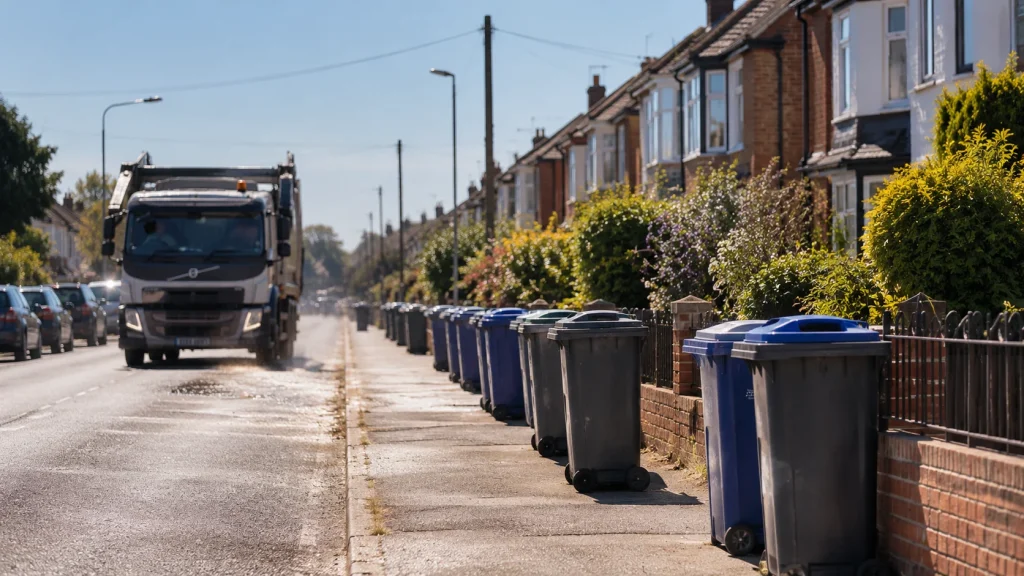
After investigating the latest council announcements and heatwave service updates, I found that several UK councils have introduced emergency schedule changes in response to a severe Met Office four-day amber extreme heat warning predicting temperatures up to 38°C (100°F).
Local authorities including Sevenoaks District Council, Cheltenham Borough Council, Somerset Council, and Bristol Waste are starting shifts up to an hour early to protect frontline collection crews from peak heat and prevent mechanical vehicle breakdowns.
I strongly advise residents to place all rubbish, recycling, and food waste bins at the kerbside by 6:00 AM (5:00 AM for Bristol Waste), or ideally the night before, to avoid missing your collection crew.
Key Takeaways:
- Met Office Heat Alert: A 4-day Amber Extreme Heat Warning targeting peak temperatures of 38°C (100°F) has forced emergency timetable shifts across the UK.
- New 5:00 AM & 6:00 AM Deadlines: Residents must present waste containers much earlier than usual; Sevenoaks, Cheltenham, and Somerset start at 6:00 AM, while Bristol Waste begins at 5:00 AM.
- Protecting Infrastructure & Crews: Moving operational hours to the cooler early morning reduces staff heat exhaustion and prevents vehicle hydraulic and engine breakdowns.
- Risk of Missed Collections: Bins not presented by the revised morning times will be marked as “not presented,” meaning residents must wait until the next scheduled cycle.
- All Waste Streams Impacted: The revised early morning schedules apply fully to general refuse, recycling boxes, garden waste, and food waste bins.
- Potential Summer Extensions: While currently scheduled as temporary measures between 22 June and 26 June 2026, several councils warn these early starts could continue all summer if the heatwave persists.
Why Are Councils Changing Bin Collection Times During the Heatwave?

When I started looking into the latest heatwave bin collection changes, one thing became immediately clear: councils across the UK are facing the challenge of maintaining essential public services while protecting frontline workers from exceptionally high temperatures.
The recent heatwave has prompted the Met Office to extend an amber extreme heat warning to cover four consecutive days, predicting peak temperatures reaching up to 38°C (100°F). For waste collection crews, this creates particularly demanding working conditions.
Unlike many indoor workers, refuse collection teams spend long hours outdoors, lifting bins, walking significant distances, and operating heavy vehicles throughout their shifts.
As I reviewed statements from local authorities, a common theme emerged. Councils are not changing schedules simply for convenience. Instead, they are attempting to reduce workers’ exposure to peak afternoon temperatures by moving collection rounds into the cooler early morning hours.
These adjustments also help councils continue delivering reliable services. Rather than cancelling collections or reducing routes, earlier starts provide a practical solution that allows waste management operations to continue functioning efficiently despite extreme weather conditions.
What Heatwave Bin Collection Changes Have Been Announced for June 2026?
During my investigation into local authority announcements, I found multiple councils introducing temporary schedule adjustments between 22 June and 26 June 2026.
Several authorities announced that collection crews would begin work one hour earlier than usual, while others opted for even earlier starts depending on local conditions and operational requirements.
Early Morning Collection Schedules
The revised schedules vary between councils, but the overall objective remains the same: complete collections before temperatures reach their highest levels.
| Council/Service Area | Revised Start Time | Resident Action Required | Temporary Period |
| Sevenoaks District Council | One hour earlier than normal | Place bins out by 6am | 22–26 June 2026 |
| Cheltenham Borough Council | 6am collections | Bins out by 6am | Heatwave period |
| Somerset Council | 6am collections | Bins out by 6am | Heatwave period |
| Bristol Waste | 5am collections | Place bins out by 5am | Heatwave period |
| Other UK Councils | Varies by authority | Check local updates | Subject to weather |
What stood out during my research was the consistency of the messaging. Regardless of location, councils are emphasising the importance of residents presenting bins earlier than normal to avoid missed collections.
Why Are Waste Collection Crews Starting Work Earlier?
As I dug deeper into the reasons behind these schedule changes, worker safety emerged as the primary concern.
Waste collection is physically demanding under normal circumstances. During a heatwave, the challenges become significantly greater. Collection crews often spend hours outdoors while performing repetitive lifting, pushing wheeled bins, and operating equipment in direct sunlight.
Earlier start times allow workers to complete a larger portion of their routes before temperatures become potentially dangerous.
Oliver Grant, a local government workforce safety consultant, explained the issue clearly: “The combination of physical labour, outdoor exposure, and prolonged shifts makes heat management essential for waste collection teams. Earlier starts significantly reduce the period crews spend working during the hottest part of the day.”
Explaining the necessity of these early shifts, Councillor Steve Harvey of Cheltenham Borough Council stated: “This is to help our crews and vehicles cope in the heat and ensure that they’re able to complete the scheduled collections.” He added that while crews will try to be as quiet as possible during these early hours, residents must adapt to the temporary timeline to keep the system moving safely.
This approach mirrors strategies used across multiple sectors during extreme weather events, including construction, highways maintenance, and outdoor utilities work.
How Does Extreme Heat Affect Bin Collection Services?

Many residents may assume that heat primarily affects workers. However, my research revealed that the impact extends much further.
Extreme temperatures can influence every aspect of waste collection operations, from vehicle performance to route completion times.
Impact on Collection Vehicles
Modern refuse collection vehicles contain complex hydraulic systems, lifting mechanisms, electronic controls, and engine components. Prolonged exposure to extreme heat can place additional strain on these systems.
Some councils have previously reported vehicle breakdowns and mechanical faults during periods of unusually hot weather. Even minor disruptions can affect collection schedules across entire service areas.
In fact, these exact operational changes come just one month after a previous spell of hot weather caused severe disruptions to local bin lorries across the West, leading to numerous sudden vehicle breakdowns and malfunctioning hydraulic mechanisms.
Challenges Faced by Waste Collection Teams
The operational challenges include:
- Increased fatigue among workers.
- Greater hydration requirements.
- Reduced physical performance during peak temperatures.
- Additional rest periods.
- Potential delays when heat-related safety measures are implemented.
| Heatwave Challenge | Impact on Operations | Potential Solution |
| High worker heat exposure | Slower collection rates | Earlier start times |
| Vehicle overheating | Service interruptions | Route adjustments |
| Increased fatigue | Reduced productivity | Additional breaks |
| Extreme afternoon temperatures | Health risks | Morning collections |
| Equipment strain | Mechanical issues | Preventive maintenance |
These factors explain why many councils prefer proactive schedule adjustments rather than waiting for disruptions to occur.
What Time Should Residents Put Their Bins Out for Collection?
One of the most common questions I encountered during my research concerned bin presentation times.
For most residents affected by heatwave bin collection changes, the safest approach is to place bins outside the evening before collection day whenever possible. This eliminates the risk of missing unexpectedly early collection rounds.
Where overnight presentation is not practical, residents should aim to follow the specific guidance issued by their local authority.
In many areas, the recommended time has been set at 6am or earlier.
Failure to present bins before collection crews arrive could result in missed collections, particularly where routes are being completed significantly earlier than normal.
What Types of Waste Are Included in the New Collection Schedule?
Another question that frequently appears during periods of service adjustment is whether the changes apply only to general rubbish.
Based on the announcements I reviewed, the revised schedules typically cover multiple waste streams.
These often include:
| Waste Type | Usually Included in Earlier Collections? | Resident Action |
| General refuse | Yes | Present by revised time |
| Recycling bins | Yes | Follow council guidance |
| Food waste bins | Yes | Present by revised time |
| Garden waste | Usually yes | Check local authority updates |
| Recycling boxes | Yes | Place out before collection begins |
The exact services included can vary between councils, making it important for residents to check local announcements whenever schedule changes are introduced.
How Long Will the Heatwave Bin Collection Changes Remain in Place?
As I continued reviewing council communications, I noticed that most authorities were presenting these changes as temporary measures linked directly to the current heatwave conditions.
For example, some councils announced revised collection schedules covering the period from 22 June to 26 June 2026, with normal operations expected to resume once temperatures return to more manageable levels. However, the duration ultimately depends on weather forecasts and operational assessments.
Local authorities regularly monitor guidance from weather agencies and health organisations when deciding whether temporary arrangements should remain in place. If temperatures continue exceeding seasonal averages, councils may choose to extend earlier collection schedules beyond the originally announced period.
What became clear during my investigation is that councils are trying to balance two priorities: protecting workers and maintaining consistent waste collection services. Temporary schedule adjustments provide flexibility without creating major disruption for residents.
For households, the most practical approach is to treat these arrangements as fluid rather than fixed. Residents should remain alert to updates from their local authority, particularly during prolonged periods of extreme weather.
What Happens If Residents Miss the Earlier Collection Time?
One concern I encountered repeatedly while researching these changes was the possibility of missed collections.
Residents who are accustomed to placing bins out later in the morning may not immediately realise that collection crews are operating under revised schedules.
If a bin is not available when crews arrive, it may be recorded as not presented. In such cases, residents may need to wait until the next scheduled collection unless their council offers a specific missed collection process.
This is why councils have been particularly clear in their messaging. The repeated requests for bins to be out by 6am are designed to minimise confusion and reduce avoidable service issues.
For households with multiple waste streams, including food waste and recycling, missing a collection can create additional inconvenience, especially during hot weather when waste can accumulate more quickly.
As I reviewed council advice, the recommendation that appeared most often was straightforward: place bins out the night before collection whenever possible.
This simple step greatly reduces the risk of missing an earlier-than-normal collection round.
How Can Households Prepare for Heatwave Waste Collection Changes?
During my investigation, I found that residents can take several practical steps to make these temporary changes easier to manage.
Preparation begins with awareness. Many missed collections occur not because services fail but because households remain unaware of revised schedules.
Checking council websites, local authority social media channels, and community announcements can help residents stay informed about collection changes.
Beyond timing, there are also practical waste management considerations during periods of extreme heat.
Food waste, in particular, can become more problematic during hot weather. Higher temperatures accelerate decomposition, potentially leading to unpleasant odours and attracting pests.
Residents may find it helpful to:
- Secure bin lids properly.
- Store bins in shaded areas where possible.
- Double-bag food waste when appropriate.
- Avoid overfilling containers.
- Present bins promptly on collection day.
These small adjustments can improve hygiene and reduce problems during extended warm periods.
Are Heatwave Bin Collection Changes Becoming More Common Across the UK?
After comparing recent council announcements with previous years, I found evidence suggesting that weather-related collection adjustments are becoming increasingly common.
Heatwaves were once considered relatively unusual events in many parts of the UK. Today, however, local authorities are encountering extreme temperatures more frequently.
This shift is influencing how public services are planned and delivered.
Waste collection represents just one example. Councils have also introduced weather-related adjustments affecting road maintenance, public events, parks management, and outdoor worker schedules.
The growing use of heatwave contingency plans suggests that councils are adapting to a changing operational environment.
| Factor Driving Change | Effect on Councils | Resulting Action |
| More frequent heatwaves | Increased operational risks | Earlier collection rounds |
| Worker welfare requirements | Greater safety obligations | Schedule adjustments |
| Vehicle performance concerns | Higher maintenance demands | Route planning changes |
| Public service expectations | Need for continuity | Temporary operational flexibility |
| Climate resilience planning | Long-term adaptation strategies | Heatwave response frameworks |
What stood out during my research was that councils are no longer simply reacting to heatwaves. Many are actively preparing for them.
How Are Councils Protecting Workers During Extreme Weather?
Earlier collection rounds are only one component of broader heatwave response strategies.
While reviewing industry guidance and council practices, I found that many authorities implement additional measures when temperatures rise significantly.
These may include:
- Increased access to drinking water.
- Additional rest breaks.
- Enhanced welfare monitoring.
- Route adjustments.
- Vehicle cooling checks.
- Flexible working arrangements where possible.
The objective is not merely to continue operations but to do so safely.
Heat-related illnesses can develop quickly, particularly among workers performing physically demanding outdoor tasks. By reducing exposure during the hottest parts of the day, councils lower the likelihood of heat exhaustion and other temperature-related health issues.
This proactive approach reflects a wider emphasis on occupational health and safety across local government services.
What Should Residents Know About Future Weather-Related Service Disruptions?
As I concluded my investigation into heatwave bin collection changes, one important lesson emerged: weather-related service adjustments are likely to become an increasingly familiar part of daily life.
Extreme heat, severe storms, flooding, and other weather events can all affect local authority operations.
For residents, the key is preparation rather than concern.
Most councils now have established communication channels that allow them to notify households quickly when service changes are required. Staying informed through official updates can help residents avoid confusion and minimise disruption.
The good news is that many of the measures being introduced are designed to prevent larger problems from occurring. Earlier collection schedules may require minor adjustments from residents, but they help ensure that waste services continue operating effectively during challenging conditions.
Conclusion
After investigating the latest heatwave bin collection changes, I found that councils across the UK are taking proactive steps to protect waste collection crews while maintaining essential services.
Earlier collection rounds, requests for bins to be presented by 6am, and temporary schedule adjustments are all part of a broader effort to manage the challenges created by extreme temperatures. Although these changes may require residents to adapt their routines, they help reduce health risks for workers and minimise operational disruptions.
As heatwaves become more common, similar measures may play an increasingly important role in ensuring reliable waste and recycling collections throughout the UK.
Frequently Asked Questions
Is my usual collection day changing during the heatwave?
No, councils are keeping your regular collection days the same but are shifting the arrival times significantly earlier into the morning.
What time should I put my bins out?
You should place your bins at the kerbside by 6:00 AM (or 5:00 AM if you are served by Bristol Waste). To be completely safe, consider putting them out the night before.
What should I do if I miss the earlier collection?
If your bin was not out when crews arrived, it will be marked as “not presented”. You will need to wait until your next scheduled day or report it via your local council’s missed collection portal.
How will I know if my council changes collection times again?
Keep an eye on your local authority’s official website, community alerts, and social media channels for real-time schedule updates.
How can I stop my food waste bin from smelling in the heat?
Keep your bin lids tightly secured, store the containers in shaded areas out of direct sunlight, and double-bag food waste to slow down decomposition.
Will my bin collections go back to normal after June 2026?
Yes, most councils intend these shifts to be temporary, though they have warned they may extend earlier rounds if extreme summer temperatures persist.
Are these early collection schedules happening across the whole UK?
While many regional councils have rolled out these emergency morning schedules, rules vary by authority depending on local weather severity and vehicle constraints.