

What Is the Universal Credit ‘Double Pay Day’ Issue?

| Personal Circumstances | Monthly Rate (2025/26) | New Monthly Rate (2026/27) |
| Single, under 25 | £316.98 | £338.58 |
| Single, 25 or over | £400.14 | £424.90 |
| Joint claimants, both under 25 | £497.55 | £528.34 |
| Joint claimants, one or both 25+ | £628.10 | £666.97 |
The Universal Credit ‘double pay day’ issue occurs when a claimant receives two wages during the same monthly assessment period. This does not usually mean they have earned extra money overall. Instead, it often happens because an employer changes the payment date due to a weekend, bank holiday or month-end timing.
For example, someone who is normally paid on the last working day of every month could receive one wage on 31 March and another on 30 April. If Universal Credit measures earnings between 2 April and 1 May, both payments may fall inside that one period. The system could then treat the claimant as though they had earned double their normal monthly wage.
This creates a problem because Universal Credit is based on earnings received during each assessment period rather than what the claimant normally earns over time. If two wages are counted together, the claimant may temporarily receive far less Universal Credit or even no payment at all for that month.
| Common Cause of Double Pay Day Issue | What Happens |
| Payday moved due to bank holiday | Two wages may fall into one assessment period |
| Paid at end of month | Month length can cause overlap |
| Employer pays early before weekend | Earnings are counted sooner than expected |
| Irregular monthly pay cycle | Universal Credit may misread income |
Why Do Some Universal Credit Claimants Receive Two Wage Payments in One Assessment Period?
Most claimants affected by this issue are paid monthly by their employer. The problem is particularly common among people whose payday is at the very end of the month. Because Universal Credit uses fixed monthly assessment periods, even a small change to the date can affect how earnings are counted.
An employer may move payday forward if the normal date falls on:
- A Saturday or Sunday
- A bank holiday
- Christmas or New Year closures
- A non-working day within the payroll system
When this happens, two wage payments can appear in the same assessment period even though the claimant has not actually been paid more than usual.
A claimant earning £1,500 a month may suddenly appear to have earned £3,000 in one period. Universal Credit then reduces the payment because the system assumes the person no longer needs as much support. In the following month, there may be no wage payment at all within the assessment period, which can then make the claimant’s Universal Credit rise sharply again.
This back-and-forth creates financial instability and confusion for households already relying on regular support.
How Has the DWP Clarified the Universal Credit Double Pay Issue Automatically Corrected?
The DWP clarified Universal Credit double pay issue automatically corrected after Labour MP Mohammad Yasin raised concerns in Parliament. The department explained that the issue is already covered by existing regulations and that most affected claims are now adjusted without the claimant having to report the problem.
The DWP said the system can identify where two earnings have been received unusually close together. It can then move one of those wages into the correct assessment period. This means the claimant’s Universal Credit payment is based on their actual monthly income rather than an artificial spike.
Stephen Timms, Minister of State for Social Security and Disability: “The majority of these double pay day cases are now identified and corrected automatically by the system.”
The department also stressed that the correction is designed to make the payment system fairer. Instead of treating claimants as though they had suddenly doubled their wages, the revised process aims to keep benefit awards more stable.
The Universal Credit (Earned Income) Amendment Regulations 2020
The legal basis for these corrections comes from the Universal Credit (Earned Income) Amendment Regulations 2020. These regulations were introduced after earlier court cases found that some claimants had been unfairly disadvantaged by the way wages were counted.
Under the rules, the DWP is allowed to reallocate one wage payment to a different assessment period if:
- The claimant is usually paid monthly
- Two wages fall into one assessment period
- The second payment happened because payday was moved
The correction does not change how much the claimant earns overall. It only changes which month the wage is counted in for Universal Credit purposes.
How the DWP Adjustment Works in Practice?

A claimant whose assessment period runs from 5 April to 4 May might normally receive wages on 30 April and 31 May. However, if 31 May falls on a bank holiday and the employer pays on 28 May instead, that wage could fall into the earlier period.
Without correction, the DWP would count two wages in April-May and none in May-June. With correction, one wage is moved to the next period so that each month contains one salary payment.
| Assessment Period | Without DWP Correction | With DWP Correction |
| 5 April – 4 May | Two wage payments counted | One wage payment counted |
| 5 May – 4 June | No wages counted | One wage payment counted |
| Result | Universal Credit reduced sharply | Universal Credit remains more stable |
Why Did Labour MP Mohammad Yasin Raise Questions About the Problem?
Mohammad Yasin raised the issue because many constituents were experiencing confusion and sudden changes to their Universal Credit payments. Some households had their benefits reduced unexpectedly even though their actual wages had not changed.
The MP asked the government whether it understood the financial impact that these incorrect calculations were having on claimants. He also wanted to know how much additional work was being created for DWP staff who had to manually review complaints and correction requests.
His question highlighted a wider concern that the benefit system should reflect a claimant’s real circumstances. People should not be penalised simply because their employer changed payday by one or two days.
The parliamentary question also pushed the DWP to publicly explain that the problem is largely dealt with automatically. This reassurance was important because many claimants were still worried that they needed to challenge every incorrect payment themselves.
What Impact Can the Double Pay Day Quirk Have on Universal Credit Payments?
The double pay day quirk can have a serious effect on a claimant’s finances. When two wages are counted together, Universal Credit may reduce dramatically for that month. Some people may even lose their full award temporarily.
The effect can include:
- Lower Universal Credit payments
- Reduced housing support
- Loss of childcare support
- Difficulty paying rent or bills
- Confusion about future benefit levels
For households already living on a tight budget, even a temporary drop in Universal Credit can create immediate pressure. Missing one month’s support can lead to borrowing, rent arrears or problems covering household expenses.
The issue becomes even more complicated because the following month may show no wages at all. Universal Credit then increases suddenly, creating an uneven pattern that makes budgeting difficult.
| Potential Effect | Possible Outcome for Claimant |
| Two wages counted together | Lower or no Universal Credit payment |
| Work allowance removed | Higher deductions from earnings |
| Benefit cap triggered | Further reduction in support |
| Payment corrected later | Finances become more stable |
Could Claimants Lose Their Work Allowance Because of Double Pay Days?

Yes, some claimants can lose part or all of their work allowance if two wages are counted in the same assessment period. A work allowance is the amount someone can earn before their Universal Credit starts to reduce.
If the system suddenly treats a claimant as though they have earned twice their normal wage, they may exceed their work allowance. That means more of their income is deducted from their Universal Credit than should happen in reality.
This issue is especially important for people with children or those who have limited capability for work, because they are more likely to receive a work allowance in the first place.
The Royal College of Nursing warned that some affected claimants could lose up to £344 a month because of these errors. Although the DWP says most cases are now corrected automatically, campaign groups still believe that some claimants may continue to experience problems.
Pat Cullen, former Royal College of Nursing General Secretary: “Nursing staff and other workers should not be left worse off simply because their employer moved payday by a few days.”
How Can the Double Pay Day Issue Affect the Benefit Cap?
The benefit cap limits the total amount of benefits some households can receive. If a claimant suddenly appears to have earned more than usual because of the double pay day issue, it may incorrectly affect whether the benefit cap applies.
For example, a claimant might normally remain below the cap because their monthly wages are stable. However, when two wages are counted together, Universal Credit may temporarily treat them as earning enough to change their entitlement.
This can lead to a situation where:
- The claimant loses part of their benefit
- Housing support is reduced
- The benefit cap is incorrectly triggered
Although the DWP says the correction process should stop this happening, there are still concerns that not every case is identified immediately. Some claimants may need to check their statement and ask for a review if they believe the cap has been applied unfairly.
Why Some Claimants Are More Likely to Be Affected?
Certain groups are more likely to experience problems with the benefit cap and double pay day issue. This includes people who:
- Work in the NHS or social care
- Receive monthly wages near the end of the month
- Have fluctuating income
- Rely heavily on Universal Credit for rent and living costs
Workers in these sectors often have payroll dates that shift around public holidays. That makes them more vulnerable to having two wages counted together.
How the DWP Decides Whether to Reallocate Earnings?
The DWP reviews the claimant’s normal payment pattern. If the department can see that the second wage only arrived early because of a payroll change, it can move that payment into the next assessment period.
This process usually happens automatically, but there are occasions when the system may not recognise the issue straight away. If that happens, the claimant can ask for a mandatory reconsideration through their online journal.
The claimant may need to provide:
- Payslips showing normal monthly wages
- Evidence of the changed payday
- Employer confirmation if available
Why Does the DWP Believe the Current System Is Fairer?
The DWP believes the current approach is fairer because it reflects a claimant’s real earnings pattern rather than simply counting the date money entered their account. Before the 2020 regulations, many people saw large changes in their benefit payments despite earning the same amount each month.
The department argues that automatic corrections now make the system:
| Pros of Current DWP System | Cons of Current DWP System |
| Reduces sudden drops in Universal Credit | Not every case is caught immediately |
| Creates more stable monthly payments | Some claimants still need to challenge decisions |
| Cuts administrative work for staff | Confusion remains around assessment periods |
| Prevents unfair loss of work allowance | Bank holiday payroll changes can still cause problems |
The DWP also says that automatic correction reduces the amount of time staff need to spend handling complaints and manual reviews. That allows more claims to be processed efficiently.
Stephen Timms, Minister of State for Social Security and Disability: “The changes significantly reduce financial volatility and help maintain a more predictable payment cycle for affected households.”
What Should Claimants Do If They Believe Their Universal Credit Payment Is Wrong?
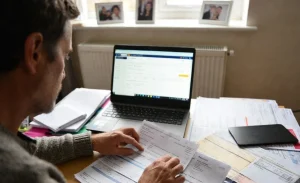
Even though the DWP says the double pay day issue is automatically corrected in most cases, claimants should still check every monthly statement carefully. Mistakes can still happen, especially if the employer has unusual payroll arrangements.
Claimants should compare the wages shown in their Universal Credit statement with the wages actually received during that month. If two salaries appear together unexpectedly, they may need to contact the DWP.
The quickest way to raise the issue is usually through the online Universal Credit journal. Claimants can explain that one wage was paid early and ask for the earnings to be reallocated.
Steps to Take if a Double Pay Error Appears
The claimant should take the following steps as soon as possible:
- Check the Universal Credit assessment period dates.
- Compare them with wage payment dates on payslips.
- Identify whether two wages were counted in one period.
- Write a message in the Universal Credit journal.
- Request a mandatory reconsideration if necessary.
It is important to keep all payslips and bank statements because the DWP may ask for evidence before changing the decision.
How Long Does It Usually Take to Correct the Problem?
Where the issue is not corrected automatically, it may take several weeks for the DWP to review the claim. The time can vary depending on how quickly evidence is provided and whether the claimant needs to request a formal reconsideration.
Some claimants receive a correction within their next payment cycle. Others may have to wait longer if the DWP needs to contact their employer or review several months of earnings.
During this period, claimants may still be able to ask about:
- A short-term advance
- Alternative payment arrangements
- Additional support from local councils
When Are Universal Credit Payments Usually Calculated and Paid?
Universal Credit is normally assessed over a one-month period known as the assessment period. At the end of that month, the DWP calculates how much support the claimant should receive.
Payment is then usually made seven days later into the claimant’s bank account. Because the assessment period is fixed, even a one-day change to payday can make a difference to the amount of Universal Credit awarded.
For example:
- Assessment period ends on 20 April
- Wages paid on 19 April and 20 April
- Both wages may be counted together
Understanding the assessment period is important because it helps claimants spot whether the DWP has counted earnings correctly.
Conclusion
The DWP clarified Universal Credit double pay issue automatically corrected to reassure claimants that most cases are now dealt with under the 2020 regulations. The problem happens when two wages fall into one assessment period, often because payday changes around weekends or bank holidays.
Although the DWP says the system usually moves one payment into the correct month automatically, claimants should still review their statements carefully. Incorrect calculations can reduce Universal Credit, affect work allowances and trigger the benefit cap. Checking payslips and contacting the DWP quickly remains the best way to avoid unnecessary financial problems.
FAQ
Can a bank holiday cause a Universal Credit double pay issue?
Yes. If an employer pays wages earlier because of a bank holiday, two wage payments can fall into the same assessment period and affect Universal Credit.
Does the DWP automatically tell claimants when a payment has been corrected?
Usually, the correction appears in the claimant’s Universal Credit statement or journal. However, the DWP may not always send a separate message explaining the adjustment.
Can self-employed claimants experience the same problem?
Self-employed claimants are less likely to be affected because they report earnings themselves. However, irregular income can still create similar issues within an assessment period.
Will the corrected payment reduce future Universal Credit awards?
No. The correction simply moves one wage into the correct month. It should not reduce the claimant’s total Universal Credit over time.
How long should claimants keep payslips for?
It is sensible to keep at least six months of payslips and bank statements in case the DWP asks for proof of the payment dates.
Can a claimant challenge the DWP if the automatic correction does not happen?
Yes. The claimant can request a mandatory reconsideration through their online journal and provide evidence that one wage was paid early.
What happens if a claimant does not have a bank account?
Claimants without a bank account should contact the Universal Credit helpline. The DWP may offer an alternative payment method.