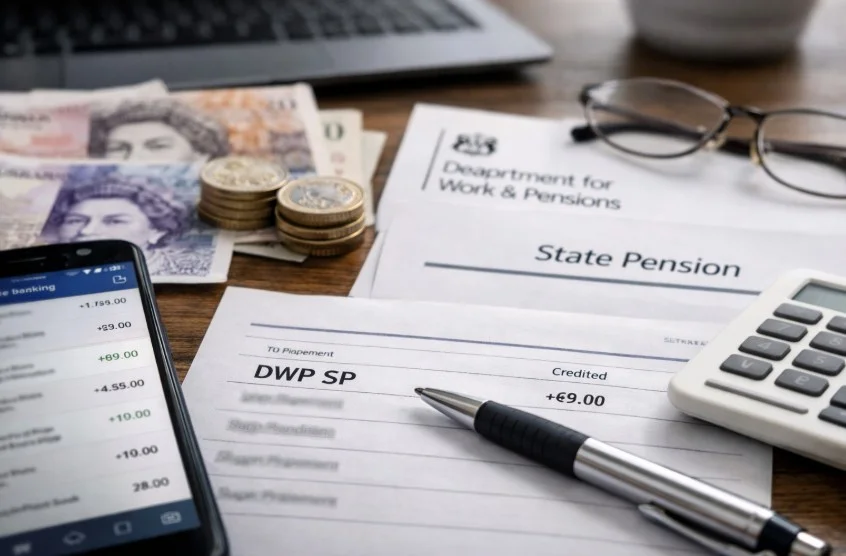
Have you ever opened your online banking and noticed a transaction labelled “DWP SP”? I remember seeing it for the first time and wondering whether it was a mistake or something official. It turns out, this code is entirely legitimate, and important.
“DWP SP” refers to a State Pension payment from the Department for Work and Pensions (DWP). In some cases, it may also refer to a special payment or benefit top-up.
Key points at a glance:
- DWP SP = Department for Work and Pensions – State Pension
- Usually paid every four weeks
- May also include Pension Credit, backdated payments, or other benefits
- Always verify via GOV.UK or contact The Pension Service
Let’s explore everything you need to know.
What Is “DWP SP” on a Bank Statement and Who Sends It?
If you’ve received a payment labelled “DWP SP,” it’s most likely your State Pension, issued by the Department for Work and Pensions (DWP). The DWP is the UK government body responsible for managing welfare and pension payments.
In banking apps or printed statements, abbreviations like “DWP SP” are used for space reasons. “SP” stands for State Pension, and the code shows that you’ve received your pension directly from the government. However, it can sometimes indicate a special payment or benefit correction too.
“DWP SP is the correct and current abbreviation used for State Pension payments, and it will continue to appear this way unless new payment codes are introduced.” – DWP Spokesperson
So, whether it’s your first pension payment, a backdated lump sum, or a routine deposit, DWP SP is a legitimate government transaction.
Could DWP SP Be a Regular Pension or a Special Payment?

Yes, and this is where it gets interesting. While the State Pension is the most common reason you’ll see “DWP SP,” it’s not the only one.
Possible meanings of DWP SP:
- Regular State Pension: Your four-weekly pension deposit
- Special Payment: A lump sum from underpaid or delayed benefits
- Backdated Adjustment: A correction for previous miscalculations
Let’s say you recently updated your income details or had a benefits reassessment. If the DWP owes you money from previous months or years, they may issue a one-time deposit under the same “DWP SP” label.
Sometimes, these payments are accompanied by a second reference like “PC” (Pension Credit) or “AA” (Attendance Allowance).
Why Did I Receive a DWP SP Payment If I Didn’t Apply for a Pension?
It can be worrying to receive a payment you didn’t expect, especially one as official as from the DWP. But in some cases, there are reasonable explanations:
Common scenarios:
- A relative’s pension was deposited into a shared/joint account
- You became eligible automatically through recent updates
- It’s a backdated payment after you deferred your pension
- There’s been an admin error, rare, but possible
- A bereavement payment or transfer from a deceased spouse
It’s always worth reviewing the payment carefully before assuming fraud or error. Often, it’s linked to deferred entitlements or adjustments. If you’re unsure, don’t touch the funds until you’ve verified with the Pension Service.
How Can I Confirm the Source and Accuracy of a DWP SP Payment?
Verifying a DWP SP payment is straightforward once you know what to check. Start by comparing the amount and date of the deposit against your expected State Pension payments or any recent letters you’ve received from the DWP.
To confirm the source, run through these quick checks:
- Check your bank statement to see the exact date and amount of the DWP SP deposit
- Compare it with your entitlements using your State Pension forecast on GOV.UK
- Review any recent DWP letters or emails that might explain an adjustment or back payment
- Contact the Pension Service on 0800 731 0469 if you still need clarification
If there’s no obvious reason for the payment, it may be linked to a wider benefits review or a correction. Many pensioners receive an explanation letter a few days after the money arrives, so it’s often worth waiting briefly before taking further action.
What Other DWP Codes Might Appear on My Bank Statement?
“DWP SP” is only one of several codes used by the Department for Work and Pensions. If you receive more than one benefit or support payment, you’ll likely come across others as well.
Here’s a handy table of common DWP payment codes:
| Code | Stands For | Type of Benefit |
| DWP SP | State Pension | Retirement income |
| DWP PC | Pension Credit | Top-up for low-income pensioners |
| DWP UC | Universal Credit | Income-based support |
| DWP PIP | Personal Independence Payment | Disability benefit |
| DWP AA | Attendance Allowance | For people aged 65+ with care needs |
| DWP XB | Christmas Bonus | Annual bonus paid in December |
Understanding these helps you keep track of your payments and detect any unusual or missing deposits.
When and How Often Is the DWP SP Payment Deposited?
Once your State Pension has been successfully claimed, it’s paid every four weeks into your bank or building society account. The day you receive it depends on your National Insurance (NI) number.
State Pension payment days by NI number:
| NI Number Ending | Payment Day |
| 00–19 | Monday |
| 20–39 | Tuesday |
| 40–59 | Wednesday |
| 60–79 | Thursday |
| 80–99 | Friday |
If your pension start date doesn’t align with the DWP payment calendar, your first payment may be partial, with regular full payments following after. Also, if your scheduled date falls on a bank holiday, the payment usually arrives the working day before.
Can I Still Work While Receiving DWP SP Payments?

The short answer is yes. Continuing or returning to work after reaching retirement age is increasingly common, especially as pension age rises and people choose phased retirement. Crucially, the State Pension is not means-tested and is not reduced if you work.
The only financial element that may shift is tax. HMRC calculates overall income by combining wages, pension funds, and other taxable income. If you earn above the personal tax allowance, you may owe income tax even if you never paid tax before receiving your pension.
Should I consider deferral?
Some people choose not to apply straight away. By delaying a claim, the State Pension accrues a percentage increase each year, currently the equivalent of approximately 5.8% annually. For someone with other income, this delayed increase can lead to a more favourable retirement income later.
How Is My State Pension (DWP SP) Amount Calculated?
Your State Pension is based on your National Insurance record, which measures your working years, income contributions and credits earned through eligible circumstances such as unemployment or maternity leave.
Table 4 – Factors influencing State Pension amounts
| Factor | Effect |
| Fewer than 35 NI years | Reduced weekly pension |
| Contracted-out history | Lower amount unless topped up |
| Additional State Pension built before 2016 | Possible protected payment |
| Deferred claiming | Gradual uplift |
What if I was contracted out?
Before April 2016, some workers contributed to private workplace schemes instead of additional State Pension. Contracted out workers usually see a reduced starting figure and may require more than 35 years to reach the full pension rate.
Can voluntary NI contributions help?
If you have gaps in your NI record, common for carers, people living abroad or anyone outside the workforce, you can sometimes purchase additional qualifying years, improving your total entitlement and creating a stronger retirement income.
How Do I Apply for or Manage My State Pension Payments?
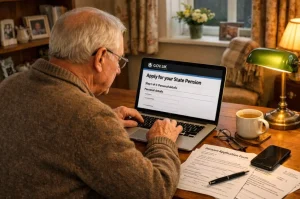
The State Pension isn’t issued automatically, you need to apply for it, typically three to four months before reaching State Pension age.
How to Apply?
There are three main ways to submit your claim:
- Online at GOV.UK
- By phone on 0800 731 7898
- By post using the BR1 application form
What You’ll Need?
To complete your application, have the following ready:
- National Insurance number
- UK bank or building society account details
- Your marital or civil partnership history
- Any records of overseas work or benefits
Living Abroad?
If you reside outside the UK, your application goes through the International Pension Centre, and your payments will reflect local currency and banking timelines in your country of residence.
What Should You Do If You Suspect a DWP Payment Error or Fraud?
Unusual deposits should always be treated with care. If a sum appears without warning and you are not expecting it, it’s best to avoid using or transferring the money.
Errors, although uncommon, do occur, especially where benefit claims overlap or where pension records are adjusted after new information is recorded. The DWP can reclaim overpayments, so confirming ownership protects you from future repayment notices.
If you feel uncertain, your bank’s fraud department may provide guidance while you wait for DWP clarification. A short delay before spending can prevent complicated problems later.
Conclusion
When I first noticed DWP SP on my statement, I wasn’t entirely sure what it meant. But after a bit of digging, I realised it was my State Pension, a clear, essential part of retirement income.
Whether it’s your regular pension, a backdated adjustment, or a one-off benefit, recognising this code helps you stay in control of your finances.
If there’s ever any doubt, I’ve learned to:
- Check my pension forecast
- Read recent letters from DWP
- Call the Pension Service if needed
Staying informed means fewer surprises, and a lot more peace of mind when managing life after retirement.
Frequently Asked Questions
Is the State Pension affected by changes to the Triple Lock system?
The Triple Lock system guarantees annual increases to the State Pension. Any changes to it could affect your future payments, so it’s important to stay informed through GOV.UK updates.
Can I receive DWP SP while living abroad?
Yes, the State Pension can be paid to most countries, especially those with social security agreements with the UK. Payment dates and currency conversion may vary.
Do I need to inform HMRC about my DWP SP payments?
While DWP SP is taxable, tax isn’t deducted at source. HMRC will include it in your tax calculations, especially if you have other income sources. It’s wise to ensure your tax code is correct.
What’s the difference between the basic and new State Pension?
The basic State Pension applies to those who reached retirement age before April 6, 2016. Those retiring after that date receive the new State Pension, which has different rules and rates.
Will I get a letter from DWP before my first State Pension payment?
Yes, the DWP typically sends a confirmation letter detailing your start date, payment schedule, and amount. If you haven’t received it, contact the Pension Service.
How do I change the account my DWP SP goes into?
You can update your bank details through the GOV.UK portal or by calling the Pension Service directly. Avoid delays by doing this ahead of the next payment cycle.
What happens if I defer my State Pension?
If you delay claiming your State Pension, the amount increases by about 5.8% for every year deferred. This can provide a larger long-term payout if you’re still working or don’t need it yet.