
Concerns about a possible UK State Pension cut have continued into 2026, particularly as pensioners face changes to the State Pension age, frozen tax thresholds and wider pressure on household finances.
However, there has been no general cut to the UK State Pension in 2026. From 6 April 2026, the full new State Pension increased by 4.8% from £230.25 to £241.30 per week, while the full basic State Pension increased from £176.45 to £184.90 per week.
The increase was made under the triple lock and reflected average earnings growth.
The more important issue for many pensioners in 2026 is therefore not a reduction in the headline pension rate, but how much income they ultimately keep after tax and how changes to State Pension age affect when they can start receiving payments.
Last Updated: 13.08.2026
Is the UK State Pension Really Being Cut in 2026?

No. The standard rate of the State Pension has increased rather than fallen.
The full new State Pension rose by £11.05 a week in April 2026, while the full basic State Pension rose by £8.45 a week. Official 2026/27 pension rates published by the government confirm the increases.
Claims about a State Pension “cut” can sometimes confuse several separate issues. A pensioner might pay more Income Tax, reach State Pension age later than expected or see a payment arrive on a different date without DWP actually reducing their pension entitlement.
Bank holidays, for example, can result in revised DWP payment dates without changing the amount someone is entitled to receive.
What Are the Latest State Pension Updates in 2026?
Several developments have made 2026 particularly important for people approaching or already in retirement.
The biggest confirmed change was the 4.8% State Pension increase from 6 April 2026, taking the full new State Pension to £241.30 a week. Pension Credit’s Standard Minimum Guarantee also increased by 4.8%.
Another major change is the start of the phased increase in State Pension age from 66 to 67. People born between 6 April 1960 and 5 March 1961 reach State Pension age at different points between 66 and 67, depending on their exact date of birth.
People born from 6 March 1961 to 5 April 1977 currently have a State Pension age of 67.
Tax has also become a bigger issue. On 7 July 2026, HMRC published specific guidance explaining how taxable State Pension income is calculated and how tax can be collected when pensioners have other income.
There is also ongoing work on the longer-term future of pensions. In July 2026, the Minister for Pensions said that the Pensions Commission’s final report would feed into the Secretary of State’s ongoing State Pension age review.
No new State Pension age timetable has yet replaced the schedule already set in legislation.
What Is the State Pension Rate for 2026/27?
For the 2026/27 tax year:
- Full new State Pension: £241.30 per week
- Full basic State Pension: £184.90 per week
The full new State Pension rate is £11.05 higher than the £230.25 paid in 2025/26, while the full basic State Pension increased by £8.45.
At £241.30 a week, the full new State Pension has an annualised 52-week value of £12,547.60.
However, £241.30 is the full standard rate rather than a guaranteed amount for every pensioner. Actual entitlement depends mainly on a person’s National Insurance history and, for people with records from before April 2016, transitional State Pension rules.
Why Did the State Pension Increase by 4.8% in 2026?

The increase came from the State Pension triple lock.
Under the triple lock, the basic and new State Pensions normally increase each year by whichever is highest:
- growth in average earnings
- Consumer Prices Index inflation
- 2.5%.
For April 2026, average earnings growth of 4.8% was the highest measure, so this determined the increase.
The triple lock therefore resulted in a pension rise rather than a cut. MoneyHelper’s explanation of the State Pension triple lock also confirms that the 4.8% increase took effect from 6 April 2026 and that there are currently no announced plans to end the triple lock.
Will Pensioners Pay Tax on the State Pension in 2026?
The State Pension is taxable income, although DWP pays it without deducting Income Tax first. Tax becomes due when a person’s total taxable income exceeds the allowances available to them.
The standard Personal Allowance remains £12,570, while 52 weeks at the £241.30 full new State Pension rate equals £12,547.60 only £22.40 below that threshold.
This is why the interaction between the pension and frozen tax thresholds has become a significant 2026 issue. The State Pension tax warning is particularly relevant for people who also receive workplace pensions, private pensions, earnings or other taxable income.
HMRC’s calculation of taxable State Pension entitlement is more specific than simply multiplying the current weekly rate by 52.
Its July 2026 guidance says a full year’s entitlement will normally reflect one week at the rate before the April change and 51 weeks at the new rate for people covered by that method.
The House of Commons Library has also highlighted the growing tax issue as the triple lock increases pensions while the Personal Allowance remains frozen. Its July 2026 State Pension taxation briefing notes that more pensioners may become liable for Income Tax as a result.
Why Might You Receive Less Than £241.30 a Week?
Not everyone qualifies for the full £241.30.
People may receive less because they have gaps in their National Insurance record or because their entitlement includes pre-2016 rules. Someone who was contracted out before April 2016 may also need more than 35 qualifying years to reach the full new State Pension.
People who have lived or worked overseas can face additional rules, and in some countries annual State Pension increases are not applied. The issue is particularly important for British pensioners affected by frozen State Pension rules abroad.
How Many National Insurance Years Do You Need?
If your National Insurance record started after April 2016, you normally need 35 qualifying years for the full new State Pension.
The calculation can be different if your record started before April 2016. Contracting out and entitlement built under the old State Pension system can affect the amount.
This is why simply counting qualifying years is not always enough to establish someone’s entitlement.
Can You Receive More Than £241.30 a Week?

Yes.
Someone who built up Additional State Pension before April 2016 may have a protected payment above the standard full new State Pension rate.
GOV.UK confirms that if someone’s starting amount under the transitional rules was above the full new State Pension, the difference can continue to be paid on top.
Can You Increase Your State Pension in 2026?
Some people can improve their entitlement by adding qualifying years to their National Insurance record, including through voluntary National Insurance contributions.
However, buying a missing year does not automatically mean you will be better off. It is important to check whether the contribution would actually increase the pension before paying.
MoneyHelper’s guidance on voluntary National Insurance contributions recommends checking the National Insurance record and expected State Pension first.
How Can You Check Your State Pension Forecast?
A State Pension forecast gives a more reliable indication of entitlement than assuming everyone with a certain number of years will receive the same amount.
The forecast can show:
- how much State Pension you could receive
- when you are expected to reach State Pension age
- your National Insurance record
- whether you may be able to increase your pension
When checking a payment that has already appeared in an account, the reference DWP SP generally relates to State Pension, but the DWP SP bank statement reference should still be compared with the pension award notice and expected payment amount.
Is the State Pension Age Changing in 2026?
Yes. This is one of the most important actual State Pension changes taking place this year.
The State Pension age is now moving gradually from 66 to 67 between 2026 and 2028.
People born between 6 April 1960 and 5 March 1961 have a State Pension age between 66 years and one month and 66 years and 11 months. Those born from 6 March 1961 to 5 April 1977 currently reach State Pension age at 67.
For someone approaching retirement, the 2026 State Pension age changes can therefore affect the date on which State Pension income begins, even though they do not reduce the weekly pension rate.
The current legislated timetable then provides for the State Pension age to rise from 67 to 68 between 2044 and 2046, although future reviews could result in changes to that later timetable.
State Pension Rates From 2023 to 2026
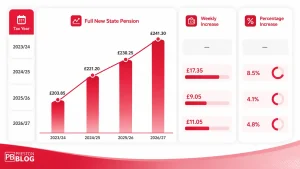
The recent history of the full new State Pension shows substantial nominal increases rather than reductions.
| Tax Year | Full New State Pension | Weekly Increase | Percentage Increase |
| 2023/24 | £203.85 | — | — |
| 2024/25 | £221.20 | £17.35 | 8.5% |
| 2025/26 | £230.25 | £9.05 | 4.1% |
| 2026/27 | £241.30 | £11.05 | 4.8% |
The 2025 increase was 4.1%, while the 2026 increase was 4.8% in line with average earnings.
The table also corrects a common source of confusion: £203.85 was the full 2023/24 new State Pension rate, not the 2024/25 rate.
Why Can a State Pension Increase Still Feel Like a Cut?
A higher weekly pension does not necessarily translate into the same increase in disposable income.
One major reason is fiscal drag. The Personal Allowance has remained at £12,570 while State Pension payments have continued rising under the triple lock. The freeze has now been legislated to continue to April 2031.
Someone with the full State Pension plus income from a workplace pension, private pension or employment can therefore face a larger tax liability even though DWP has increased their pension.
Household expenses can also rise at a different rate from pension income. That can leave some retirees feeling financially worse off, but it should not be described as an official reduction in the State Pension rate.
Does the Triple Lock Still Apply in 2026?
Yes.
The triple lock determined the April 2026 State Pension increase, with the 4.8% earnings measure producing the highest figure.
There is regular political and economic debate about the long-term cost of the triple lock, but there is currently no announced 2026 decision abolishing it.
Any future change should therefore be separated from the confirmed position for the current 2026/27 tax year.
What Should Pensioners Check in 2026?
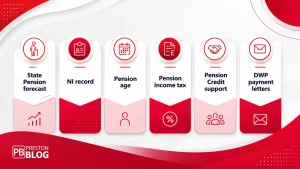
People receiving or approaching the State Pension should check their own circumstances rather than relying only on headline figures.
Useful steps include:
- checking the current State Pension forecast
- reviewing the National Insurance record for missing years
- confirming the exact State Pension age based on date of birth
- reviewing workplace and private pension income for tax purposes
- checking whether Pension Credit or other pensioner support may apply
- comparing unexpected payments with DWP letters before assuming that entitlement has changed.
The key distinction is between changes to the State Pension rate, changes to State Pension age and changes to tax. They can all affect retirement finances, but they are not the same thing.
Conclusion
The UK State Pension has not been cut in 2026. The full new State Pension increased by 4.8% to £241.30 per week from April, while the full basic State Pension increased to £184.90.
Two developments matter particularly in 2026. First, the full new State Pension is now very close to the £12,570 standard Personal Allowance, making tax on additional retirement income increasingly relevant.
Second, the phased increase in State Pension age from 66 to 67 is now underway.
HMRC’s new State Pension tax guidance published in July 2026 and the continuing State Pension age review also mean pension policy remains an active area.
However, neither represents a confirmed across-the-board reduction in current State Pension payments.
For individual decisions about National Insurance top-ups, tax or retirement timing, pensioners should check their own State Pension forecast and current official guidance before taking action.
Frequently Asked Questions
Has the UK State Pension been cut in 2026?
No. The full new State Pension increased by 4.8% to £241.30 per week from April 2026, while the full basic State Pension increased to £184.90.
How much is the State Pension in 2026?
The full new State Pension is £241.30 per week for 2026/27. The full basic State Pension is £184.90 per week.
Is the State Pension taxable in 2026?
Yes. State Pension is taxable income, although DWP does not normally deduct tax before paying it. Tax depends on total taxable income and available allowances.
Is the State Pension above the £12,570 Personal Allowance?
The annualised value of 52 weeks at the £241.30 full rate is £12,547.60, which is £22.40 below the £12,570 standard Personal Allowance.
HMRC’s actual taxable entitlement calculation can differ because of how the April rate change is treated.
Why am I getting less than £241.30 a week?
Your amount may be lower because of gaps in your National Insurance record or transitional rules applying to pre-2016 contributions and contracting out.
Is the State Pension age increasing in 2026?
Yes. The phased rise from age 66 to 67 is taking place between 2026 and 2028. The exact State Pension age for people affected depends on their date of birth.
Is the triple lock being removed in 2026?
No removal has been announced for 2026. The triple lock was used to calculate the April 2026 increase, resulting in a 4.8% rise based on average earnings growth.
Editorial note: This article provides general information about UK State Pension rates, tax and eligibility rules. Individual pension and tax circumstances can differ, and official guidance should be checked before making financial decisions.