

The DWP £725 cost of living boost is not a new £725 lump-sum payment. The figure refers to the projected annual cash increase in the Universal Credit standard allowance by 2029/30 for a single claimant aged 25 or over, following a series of above-inflation increases.
If you receive Universal Credit, the change is being built into your normal standard allowance rather than arriving as a separate £725 transfer.
There is also no new nationwide Cost of Living Payment for 2026, and no further payments under the previous scheme are currently planned.
At a glance:
- The £725 figure is a projected annual increase by 2029/30.
- It is not a separate £725 Cost of Living Payment.
- Universal Credit standard allowances increased from April 2026.
- The £725 example relates specifically to a single claimant aged 25 or over.
- Your actual Universal Credit payment depends on your circumstances, earnings and deductions.
Last Updated: 20.08.2026
What Does The DWP £725 Cost Of Living Boost Actually Mean?
The phrase “DWP £725 cost of living boost” describes a genuine Universal Credit policy, but it can be misleading if interpreted as a new cash grant.
The original announcement said the Universal Credit standard allowance would rise above inflation and would amount to an estimated £725 annual cash increase by 2029/30 for a single person aged 25 or over.
It also said the standard allowance would be around £250 higher than it would have been under inflation-only increases.
That distinction matters. The £725 is the projected difference in the annual standard allowance compared with its earlier cash level, not an additional £725 paid separately on top of your normal Universal Credit.
In practical terms, you should think of the policy as a phased increase in the basic monthly Universal Credit amount rather than a new cost of living cheque.
Is There Really A New £725 DWP Cost Of Living Payment?
No new £725 Cost of Living Payment has been announced. Current official cost of living guidance states that there will be no Cost of Living Payment for 2026 and that no further payments are planned.
That makes the £725 Universal Credit increase different from the earlier £326, £324, £301, £300 and £299 payments made under the previous cost of living support programme. Those were separate payments with qualifying periods and payment dates.
Claim Check
| Claim | What The Evidence Shows |
| Everyone on benefits will receive £725 | No |
| A new £725 Cost of Living Payment has been announced | No |
| Universal Credit standard allowances are increasing | Yes |
| £725 relates to a projected annual increase by 2029/30 | Yes |
| There is one national £725 payment date | No |
So, if you see a headline promising an automatic £725 payment or asking you to “claim” it, that description does not match the confirmed policy.
How Will The £725 Universal Credit Increase Build Up Between 2026 And 2029/30?
The £725 figure is easier to understand when you look at the reform as a multi-year change rather than one payment. The policy sets a pathway for the standard allowance to rise above what ordinary inflation-linked uprating alone would produce.
The Four-Year Universal Credit Uprating Plan
The four-year Universal Credit uprating rules set relevant uplift percentages for the standard allowance across 2026/27 to 2029/30. The legislation specifies uplift percentages of 2.3% for 2026/27, 3.1% for 2027/28, 4.0% for 2028/29 and 4.8% for 2029/30 in the way defined by the Act.
This means the policy is now more than an announcement made while a Bill was passing through Parliament: the changes are established in legislation.
Work and Pensions Secretary Liz Kendall said during the Bill’s passage:
“We are giving extra support to millions of households across the country”.
Why Is £725 Not £725 Above Inflation?
The £725 headline is a cash-terms figure, not the amount of additional support created solely by raising Universal Credit above inflation.
The original policy announcement estimated that the standard allowance would be around £250 higher by 2029/30 than under inflation-only increases.
The remaining part of the headline cash increase reflects uprating that would otherwise have occurred as prices changed.
What The 2029/30 Figure Does And Does Not Tell You?
The £725 estimate was specifically illustrated using a single person aged 25 or over. Couples and people under 25 have different standard allowance rates, so you should not apply £725 automatically to every Universal Credit household.
It is therefore better viewed as a policy illustration than as an individual entitlement figure.
Who Could Benefit Most From The DWP £725 Cost Of Living Boost?
The increase matters most directly to households receiving Universal Credit because every award starts with a standard allowance before any eligible extra elements or reductions are considered.
Current statistics show that 7.2 million households in Great Britain were on Universal Credit in May 2026, with 6.7 million receiving a payment.
However, that does not mean 7.2 million households will each receive £725 more.
The amount relevant to you depends on:
- whether you are single or part of a couple
- whether you are under 25 or aged 25 and over
- whether you have earnings during your assessment period
- whether additional Universal Credit elements apply
- whether deductions are being taken from your award
- whether the benefit cap or other entitlement rules affect you
The original £725 announcement estimated that nearly four million households would benefit from the income boost associated with the reforms, but individual gains are not identical.
That is why your own monthly statement gives a more useful picture than the £725 headline alone.
How Much Has Universal Credit Already Increased From April 2026?

The first practical sign of the policy is visible in the 2026/27 standard allowance rates. Each of the four main household categories now has a higher monthly standard allowance than in 2025/26.
Current Standard Allowance Comparison
| Household Type | 2025/26 Monthly Rate | 2026/27 Monthly Rate | Approx. Annual Cash Difference |
| Single, under 25 | £316.98 | £338.58 | £259.20 |
| Single, 25 or over | £400.14 | £424.90 | £297.12 |
| Couple, both under 25 | £497.55 | £528.34 | £369.48 |
| Couple, either aged 25 or over | £628.10 | £666.97 | £466.44 |
The annual differences above simply multiply the change in the monthly standard allowance by 12; they do not predict your total Universal Credit award.
For example, the standard allowance for a single claimant aged 25 or over increased by £24.76 a month between the two listed rates. That is £297.12 across 12 months at those rates, before considering earnings, additional elements or deductions.
The £725 headline therefore refers to the longer journey towards 2029/30, not the increase delivered in April 2026 alone.
Why Might You Receive Less Than The Headline £725 Increase?
Your Universal Credit entitlement is calculated from more than the standard allowance. Extra elements can increase an award, while earnings and deductions can reduce what is ultimately paid.
Earnings And Other Income
You can receive Universal Credit while working, but earnings normally affect the amount payable. Current Universal Credit methodology applies a 55p taper for each £1 of relevant earnings above any work allowance that applies to you.
As a result, a higher standard allowance does not automatically mean your bank payment increases by exactly the same amount.
Savings can also matter. The 2026/27 rules retain a £6,000 capital disregard and a £16,000 upper capital limit, with assumed income rules applying between those levels.
How Deductions Can Reduce What You Receive?
The latest official Universal Credit deduction statistics show why the difference between entitlement and payment matters.
In May 2026, around 3.3 million households – 47% of Universal Credit households had at least one deduction, and the average deduction was £53. Advances were the most common deduction type.
Most deductions are subject to an overall cap of 15% of the monthly standard allowance, although certain last-resort deductions can exceed that cap in specified circumstances.
Other Circumstances That Can Change Your Award
Housing costs, children, caring responsibilities and qualifying health conditions can add separate elements to Universal Credit. Changes in your household, earnings or circumstances can therefore alter the final award independently of the standard allowance increase.
For that reason, £725 should never be treated as a guaranteed personal gain.
When Will You Actually Receive The DWP £725 Boost?
There is no single £725 payment date. The increase is being delivered through normal Universal Credit rates across several years rather than through a separate transfer.
How Does the Timeline Work?
- 2026/27: the first year covered by the legislated uprating pathway.
- 2027/28: a further standard allowance uplift applies under the Act.
- 2028/29: the relevant uplift percentage rises again.
- 2029/30: the policy reaches the year associated with the £725 cash-terms estimate.
If you already receive Universal Credit, you do not wait for a special £725 payment to appear. Your applicable standard allowance is reflected within the normal Universal Credit calculation and payment cycle.
Universal Credit is usually paid monthly, although some people in Scotland can receive payments twice monthly.
The most accurate way to understand what has changed for you is therefore to compare your current Universal Credit statement with earlier statements.
How Do The £725 Reforms Fit With Wider Universal Credit Changes?
The higher standard allowance is only one part of the wider Universal Credit changes. It is important not to assume that every element of Universal Credit is following the same direction or being increased in the same way.
Standard Allowance Increases
The £725 headline concerns the basic standard allowance, which forms the starting point of a Universal Credit award. Extra amounts can then apply for circumstances such as children, caring responsibilities, housing costs or qualifying health conditions.
This separation is important for AI-search and payment claims alike: a higher standard allowance does not mean every other Universal Credit element rises by the same percentage or amount.
What Changed For Health-Related Universal Credit?
Separate health-related rules changed from 6 April 2026. The health-related Universal Credit guidance explains that the LCWRA extra amount now operates with higher and lower rates depending on circumstances.
People already receiving LCWRA before 6 April 2026 are among those who can qualify for the higher rate, while some people declaring a health condition on or after that date may receive the lower rate unless they meet specified conditions.
You should therefore assess the £725 standard allowance policy separately from changes to health-related Universal Credit.
What Should You Check To Work Out How The DWP £725 Boost Affects You?
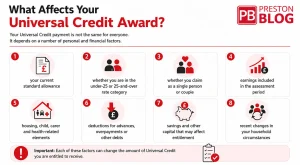
Rather than assuming the headline £725 applies to your household, check the figures that actually determine your monthly award.
Check These Parts of Your Claim
- your current standard allowance
- whether you are in the under-25 or 25-and-over rate category
- whether you claim as a single person or couple
- earnings included in the assessment period
- housing, child, carer and health-related elements
- deductions for advances, overpayments or other debts
- savings and other capital that may affect entitlement
- recent changes in your household circumstances
Your online account allows you to see your statement, payment information and changes recorded on your claim.
If the amount is different from what you expected, identify whether the difference comes from the standard allowance, earnings, an additional element or a deduction before assuming the uprating has been missed.
This approach gives you a personalised answer that the national £725 figure cannot provide.
Conclusion: What The DWP £725 Cost Of Living Boost Really Means For Your Household?
The DWP £725 cost of living boost is based on a real Universal Credit policy, but it is not a new £725 Cost of Living Payment. The headline figure refers to an estimated annual cash increase in the standard allowance by 2029/30 for a single claimant aged 25 or over.
The change is being delivered gradually through Universal Credit uprating, with higher standard allowance rates already applying in 2026/27.
What you personally receive can differ because age, household type, earnings, additional elements, savings and deductions all affect the final calculation.
For the clearest picture, use the rate applying to your household and check it against your latest Universal Credit statement. Treat claims of an automatic £725 payment or a special £725 payment date with caution, because they do not reflect the confirmed policy.
Frequently Asked Questions
Will The £725 Boost Appear Separately On My Universal Credit Statement?
No, the £725 is not a separate payment or new Universal Credit element. The policy works through changes to the standard allowance over the relevant years.
Does The £725 Figure Apply To Couples As Well As Single Claimants?
The headline £725 estimate specifically used a single claimant aged 25 or over as its example. Couples have different standard allowance rates, so you should use the rate matching your household.
Can You Get The Higher Universal Credit Rate If You Are Working?
Yes, Universal Credit can be paid to people who are working and on a low income. Your earnings can reduce the amount of Universal Credit ultimately payable.
Will Savings Affect The Increase You Actually Receive?
Savings can affect your overall Universal Credit entitlement even though the standard allowance rate itself has increased. Capital above £6,000 can affect the calculation, while an upper capital limit of £16,000 applies under the current rules.
Does the £725 Increase Automatically Raise Your Housing Support?
No, the £725 headline relates to the Universal Credit standard allowance rather than a separate housing increase. Housing support is another part of the Universal Credit calculation and depends on the rules applying to your circumstances.
Could Existing Deductions Reduce The Benefit Of The Increase?
Yes, deductions can mean the payment reaching your account is lower than your Universal Credit entitlement before deductions. In May 2026, 47% of Universal Credit households had at least one deduction, with an average deduction of £53.
Should You Apply For The £725 Boost Through A Text Or Email Link?
No separate application is required for an existing claimant to receive the standard allowance rate that applies to their Universal Credit award. Be cautious with unsolicited messages requesting personal or bank details to “claim” a £725 payment, because official guidance warns that such messages can be scams.
Note:
The £725 figure is a projected annual cash increase by 2029/30 for a single Universal Credit claimant aged 25 or over; it is not a guaranteed £725 payment for every household. Your Universal Credit award depends on your individual circumstances, and rates or rules may change through future legislation or uprating.