
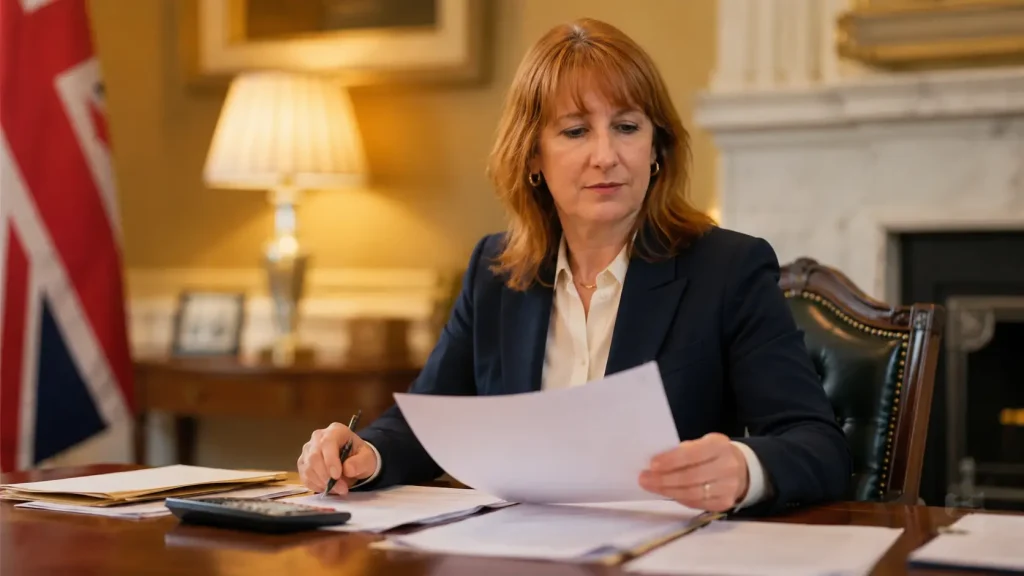
Chancellor Rachel Reeves has confirmed that pensioners whose only income is the basic or new State Pension will not have to pay income tax or fill out tax returns during this Parliament.
While the April 2026 Triple Lock increase of 4.8 percent brings the full new State Pension to 12,548 pounds a year, just under the 12,570 pounds Personal Allowance, future increases are expected to push it over the line by April 2027.
To prevent a massive administrative burden, the government is developing a simple workaround, though this protection is only guaranteed for the duration of the current Parliament. For more detailed information on these legislative updates, you can consult the document titled Official Rachel Reeves State Pension Changes.docx.
Key Takeaways:
- State Pension Tax: Pensioners relying solely on the State Pension are exempt from income tax and tax returns during this Parliament.
- The 2027 Tax Trap: The April 2026 increase keeps the pension just under the tax threshold, but the April 2027 Triple Lock hike will likely push it over the 12,570 pounds limit.
- The Workaround: The government is creating an administrative solution so HMRC can waive minor tax liabilities for sole-pensioners without forcing them into self-assessment.
- Private Pensions Impact: Retirees with a mix of State and private pensions do not get this exemption and must pay tax if their combined income exceeds 12,570 pounds.
- Two-Tier Controversy: Industry experts warn the policy is unfair because it penalizes modest savers while protecting those with only a State Pension.
What Has Rachel Reeves Announced About State Pension Changes?
Rachel Reeves has confirmed that pensioners who rely solely on either the basic State Pension or the new State Pension will not have to pay income tax on that income during the current Parliament.
Speaking with consumer finance expert Martin Lewis, the Chancellor confirmed that these pensioners would also avoid the administrative burden of completing tax returns solely because the annual State Pension is increasing.
The announcement follows widespread concern after the government confirmed it was examining ways to simplify tax administration for pensioners whose State Pension may exceed the Personal Allowance in future years. Initially, many interpreted this as meaning pensioners would automatically begin paying tax directly on their State Pension.
The Chancellor’s clarification has largely settled that uncertainty by confirming the government’s intention to prevent unnecessary paperwork for pensioners who have no additional taxable income.
Importantly, this announcement does not change the legal status of the State Pension. The State Pension remains taxable income under existing legislation. Instead, the government intends to introduce an administrative solution that prevents pensioners with only State Pension income from facing unnecessary tax collection requirements during this Parliament.
Why Was There Confusion Over State Pension Taxation?
The confusion largely arose after the government announced plans to reduce what it described as the “administrative burden” facing pensioners whose State Pension could exceed the Personal Allowance.
Normally, the State Pension is taxable. However, unlike most pensions, tax is not automatically deducted before payment. If someone receives additional taxable income, HMRC generally collects any tax due through adjustments to other pension income, employment income or other collection methods.
As annual increases under the Triple Lock continue pushing the full new State Pension closer to the Personal Allowance, industry experts questioned how HMRC intended to collect any future tax from pensioners receiving only the State Pension.
Without further clarification, many pensioners feared they could receive unexpected tax bills or be required to complete Self Assessment tax returns despite having relatively straightforward financial circumstances.
Rachel Reeves’ latest statement addressed these concerns directly by confirming that the government intends to remove that administrative burden rather than increase it.
Helen Morrissey, Head of Retirement Analysis at Hargreaves Lansdown, said the clarification would be welcomed by pensioners who had become concerned as the State Pension moved increasingly close to the Personal Allowance.She also noted that the commitment currently applies only during this Parliament, meaning longer-term tax policy remains uncertain.
Source: https://www.hl.co.uk/news/articles/archive/will-state-pension-be-taxed
Will Pensioners Have to Pay Tax on Their State Pension?

Many retirees receive income from several different sources, including workplace pensions, private pensions, rental income, savings interest or employment. These income sources continue to form part of an individual’s overall taxable income and may still result in an income tax liability depending on their total annual earnings.
It is therefore important to distinguish between pensioners who rely entirely on the State Pension and those with broader retirement income.
Rachel Reeves’ Latest Clarification
During her interview with Martin Lewis, the Chancellor stated:
“If you just have a State Pension, we are not going to make you fill in a tax return of any type.”
She later confirmed:
“In this Parliament, they won’t have to pay the tax. We’re looking at a simple workaround at the moment.”
These comments represent the clearest confirmation so far of the government’s immediate approach. Nevertheless, because the commitment is limited to the current Parliament, pension taxation beyond that period remains subject to future government policy.
What Is the Simple Assessment System for State Pension Tax?
The government’s proposed Simple Assessment system is designed to reduce paperwork for taxpayers whose tax affairs are relatively straightforward.
Instead of requiring eligible individuals to complete a Self Assessment tax return, HMRC can calculate the amount of tax due using information it already holds from pension providers, employers and other government departments.
For pensioners, this approach could significantly reduce administrative complexity. Rather than completing annual tax returns or calculating liabilities themselves, eligible individuals would receive a calculation directly from HMRC where appropriate.
Although Rachel Reeves has indicated that pensioners receiving only the State Pension will not pay tax during this Parliament, the government is still exploring how a simplified administrative process could operate for other pensioners whose financial circumstances are more complex.
As further details emerge, HMRC is expected to clarify exactly how any new Simple Assessment arrangements will work alongside existing pension tax rules.
Who Will Benefit From the Temporary Tax Exemption?

The Chancellor’s announcement is primarily aimed at pensioners whose only source of retirement income is either the basic State Pension or the new State Pension. These individuals were expected to be the most affected as annual State Pension increases gradually move closer to the Personal Allowance threshold.
For many retirees, the announcement removes concerns about receiving unexpected correspondence from HMRC or having to complete tax paperwork despite having relatively simple financial affairs. It also provides reassurance that the annual increase under the Triple Lock will not immediately create additional tax administration during this Parliament.
However, the exemption is not universal. Pensioners who receive income from occupational pensions, private pensions, employment, rental properties or investments may still need to pay income tax if their combined taxable income exceeds their available allowances. Their tax position will continue to depend on their overall financial circumstances rather than the State Pension alone.
The distinction is important because many retired households receive multiple income streams. While one pensioner may rely solely on the State Pension, another with a modest workplace pension could still fall within the normal income tax system.
| Pensioner Type | Will They Benefit From the Current Announcement? | Additional Considerations |
| State Pension only | Yes | No income tax or tax return during this Parliament, according to the Chancellor’s commitment. |
| State Pension + Workplace Pension | Potentially No | Tax depends on total annual taxable income. |
| State Pension + Private Pension | Depends | Combined income may exceed the Personal Allowance. |
| State Pension + Employment Income | Depends | PAYE and other income tax rules continue to apply. |
| State Pension + Rental or Investment Income | Depends | Other taxable income remains subject to HMRC rules. |
How Much Will the State Pension Increase From April 2026?
The government’s commitment to maintaining the Triple Lock means both forms of the State Pension will increase by 4.8 percent from April 2026. This increase reflects average earnings growth and continues the government’s policy of protecting pensioners’ incomes against inflation and wage growth.
The full new State Pension is expected to rise to approximately 241.30 pounds per week, equating to around 12,548 pounds per year. Meanwhile, the full basic State Pension will increase to around 184.90 pounds per week, or roughly 9,615 pounds annually.
Although these April 2026 increases keep the pension just a whisker below the 12,570 pounds Personal Allowance, they have intensified discussion about future taxation.
Looking ahead to April 2027, subsequent Triple Lock increases are highly likely to push the full new State Pension beyond the frozen tax threshold. This projected 2027 crossover is the primary reason why the government is under pressure to establish a clear administrative workaround today.
Why Is the Triple Lock Still Important for Pensioners?

The Triple Lock remains one of the most significant policies affecting retirement income in the UK. It guarantees that the State Pension increases each year by whichever is highest: average earnings growth, inflation or 2.5%.
For pensioners, this mechanism helps preserve spending power during periods of rising living costs. It has contributed to substantial increases in the value of the State Pension over recent years and remains central to the government’s current pension policy.
However, one consequence of these annual increases is that the new State Pension is gradually approaching the frozen Personal Allowance. While pensioners benefit from larger payments, future governments will continue to face questions about how those increases interact with income tax rules.
This explains why discussions about Rachel Reeves’ State Pension changes have focused not only on the pension increase itself but also on the future administration of pension taxation.
Steve Webb, former Pensions Minister and now Partner at LCP, warned that exempting only certain pensioners could create unintended inequalities. He argued that pensioners with modest private pensions could end up paying tax while those relying solely on the State Pension receive greater protection, raising questions about fairness across the retirement system.
Source: https://www.lcp.com/en/media-centre
How Long Will This State Pension Tax Promise Last?
One of the most important aspects of Rachel Reeves’ announcement is its timeframe. The Chancellor specifically confirmed that the commitment applies during this Parliament, rather than permanently.
This distinction matters because tax policy can change with future Budgets, Spending Reviews or subsequent governments. While current pensioners have received reassurance for the immediate future, there is no guarantee that the same approach will continue beyond the present parliamentary term.
The temporary nature of the commitment has prompted many pension experts to encourage retirees to remain informed about future fiscal announcements.
If the Personal Allowance remains frozen while the Triple Lock continues increasing State Pension payments, the interaction between pension income and taxation is likely to remain an important political and economic issue.
For pensioners planning their retirement finances over the next decade, it is therefore sensible to view the Chancellor’s announcement as a short-term administrative commitment rather than a permanent change to UK pension taxation.
Why Are Some Pension Experts Concerned About the Changes?
Although Rachel Reeves’ announcement has reassured many pensioners, several retirement experts have cautioned that the proposed approach raises broader questions about fairness, long-term tax policy and the practical operation of the UK pension system.
While the government’s objective is to reduce unnecessary administration, experts believe the policy may create different outcomes for pensioners with similar levels of retirement income.
The main concern is that the announcement currently applies only to pensioners whose sole income comes from the State Pension. Millions of retirees receive additional income from workplace pensions, private pensions or small savings, meaning their tax position may differ despite having comparable overall financial circumstances.
Could These State Pension Changes Be Unfair to Some Pensioners?
One of the biggest debates surrounding Rachel Reeves’ State Pension changes is whether the policy treats pensioners equally.
The government’s objective is understandable. Pensioners with straightforward finances should not be required to complete unnecessary paperwork simply because annual State Pension increases push their income towards the Personal Allowance.
However, some specialists argue that creating different rules for different pensioners could produce unintended consequences.
For example, someone receiving only the new State Pension could benefit from the government’s proposed administrative solution. Another retiree who receives the same total annual income but includes a small workplace pension may still remain fully within the income tax system.
This dynamic is leading retirement experts to warn about the creation of an uneven, two-tier pension system. Critics point out that while those with zero outside income are completely protected from tax paperwork under the new announcement, anyone with even a minor private pension will remain stuck within the standard tax collection net.
Furthermore, as revealed in leaked Treasury documents in June 2026, the government is actively drawing up plans alongside the Department for Work and Pensions to automatically withhold income tax from the State Pension before it is paid out.
This proposed PAYE-style mechanism would see a default basic rate deducted at source, which would then be reconciled at the end of the tax year.
While this is designed to manage the upcoming 2027 tax crossover, critics argue it flies in the face of initial assurances that the elderly would not be heavily targeted with fresh administrative demands
This difference has prompted concerns that people who saved responsibly for retirement could ultimately receive less favourable treatment than those who rely entirely on the State Pension.
| Potential Benefits | Potential Challenges |
| Reduces paperwork for millions of pensioners. | Different tax treatment for similar incomes. |
| Simplifies HMRC administration. | Could disadvantage pensioners with modest private pensions. |
| Provides short-term certainty. | Only guaranteed during this Parliament. |
| Protects pensioners with straightforward finances. | Long-term policy remains uncertain. |
How Does the Personal Allowance Freeze Affect Pensioners?
The Personal Allowance is the amount of income most people can earn before paying income tax. Although the State Pension continues increasing each year under the Triple Lock, the Personal Allowance has remained frozen.
This creates a situation known as fiscal drag. Rather than increasing tax rates, governments collect additional tax because incomes gradually rise while tax thresholds remain unchanged.
For pensioners, fiscal drag has become increasingly significant. As the full new State Pension approaches the Personal Allowance, more retirees could theoretically become liable for income tax unless further government action is taken.
This explains why Rachel Reeves’ announcement focuses not only on pension increases but also on reducing the administrative burden created by these changing income levels.
Understanding fiscal drag is essential because it affects retirement planning even when tax rates themselves remain unchanged.
| Current Issue | Impact on Pensioners |
| Frozen Personal Allowance | More pensioners move closer to the tax threshold. |
| Triple Lock increases | State Pension rises faster than the tax threshold. |
| Fiscal drag | Potential increase in taxpayers over time. |
| Government response | Temporary protection for State Pension-only recipients. |
What Does This Mean for Pensioners With Private Pensions?
This is one area where confusion continues to exist, making it important to distinguish between different types of retirement income.
Rachel Reeves’ announcement relates specifically to pensioners whose only income is the State Pension. Individuals receiving workplace pensions, defined contribution pensions, defined benefit schemes or personal pensions remain subject to existing income tax rules.
Their taxable income continues to include all pension payments alongside any employment earnings, rental income or investment income. If their total income exceeds the Personal Allowance, income tax may still apply.
This means retirees should not assume that the Chancellor’s announcement automatically exempts all pension income from taxation.
Independent financial planning remains particularly important for retirees with multiple income sources, especially as future Budgets may introduce further changes affecting retirement taxation.
Martin Lewis, founder of MoneySavingExpert, has repeatedly encouraged pensioners to understand the distinction between taxable income and tax administration.
He has emphasised that the Chancellor’s announcement relates primarily to simplifying administration for those with only State Pension income, rather than removing income tax from pensions more generally.
Source: https://www.moneysavingexpert.com/news/
Are State Pension Changes Planned Beyond This Parliament?
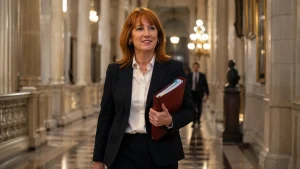
Although Rachel Reeves has provided reassurance for the current Parliament, the longer-term future of the UK State Pension remains under active review. The government has made it clear that broader pension reform is still being considered, meaning further changes could emerge over the coming years.
One of the main reasons for these reviews is demographic change. People are generally living longer, retirement periods are increasing, and policymakers must ensure that the State Pension remains financially sustainable while continuing to provide adequate support for future retirees.
In addition, the interaction between rising State Pension payments, frozen tax thresholds and the wider tax system will remain an important issue for future governments. As a result, pension policy is expected to continue evolving rather than remaining static.
The Revived Pensions Commission
The government has revived the Pensions Commission to examine whether today’s retirement system will continue meeting the needs of future generations.
Its work extends beyond the State Pension and includes several important areas, such as:
- Auto-enrolment participation and contribution levels.
- Retirement savings among self-employed workers.
- Long-term pension adequacy.
- The balance between State Pension provision and private retirement savings.
The Commission’s recommendations could influence future governments when deciding how the State Pension should develop over the coming decades.
Future Review of the State Pension
Alongside the Commission’s work, ministers are reviewing the wider structure of the UK retirement system.
Areas currently under discussion include the long-term affordability of the Triple Lock, retirement income adequacy, tax administration and the relationship between State Pension payments and the wider benefits system.
At present, these remain policy discussions rather than confirmed reforms. Pensioners should therefore distinguish between official government announcements and wider proposals that are still under consideration.
Will the State Pension Age Continue to Rise?
Yes. The State Pension age is already legislated to increase from 66 to 67 between 2026 and 2028. Under existing legislation, it is then expected to rise to 68 during the mid-2040s, although the exact timetable could change following future government reviews.
These increases reflect improvements in life expectancy and the growing financial pressures associated with supporting an ageing population. However, recent demographic data has prompted renewed debate about whether previously planned increases remain appropriate.
The government regularly reviews the State Pension age to ensure it reflects changing economic conditions, longevity and public finances. Any future changes would require legislation before taking effect.
For those approaching retirement, understanding the planned State Pension age remains just as important as following changes to pension taxation, as it directly affects when State Pension payments begin.
What Do These State Pension Changes Mean for UK Pensioners?

For most pensioners, the immediate impact of Rachel Reeves’ announcement is reassurance rather than financial gain.
The government’s commitment means that individuals whose only income comes from the State Pension should not face unexpected income tax or additional HMRC paperwork during this Parliament.
However, pensioners with workplace pensions, private pensions or other taxable income should continue monitoring their total retirement income, as existing tax rules still apply to those sources.
The announcement also highlights a wider issue affecting UK retirement planning.
As the Triple Lock increases annual State Pension payments while income tax thresholds remain frozen, future governments will need to decide how to balance fairness, simplicity and long-term sustainability.
For anyone approaching retirement, keeping up to date with future Budget announcements, HMRC guidance and pension reforms will remain essential. While the latest clarification resolves one area of uncertainty, the broader conversation around State Pension taxation is likely to continue for several years.
Conclusion
Rachel Reeves’ State Pension changes have brought welcome clarity for millions of pensioners by confirming that those whose only income is the State Pension will not pay income tax or complete a tax return during this Parliament.
While this removes immediate uncertainty surrounding the government’s proposed Simple Assessment approach, it does not represent a permanent change to UK pension taxation.
The continued rise in State Pension payments under the Triple Lock, alongside frozen Personal Allowance thresholds and ongoing pension reviews, means further policy developments remain possible.
Pensioners should therefore continue monitoring official government announcements and seek independent financial guidance where appropriate to understand how future reforms may affect their retirement income.
Frequently Asked Questions
Will I have to pay tax on my State Pension if it is my only income?
No. The Chancellor has confirmed that if your sole retirement income comes from the basic or new State Pension, you will not have to pay income tax during this Parliament.
When is the State Pension expected to rise above the tax-free personal allowance?
While the April 2026 increase keeps the pension just under the limit, the 2027 Triple Lock increase is projected to push the full new State Pension past the 12,570 pounds threshold.
What exactly is the government’s “simple workaround”?
It is an administrative policy currently being designed to ensure HMRC waives small tax liabilities and does not force sole-pension recipients to fill out tax returns.
If I have a small workplace or private pension, will I qualify for this tax exemption?
No. If you have any additional taxable income outside of your State Pension that pushes you over the 12,570 pounds limit, you will still be subject to standard income tax rules.
How long will this State Pension tax exemption last?
The Chancellor has explicitly committed to this tax-free workaround only for the duration of the current Parliament.
Why do some pension experts call this workaround a “two-tier” system?
Critics argue it is unfair because a person relying solely on a higher State Pension pays no tax, while someone with the exact same total income containing a small private pension faces a tax bill.
Are there plans to automatically deduct tax from the State Pension in the future?
While not officially confirmed, recent reports indicate the Treasury is exploring a PAYE-style system to automatically withhold tax before pensions are paid out to retirees with multiple income streams.
Related Topics Covered
This guide also explains:
- Rachel Reeves State Pension changes explained
- Will pensioners have to pay tax on the State Pension?
- HMRC Simple Assessment and how it works
- Why the State Pension is considered taxable income
- The difference between the basic and new State Pension
- How the Triple Lock affects State Pension payments
- State Pension rates from April 2027