
Key Takeaways:
| Topic | What to Know |
| Event Impact | Temporary road closures will affect several areas along the marathon route |
| Main Areas | Edinburgh city sections and East Lothian communities will experience restrictions |
| Public Transport | Bus diversions and timetable changes are expected |
| Local Access | Residents may face temporary access controls |
| Travel Planning | Early journey planning can reduce delays |
Why Are Road Closures in Place for the Edinburgh Marathon 2026?
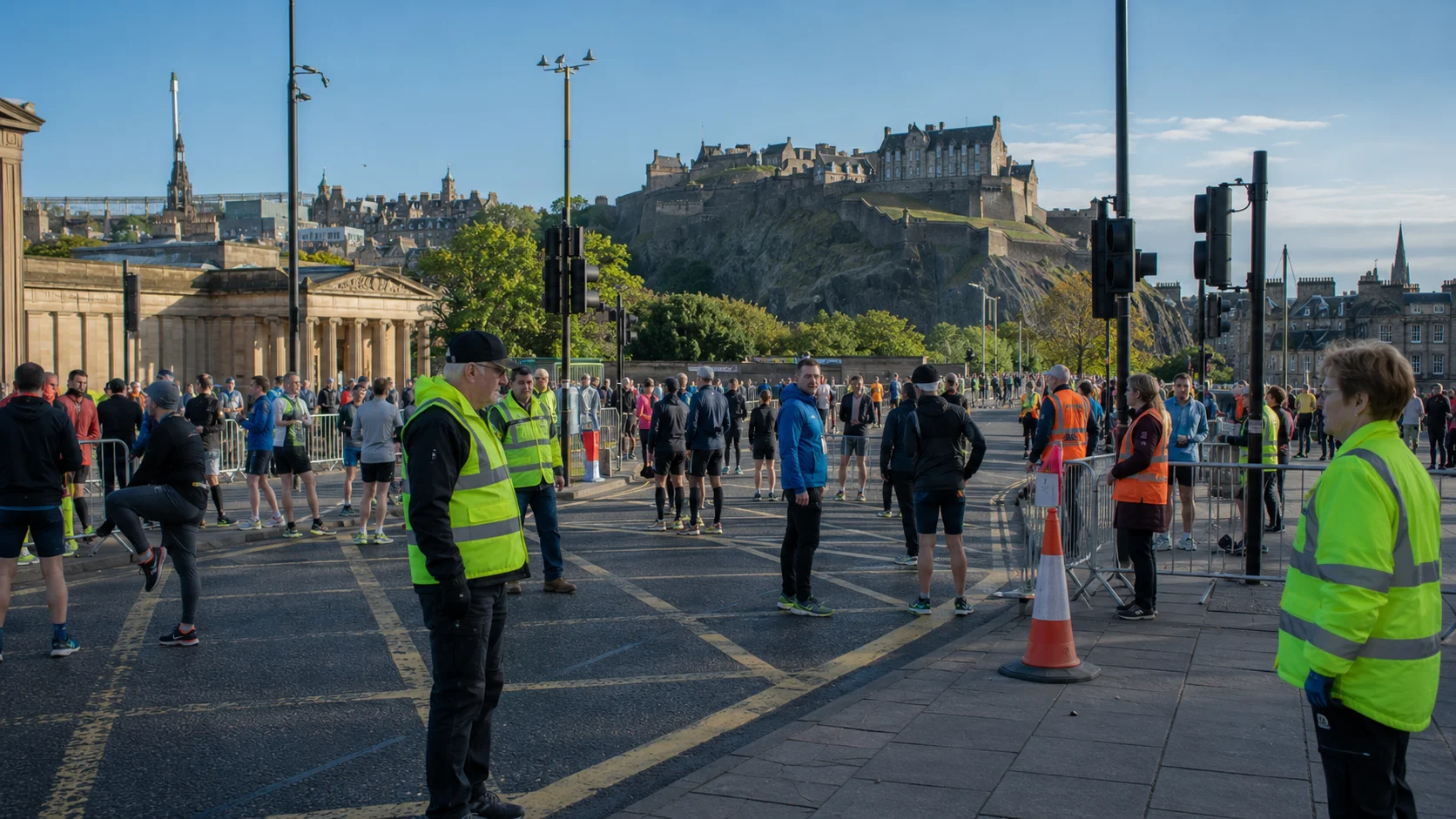
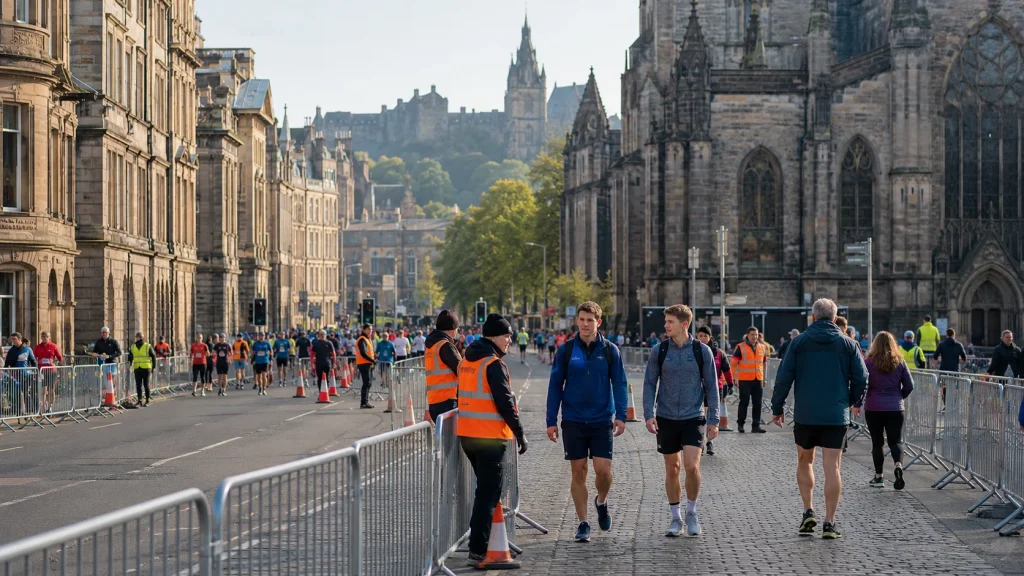
The Edinburgh Marathon is one of the largest running events in the UK and attracts participants, volunteers, organisers and spectators across multiple locations. Road closures are introduced to create a controlled route that protects runners and supports emergency access and event logistics.
Unlike standard traffic management, marathon closures are carefully coordinated to maintain separation between moving vehicles and large participant groups. The route stretches across urban and coastal sections, requiring temporary restrictions at different stages of the event.
Closures also support:
- Safe movement of runners
- Emergency vehicle access
- Event infrastructure and steward positioning
- Spectator management
- Controlled reopening of roads after clearance
Transport planning during marathon events typically focuses on maintaining local movement while reducing conflict points between race activity and everyday traffic.
Alison Murray, Event Transport Coordinator: “Successful marathon operations depend on predictable road management. Temporary closures are designed to move thousands of participants safely while allowing communities to regain access as quickly as possible.”
When Will the Edinburgh Marathon 2026 Road Closures Begin and End?
Closure timings generally vary depending on where a road sits within the route. Areas near early race sections often close sooner, while roads later in the course reopen after participants and event teams clear each section.
Drivers should expect staggered access restrictions rather than one universal closure period.
Road reopening usually follows a staged process:
- Event officials confirm runner clearance.
- Safety inspections take place.
- Equipment and barriers are removed.
- Roads reopen progressively.
Typical Event-Day Travel Expectations
| Time Period | Expected Conditions |
| Early Morning | Initial closures and route preparation |
| Race Start Period | Significant restrictions near central areas |
| Midday | Peak movement and diversions |
| Afternoon | Progressive reopening |
| Later Afternoon | Return to normal conditions |
Travellers should remain flexible as timings may change depending on race operations and weather conditions.
While exact closure timings may vary by operational decisions, residents and visitors should expect activity to begin earlier than race movement itself. Event preparation, barrier installation and traffic management can begin before participant arrival, while reopening may continue after runners pass due to safety inspections and route clearance.
Travellers planning airport transfers, hotel check-ins or business appointments should avoid assuming normal traffic conditions during active event periods
Which Roads Are Expected to Experience the Longest Closures During the Edinburgh Marathon?
Not all road closures operate for identical periods during the Edinburgh Marathon. Areas located near event setup points, participant gathering zones and major spectator locations often experience earlier restrictions and later reopening compared with outer route sections.
Road reopening usually follows runner progression and operational clearance rather than a fixed schedule.
| Area Type | Expected Closure Pattern |
| Central Edinburgh Sections | Earlier closure periods |
| Portobello Corridor | Extended movement controls |
| Musselburgh Areas | Controlled reopening |
| Prestonpans Route | Temporary local access limits |
| Coastal Finish Areas | Flexible reopening |
Travellers should avoid planning journeys immediately after runners pass because barriers, cleaning operations and steward removal can continue for some time afterwards.
Which Areas Are Included in the Edinburgh Marathon 2026 Road Closure Plan?
Road closures for the Edinburgh Marathon 2026 are expected to affect multiple connected areas across Edinburgh and East Lothian rather than one continuous city-wide shutdown.
Because the marathon route stretches from central Edinburgh toward coastal sections and surrounding communities, closures are introduced in stages and managed differently depending on runner movement, safety operations and local access requirements.
For travellers, the biggest mistake is assuming disruption only applies near the race start. In reality, restrictions can continue well into eastern corridors and surrounding residential communities as participants progress through the course.
Edinburgh City Centre Areas
Early operational activity is expected around areas linked to race setup, participant gathering and spectator movement.
Areas likely to experience stronger traffic restrictions include:
- Holyrood
- Prestonfield
- Potterrow
- The Mound
- Canongate
- Jeffrey Street
Eastern Edinburgh Corridor
As runners move east, traffic conditions may become more dynamic across:
- Restalrig
- Craigentinny
- Seafield
- Portobello
- Joppa
East Lothian Closure Areas
Later stages of the event extend beyond Edinburgh into:
- Musselburgh
- Prestonpans
- Cockenzie
- Port Seton
- Gosford
- Aberlady
| Route Stage | Typical Conditions | Travel Expectations |
| Start Sections | High setup activity | Longer delays |
| Mid Route | Diversions active | Moderate disruption |
| Finish Sections | Controlled reopening | Variable movement |
People travelling between Edinburgh and East Lothian should expect travel conditions to evolve during the day rather than remain fixed from morning to afternoon.
Which Road Closure Zones Are Included in the Edinburgh Marathon 2026 Route?
The Edinburgh Marathon 2026 route is divided into seven operational closure zones to help manage traffic, improve safety and provide clearer guidance for residents and visitors. Each zone reflects a specific section of the marathon and may experience different levels of disruption depending on road layout, spectator activity and local access requirements.
Understanding the zones can make travel planning easier because restrictions are rarely identical across the entire route. Central urban areas tend to experience earlier and more intensive controls, while outer sections may have more localised impacts.
Zone 1 – Holyrood Park, Prestonfield, Potterrow, The Mound, Jeffrey Street and Canongate
Zone 1 covers some of the busiest sections of the Edinburgh Marathon route and is expected to experience the highest concentration of race operations, participant movement and spectator activity.
Because this area sits close to the earlier stages of the event, traffic management activity may begin sooner than many visitors expect and vehicle movement can become more restricted throughout the morning.
Drivers travelling through central Edinburgh should prepare for diversions, controlled crossings and limited direct access across key corridors. Visitor movement, hotel arrivals and local business activity may also increase pressure on surrounding roads.
This area may particularly affect:
- Local deliveries
- Tourist movement
- City centre access
- Early morning commuting
- Accommodation arrivals
- Short-distance city travel
| Travel Factor | Expected Conditions |
| Closure Intensity | High |
| Spectator Levels | Very High |
| Vehicle Access | Limited |
| Recommended Travel | Public transport or walking |
Zone 2 – Royal Park Terrace, Restalrig, Craigentinny, Seafield, Portobello and Joppa
Zone 2 marks the transition from central Edinburgh toward eastern sections of the marathon route and can experience increasing pedestrian activity as spectators move into viewing areas. Portobello and nearby sections often attract larger crowds due to accessibility and viewing opportunities, which may create additional local movement alongside official restrictions.
Drivers should expect changing traffic conditions throughout the day rather than one fixed closure pattern. Public transport diversions may also become more noticeable as services adjust to route operations.
This section may particularly influence:
- Beach and leisure access
- Local hospitality visits
- Residential movement
- Visitor parking availability
| Travel Factor | Expected Conditions |
| Closure Intensity | Moderate to High |
| Parking Availability | Reduced |
| Spectator Activity | High |
| Suggested Travel | Earlier arrival |
Zone 3 – Edinburgh Road, Promenade, Eskside, Goose Green and Balcarres Road
Zone 3 introduces coastal sections of the route and combines marathon operations with local visitor movement. Areas near promenade routes may experience slower conditions due to increased pedestrian activity, event barriers and changing access arrangements throughout the day.
Travellers heading toward coastal destinations, hospitality venues or surrounding attractions should allow additional journey time and avoid assuming conditions immediately return to normal after runners move through.
This area may particularly affect:
- Leisure travel
- Coastal access
- Local visitor movement
- Return journeys
| Travel Factor | Expected Conditions |
| Travel Reliability | Moderate |
| Pedestrian Activity | High |
| Parking Pressure | Moderate |
| Journey Planning | Recommended |
Zone 4 – Musselburgh, Newbigging, Inveresk, Pinkie, Wallyford and Ravensheugh Road
Zone 4 moves through established residential and commuter areas where closure activity may influence everyday travel more noticeably. Because these locations support both local access and through traffic, surrounding roads may experience increased pressure as drivers adjust routes.
Residents and businesses may benefit from planning essential journeys earlier and preparing for temporary changes in access arrangements during active event periods.
Temporary restrictions here can influence:
- Residential access
- Local parking
- Delivery schedules
- Through traffic
- Commuter movement
- Visitor access
| Travel Factor | Expected Conditions |
| Local Access | Managed |
| Commuter Pressure | Higher |
| Parking Conditions | Restricted |
| Diversion Use | Increased |
Zone 5 – Prestonpans, Edinburgh Road and West Harbour Road
Zone 5 extends the marathon impact further into East Lothian and introduces more localised traffic management conditions. While restrictions may feel less intense than central sections, movement between nearby communities may still become slower due to controlled traffic flow and event operations.
Drivers travelling through this area should remain flexible and avoid relying on normal journey estimates during active closure periods.
This section may particularly affect:
- Community movement
- Coastal access
- Visitor travel
- Local business activity
| Travel Factor | Expected Conditions |
| Closure Intensity | Moderate |
| Community Access | Controlled |
| Traffic Build-Up | Possible |
| Travel Flexibility | Recommended |
Zone 6 – Cockenzie High Street, Port Seton and Seton Sands
Zone 6 combines residential communities with visitor destinations and holiday accommodation areas. Travel conditions may become more dynamic as local journeys interact with marathon operations and spectator movement.
Visitors staying nearby or travelling into the area should prepare for temporary access changes and allow additional time when entering or leaving local destinations.
This area may particularly affect:
- Holiday accommodation access
- Residential movement
- Local businesses
- Visitor parking
| Travel Factor | Expected Conditions |
| Visitor Volume | Moderate |
| Holiday Traffic | Increased |
| Parking Access | Variable |
| Travel Planning | Important |
Zone 7 – Seton Sands Holiday Park, Gosford and Aberlady
Zone 7 represents later stages of the route where attention gradually shifts toward participant completion and phased road reopening. Although congestion may feel lighter than central Edinburgh, travel conditions can remain unpredictable because reopening depends on runner progression and operational clearance.
Visitors travelling toward coastal destinations should remain flexible and monitor conditions before beginning return journeys.
This section may particularly affect:
- Holiday traffic
- Coastal visitor movement
- Local access planning
- Return travel routes
| Travel Factor | Expected Conditions |
| Closure Duration | Variable |
| Travel Predictability | Moderate |
| Visitor Movement | Steady |
| Return Journey Planning | Recommended |
Edinburgh Marathon 2026 Closure Zones Overview
| Zone | Areas Included | Expected Travel Impact |
| Zone 1 | Holyrood to Canongate | High |
| Zone 2 | Portobello Corridor | Moderate to High |
| Zone 3 | Coastal Roads | Moderate |
| Zone 4 | Musselburgh Areas | High |
| Zone 5 | Prestonpans Corridor | Moderate |
| Zone 6 | Cockenzie & Port Seton | Moderate |
| Zone 7 | Seton Sands to Aberlady | Variable |
How Can Residents and Local Businesses Prepare for Edinburgh Marathon Road Closures?

Preparation can significantly reduce disruption.
Residents should review local access arrangements before race day and consider timing essential journeys outside peak closure periods.
Businesses may benefit from:
- Communicating revised opening arrangements
- Informing suppliers
- Adjusting staffing schedules
- Advising customers in advance
Planning ahead reduces uncertainty and supports smoother operations.
David Campbell, Community Events Adviser: “Businesses that communicate early usually experience less disruption because customers and suppliers know what to expect before restrictions begin.”
What Are the Best Alternative Routes During the Edinburgh Marathon 2026?
Choosing alternative routes during the Edinburgh Marathon is usually more effective than attempting to navigate around individual closures. Because traffic management operates in connected zones, short detours often create additional delays.
Travellers moving across Edinburgh and East Lothian should prioritise entering destination areas before peak closure activity begins.
Recommended alternatives include:
For City Centre Travel
- Use outer ring connections where possible
- Avoid race crossing points
- Consider park-and-ride services
For Eastbound Travel
- Travel before peak spectator periods
- Use unaffected transport corridors
- Build additional transfer time
For Spectators
- Arrive early
- Walk final sections where practical
- Choose viewing areas with transport links
| Travel Method | Practicality During Closures |
| Train | Strong |
| Bus | Moderate |
| Taxi | Variable |
| Walking | High |
| Cycling | Moderate |
Journey flexibility often becomes more valuable than selecting the shortest route.
How Will Lothian Buses and East Coast Buses Operate During the Marathon?
Bus services are expected to operate with temporary diversions where necessary.
Passengers should expect:
- Route changes
- Temporary stops
- Longer journey times
- Adjusted schedules
Public transport remains one of the more practical travel options during large-scale closures.
Where Can Residents Find Live Edinburgh Marathon Travel Updates?
Planning before race day is useful, but conditions can continue changing during event operations. Residents, visitors and spectators should monitor official transport channels and local announcements throughout the day.
Useful places to monitor include:
- Official marathon transport updates
- Bus operator service notices
- Local authority travel announcements
- Journey planning tools
- Temporary road signage
Checking updates before leaving and again before returning can reduce unnecessary delays.
Diversions and Public Transport Adjustments
Bus operators generally introduce temporary arrangements to maintain connectivity.
Travellers should verify stop locations and service updates before travelling.
Public Transport Planning Guide
| Travel Method | Expected Impact | Recommendation |
| Bus | Diversions likely | Check service notices |
| Taxi | Possible delays | Book early |
| Walking | Increased pedestrian use | Allow extra time |
| Cycling | Route changes possible | Check local access |
| Train | Less affected | Useful alternative |
What Should Drivers Know Before Travelling on Marathon Day?
Drivers should anticipate changing road conditions throughout the day.
Key considerations include:
- Additional journey time
- Temporary no-entry points
- Increased pedestrian movement
- Parking restrictions
Navigation systems may not immediately reflect live operational decisions.
Where possible, avoid unnecessary travel through event corridors.
How Can Spectators Reach the Edinburgh Marathon Route Efficiently?
Spectators contribute significantly to the atmosphere but can influence movement patterns.
The most effective approach is arriving early and selecting viewing locations with transport access.
Spectators should:
- Choose designated access areas
- Follow steward instructions
- Carry travel essentials
- Plan return journeys
Arriving later in the event may reduce congestion in some locations.
What Are the Rules Around Access and Enforcement During Road Closures?
Road restrictions are actively managed for safety reasons.
Police Scotland and event teams oversee compliance and may restrict vehicle movement where necessary.
Ignoring closure instructions can create operational and safety risks.
Police Scotland Guidance and Safety Measures
Authorities remind the public that closure controls support participant safety and event delivery.
Drivers should not attempt to bypass barriers or enter restricted sections.
Mark Henderson, Road Safety Operations Consultant: “Temporary event closures only work when road users follow instructions consistently. Attempting to bypass restrictions increases delays and creates avoidable safety concerns.”
How Will Roads Reopen After the Edinburgh Marathon Ends?
Road reopening is managed in phases.
The process normally involves:
- Confirming route clearance
- Removing infrastructure
- Cleaning operations
- Restoring access safely
Some areas reopen sooner than others depending on participant progression.
Drivers should avoid assuming all roads reopen simultaneously.
What Should Residents Do If Their Area Is Within a Closure Zone?

Residents affected by Edinburgh Marathon road closures can reduce disruption significantly by preparing before restriction periods begin rather than reacting during active operations.
Properties positioned directly beside the route may experience controlled movement windows, managed crossings and temporary parking adjustments.
Resident Preparation Checklist
- Complete important journeys early
- Move parked vehicles if necessary
- Notify visitors and carers
- Confirm delivery schedules
- Review work travel plans
- Allow additional return time
Residents should also avoid assuming nearby roads remain open because traffic management may extend beyond roads used directly by runners.
People travelling for medical appointments, airport journeys or business commitments may benefit from departing earlier than normal.
Conclusion
Road closures for the Edinburgh Marathon 2026 will influence travel across Edinburgh and East Lothian throughout race weekend, but disruption becomes easier to manage with preparation. Understanding which areas operate under staged restrictions, identifying alternative travel options and planning journeys earlier can reduce unnecessary delays.
Residents, spectators and businesses all benefit from checking transport updates, allowing additional travel time and preparing for changing conditions throughout the day. With realistic expectations and flexible planning, marathon day becomes far easier to navigate while supporting one of Scotland’s largest running events.
Frequently Asked Questions
What time do Edinburgh Marathon road closures usually begin?
Closure timing varies by location and operational requirements, with some areas preparing earlier than active race movement.
Which roads are expected to stay closed the longest?
Central event sections and areas with heavier spectator movement often experience longer restrictions.
Can residents drive across closure zones?
Access arrangements vary and controlled crossings may operate in some locations.
Is Portobello affected by Edinburgh Marathon traffic?
Portobello often experiences increased movement controls because of its position along the route.
Are East Lothian roads included in marathon restrictions?
Yes, several communities may experience phased traffic management during the event.
Are buses still available during closures?
Services may operate with diversions and temporary stop adjustments.
What is the easiest way to avoid delays?
Travelling earlier and planning around closure zones generally provides smoother movement.