
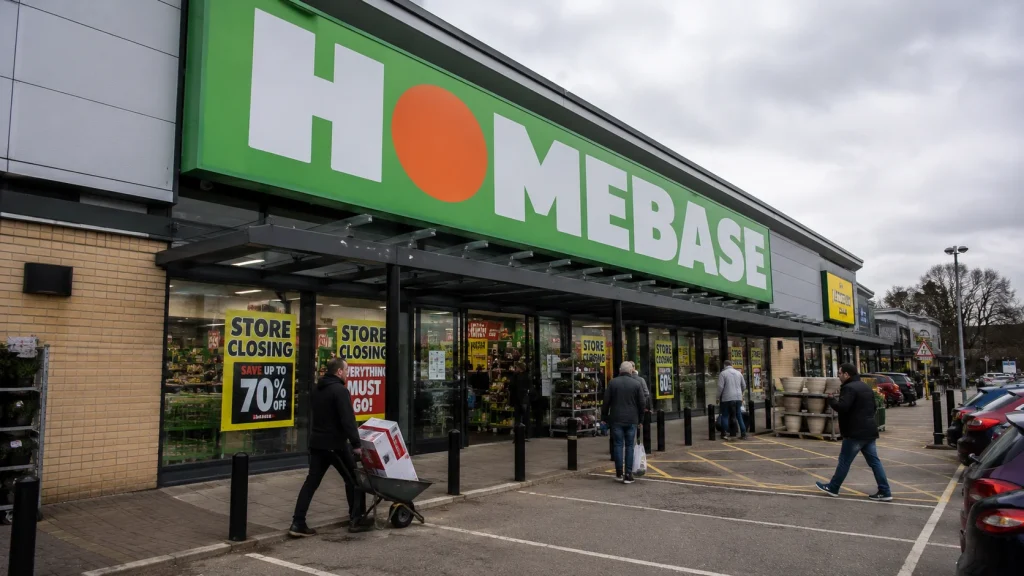
Quick Answer: Homebase entered administration with total liabilities of approximately £803 million, according to administrator reports released in June 2026. The collapse affected around 2,300 employees, resulted in claims from 1,299 unsecured creditors worth roughly £693 million, and led to the closure of most of its 135 UK stores.
Although CDS Superstores International purchased 70 stores and key assets for £25.6 million, preserving approximately 1,150 jobs, the administration exposed the scale of the financial pressures facing major UK retailers, including weaker consumer demand, rising operating costs, and ongoing inflationary challenges.
Key Takeaways:
- Homebase entered administration owing approximately £803 million.
- Around 2,300 employees were affected by store closures and redundancies.
- Approximately 1,150 staff members transferred to the new owner as part of the business sale.
- CDS Superstores International acquired parts of the business for £25.6 million.
- 1,299 unsecured creditors submitted claims worth approximately £693 million.
- The administration highlights the wider financial pressures currently affecting UK retailers, including weaker consumer spending, inflation, and rising operating costs.
How Did Homebase End Up Owing £803 Million?

As I examined the reports released by Teneo Financial Advisory, the sheer scale of Homebase’s debt became one of the most striking findings.
Many headlines focus on the £803 million figure itself, but my investigation found that this total was made up of several different categories of liabilities, including secured lending, unsecured creditor claims, tax obligations, employee-related liabilities, and supplier debts.
What surprised me most was how quickly a well-known retailer with a nationwide presence found itself facing such enormous financial pressure. Homebase operated 135 stores across the UK and employed more than 3,400 people before entering administration.
The figures released by administrators show that the company was carrying significant financial obligations at a time when consumer spending was weakening and operating costs were increasing.
The reports were prepared by joint administrators Gavin Park, Gavin Maher and Adele MacLeod of Teneo Financial Advisory, whose findings revealed the full scale of Homebase’s liabilities and creditor exposure following the administration process.
Homebase Administration Timeline: What Happened?
While reviewing the administration process, I found that understanding the timeline helps explain how the situation developed.
| Date | Key Event |
| 2020-2021 | Pandemic DIY demand surged across the UK |
| 2022-2023 | Consumer spending patterns began normalising |
| 2024 | Homebase continued reporting significant financial pressure |
| November 2024 | Homebase entered administration |
| November 2024 | CDS acquired parts of the business for £25.6 million |
| March 2025 | Remaining stores ceased trading |
| June 2026 | Administrators revealed liabilities approaching £803 million |
From my research, the collapse was not sudden. Instead, it appears to have been the result of several years of mounting commercial pressures.
How Much Debt Did Homebase Owe When It Entered Administration?
One of the most striking findings from my investigation was the scale of Homebase’s debt burden. The figures released by administrators revealed liabilities that extended far beyond normal operating debts.
The £803 Million Debt Position Explained
According to the administrators’ reports, Homebase owed approximately £803 million at the time of its collapse. This figure included secured debt, unsecured liabilities, employee-related obligations, tax liabilities, and supplier claims.
When I dove into the financial figures released by Teneo Financial Advisory, I found liabilities that extended far beyond standard operational debts.
With 135 stores previously operating across the UK, the business carried substantial overheads and financial commitments that escalated rapidly as consumer confidence dropped.
From my analysis of the administration process, it is clear that there is a stark difference in recovery outcomes depending on creditor priority.
While I found that secured lines saw significant movement such as Wells Fargo Capital being repaid in full the structural shortfall left behind for standard trade suppliers and unsecured partners is immense.
Secured and Unsecured Creditor Claims
The debt structure included both secured and unsecured creditors, each facing different outcomes during the administration process.
| Creditor Category | Estimated Amount Owed |
| Total Debt | £803 million |
| Unsecured Creditor Claims | £693 million |
| Ark Finco Unsecured Claim | £523 million |
| HMRC Claim | £10.2 million |
| Wells Fargo Capital | £20.1 million |
| Employee Claims | Approximately £938,000 |
The largest portion of unsecured claims came from Ark Finco, which submitted a claim exceeding £523 million. This single claim represented a substantial proportion of the overall unsecured debt.
From my analysis, the figures demonstrate the complexity of modern retail financing structures and the significant risks faced by creditors when large businesses enter administration.
Does Homebase Really Owe £803 Million?
One question I kept encountering while researching the administration was whether Homebase genuinely owed £803 million in the way many headlines suggest.
From my review of the figures, the answer is more nuanced.
The £803 million figure represents total liabilities rather than a single outstanding loan. It includes secured debt, unsecured claims, supplier obligations, tax liabilities, and employee-related claims.
This distinction is important because recovery outcomes differ significantly between creditor groups. While some secured lenders have already received substantial repayments, many unsecured creditors face far less certain outcomes.
Why Did Homebase Collapse Into Administration?

As I analysed statements from administrators, several recurring themes emerged.
The business experienced exceptional demand during the pandemic as homeowners invested heavily in gardens, home offices, renovations, and DIY projects. However, I found that this surge created expectations that proved difficult to sustain.
Once restrictions ended, spending patterns shifted significantly.
Consumers began prioritising:
- Travel
- Leisure activities
- Household bills
- Mortgage payments
- Essential purchases
At the same time, Homebase faced rising costs throughout its operations.
During my review of the administration documents, I found that Homebase had suffered losses exceeding £59 million before entering administration, highlighting the severity of the financial challenges facing the retailer.
These included:
| Cost Pressure | Impact |
| Inflation | Higher operating expenses |
| Interest Rates | Increased borrowing costs |
| Freight Charges | Reduced profit margins |
| Supply Chain Disruption | Product delays and added expenses |
| Energy Costs | Increased overheads |
| Poor Seasonal Weather | Lower garden product sales |
Looking at the evidence, I found that no single factor caused the collapse. Instead, several economic pressures arrived simultaneously, creating a difficult environment for large-format retailers.
What Factors Contributed to Homebase’s Financial Collapse?
After examining the administrators’ explanations, several recurring themes emerged regarding the causes of Homebase’s downfall.
Falling Consumer Demand and Economic Pressures
Consumer confidence has been under pressure across the UK in recent years. Rising mortgage costs, energy bills, and everyday living expenses have forced many households to reduce discretionary spending.
DIY projects often fall into the category of spending that can be postponed. As a result, retailers specialising in home improvement products experienced reduced customer demand.
I found that Homebase was particularly vulnerable to these changes because much of its business depended on consumers having disposable income available for non-essential purchases.
Inflation, Interest Rates and Rising Costs
The company also faced substantial cost increases across multiple areas of its operations.
These included:
- Higher energy expenses
- Increased wage costs
- More expensive freight charges
- Elevated borrowing costs
- Supply chain disruptions
- Increased inventory expenses
The impact of these challenges can be seen below:
| Economic Pressure | Impact on Homebase |
| Inflation | Increased operating costs |
| High Interest Rates | More expensive borrowing |
| Freight Costs | Reduced profit margins |
| Supply Chain Issues | Product delays and higher expenses |
| Consumer Spending Decline | Lower sales volumes |
| Poor Seasonal Weather | Reduced garden product demand |
Another factor identified by administrators was poor weather during peak spring and summer trading periods. Garden products typically generate significant revenue, making seasonal performance particularly important for Homebase.
How Many Jobs Were Lost Following the Homebase Administration?

The human impact of the administration extends beyond financial figures. As I reviewed the reports, the scale of workforce disruption became one of the most significant aspects of the collapse.
Employee Transfers to The Range
Before administration, Homebase employed approximately 3,446 staff members across its store network and support operations.
The sale of part of the business to CDS Superstores International provided some protection for employees. Around 1,150 workers transferred to the new owner as part of the acquisition agreement.
This transfer allowed a substantial number of employees to retain their positions and continue working under new ownership arrangements.
Redundancies and Employee Claims
Despite the transfer of some staff, many employees were ultimately affected by store closures and restructuring measures.
Administrators indicated that approximately 2,300 employee claims were expected, totalling around £938,000.
The situation highlights a common reality in retail administrations. Even when parts of a business are rescued, workforce reductions are often unavoidable as new owners focus on creating sustainable operations.
For many communities, Homebase stores served as important local employers. Their closure therefore carried consequences beyond the immediate workforce, affecting local economies and retail parks.
What Happened to Homebase Stores Across the UK?
Store closures became one of the most visible consequences of the administration process.
Store Closures and Asset Sales
Prior to administration, Homebase operated approximately 135 stores throughout the UK.
As part of the restructuring process, only selected locations were included in the sale to CDS Superstores International. The remaining stores gradually ceased trading, with some locations closing before administration formally commenced.
The closures reflected efforts to reduce losses and streamline operations.
Former Homebase Locations and Their New Occupants
My research found several examples of former Homebase locations being repurposed or acquired by other retailers.
The Fairacres Retail Park store in Abingdon closed following unsuccessful rescue attempts. The site has since been occupied by Marks & Spencer, which opened a new food hall.
Meanwhile, locations such as Oxford and Bicester have transitioned to The Range branding, ensuring continued retail use of the premises.
My Regional Breakdown: What Happened to Your Local Homebase Store?
In my tracking of the administration, I found that while 70 stores were successfully saved in the £25.6m acquisition by CDS Superstores International (owner of The Range and Wilko), the remaining locations gradually shut down through March 2025.
I looked closely at how these closures drastically shifted the landscape of several major UK retail parks, and a few key regional examples stand out:
- Abingdon (Fairacres Retail Park): I noted that this store closed early last year after local rescue efforts failed, leaving staff and loyal customers “gutted”. The prime unit has since been repurposed, with Marks & Spencer opening a new foodhall on the site.
- Oxford & Banbury: My research shows that the Homebase locations at Seacourt (off Botley Road) and Banbury actually closed down permanently before the company formally entered administration.
- Oxford (Horspath Driftway) & Bicester: Both of these locations were permanently transitioned over to The Range branding, ensuring the retail spaces remained active
Who Bought Parts of the Homebase Business and What Was Included in the Deal?
The administration process included a significant asset sale designed to preserve value and protect employment where possible.
As I investigated the rescue deal, I found that CDS Superstores International, the company behind both The Range and Wilko, emerged as the successful buyer of key Homebase assets.
The business is owned by retail entrepreneur Chris Dawson, who acquired 70 stores, intellectual property and selected operations as part of a £25.6 million transaction designed to preserve viable parts of the retailer.
The £25.6 Million Acquisition
CDS Superstores International Limited acquired key parts of the Homebase business for approximately £25.6 million.
The transaction provided an opportunity to retain viable stores and preserve a portion of Homebase’s operations under different ownership.
The acquisition also reflected confidence that certain locations remained commercially viable despite the broader challenges facing the business.
How Were Creditors and HMRC Affected by the Administration?

One of the most important aspects of any administration involves understanding how creditors are treated.
Major Creditor Claims and Repayments
Wells Fargo Capital was owed approximately £20.1 million and was reportedly repaid in full.
Ark Finco held a much larger position, with debt exposure reaching approximately £80 million under secured arrangements and additional unsecured claims.
I also noted that distributions exceeding £57 million had been made to Ark Finco. Some of these funds were made available to assist employees affected by redundancies.
HMRC submitted claims of approximately £10.2 million relating to unpaid PAYE and National Insurance contributions.
For unsecured creditors, recovery prospects are typically less favourable. Many suppliers and service providers may recover only a fraction of the amounts owed, if anything at all.
What Does the Homebase Collapse Reveal About the UK DIY Retail Sector?
The Homebase administration offers valuable insights into wider trends affecting the DIY and home improvement market.
Industry Challenges and Market Trends
As I examined developments across the sector, I found that Homebase’s difficulties were not unique.
Many retailers have experienced:
- Reduced discretionary spending
- Increased operating expenses
- Supply chain volatility
- Higher financing costs
- Growing competition from online retailers
The DIY market remains substantial, but growth rates have moderated significantly compared with the exceptional levels seen during the pandemic.
Consumers are becoming more selective with their spending, focusing increasingly on essential projects rather than discretionary upgrades.
Retailers must therefore adapt to changing expectations while managing cost pressures and maintaining profitability.
What This Administration Means For Creditors
As I reviewed the creditor filings, one of the clearest findings was that not all creditors are likely to experience the same outcome.
Secured creditors generally receive priority during an administration process, while unsecured creditors often face a much lower recovery rate.
Conclusion
After reviewing the available reports and financial information, I found that the Homebase administration represents one of the most significant developments in the UK DIY retail sector in recent years.
The company’s £803 million debt burden was driven by a combination of declining consumer demand, inflationary pressures, rising costs, and changing market conditions. While the sale of parts of the business preserved some jobs and store locations, thousands of employees and creditors were affected.
The case highlights the challenges facing retailers across the UK and demonstrates the importance of financial resilience in an increasingly uncertain economic environment.
Frequently Asked Questions
What does administration mean for a retail company?
Administration is a legal process designed to protect a financially distressed business while administrators assess options for rescue, restructuring, or asset sales. The aim is often to achieve the best possible outcome for creditors while preserving value where possible.
Why did Homebase accumulate such significant debt?
Homebase faced a combination of declining consumer spending, rising operating costs, inflation, higher interest rates, and supply chain challenges. These factors contributed to financial losses that eventually resulted in administration.
What happens to employees when a company enters administration?
Employees may be transferred to a new owner if parts of the business are sold. However, redundancies can occur when stores close or restructuring measures are implemented to reduce costs.
How are creditors paid during an administration process?
Creditors are generally paid according to a legal order of priority. Secured creditors typically receive payment before unsecured creditors, whose recoveries are often more limited.
Did all Homebase stores close after the administration?
No. Some stores and business assets were acquired by CDS Superstores International, allowing selected locations to continue operating under new ownership and branding.
What role did HMRC play as a creditor in this case?
HMRC submitted claims relating to unpaid PAYE and National Insurance contributions. These claims formed part of the overall liabilities considered during the administration process.
Could other UK DIY retailers face similar challenges in the future?
The sector continues to face economic pressures including inflation, changing consumer spending habits, and rising operating costs. Retailers that fail to adapt effectively could encounter similar difficulties if market conditions remain challenging.