
Quick Answer:
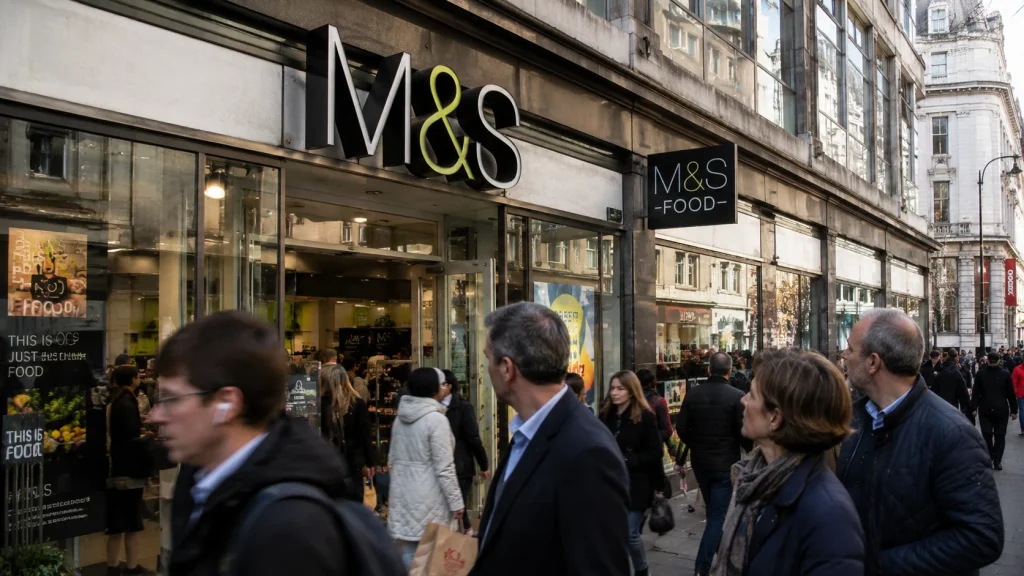
Marks & Spencer has confirmed that its Swiss Cottage food store in London will close during summer 2026 as part of the retailer’s strategy to focus on larger, more modern stores that can offer a broader shopping experience. While M&S says the branch is one of its smallest locations and no longer meets its long-term retail objectives, local residents and staff have also pointed to rising rental costs as a contributing factor.
The closure has raised concerns about the loss of convenient local shopping options, although M&S has pledged support for affected employees and says it hopes to return to Swiss Cottage in the future if a suitable larger site becomes available.
Key Takeaways:
| Key Point | Summary |
| Store Closure | M&S will close its Swiss Cottage food store during the summer. |
| Main Reason | M&S cites its store rotation programme, while locals point to rising rents. |
| Community Impact | Residents fear reduced convenience and further decline of local shopping options. |
| Staff Support | M&S plans to prioritise alternative roles for affected employees. |
| Future Plans | The retailer hopes to secure a larger site in Swiss Cottage in the future. |
| Wider Trend | The closure reflects ongoing changes affecting retailers across the UK. |
Why Is the M&S London Store Closure Making Headlines?
When I first heard about the M&S London store closure, I decided to visit Swiss Cottage to understand why the announcement had attracted so much attention.
At first glance, the area still appears busy, with commuters moving through the transport hub and residents carrying out their daily routines. However, conversations with shoppers quickly revealed a deeper concern.
For many local people, the closure is about more than simply losing a food store. It represents another chapter in the gradual transformation of a neighbourhood that has already witnessed the disappearance of banks, retail chains, and other familiar businesses.
The closure has become a talking point because Marks & Spencer remains one of Britain’s most recognised retailers. Whenever a major brand leaves a community, questions naturally arise about the future of local shopping, the strength of the high street, and the long-term economic outlook for the area.
The decision also arrives at a time when numerous UK retailers are restructuring their operations, making the closure part of a much larger national conversation about the future of physical retail stores.
What Has Happened to the M&S Swiss Cottage Store?
Marks & Spencer confirmed that its Swiss Cottage food store will close during the summer. The announcement came as a disappointment to many shoppers who have relied on the store for groceries and everyday essentials.
The closure was announced as part of Marks & Spencer’s ongoing review of its UK store portfolio, with the company continuing to invest in larger food halls and renewed stores across London despite the Swiss Cottage shutdown.
The branch has served the community for years and has become a familiar part of the local shopping environment. Its closure leaves another noticeable gap in a high street already affected by the departure of several established brands.
According to M&S, the decision forms part of a wider strategy designed to ensure that each store can provide the level of customer experience expected from the company.
Timeline for the Store Shutdown
While the exact closure timeline may vary depending on operational requirements, M&S has confirmed that the Swiss Cottage branch will cease trading during the summer period.
Customers have been encouraged to continue shopping as normal until the final closure date. Meanwhile, management teams are focusing on supporting staff and helping customers transition to nearby stores.
The retailer has stated that communication with employees and shoppers will remain a priority throughout the process.
Why Is Marks & Spencer Closing Its Swiss Cottage Location?
Rising Rental Costs and Local Challenges
During my investigation, one explanation appeared repeatedly in discussions with local residents and reports from store employees: rising rental costs.
Retail businesses across London continue to face increasing property expenses, making it more difficult for smaller stores to remain financially sustainable. Even well-established brands must regularly assess whether locations can continue operating efficiently.
As consumer behaviour changes and online shopping grows, retailers increasingly scrutinise the profitability of every site in their portfolio.
M&S Store Rotation Strategy
Marks & Spencer maintains that the closure is primarily linked to its store rotation programme.
This strategy involves opening new stores, modernising existing locations, and closing branches that no longer fit the company’s long-term objectives. The aim is to concentrate investment in locations capable of delivering stronger customer experiences and better commercial returns.
This approach has become increasingly common among major retailers seeking to balance physical store networks with changing shopping habits.
Why Was Swiss Cottage Specifically Chosen for Closure?

One of the key reasons the Swiss Cottage branch was selected for closure is its relatively small size compared with other Marks & Spencer locations across London.
Carl Flanagan, M&S Regional Manager, explained that the company’s store rotation programme focuses on ensuring every branch can deliver the best possible experience for customers.
According to the retailer, the Swiss Cottage store is among its smallest locations, limiting the range of products and services that can be offered.
Flanagan stated: “Our store rotation programme is all about making sure every store we have delivers the best of M&S for customers. That means opening new stores, renewing existing stores and, sadly, closing others which do not have a sustainable future.”
How Does the M&S Store Rotation Programme Work?
Store rotation is not unique to Marks & Spencer. Many retailers regularly review their property portfolios to ensure stores remain commercially viable.
Factors commonly assessed include:
| Assessment Area | Why It Matters |
| Store Size | Larger stores can offer broader product ranges and services. |
| Customer Footfall | Determines potential sales opportunities. |
| Operating Costs | Includes rent, utilities, staffing, and maintenance. |
| Local Competition | Impacts market share and profitability. |
| Growth Potential | Helps determine long-term sustainability. |
Through this process, retailers aim to identify locations where investment can generate the greatest return while maintaining strong customer service standards.
Investment in New and Renewed Stores Across London
M&S has highlighted plans to open new stores and refurbish existing locations across London.
The company believes modern retail environments can better meet customer expectations, particularly as shoppers increasingly seek convenience, wider product selections, and enhanced store experiences.
This strategy reflects a broader shift within retail, where businesses are focusing on quality and efficiency rather than simply maintaining large numbers of locations.
What Did M&S Say About the Closure Decision?
Regional management has described the closure as a difficult but necessary decision.
The company emphasises that the Swiss Cottage store is among its smaller locations, limiting its ability to provide the range of products and services available in larger branches.
M&S has consistently stated that the objective is to ensure customers receive the best possible shopping experience across its network.
Plans for Employees and Customers
One of the most important aspects of the closure involves support for employees.
M&S has indicated that its priority is to identify alternative opportunities for affected staff wherever possible. This approach aims to minimise disruption while retaining valuable experience within the organisation.
Customers will be directed to nearby branches in Hampstead, West Hampstead, Kilburn, and Camden, ensuring continued access to M&S products and services.
How Will the Closure Affect Swiss Cottage Residents?
The impact extends beyond shopping convenience.
Many residents depend on nearby stores for everyday purchases, particularly older individuals and those with limited mobility. Losing a local food retailer may require longer journeys and additional travel expenses.
The closure also affects the character of the area. Successful high streets often rely on a diverse mix of businesses that encourage regular footfall and community interaction.
For residents who have watched familiar businesses disappear over the years, the loss of another major retailer raises concerns about the future attractiveness of the neighbourhood.
What Are Local Shoppers Saying About the Store Closure?
While speaking with residents and reviewing local reactions, a common theme emerged: disappointment.
Many people view M&S as more than a retailer. It represents reliability, familiarity, and quality. Its departure therefore feels particularly significant.
Several residents have expressed concern that the closure could reduce foot traffic and make the area less appealing to shoppers and investors.
Concerns About the Future of Local Shopping
There is also growing anxiety about what comes next.
Some residents worry that vacant retail units could remain empty for extended periods, contributing to further decline. Others fear that additional closures may follow if trading conditions remain challenging.
Such concerns are becoming increasingly common in towns and cities across the UK.
What Other Businesses Have Left Swiss Cottage in Recent Years?
For many residents, the closure of Marks & Spencer is not an isolated event. The Swiss Cottage area has experienced a steady reduction in well-known high street names over recent years, increasing concerns about the future of local shopping facilities.
Several high street banks have already disappeared from the area, while recognised brands including Argos, Starbucks and WH Smith have also left. Residents argue that each departure reduces footfall and makes the area less attractive for shoppers.
Because M&S is one of Britain’s most recognisable retail brands, its closure has generated particularly strong reactions. Some local residents fear that losing another major retailer could accelerate changes already affecting the neighbourhood’s traditional high street identity.
Is Swiss Cottage Losing Its High Street Identity?
Swiss Cottage has experienced notable retail changes over recent years.
The departure of banks, chain retailers, and service providers has altered the local commercial landscape. While new businesses occasionally emerge, many residents feel the area’s traditional high street identity has weakened.
High streets play an important role in community life by providing access to goods, services, employment, and social interaction.
When multiple businesses close over time, the cumulative impact can become highly visible, affecting both economic activity and public perception.
The M&S closure therefore represents more than an isolated event. It serves as another indicator of the pressures facing urban retail centres.
Where Can Customers Shop After the M&S Swiss Cottage Closure?
Customers seeking alternatives will still have access to several nearby M&S stores.
| Alternative Store | Approximate Accessibility |
| Hampstead | Convenient for local residents |
| West Hampstead | Accessible by public transport |
| Kilburn | Suitable for grocery shopping |
| Camden | Offers broader retail options |
These branches will become the primary destinations for former Swiss Cottage customers.
Alternative Shopping Options in the Area
In addition to M&S locations, residents can access independent retailers, supermarkets, convenience stores, and specialist food shops.
However, many shoppers note that replacing the specific combination of quality, convenience, and product range offered by M&S may not be straightforward.
Consumer preferences often develop over many years, making retail transitions challenging for loyal customers.
Is Marks & Spencer Leaving London?
No, Marks & Spencer is not leaving London. While the closure of the Swiss Cottage food store has attracted significant attention, the retailer has made it clear that the decision forms part of its wider store rotation programme rather than a withdrawal from the capital.
According to M&S, the company is focusing on operating stores that can offer a broader range of products, improved layouts, and a stronger overall shopping experience.
As part of this strategy, the retailer plans to open four new stores and complete six major store renewals across London during the current financial year.
M&S regional manager Carl Flanagan explained that the company regularly reviews its store portfolio to ensure each location remains sustainable and capable of meeting customer expectations.
He noted that while smaller stores such as Swiss Cottage face challenges, the business continues to invest heavily in larger and more modern locations across London.
Could Marks & Spencer Return to Swiss Cottage in the Future?

Despite the closure, M&S has suggested that it remains interested in the area.
Company representatives have indicated that they would welcome the opportunity to secure a larger site capable of delivering a broader customer experience.
This possibility provides some reassurance to residents who hope the retailer may eventually return.
Future Expansion Opportunities
Should suitable premises become available, M&S could potentially re-establish a presence within Swiss Cottage.
The success of such a move would likely depend on property availability, market conditions, customer demand, and long-term commercial viability.
For now, however, any return remains a future possibility rather than a confirmed plan.
What Does the M&S Closure Reflect About Wider Changes in London Retail?
The closure reflects several broader retail trends.
Consumers increasingly combine online shopping with physical store visits, leading retailers to rethink how many locations they require and where those stores should be situated.
At the same time, rising rents, staffing costs, energy expenses, and business rates continue to challenge retailers operating in urban environments.
As a result, closures and relocations are becoming a normal part of modern retail strategy.
What Does the Future Hold for Physical Retail Stores in London?
Despite ongoing closures, physical retail is unlikely to disappear.
Instead, stores are evolving to meet changing customer expectations.
Many retailers are investing in larger, more modern locations that provide a broader range of products and services. Others are integrating digital technology into physical stores to create more seamless shopping experiences.
London remains one of Europe’s most important retail markets, attracting residents, commuters, and tourists throughout the year.
As a result, demand for high-quality retail space is expected to remain strong, even if the number of stores continues to fluctuate.
Future success will likely depend on location quality, customer experience, and operational efficiency rather than simply the size of a retailer’s store network.
Conclusion
After visiting Swiss Cottage and examining the circumstances surrounding the M&S London store closure, I found that the story extends far beyond the loss of a single food store.
The closure reflects wider changes affecting retailers across London and the UK, including rising costs, evolving consumer behaviour, and ongoing efforts to modernise store networks.
While M&S remains committed to investing in larger and more sustainable locations, local residents understandably worry about the impact on their community.
As retailers continue adapting to a rapidly changing market, the Swiss Cottage closure provides a clear example of the challenges and opportunities shaping the future of Britain’s high streets.
FAQs
Is the M&S Swiss Cottage store closing permanently?
Yes. Marks & Spencer has confirmed that its Swiss Cottage food store will close during summer 2026. However, the retailer has stated that it would like to return to the area if a larger and more suitable site becomes available in the future.
Why is Marks & Spencer closing the Swiss Cottage store?
M&S says the closure is part of its wider store rotation programme. According to the company, the Swiss Cottage branch is one of its smallest stores and cannot provide the shopping experience the retailer aims to offer customers.
When will the Swiss Cottage M&S store close?
The retailer has confirmed that the store will close during summer 2026. Customers can continue shopping at the branch until the final closure date is announced.
What will happen to employees affected by the closure?
Marks & Spencer has said its priority is to support affected employees and explore alternative roles within the business wherever possible. The company aims to minimise disruption for staff during the transition.
Where can customers shop after the Swiss Cottage store closes?
Customers will be able to use nearby M&S locations in Hampstead, West Hampstead, Kilburn and Camden. These stores will continue to provide access to M&S food and other products.
Is Marks & Spencer leaving London?
No. M&S has made it clear that the Swiss Cottage closure does not represent a withdrawal from London. The retailer is continuing to invest in the capital through new stores, refurbishments and larger-format locations.
Is M&S planning to open more stores in London?
Yes. Marks & Spencer has confirmed plans for four new stores and six store renewals across London as part of its ongoing investment strategy. The company says these projects will help deliver improved shopping experiences and support future growth.