
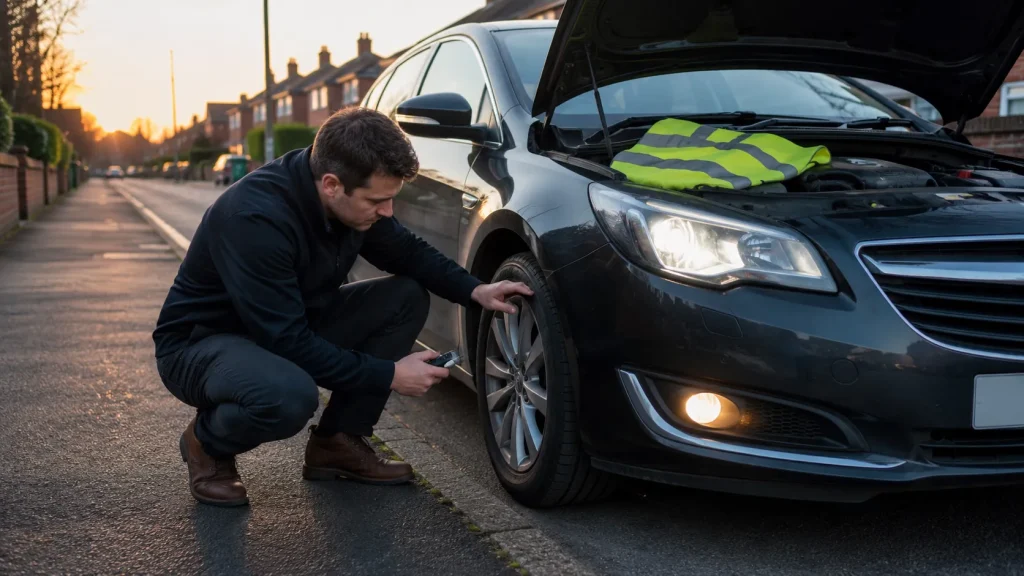
Under the Road Vehicles Construction and Use Regulations 1986, United Kingdom law requires drivers to keep their entire vehicle in a safe and legally roadworthy condition whenever it is used on a public road.
However, if you are looking for the specific answer to the DVSA driving theory test question, the three parts you must keep in good condition are your tyres, brakes, and lights.
These three specific components are prioritized because they have the most immediate impact on road safety, vehicle control, and visibility. Failing to maintain them can lead to immediate vehicle defects, significant police fines, and an invalidated car insurance policy.
Key Takeaways:
- Core Driving Test Answer: The official DVSA driving theory test and the Highway Code specifically highlight tyres, brakes, and lights as the three essential parts that must be kept in good condition.
- Broader Legal Reality: The Road Vehicles Construction and Use Regulations 1986 extend full legal requirements to other critical components including the steering system, seat belts, windscreens, wipers, mirrors, and number plates.
- Continuous Accountability: A valid MOT certificate only proves roadworthiness on the exact day of the test. Motorists bear continuous legal responsibility for any defects that develop at any point throughout the year.
- Severe Financial Penalties: Operating an unroadworthy vehicle carries strict statutory penalties, such as a fine of up to 2,500 pounds and 3 penalty points per defective tyre.
- Windscreen Directives: Any chip or crack exceeding 10mm in the driver’s direct line of sight, known as Zone A, is classified as an MOT Major defect and constitutes an illegal driving offence.
- Insurance and Liability Risks: If a road collision occurs due to a lack of maintenance, such as worn brake pads or insufficient tyre tread depth, motor insurers can legally refuse or invalidate the claim
UK Car Maintenance Laws: What Are Your Legal Obligations?
Understanding what part of the car does the law require you to keep in good condition is essential whether I am preparing for the DVSA theory test or simply ensuring my vehicle complies with UK law.
Many motorists know the theory test answer is “tyres, brakes and lights”, but far fewer realise that the legal requirements extend well beyond those three components.
Every vehicle driven on UK roads must remain roadworthy throughout the year, not just on the day it passes its MOT. Vehicle components naturally wear over time, meaning it is my responsibility as a driver to identify defects before they become safety hazards.
This guide explains the legal requirements under current UK legislation, the responsibilities placed on drivers, the difference between roadworthiness and an MOT certificate, and the practical steps that help keep a vehicle safe and compliant.
What Part of the Car Does the Law Require You to Keep in Good Condition?
The straightforward answer is that UK law requires drivers to keep their entire vehicle in a safe and roadworthy condition.
However, if you are answering the DVSA driving theory test, the expected response is tyres, brakes and lights because these are the three components most directly linked to road safety and are specifically highlighted in the Highway Code.
The legal foundation for these requirements comes primarily from the Road Vehicles (Construction and Use) Regulations 1986, supported by the Road Traffic Act 1988 and guidance published by the Driver and Vehicle Standards Agency (DVSA). Together, these rules ensure that every vehicle used on a public road meets minimum safety standards.
A roadworthy vehicle is one that can be driven safely without creating unnecessary risks for the driver, passengers or other road users.
This responsibility applies every time a driver uses their vehicle, regardless of whether it passed its MOT recently or is due for another inspection in several months
The law therefore covers far more than just the three components commonly referenced in the theory test. Steering systems, mirrors, windscreens, seat belts, wipers and number plates must also remain in proper working condition because each contributes directly to vehicle safety and legal compliance.
| Vehicle Component | Legal Requirement | Why It Matters |
| Tyres | Minimum 1.6mm tread depth and free from dangerous damage | Maintains grip, braking and handling |
| Brakes | Fully operational and effective | Allows safe stopping in all conditions |
| Lights | All required lights must function correctly | Ensures visibility and communication |
| Steering | Must operate safely without excessive play | Maintains vehicle control |
| Seat Belts | All fitted belts must work properly | Protects occupants during collisions |
| Windscreen & Wipers | Clear visibility with effective cleaning | Prevents obstructed vision |
| Mirrors | Adequate rearward visibility | Helps monitor surrounding traffic |
| Number Plates | Clearly displayed and illuminated | Allows vehicle identification |
Which Three Parts of the Car Does the Law Require You to Keep in Good Condition?
If you are preparing for your UK driving theory test, the correct answer is tyres, brakes and lights. These three components are prioritised because they have the greatest immediate impact on road safety.
Tyres provide the only contact between a vehicle and the road surface. Their condition directly affects grip, braking distances, steering response and stability, particularly during heavy rain or emergency manoeuvres. Even a small defect, such as a bulge or exposed cord, can significantly increase the risk of tyre failure.
Brakes are equally important because they determine how effectively a vehicle can slow down or stop. Worn brake pads, leaking hydraulic systems or damaged discs can increase stopping distances and reduce driver control during emergencies.
Maintaining these components is not simply good practice; it forms part of my legal responsibility as the person driving the vehicle on public roads. Faulty headlights, brake lights or indicators increase the likelihood of collisions, especially during poor weather or at night.
Although these three components are emphasised during the theory test, they should not be viewed as the only legal requirements. They simply represent the most safety-critical areas that every driver should inspect regularly.
Richard Holden MP, speaking as the UK Roads Minister, emphasized that vehicle maintenance plays a fundamental role in improving road safety. Official government guidance encourages motorists to carry out proactive safety checks rather than relying solely on annual MOT testing to catch defects.
Source: https://www.gov.uk/government/news”
Why Does UK Law Focus on Tyres, Brakes and Lights?
Tyres, brakes and lights receive special attention because defects in these systems contribute directly to serious road collisions. Unlike cosmetic damage, faults affecting these components can immediately compromise a driver’s ability to control a vehicle safely.
Tyres influence braking efficiency, steering precision and traction in every weather condition. A worn tyre with insufficient tread depth can significantly increase stopping distances on wet roads because it cannot disperse water effectively.
Brakes represent the vehicle’s primary safety mechanism. Even minor reductions in braking performance may become critical when avoiding unexpected hazards, pedestrians or other vehicles.
Lights perform two equally important functions. They improve visibility for the driver while also making the vehicle visible to everyone else using the road.
Indicators communicate intended movements, brake lights warn following traffic and headlights allow safe driving after dark.
Because these components work together to reduce accident risk, they have become the focus of both driving theory education and routine roadside vehicle inspections.
Which Other Vehicle Parts Must Be Kept in Good Condition by Law?
Although tyres, brakes and lights are widely recognised, UK legislation requires several additional components to remain safe and functional.
Components Covered Under the Road Vehicles (Construction and Use) Regulations 1986
The regulations cover steering systems, suspension, mirrors, seat belts, windscreens, washers, windscreen wipers, exhaust systems, registration plates and numerous other safety-related items.
A damaged windscreen can reduce visibility, particularly if cracks fall within the driver’s direct field of vision. Worn wiper blades may leave streaks that make driving hazardous during rain.
Seat belts must operate correctly for every seating position where they are fitted. A damaged buckle or faulty retractor may prevent occupants from receiving adequate protection during a collision.
Steering components must respond accurately without excessive movement or mechanical defects. Any noticeable steering fault should be investigated immediately because it directly affects vehicle control.
Mirrors must provide a clear rearward view, allowing drivers to monitor surrounding traffic safely before changing lanes or reversing.
Maintaining these components is not simply good practice; it forms part of my legal responsibility as the person driving the vehicle on public roads.
| Component | Common Defect | Possible Legal Consequence |
| Windscreen | Crack in driver’s view | MOT failure and possible offence |
| Seat Belt | Faulty buckle | Vehicle considered unsafe |
| Steering | Excessive free play | Vehicle may be prohibited |
| Mirrors | Broken mirror | Reduced visibility offence |
| Wipers | Ineffective clearing | Unsafe vehicle condition |
| Number Plate | Illegible or damaged | Fixed penalty notice |
What Does the Road Vehicles (Construction and Use) Regulations 1986 Say?
The Road Vehicles (Construction and Use) Regulations 1986 establish the minimum standards that vehicles must satisfy before they are used on public roads.
These regulations specify how vehicle systems should function and prohibit the use of vehicles with defects that could endanger road users. Rather than focusing solely on annual inspections, the legislation requires compliance every day a vehicle is driven.
The regulations cover mechanical integrity, braking performance, steering effectiveness, tyre condition, lighting equipment, visibility, mirrors and numerous other safety systems.
This continuous legal obligation explains why a vehicle that passed its MOT several months ago can still become illegal if defects develop afterwards.
Edmund King OBE, President of the AA, has repeatedly advised motorists through the AA Newsroom that simple routine vehicle checks can prevent a significant percentage of highway breakdowns and immediately improve road safety, particularly before long journeys or seasonal weather changes.
Source: https://www.theaa.com/newsroom
What Does the Highway Code Say About Keeping Your Car Roadworthy?

The Highway Code states that drivers must ensure their vehicle is roadworthy before every journey. This means carrying out basic safety checks and addressing any faults that could affect safe driving.
It also reminds drivers that using an unsafe vehicle can lead to penalties, even if it has a valid MOT certificate.
Does Passing an MOT Mean Your Car Is Legally Roadworthy All Year?
No. An MOT only confirms that a vehicle met the required safety and environmental standards on the day it was tested. It does not guarantee that the vehicle will remain roadworthy for the next 12 months.
If a serious defect develops after the test, the vehicle can become illegal to drive immediately. The responsibility for identifying and repairing new faults always remains with the driver.
| MOT Certificate | Roadworthiness |
| Valid on the test date | Required every day |
| Annual inspection | Continuous legal responsibility |
| Identifies defects during testing | Covers any defects that develop afterwards |
| Does not replace driver responsibility | Driver remains legally accountable |
Sarah Sillars OBE, writing for the Institute of the Motor Industry (IMI), has consistently highlighted that routine vehicle maintenance between MOT tests is essential. Because many safety-related defects develop gradually, they often go unnoticed by motorists until an emergency occurs, making regular physical inspections vital
Source: https://tide.theimi.org.uk
Who Is Responsible for Keeping a Vehicle Roadworthy?
The driver is legally responsible for ensuring the vehicle is safe whenever it is driven on a public road. While owners should maintain their vehicles, anyone driving the vehicle can be held accountable if it is found to be unroadworthy.
This applies to private cars, company vehicles and borrowed vehicles alike.
What Happens If You Drive an Unroadworthy Vehicle?
Driving an unsafe vehicle can have serious legal and financial consequences. Depending on the defect, drivers may face fines, penalty points, prosecution or even a vehicle prohibition notice preventing further use until repairs are completed.
For example, defective tyres can result in substantial fines and penalty points for each illegal tyre.
Can Your Insurance Become Invalid If Your Car Is Not Roadworthy?
Yes. If an accident occurs and investigations show the vehicle was unroadworthy due to poor maintenance, insurers may reduce or refuse a claim depending on the policy terms and circumstances.
Keeping the vehicle properly maintained helps reduce both legal and financial risks.
How Can You Check Whether Your Car Is Roadworthy Before Every Journey?
A quick inspection before driving can help identify common problems before they become safety hazards.
Check the following:
| Safety Check | What to Look For |
| Tyres | Correct pressure, legal tread depth and no visible damage |
| Brakes | No unusual noises or reduced braking performance |
| Lights | All headlights, brake lights and indicators working |
| Windscreen | Clean with no significant cracks |
| Mirrors | Secure, clean and properly adjusted |
| Wipers | Clear the screen effectively |
| Number Plates | Clean, secure and easy to read |
Spending a few minutes checking these items can prevent costly repairs and improve road safety.
What Are the Most Common Vehicle Defects Found on UK Roads?
Some of the most frequently reported defects include:
- Worn tyres
- Faulty lights
- Damaged windscreens
- Ineffective windscreen wipers
- Worn brake components
- Broken mirrors
- Defective number plate lights
Most of these issues develop gradually, making regular inspections an important part of responsible vehicle ownership.
What Are the Legal Requirements for Tyres, Brakes and Lights?
Tyres
Tyres must have a minimum tread depth of 1.6mm across the central three-quarters of the tread and be free from dangerous cuts, bulges or exposed cords.
Brakes
Brakes must operate efficiently, including the handbrake. Any reduction in braking performance should be investigated immediately.
Lights
All mandatory exterior lights, including headlights, brake lights, indicators, rear lights and number plate lights, must work correctly whenever required.
What Other Safety Components Should Drivers Regularly Inspect?
Although tyres, brakes and lights receive the most attention, several other components also play an important role in keeping a vehicle roadworthy.
The steering should respond smoothly without excessive play, mirrors must provide a clear rear view, seat belts should lock and retract correctly, and the windscreen should be free from damage that obstructs the driver’s vision.
Drivers should also ensure windscreen washers contain sufficient fluid and that number plates remain clean, securely attached and easy to read.
Regular checks help identify problems before they become legal or safety concerns.
Common Myths About UK Car Condition Laws
Many drivers misunderstand what UK law actually requires. The table below separates common myths from the facts.
| Myth | Reality |
| A valid MOT means the car is legal all year. | An MOT only reflects the vehicle’s condition on the test date. |
| Only tyres, brakes and lights matter legally. | UK law covers many other safety-critical components. |
| Small windscreen cracks are always acceptable. | Damage in the driver’s line of sight may make the vehicle unroadworthy. |
| Tyres only need checking before an MOT. | Tyres must meet legal standards every time the vehicle is driven. |
| Seat belts only matter for the driver. | Every fitted seat belt must be in good working order. |
What Is the Difference Between an MOT Test and Roadworthiness?
Although they are closely linked, an MOT test and roadworthiness are not the same.
An MOT is an annual inspection that checks whether a vehicle meets the minimum legal standards at the time of testing. Roadworthiness is a continuous legal requirement that applies every day the vehicle is used.
A car can pass its MOT and later become unroadworthy if a safety-related defect develops.
What Are the Best Practices for Keeping Your Vehicle in Good Condition?
Keeping a vehicle roadworthy does not require extensive mechanical knowledge. A few simple habits can significantly reduce the risk of defects.
Inspect tyres regularly for tread depth and damage, test all lights before longer journeys, monitor brake performance, keep the windscreen clean, top up washer fluid, and arrange servicing according to the manufacturer’s recommendations. Addressing small faults promptly is often less expensive than waiting until they become serious problems.
Conclusion
Understanding what part of the car does the law require you to keep in good condition is about more than answering a driving theory test question. While tyres, brakes and lights are the three components most commonly highlighted, UK law requires drivers to keep the entire vehicle in a safe and roadworthy condition.
Regular inspections, prompt repairs and routine servicing help ensure compliance with the law while reducing the risk of accidents, fines and insurance issues.
By carrying out a few simple checks before driving, I can protect myself, my passengers and everyone else using the road.
Frequently Asked Questions
Is it illegal to drive with worn tyres?
Yes. If a tyre does not meet the legal tread depth requirement or has dangerous damage such as cuts, bulges or exposed cords, driving the vehicle is illegal and could lead to fines and penalty points.
Can I drive with a broken brake light?
No. Brake lights are mandatory safety equipment. A faulty brake light can result in a fixed penalty and increases the risk of rear-end collisions.
Does an MOT guarantee my vehicle is safe for the next 12 months?
No. An MOT only confirms the vehicle met the required standards on the day of the inspection. Drivers remain responsible for any defects that develop afterwards.
Who is responsible if I borrow someone else’s car?
The person driving the vehicle is responsible for ensuring it is roadworthy before using it on a public road, even if they are not the owner.
Can a cracked windscreen fail an MOT?
Yes. A crack that affects the driver’s field of vision or exceeds the permitted limits can result in an MOT failure and make the vehicle unroadworthy.
How often should I check my vehicle?
Basic safety checks should be carried out regularly, with tyres, lights, brakes and fluid levels inspected before long journeys and periodically during normal use.
What happens if the police find my vehicle is unroadworthy?
Depending on the defect, you may receive a prohibition notice, penalty points, a fine or prosecution. Serious defects may also prevent you from driving the vehicle until repairs have been completed.