Last checked: 2 July 2026
This article distinguishes between the reasons Routledges gave for closing its shops and the information subsequently recorded in official company and insolvency filings.
This article is for general information only and does not constitute legal, employment or financial advice.
Quick Answer: Why Did Routledges the Bakers Close?
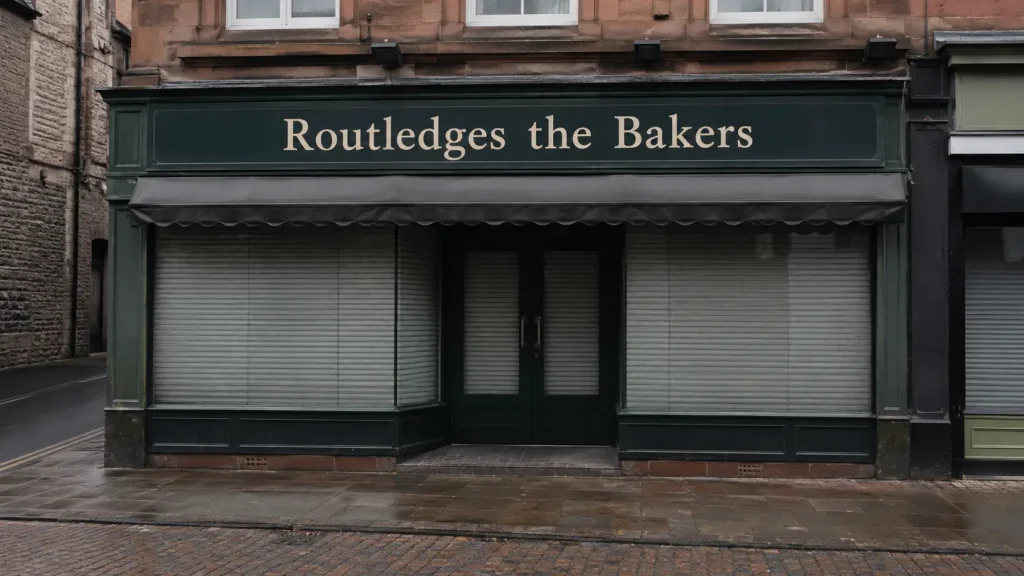
Routledges the Bakers closed all its Carlisle outlets on 30 March 2026 after 109 years of trading. The company blamed a combination of rising operational and ingredient costs, minimum-wage increases, higher business rates, expected energy-price rises and declining high-street footfall.
Routledges said its operating costs alone were expected to be more than £80,000 higher than in 2025. It had recently opened a self-service Market Hall shop and reduced prices across its stores, but these measures were not enough to make continued trading sustainable.
The shops closed first, and Routledges the Bakers Limited subsequently entered creditors’ voluntary liquidation. Official records show that the winding-up process commenced on 13 April 2026.
Key Takeaways:
- Routledge announced the permanent closure of its Carlisle outlets on 30 March 2026.
- The bakery had traded for 109 years.
- Rising ingredients, wages, business rates, and operational costs were central to the closure.
- The company was also expecting higher energy costs when its contracts were renewed.
- Routledge said declining high-street footfall had weakened customer demand.
- Its projected annual operating costs were more than £80,000 higher than in 2025.
- The business tried to reduce costs through a self-service Market Hall shop and price reductions.
- Published reports differ over whether seven or eight locations closed.
- Routledges the Bakers Limited entered creditors’ voluntary liquidation on 13 April 2026.
The closure was therefore not attributed to one isolated bill or decision. It followed several commercial pressures affecting the business at the same time.
What was Routledge’s The Bakers?
Routledges the Bakers was a long-established Carlisle bakery that produced and sold bread, cakes, pastries and confectionery through a network of local outlets.
The business had traded for 109 years by the time its shops closed in March 2026. This made Routledges a familiar name within Carlisle and part of the city’s traditional independent retail sector.
Routledges the Bakers Limited was incorporated on 29 August 2002, although the registered company’s incorporation date should not be confused with the beginning of the bakery’s wider trading history.
Its business model combined bakery production with physical retail shops. This meant it had to cover ingredients, employees, energy, equipment, packaging, transport, commercial premises and business rates. It also depended heavily on sufficient numbers of customers visiting Carlisle’s shopping areas.
That combination of production and retail costs became increasingly difficult to sustain when expenditure rose while high-street footfall declined.
Why Did the Routledges Bakery Closure Matter Locally?
The Routledges Carlisle closure removed a familiar independent name from the city’s retail landscape. Long-established food businesses often form part of a place’s identity because they serve several generations of customers and become associated with local routines.
The closure also demonstrated that a business can have strong local recognition and a long history while still facing serious modern trading pressures. Longevity by itself does not protect a company from rising costs, changing consumer behaviour or falling town-centre footfall.
When Did the Routledges the Bakers Closure Happen?
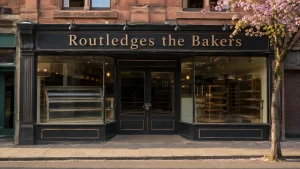
Routledges announced the permanent closure of its Carlisle outlets on 30 March 2026 after 109 years of trading. The shops stopped operating first, while the formal liquidation process began later in April.
Timeline of the Closure
| Date | Development |
| February 2026 | A self-service outlet opened in Carlisle Market Hall. |
| March 2026 | Routledges reduced prices across its stores. |
| 30 March 2026 | All Carlisle outlets closed permanently. |
| 13 April 2026 | Creditors’ voluntary liquidation commenced. |
| 27 April 2026 | A statement of affairs was filed. |
| 28 April 2026 | The liquidators’ appointment and winding-up resolution were filed. |
Companies House records 13 April 2026 as the start of the winding-up process.
Did Rising Costs Contribute to the Routledges Bakery Closure?
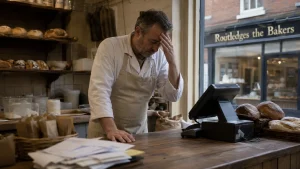
Yes. Routledges said rising operational expenses, ingredient prices, wages, business rates and expected energy costs made continued trading unsustainable.
Ingredient and Operating Costs
- The bakery faced higher costs for ingredients, packaging, equipment and other supplies.
- Although Routledges did not publish a detailed supplier breakdown, it identified increasing operational and ingredient costs as major pressures.
Minimum-Wage Costs
- Running bakery production and several shops required staff across baking, retail, cleaning and deliveries.
- Routledges said minimum-wage increases added to its overall operating costs.
- This does not mean employees caused the closure.
- Wage costs were one of several financial pressures affecting the business.
Business Rates
- Routledges said its business-rates bill had increased sharply compared with 2025.
- As the company operated several premises, rates formed a significant part of its wider cost base.
- However, the bakery did not blame business rates alone.
- It cited them alongside wages, ingredients, energy costs and declining footfall.
Expected Energy-Price Rises
- Bakery ovens, refrigeration, lighting and ventilation can consume substantial energy.
- Routledges expected its energy costs to rise when existing contracts were renewed, adding further uncertainty.
£80,000 Projected Cost Increase
- Routledges estimated that its annual operating costs would be more than £80,000 higher than in 2025.
- This was the company’s projection rather than an independently audited figure, but it shows the scale of the financial pressure it expected to face.
- Price reductions and the new self-service outlet were not enough to offset these wider increases.
Did Falling Footfall Also Cause Routledges to Shut?
Yes. Routledges said it had seen a continuing decline in high-street footfall at the same time as its operating expenses were increasing. means the number of people visiting or passing through a shopping area. It does not guarantee sales, but fewer visitors generally mean fewer opportunities for a shop to attract customers.
Why Customer Numbers Matter to a Bakery?
A bakery normally produces fresh goods before it knows exactly how many customers will visit. Some products have a limited shelf life and may not be saleable for long.
If fewer customers enter the shop, the business may sell less while still paying for ingredients, production, employees, rent, rates and energy. This creates a difficult balance between producing enough goods to meet demand and avoiding unsold stock.
A business with several shops also has fixed costs attached to keeping those locations open. Lower footfall can therefore affect the value of maintaining a wider branch network.
How Rising Costs and Weaker Demand Combined?
Rising expenditure and declining footfall can be especially difficult when they happen together.
Higher costs may encourage a bakery to increase its prices. However, customers facing their own household pressures may reduce discretionary purchases or visit less frequently. The business can then find itself paying more to operate while having fewer opportunities to generate sales.
Routledges’ statement suggests that this combined pressure, rather than a single isolated event, was the deciding factor behind the Routledges bakery shutdown.
Was Falling Footfall the Only Reason?
No. Falling footfall was one of several reasons given.
Describing the closure solely as a result of fewer shoppers would overlook the company’s statements about ingredients, wage costs, business rates, energy contracts and general operating expenditure. The clearest explanation is that weaker footfall made it harder to absorb the other increases.
What Did Routledges Try Before Closing?
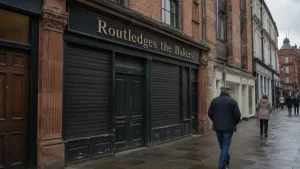
Routledges attempted changes shortly before the business ceased trading. These included opening a self-service outlet and reducing prices across its stores. Carlisle Market Hall self-service shop
In February 2026, Routledges opened a self-service store in Carlisle Market Hall. The concept was intended to reduce running costs and allow savings to be passed on to customers.
A self-service format can potentially require fewer front-of-house resources and simplify the way products are sold. For Routledges, it represented an attempt to find a lower-cost retail model at a time when traditional shop operations were under pressure.
However, the Market Hall outlet opened only shortly before the permanent closure announcement. It did not provide enough time or savings to overcome the company’s wider financial difficulties.
Price Reductions Across Its Shops
Routledges also cut prices across its stores in March 2026.
This is important because it shows the business was not simply responding to rising costs by continually charging customers more. It tried to make its products more affordable and potentially encourage additional sales.
Lower prices can attract customers, but they also reduce the amount received per sale unless the business can lower its costs or sell significantly more products. With expenditure rising and footfall declining, the strategy was not enough to reverse the overall position.
Why the Cost-saving Measures Were Not Enough?
The changes addressed only parts of the business model. A self-service shop could reduce certain retail costs, while lower prices could potentially encourage demand. Neither measure directly removed the effect of higher ingredient bills, statutory wage increases, rates liabilities or expected energy costs.
The company ultimately concluded that it did not want to face another year of rising expenditure and uncertainty. ll Routledges Shops Close?
All of the company’s Carlisle outlets were reported as having closed permanently. However, published reports differ over the exact number of locations.
BakeryInfo reported that Routledges closed seven shops, while ITV News referred to eight branches. do some reports say seven shops and others say eight?
The difference may relate to how individual locations were counted, although the available reports do not provide a definitive explanation.
One possibility is that a production, market or recently opened location was counted differently from a conventional shop. That is only a possible interpretation and should not be presented as confirmed.
For accuracy, I have used the phrase “all of its Carlisle outlets” throughout this article where the precise number is not essential. This acknowledges that the entire local operation ceased while avoiding a claim that credible reports do not consistently support.
Was the Market Hall outlet included?
The self-service Market Hall operation was part of the Routledges business that ceased trading. It had opened in February 2026, only weeks before the wider Routledges Carlisle closure was announced. The trading period shows how quickly the company’s position developed despite attempts to introduce a lower-cost concept.
Is Routledges the Bakers in Liquidation?
Yes. Companies House records Routledge’s The Bakers Limited as being in liquidation.
The company entered a creditors’ voluntary liquidation, with the winding-up process commencing on 13 April 2026. This happened approximately two weeks after its Carlisle outlets stopped trading.
The closure of the shops and the liquidation of the company are connected but legally distinct events. Closure means the business stopped serving customers and carrying on its normal operations. Liquidation is the formal process used to wind up the limited company, deal with its assets and assess claims from creditors.
Official filing records show that a statement of affairs was filed on 27 April 2026. The appointment of voluntary liquidators and the winding-up resolution were filed on 28 April 2026.
Companies House lists Andrew Little and Gillian Margaret Sayburn as the appointed insolvency practitioners. The company’s registered office was also changed to an address associated with BTG Begbies Traynor in Newcastle upon Tyne.
What Is a Creditors’ Voluntary Liquidation?
A creditors’ voluntary liquidation is an insolvency process generally used when a company cannot continue trading and meet its financial obligations.
Appointed insolvency practitioners take control of the winding-up process. Their responsibilities may include identifying assets, reviewing creditor claims, dealing with company records and distributing any available funds in accordance with insolvency law.
The term “administration” should not be used to describe Routledges’ position because Companies House identifies the procedure as a creditors’ voluntary liquidation.
What Does Routledge’s Closure Mean for Carlisle?
The closure means Carlisle has lost a bakery name that formed part of the city’s commercial life for more than a century.
The Loss of a Longstanding Local Name
Businesses with a 109-year history are relatively rare. Their value to a city is not limited to the products they sell. They can become landmarks, meeting points and part of residents’ memories of the high street.
The loss of Routledges therefore carries a cultural as well as an economic impact. Customers who used the shops regularly no longer have access to the same local business, while Carlisle’s retail mix has lost a traditional independent operator.
The Effect on Former Workers and Regular Customers
The closure was likely to be especially difficult for employees and loyal customers. However, individual employment, redundancy or payment circumstances should not be assumed without verified information.
The company’s announcement and subsequent insolvency records establish that trading stopped and liquidation began. They do not provide a complete public account of every person affected.
Wider Concerns About Carlisle’s High Street
The Routledges closure may add to concerns about the future of established businesses in Carlisle’s shopping areas.
A high street depends on a mix of businesses that give people reasons to visit regularly. When a familiar operator closes, neighbouring shops can also lose some of the shared footfall created by that destination.
At the same time, one closure should not be used to declare the wider city centre beyond recovery. Carlisle’s future will depend on investment, consumer behaviour, property costs and the ability of local businesses to adapt.
What Is Confirmed and What Remains Unclear?
The available evidence confirms the main sequence of events, although some details remain uncertain.
| Confirmed information | Information that remains unclear |
| Routledges closed its Carlisle outlets on 30 March 2026 | Why reports differ between seven and eight locations |
| The bakery had traded for 109 years | The final amount each unsecured creditor may receive |
| Rising costs and declining footfall were cited as reasons | The individual financial position of every employee |
| Operating costs were forecast to rise by more than £80,000 | Whether any single cost increase was decisive |
| The company entered creditors’ voluntary liquidation | The eventual outcome of every lease and creditor claim |
| The winding-up process commenced on 13 April 2026 | The final amount available for distribution after costs |
Separating confirmed facts from unresolved details prevents assumptions from being presented as established information.
Conclusion: Why Did Routledges the Bakers Close?
Routledges the Bakers closed because several commercial pressures affected the business simultaneously.
The company cited rising operational and ingredient costs, minimum-wage increases, higher business rates, expected energy-price rises and declining high-street footfall. It estimated that its operating costs would be more than £80,000 higher than in 2025.
Routledges attempted to adapt by opening a self-service Market Hall shop and reducing prices, but these measures did not resolve its wider financial pressures. Its Carlisle outlets closed on 30 March 2026, and the company entered creditors’ voluntary liquidation shortly afterwards.
Frequently Asked Questions
When Did Routledges the Bakers Close?
Routledges announced the permanent closure of its Carlisle outlets on 30 March 2026. Its formal creditors’ voluntary liquidation commenced on 13 April 2026.
Why Did Routledges the Bakers Shut Down?
The bakery blamed rising operational and ingredient costs, minimum-wage increases, higher business rates, expected energy-price rises and declining high-street footfall. It said operating costs would be more than £80,000 higher than in 2025.
How Many Routledges Shops Closed?
All of the company’s Carlisle outlets closed. ITV News reported eight branches, while BakeryInfo referred to seven shops. The reason for the difference has not been publicly confirmed.
Did Routledges Try to Avoid Closing?
Yes. The business opened a self-service shop in Carlisle Market Hall in February 2026 and reduced prices across its stores in March. These measures were not enough to overcome its wider cost and trading pressures.
Is Routledges the Bakers in Liquidation?
Yes. Companies House records Routledges the Bakers Limited as being in creditors’ voluntary liquidation, commencing on 13 April 2026.
Who Is Handling the Routledges Liquidation?
Companies House lists Andrew Little and Gillian Margaret Sayburn as the appointed insolvency practitioners.
What Should Former Employees or Creditors Do?
Former employees should check official government guidance about possible statutory payments. Suppliers and other creditors should contact the appointed liquidators and retain evidence supporting any amount they are owed.
How We Checked This Article
Last checked: 2 July 2026
This article was checked against contemporary news coverage, official company records, insolvency notices and UK government guidance. The closure announcement was separated from the later liquidation process to avoid presenting the shop closures and legal winding-up as the same event.
The following checks were completed:
- Routledges’ reported closure statement was used to verify the closure date, 109-year trading history, reasons given for shutting, projected £80,000 cost increase, price reductions and self-service Market Hall outlet.
- Companies House records were checked for the company’s incorporation date, business activities, filing history and insolvency information.
- The Gazette was checked to confirm that the company entered a creditors’ voluntary liquidation and to verify the appointment of the joint liquidators.
- British Baker was used to review bakery-industry reporting and the claim that seven Carlisle shops closed.
- Official GOV.UK guidance was checked for information about the 2025/26 Retail, Hospitality and Leisure Business Rates Relief scheme.
- UK insolvency guidance was consulted when explaining the possible rights of former employees.
Published sources disagree over whether seven or eight Routledges locations closed. ITV News reported eight branches, while British Baker referred to seven shops. Because no authoritative public explanation for the difference was found, the article uses “all Carlisle outlets” where an exact number is unnecessary.