
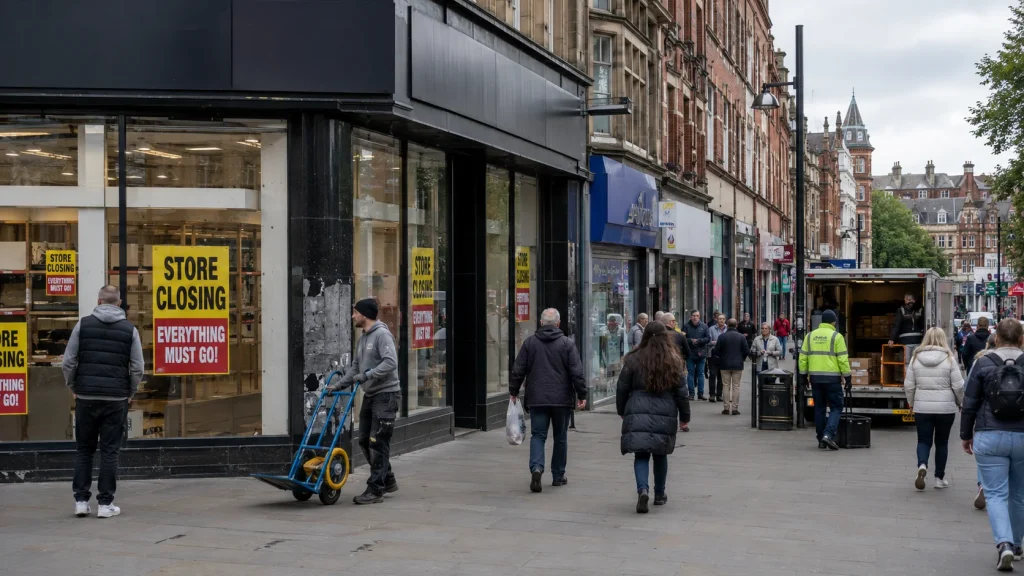
The 2026 wave of UK high street store closures reflects a broad restructuring across multiple sectors, including fashion retail, charity shops, supermarkets, and banking. Rising operating costs, declining footfall, and the continued shift toward online services are prompting businesses to reduce their physical presence.
Key Takeaways:
- Broad Multi-Sector Strain: The 2026 high street shakeup is hitting major fashion brands, nationwide charity networks, grocery chains, and financial institutions simultaneously.
- Phase Eight Downsizing: Backed by parent company TFG, fashion retailer Phase Eight is shutting down up to 400 branches, with closures already finalized in St Andrews, Dundee, and Perth.
- BHF Shifting Online: The British Heart Foundation (BHF) is closing 150 physical shops by March 2028, migrating secondary retail fundraising streams to its official eBay storefront.
- Morrisons Daily Consolidation: Supermarket giant Morrisons is trimming its 2,200+ store footprint by executing 7 immediate convenience branch closures, with 93 more under review.
- Bank Outlets Vanishing: Major banking groups like NatWest, Barclays, and Lloyds continue aggressively reducing physical branches due to widespread mobile app adoption.
- Job Redundancy Risks: Hundreds of local retail and banking jobs are at immediate risk nationwide as companies execute these massive portfolio restructurings.
- Town Centre Evolution: Vacant high street units are forcing local authorities to shift town centres away from retail-only models into mixed-use community and leisure hubs.
Why the 2026 Retail Shaker is Grabbing National Headlines?

The scale and frequency of closure announcements have placed the issue firmly in the national spotlight. Across the UK, major retailers, supermarkets, charity shops and financial institutions are reviewing their property portfolios and reducing their physical footprints.
For many consumers, high streets have long served as more than shopping destinations. They act as community hubs, employment centres and focal points for local economies.
When recognised brands announce closures, concerns naturally arise regarding jobs, local investment and the future appearance of town centres.
What makes 2026 particularly significant is the diversity of businesses involved. Unlike previous retail downturns that primarily affected fashion chains, current closure announcements span multiple sectors, including clothing retailers, supermarkets, charity organisations and banking services.
What Is Driving the Latest Wave of High Street Store Closures Across Britain?
Several factors are contributing to the growing number of store closures across Britain. Retailers are navigating a challenging environment shaped by economic pressures and changing consumer behaviour.
Economic Pressures on Retailers
Businesses continue to face increasing costs across numerous areas. Energy bills, rent, wages, supply chain expenses and business rates have all created financial strain for retailers operating large store networks.
Many companies are reassessing whether every physical location remains commercially viable. Stores that once generated strong profits may now struggle to cover operating costs due to declining footfall and higher overheads.
Changes in Consumer Behaviour
Consumer habits have evolved considerably over the past decade. Shoppers increasingly research products online, compare prices digitally and choose home delivery or click-and-collect options instead of visiting physical stores.
This shift does not mean consumers have abandoned in-person shopping altogether. However, it has reduced the frequency of visits to many high street locations, forcing retailers to rethink how many stores they need.
Which Major UK Retailers Have Announced Store Closures?
Several well-known organisations have confirmed closure plans affecting locations across Britain. These announcements illustrate the breadth of challenges currently facing the retail sector.
| Retail Entity & Parent Organisation | Sector Type | 2026 Confirmed Closure Scale & Timelines | Core Strategic Drivers & Alternative Channels |
| Phase Eight (Parent Company: TFG – The Foschini Group) | Fashion Retail | Up to 400 stores could be affected under a major restructuring programme. More than 100 underperforming locations have already been identified for closure, with several sites already shut. | Portfolio Restructuring: The company is focusing on profitability by exiting weaker locations and concentrating investment on stronger-performing stores and digital retail channels. Closures have already been confirmed in St Andrews, Dundee and Perth. |
| British Heart Foundation (BHF) | Charity Retail | 150 charity shops are scheduled for closure. The first 90 locations are expected to close by March 2027, with the remaining sites planned to close by March 2028. | Challenging Trading Conditions: Rising operational costs and changing shopping habits have increased pressure on physical charity retailing. The organisation plans to strengthen online sales through its website and official eBay marketplace presence. |
| Morrisons Daily (Parent Company: Morrisons) | Convenience Retail | Seven stores have been confirmed for immediate closure, while 93 additional convenience locations are expected to follow as part of a wider review. | Estate Optimisation Strategy: Morrisons is reassessing store performance across its network to improve efficiency and focus resources on locations delivering stronger long-term returns. The supermarket group continues to operate more than 2,200 outlets across the UK. |
| Major High Street Banks (Including NatWest, Barclays, Lloyds and Others) | Financial Services | Major banking groups continue implementing branch reduction programmes, with closures occurring throughout 2026 as part of ongoing network reviews. | Digital Banking Adoption: Growing customer preference for mobile apps, online banking services and digital transactions has significantly reduced branch usage, prompting banks to streamline physical networks while expanding digital service offerings. |
While each organisation faces unique circumstances, many share common challenges including changing customer behaviour, operational costs and the need to improve efficiency.
Why Is Phase Eight Closing Stores Across the UK?
Phase Eight, backed by parent conglomerate TFG, has taken center stage in the 2026 high street retail shakeup. Rather than indicating a total business failure, TFG’s radical restructuring strategy involves closing up to 400 branches nationwide, having already locked the doors on more than 100 struggling locations.
The real-world impact of this streamlining strategy is already being felt on the ground, with high-profile closures officially confirmed in St Andrews, Dundee, and Perth.
TFG’s Restructuring Strategy
Retail restructuring does not always indicate a business is failing. In many cases, companies seek to strengthen long-term profitability by reducing costs and concentrating investment in locations that generate higher returns.
For Phase Eight, the decision appears linked to maintaining competitiveness in an increasingly challenging retail landscape.
Retail consultant Amelia Harding explained the trend clearly: “Many fashion brands are reassessing where customers actually shop today. The goal is often to build a smaller but more profitable store network rather than maintaining locations that consistently underperform.”
Impact on Local Communities
Store closures can have a noticeable effect on local high streets. Vacant units may reduce footfall and create concerns among neighbouring businesses that depend on passing customers.
However, closure announcements can also create opportunities for independent businesses or alternative uses for retail space if managed effectively by local authorities and property owners.
What Do the British Heart Foundation Shop Closures Mean for Local High Streets?
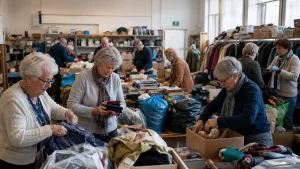
The British Heart Foundation’s decision to close a significant number of charity shops highlights that retail challenges extend beyond commercial businesses.
Charity shops play an important role within many communities. They provide affordable goods, support fundraising efforts and contribute to local employment opportunities.
Charity Retail Challenges
The financial pressures of 2026 are not restricted to commercial retail chains; charity sectors are being hit just as hard. The British Heart Foundation shocked local economies by announcing it will close 150 of its physical shops.
Executives have cited an “exceptionally challenging trading environment” as the catalyst for the decision. To protect their bottom line, BHF is executing a two-phase exit plan: the first 90 premises will close permanently by March 2027, and the final 60 will wrap up by March 2028
Future Plans for Fundraising Operations
Although physical stores remain important, many charities are increasingly investing in digital fundraising methods and online marketplaces. This approach allows organisations to reach broader audiences while reducing reliance on expensive retail premises.
To maintain their “ground-breaking research” funding, the British Heart Foundation is aggressively scaling its e-commerce operations, shifting donor focus to its heavily trafficked official eBay storefront
Why Is Morrisons Reducing Its Store Network?
Morrisons has also announced plans affecting numerous convenience store locations across the country. The move forms part of broader efforts to optimise its estate and improve operational efficiency.
The supermarket sector remains highly competitive, with traditional retailers facing pressure from discount chains, online grocery services and changing consumer preferences.
Morrisons Daily Closure Programme
While the supermarket giant continues to command a massive market footprint with over 2,200 outlets throughout the UK, it is aggressively trimming its convenience portfolio. Morrisons has officially confirmed the closure of seven initial Morrisons Daily branches, with a stark warning that 93 more sites are scheduled to follow.
This rapid consolidation highlights how even major grocery chains must aggressively optimize their real estate to survive changing local market dynamics
Business Performance Considerations
Large retailers regularly evaluate store performance. Factors such as footfall, sales growth, local competition and operating costs all influence whether a location remains viable.
| Key Challenge | Impact on Retailers | Potential Response |
| Rising energy costs | Higher operating expenses | Energy efficiency investments |
| Reduced footfall | Lower in-store sales | Enhanced customer experiences |
| Online competition | Market share pressure | Omnichannel retail strategies |
| Wage increases | Increased staffing costs | Operational restructuring |
| Inflation | Reduced consumer spending | Promotional pricing strategies |
How Are Bank Branch Closures Contributing to High Street Decline?
Bank branch closures represent another significant change affecting UK town centres. As digital banking becomes increasingly popular, many financial institutions have reduced their physical branch networks.
For some consumers, particularly older residents, branch closures can create accessibility concerns. Physical banking services often remain important for cash transactions, financial advice and personal support.
The reduction of banking facilities can also impact surrounding businesses by decreasing footfall and reducing reasons for consumers to visit town centres regularly.
What Impact Will These Store Closures Have on UK Jobs?
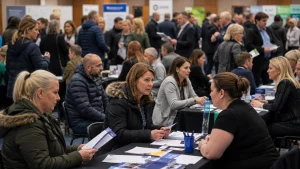
Employment remains one of the most significant concerns associated with retail closures. Hundreds of jobs may be affected as organisations reduce their physical presence.
The impact varies depending on the employer and closure programme. Some workers may be offered redeployment opportunities within existing store networks, while others may face redundancy.
Retail continues to employ millions of people across Britain, making sector-wide changes particularly important for local labour markets.
How Are Local Town Centres Being Affected by Retail Closures?
Town centres often experience multiple effects when stores close. The loss of a major retailer can reduce visitor numbers and influence the performance of neighbouring businesses.
Empty units may also affect perceptions of an area’s economic health, potentially discouraging further investment if vacancies remain unfilled.
Urban regeneration specialist Daniel Mercer noted: “Successful town centres are increasingly diversifying their purpose. Retail remains important, but leisure, hospitality and community services are becoming equally vital in attracting visitors.”
Many local authorities are actively exploring regeneration strategies designed to create more resilient town centres.
How Operating Costs and Business Rates are Fueling the 2026 Retail Exodus?
Rising costs are undoubtedly influencing business decisions across the retail sector. Inflation has affected everything from energy and transportation to staffing and inventory management.
For retailers operating large estates, even modest cost increases can significantly affect profitability when multiplied across hundreds of locations.
Businesses therefore face difficult decisions regarding which stores can continue operating sustainably and which may require closure or restructuring.
How Has Online Shopping Changed the Future of the British High Street?
Online shopping has transformed retail over the past two decades. Consumers now enjoy greater convenience, wider product selection and easier price comparisons than ever before.
This evolution has forced traditional retailers to adapt. Many businesses now pursue omnichannel strategies that integrate physical stores with digital platforms.
Rather than replacing physical retail entirely, online shopping has changed its purpose. Stores increasingly focus on customer experience, product discovery and service rather than simple transactions.
Is the Cost of Living Crisis Accelerating Retail Closures?
Household budgets continue to face pressure from higher living costs. When consumers become more cautious with spending, retailers often experience reduced sales volumes.
The impact can be particularly noticeable in sectors dependent on discretionary spending, such as fashion and homeware.
Lower consumer demand, combined with rising operating expenses, creates a challenging environment that can accelerate closure decisions.
What Are the Confirmed Facts About UK High Street Store Closures?
As the 2026 retail landscape undergoes rapid consolidation, several core facts have been officially established across the UK high street market:
- Multi-Sector Impact: Store closures are occurring across multiple sectors, including clothing retailers, supermarkets, charity organisations, and banking services, rather than being confined to fashion retail alone.
- Escalating Overhead Pressures: Rising operational costs, energy bills, rent, wages, supply chain expenses, and business rates continue to affect businesses of all sizes.
- Digital-First Migration: Consumer behaviour and habits have shifted significantly toward digital channels, online shopping, and mobile banking.
- Mass-Scale Fleet Reduction: Major national organisations have publicly confirmed extensive closure programmes involving hundreds of brick-and-mortar locations nationwide.
- Structural Retail Transformation: These developments represent genuine, long-term structural changes within the UK retail landscape rather than isolated incidents affecting individual companies.
What Changes Are Retailers and Policymakers Proposing?
Businesses and policymakers are exploring a variety of solutions designed to support town centre sustainability.
Many retailers are investing in digital transformation, loyalty programmes and experiential shopping concepts. Meanwhile, local authorities are considering regeneration initiatives focused on mixed-use developments, public spaces and community engagement.
These proposals aim to create town centres that serve multiple purposes beyond traditional retail activity.
What Misconceptions Exist About the Future of the High Street?
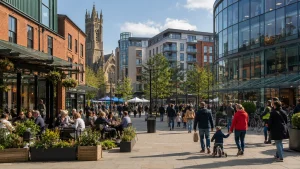
One common misconception is that every store closure signals the complete decline of the British high street. While closures present genuine challenges, many town centres continue to attract investment and adapt successfully.
Another misunderstanding is that online shopping will eliminate physical stores entirely. Evidence increasingly suggests that consumers value a combination of digital convenience and in-person experiences.
Retail economist Sarah Whitmore observed: “The strongest retail destinations are not necessarily those with the most shops. They are often places that combine shopping, dining, entertainment and community services effectively.”
The future of the high street is therefore likely to involve evolution rather than disappearance.
Can UK High Streets Recover From Ongoing Store Closures?
Recovery remains possible, although outcomes will vary between locations. Successful adaptation often depends on local leadership, investment and willingness to embrace new uses for retail space.
Many towns are already experimenting with innovative approaches designed to increase visitor numbers and support local businesses.
These efforts demonstrate that high streets can remain relevant even as traditional retail models change.
How Are Successful Town Centres Adapting to Retail Transformation?
Forward-thinking town centres are increasingly diversifying beyond retail. Many are incorporating hospitality venues, healthcare services, co-working spaces, residential developments and cultural attractions.
| Traditional High Street Model | Emerging Town Centre Model |
| Retail-focused | Mixed-use destinations |
| Department stores as anchors | Leisure and services as anchors |
| Primarily shopping visits | Multiple visit purposes |
| Limited evening activity | Extended day and evening economy |
| Retail-only occupancy | Diverse tenant mix |
This diversification helps create more resilient local economies capable of adapting to changing consumer expectations.
What Does the Future Hold for UK High Street Retail Beyond 2026?
The future of British retail will likely involve continued transformation rather than a return to previous models. Businesses are expected to place greater emphasis on convenience, customer experience and digital integration.
Consumers may continue to favour a blend of online and in-person shopping, encouraging retailers to maintain carefully selected physical locations while expanding digital capabilities.
Town centres that successfully adapt to these trends are likely to remain important community assets despite ongoing challenges.
Conclusion: Are UK High Street Store Closures Reshaping Rather Than Ending British Retail?
UK high street store closures represent one of the most significant retail developments of 2026, affecting fashion retailers, supermarkets, charity organisations and financial institutions alike.
While the closures raise understandable concerns regarding jobs, investment and community vitality, they do not necessarily signal the end of British retail. Instead, they reflect a sector adapting to changing consumer behaviour, economic pressures and technological advancements.
The future of the high street will depend on innovation, diversification and local regeneration efforts. Those town centres that evolve beyond traditional retail models are likely to remain vibrant destinations for years to come.
FAQs
Why are so many UK retailers closing stores in 2026?
Retailers are facing a combination of rising operating costs, changing consumer habits and increased online competition. Many businesses are reviewing their store networks to improve efficiency and profitability.
Which retailers have announced the largest number of closures?
Several organisations have announced significant closure programmes, including Phase Eight, the British Heart Foundation and Morrisons. Banks have also continued reducing their physical branch networks.
Are all store closures permanent?
Not necessarily. Some closures form part of wider restructuring programmes designed to strengthen long-term business performance. In certain cases, retailers may relocate or open alternative formats elsewhere.
How do retail closures affect local economies?
Closures can reduce employment opportunities, lower footfall and impact neighbouring businesses. However, redevelopment projects can sometimes create new economic opportunities over time.
What happens to empty shop units after closures?
Vacant units may be reoccupied by new retailers, converted into alternative business premises or incorporated into regeneration projects. Outcomes often depend on local demand and investment levels.
Are independent retailers facing the same challenges as national chains?
Independent businesses face many similar pressures, including rising costs and changing consumer behaviour. However, some benefit from strong local customer loyalty and niche market positioning.
Can online sales fully replace physical stores?
While online shopping continues to grow, many consumers still value physical stores for product experience, convenience and personal service. Most experts expect both channels to coexist.
What is being done to revitalise UK high streets?
Local authorities, retailers and property owners are investing in regeneration initiatives, mixed-use developments and community-focused projects designed to increase visitor numbers and economic activity.
Will high street shopping continue to exist in the future?
Yes. Although the format may evolve significantly, physical shopping destinations are expected to remain important. Future high streets are likely to combine retail, leisure, hospitality and community services in new ways.