
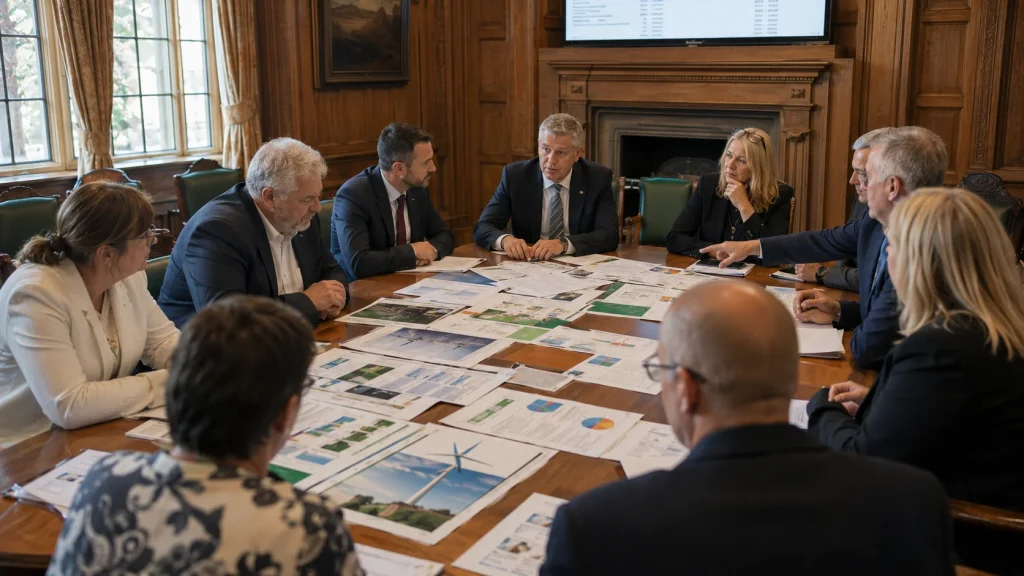
Following major breakthroughs across 32 English local authorities, Reform UK-controlled councils have transitioned from campaign slogans to aggressive policy rollbacks.
Newly established administrations in Essex, Norfolk, and Suffolk are systematically dismantling inherited green spending, arguing that essential public services must take priority over costly climate metrics.
While opposition parties warn that cutting sustainability frameworks creates a false economy, a landmark study by the London School of Economics (LSE) exposes a clever political strategy: 7 out of 9 Reform-led councils are systematically scrubbing “climate emergency” language from official texts while quietly keeping millions in central government green grants under the banner of “energy security.”
Key Takeaways:
- Target Scrapping: Major councils like Essex, Suffolk, and Newcastle-under-Lyme have formally rescinded their 2030 net-zero targets and climate emergency declarations.
- Immediate Cash Savings: Policy rollbacks are driving instant budget shifts, highlighted by Suffolk saving £175,000 annually on energy tariffs and Essex freezing a £47.5 million climate allocation.
- Infrastructure Freezes: Upfront capital projects inherited from prior administrations, specifically EV fleet transitions, solar panel retrofits, and cycling lanes, are facing immediate funding cuts.
- The Rebranding Loophole: LSE research reveals 7 out of 9 Reform councils scrub “carbon neutral” phrasing from documents but keep millions in green grants, like West Northamptonshire’s £2.6m Warm Homes funding.
- The Long-Term Debate: Opposition leaders, like Suffolk’s Cllr Andrew Stringer, argue that cutting green policies ignores council data showing net-zero efficiencies save over £4 million a year.
- National Blueprint: These local financial rollbacks provide a direct indicator of how a national Reform UK government intends to target the 2008 Climate Change Act.
What Has Happened Since Reform UK Took Control of Councils?
Since Reform UK secured control of several councils during the 2025 local elections, climate-related spending has become one of the party’s most visible areas of policy review.
Council leaders in parts of Essex, Norfolk and Suffolk have examined existing net zero commitments, climate action plans and environmental spending programmes inherited from previous administrations.
Rather than focusing solely on emissions targets, Reform UK councillors have argued that local authorities should prioritise essential services such as social care, road maintenance, housing and education support.
This shift has resulted in reviews of renewable energy projects, electric vehicle infrastructure, sustainability programmes and climate-related council strategies.
Supporters believe these reviews improve accountability and ensure taxpayers receive value for money. Critics argue that scaling back climate commitments could undermine long-term energy savings, reduce environmental progress and affect future investment opportunities within local communities.
Why Are Reform UK Councils Scrapping Net Zero Policies?
Since taking control of several major councils in the East of England, Reform UK has made climate spending one of its first areas of review. The party argues that local authorities are facing increasing financial pressures and should focus on delivering essential services rather than pursuing ambitious environmental targets.
Supporters of the policy believe councils have become too focused on long-term climate objectives while residents continue to face concerns about road maintenance, social care, education support and local infrastructure. Reform UK’s position is that every pound spent by councils should demonstrate a clear benefit to taxpayers.
In Essex, Norfolk and Suffolk, council leaders have announced plans to reassess net zero strategies, climate emergency declarations and related spending commitments. Rather than automatically continuing existing programmes, Reform UK wants to evaluate whether they provide value for money.
While supporters see the reviews as sensible financial management, critics view them as a significant shift away from local climate leadership.
What Is Net Zero and Why Have Councils Adopted It?
Net zero refers to achieving a balance between greenhouse gas emissions produced and emissions removed from the atmosphere. The goal is to reduce emissions as much as possible while offsetting any remaining carbon through environmental measures and cleaner technologies.
The UK has a legally binding target to reach net zero emissions by 2050. Although councils are not responsible for delivering this target alone, many local authorities have introduced climate strategies to contribute towards national objectives.
Understanding Local Net Zero Targets
Over recent years, many councils have declared climate emergencies and adopted their own net zero ambitions. In some cases, local authorities aimed to make their estates and operations carbon neutral before the national 2050 deadline.
To achieve these goals, councils introduced measures designed to reduce energy consumption, improve efficiency and encourage cleaner forms of transport. These programmes were often promoted as ways to reduce both emissions and long-term operating costs.
For supporters, local action demonstrates leadership and helps communities prepare for future environmental challenges. For critics, some targets may be unrealistic or too expensive for councils already facing financial constraints.
Which Green Policies Are Being Reviewed by Reform UK Councils?
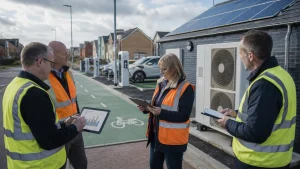
The specific projects under review differ between councils, but many existing climate initiatives focus on reducing emissions from council operations and encouraging sustainable behaviour among residents.
| Council | Political Leader | Direct Policy Action Taken | Financial / Practical Impact |
| Suffolk County Council | Cllr Michael Hadwen | Rescinded the 2019 Climate Emergency Declaration and cancelled the council’s green electricity tariff. | Saved approximately £175,000 annually by switching to a standard electricity tariff. |
| Essex County Council | Peter Harris & Russell Quirk | Scrapped inherited net-zero strategies, describing the agenda as “net stupid zero.” | Froze a planned £47.5 million climate budget allocation. |
| Newcastle-under-Lyme | Jonathan Gullis | Rescinded the borough’s 2030 carbon-neutrality targets. | Removed decarbonisation requirements from town centre and housing policy frameworks. |
| Kent & Durham | Local Reform Majorities | Dropped electric vehicle fleet transition plans and public building solar array projects. | Cancelled a 350-vehicle EV transition programme and halted civic solar retrofitting grants. |
Which Renewable Energy Projects Face the Greatest Scrutiny?
Although Reform UK has not proposed cancelling every environmental initiative, several types of projects have attracted particular attention during council spending reviews.
Large-scale solar panel installations on council-owned buildings have been questioned because of their upfront costs, despite their potential to reduce future energy bills.
Electric vehicle charging networks have also become a focus, with some councillors arguing that demand forecasts and installation costs should be reviewed before further expansion takes place.
Heat pump replacement schemes and council fleet electrification programmes are also being assessed in some authorities. Reform UK representatives have repeatedly stated that projects should demonstrate clear financial benefits rather than being justified primarily through climate targets.
Why Does Reform UK Believe Climate Projects Cost Too Much?
A central argument made by Reform UK is that local authorities cannot afford to prioritise climate initiatives when budgets are already under pressure. Rising demand for social care, special educational needs support and infrastructure maintenance has placed significant strain on council finances.
The party argues that some environmental projects require substantial upfront investment without delivering immediate returns. In its view, councils should focus on activities that provide direct and measurable benefits to residents.
For example, installing solar panels, upgrading heating systems or expanding EV infrastructure often requires large capital expenditure. While these projects may produce savings over time, Reform UK questions whether they should take priority over other spending needs.
Reform UK maintains that reviewing these commitments is necessary to ensure responsible financial management. Opponents, however, argue that short-term savings could result in greater costs later.
Could Scrapping Net Zero Projects Save Money?

A landmark study by Edward de Quay at the Grantham Research Institute (London School of Economics) analysed the structural reality behind these local policy rollbacks.
The data reveal a fascinating political strategy: 7 out of 9 Reform-led councils systematically scrubbed terms like “climate change” and “carbon neutral” from official documentation, yet chose to retain the actual green funding.
For example, despite its hardline stance against net-zero targets, the Reform-run West Northamptonshire Council proudly accepted £2.6 million from the central Government’s Warm Homes Programme to fund energy-efficiency upgrades.
This proves that local climate policy under Reform isn’t always about stopping home insulation or boiler upgrades, it is about reframing the expenditure. If a project protects local “energy security” or lowers bills directly, it stays. If it is justified purely by global emissions metrics, it is cut.
However, opposition figures like Suffolk’s Green Group leader, Cllr Andrew Stringer, warn that this approach is a false economy. Opposition data shows that net-zero actions save councils over £4 million a year in long-term operational efficiency, meaning short-term tariff cuts could create massive structural deficits later.
Could Councils Lose External Funding by Cancelling Green Projects?
One factor often overlooked in the debate is the role of external funding. Many climate-related projects have received support through government grants, regional development programmes and energy-efficiency funding schemes.
Where projects have already secured funding, councils may face restrictions on how money can be used or obligations that must be met before funding is released.
Cancelling approved schemes could result in the loss of future investment opportunities and, in some circumstances, require previously awarded funding to be returned.
This means that the financial impact of cancelling projects is not always straightforward. While councils may avoid some capital expenditure, they could also lose access to funding streams designed to improve local infrastructure, reduce energy costs and support regeneration initiatives.
What Impact Could These Changes Have on Communities and Local Economies?
The impact of policy changes extends beyond council budgets. Many climate-related projects are linked to wider goals such as economic development, job creation and community regeneration.
Supporters of existing climate strategies argue that investment in renewable energy, energy efficiency and sustainable infrastructure can stimulate local economies while reducing environmental impacts. These projects often involve contractors, suppliers and skilled workers from the local area.
If funding is reduced, some planned developments may be delayed or scaled back. This could affect employment opportunities and investment associated with green projects.
At the same time, Reform UK argues that redirecting funds towards frontline services could also benefit communities by improving areas that residents use every day.
Are Reform UK Councils Removing Climate Emergency Declarations?
A growing area of debate concerns climate emergency declarations adopted by many councils during the past decade. These declarations were originally introduced to signal a commitment to reducing emissions and accelerating climate action at a local level.
Reform UK councillors have questioned whether such declarations provide practical benefits or simply create additional layers of policy commitments that councils may struggle to deliver.
In some authorities, discussions have focused on removing climate emergency language from official strategies and replacing it with broader references to sustainability, efficiency and cost-effective environmental improvements.
Will Reform UK Council Green Policies Lead to Significant Change?
The answer remains uncertain because many reviews are still ongoing. While Reform UK has signalled a clear shift in priorities, the practical impact will depend on decisions made over the coming months.
Possible Outcomes of Reform UK Policy Reviews
| Potential Outcome | Possible Impact |
| Net zero targets removed | Reduced focus on climate-specific goals |
| Climate spending reduced | Short-term budget savings |
| Some projects cancelled | Fewer environmental initiatives |
| Projects rebranded | Continued investment under different objectives |
| Energy-efficiency schemes retained | Ongoing cost-saving measures |
| Grant-funded projects maintained | Limited overall change |
What is already clear is that Reform UK has changed the conversation surrounding local climate policy. Instead of focusing primarily on emissions targets, discussions are increasingly centred on affordability, public spending and measurable outcomes.
Whether this leads to substantial policy changes or simply a different way of presenting existing programmes remains to be seen.
Conclusion
By mid-2026, Reform UK has already shifted the conversation around local climate policy from emissions targets towards affordability, public spending and service delivery.
While some environmental projects remain under review, the debate now centres on whether councils should prioritise long-term climate objectives or immediate local needs.
The next phase of council budget decisions will determine whether these policy reviews lead to substantial reductions in climate spending or simply reshape how environmental programmes are delivered.
Either way, Reform UK’s approach has become one of the most closely watched local government policy experiments in England.
Frequently Asked Questions
What does net zero mean?
Net zero means balancing the amount of greenhouse gases produced with the amount removed from the atmosphere. The aim is to reduce overall emissions and limit the impact of climate change.
Why are Reform UK councils reviewing climate policies?
Reform UK argues that councils should focus on essential public services and ensure climate-related spending provides clear value for money. Reviews are intended to assess whether existing projects remain justified.
Which councils have announced changes to net zero policies?
Essex County Council (led by Peter Harris), Suffolk County Council (led by Michael Hadwen), and Newcastle-under-Lyme Borough Council (led by Jonathan Gullis) have all aggressively dismantled their inherited net-zero and climate emergency strategies. Similar actions were executed by Reform majorities in Kent and Durham.
Are all green projects being cancelled?
No. Councils are reviewing spending, but many projects may continue if they are considered financially beneficial or supported by external funding.
Could residents notice immediate changes?
In most cases, changes are likely to take time. Reviews must be completed before councils decide which projects will continue, be modified or end.
Do climate projects help councils save money?
Some projects can reduce long-term energy costs and improve efficiency. However, they often require significant upfront investment before savings are realised.
What happens to government-funded environmental schemes?
Projects supported by grants may continue because cancelling them could require councils to return funding or lose future investment opportunities.
Could these decisions affect the UK’s national net-zero target?
Local councils contribute to wider climate goals, but national net zero targets involve actions across government, industry and society. Local policy changes may have an impact, but they are only one part of the overall picture.