

Taking money from a deceased person’s bank account without lawful authority can have serious consequences in the UK.
Depending on what happened, the person involved could be required to repay the money, face a civil claim from the estate or beneficiaries, or be investigated and prosecuted for an offence such as fraud or theft.
There is no single automatic punishment for taking money from a deceased account in the UK. The outcome depends on whether the person had authority to deal with the money, whether they acted dishonestly, how much was taken, what the money was used for and which part of the UK the case falls under.
In England and Wales, fraud under the Fraud Act 2006 can carry a maximum sentence of 10 years’ imprisonment on indictment, while theft under the Theft Act 1968 has a maximum of seven years. These are statutory maximums, not automatic sentences for every unauthorised withdrawal.
It is equally important not to assume that every movement of money after a death is illegal. Executors and administrators may legitimately deal with estate money, banks can sometimes release funds without a grant of probate under their own procedures, and joint accounts are treated differently from accounts held solely in the deceased person’s name.
Is It Illegal to Take Money From a Deceased Person’s Bank Account?

Taking money from a deceased person’s sole bank account can be unlawful if the person making the withdrawal has no authority to do so. However, the legal position depends on the facts rather than simply on the fact that a withdrawal occurred.
When somebody dies, their money, property and possessions generally form part of their estate. The person responsible for administering that estate is normally an executor named in the will or an administrator where there is no executor able to act.
The GOV.UK guidance on dealing with a deceased person’s estate confirms that personal representatives are responsible for administering estate assets and may need probate before they can deal with some of them.
Being a close relative does not, by itself, give someone unrestricted authority over a deceased person’s sole bank account. The same applies to being named as a beneficiary in a will.
This distinction between entitlement and control also arises with other inherited assets: someone named to inherit property may still have to wait for probate and the appropriate ownership transfer before they can deal with it as their own, as explained in the rules around inherited land and probate.
What Happens to a Sole Bank Account After Death?
Once a bank is informed that a sole account holder has died, access to the account will normally be dealt with through the bank’s bereavement and estate-administration procedures.
The executor or administrator may be asked for documents such as a death certificate, identification, the will or evidence of probate or letters of administration. Exactly what is required can vary between financial institutions and according to the value and circumstances of the estate.
GOV.UK states that probate is the legal right to deal with someone’s property, money and possessions after death, although the precise requirement for a grant can depend on the assets involved.
This means a deceased person bank account withdrawal in the UK should not be assessed simply by asking whether probate had been granted. The more important questions include who made the withdrawal, what authority they had, what the bank authorised and why the money was moved.
What Happens to a Joint Bank Account When Someone Dies?
A genuine joint bank account is different from a sole account.
In many cases, the surviving joint account holder can continue to use the account after the death of the other holder. However, beneficial ownership and the deceased person’s contribution may still matter when the estate is being valued.
The distinction between whose name appears on an asset and who is financially entitled to it is also relevant more broadly, particularly where legal title and beneficial ownership do not produce exactly the same result.
This is particularly important where substantial funds are held jointly and the executor needs to establish what forms part of the deceased’s estate for probate or Inheritance Tax purposes.
Does Power of Attorney Continue After Death?
No. A lasting power of attorney does not continue simply because the attorney previously managed the person’s finances.
GOV.UK confirms that an LPA ends automatically when the donor dies. Responsibility then passes to the executors or other personal representatives dealing with the estate.
Therefore, somebody who previously had legitimate access to online banking, a debit card or account information under a power of attorney should not assume that this gives them continuing authority to make withdrawals after death.
This distinction can become particularly important when considering using a deceased person’s bank card after death or transferring money through online banking credentials that were previously available to the attorney.
What Criminal Consequences Can Apply for Taking Money From a Deceased Account?
An unauthorised withdrawal can potentially result in criminal proceedings, but the relevant offence depends on how the money was obtained and what can be proved about the person’s conduct and state of mind.
Two offences that may become relevant in England and Wales are fraud and theft.
Could Taking Money From a Deceased Account Be Fraud?
Potentially, yes.
The Fraud Act 2006 creates several ways in which fraud can be committed, including fraud by false representation and fraud by abuse of position. A prosecution must establish the elements of the particular offence; an unexplained withdrawal is not automatically proof of fraud.
Fraud by False Representation
Fraud by false representation can potentially become relevant where a person dishonestly makes a false representation intending to make a gain for themselves or another person, or to cause loss or expose another person to the risk of loss.
Depending on the circumstances, questions could therefore arise where somebody uses banking facilities in a way that falsely represents that they continue to have authority to operate an account.
Whether an actual offence has occurred depends on the evidence and should not be assumed merely because a card, PIN or online account was used.
Fraud by Abuse of Position
Fraud by abuse of position may be particularly relevant where somebody occupies a position in which they are expected to safeguard another person’s financial interests and dishonestly abuses that position.
An allegation involving an executor or another person entrusted with estate funds could therefore raise different issues from a withdrawal by an unrelated third party.
Again, the prosecution would still have to establish the required elements of the offence.
What Is the Punishment for Taking Money From a Deceased Account in the UK If It Is Fraud?
For offences covered by section 1 of the Fraud Act 2006, the maximum sentence following conviction on indictment is 10 years’ imprisonment, a fine, or both.
That does not mean somebody who takes money from a deceased account will automatically receive 10 years in prison.
The Sentencing Council fraud guideline for England and Wales considers factors including financial harm and culpability. Features such as significant planning, abuse of a position of trust or responsibility, sustained offending and targeting vulnerability can increase seriousness.
The amount of money involved is therefore important, but it is not the only consideration.
Could Taking the Money Amount to Theft?
It can potentially amount to theft where the legal elements of theft are established.
Under the Theft Act 1968 in England and Wales, theft involves dishonestly appropriating property belonging to another with the intention of permanently depriving the other of it.
The maximum sentence for theft on indictment in England and Wales is seven years’ imprisonment.
Whether a particular deceased bank account withdrawal should be treated as theft, fraud, another offence or no criminal offence at all depends on the circumstances.
Do the Consequences Differ Across the UK?
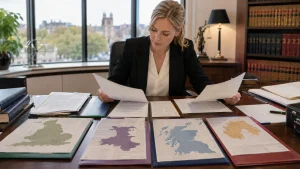
Yes. A search for what is the punishment for taking money from a deceased account UK can produce misleading answers if the differences between UK jurisdictions are ignored.
England and Wales
In England and Wales, the Fraud Act 2006 and Theft Act 1968 are central pieces of criminal legislation that may become relevant to dishonest financial conduct.
The Fraud Act maximum for section 1 fraud is 10 years’ imprisonment on indictment, while theft under the Theft Act 1968 carries a maximum of seven years.
Executors and administrators also have responsibilities concerning the proper collection and administration of estate assets. This means an executor who uses estate funds improperly may face questions about both their estate-administration duties and, in sufficiently serious cases, possible criminal conduct.
Northern Ireland
The position is not identical in Northern Ireland.
The Fraud Act 2006 extends to England, Wales and Northern Ireland, so its main fraud offences apply there as well. However, Northern Ireland has separate theft legislation rather than the Theft Act 1968 used in England and Wales.
Under the Theft Act (Northern Ireland) 1969, theft on indictment carries a maximum sentence of 10 years’ imprisonment.
This is one reason a UK-wide article should not simply state that “the maximum punishment for theft is seven years” without specifying the jurisdiction.
Scotland
Scotland has a separate criminal-law and estate-administration system.
The main offences in the Fraud Act 2006 do not generally extend to Scotland. Scottish cases involving dishonest taking or deception are therefore dealt with under Scotland’s own criminal-law framework.
Probate terminology is also different. In Scotland, an executor may obtain confirmation, which provides authority to receive and make payments relating to the estate.
English sentencing figures should therefore not be presented as though they automatically apply to a Scottish case.
Can an Executor Withdraw Money From a Deceased Account?
An executor can have authority to deal with a deceased person’s money, but being an executor does not turn estate money into the executor’s personal property.
The executor’s job is to administer the estate.
That can include collecting money owed to the deceased, dealing with bank accounts, paying appropriate debts and expenses, handling tax liabilities and eventually distributing the remaining estate to those entitled to receive it.
The distinction matters because executor taking money from an estate in the UK can describe two very different situations.
An executor transferring money into an estate administration account so that a legitimate liability can be paid is very different from an executor moving estate money into their personal account for their own use without proper entitlement.
Good record-keeping is therefore important. Bank statements, receipts, invoices and estate accounts can help demonstrate why money was moved and whether it was used for a legitimate estate purpose.
Can an Executor Take Their Inheritance Before Probate?
Being both an executor and beneficiary does not provide unrestricted permission to take an inheritance whenever the person chooses.
Estate debts, tax and administration expenses may need to be identified or paid before the estate is distributed.
Therefore, taking inheritance money before probate or before estate liabilities have been resolved can create problems even where the person ultimately expects to inherit.
The correct treatment depends on the circumstances, including the nature of the estate, whether a grant is required and whether the payment has been properly authorised and recorded.
Can Money Be Taken From a Deceased Account Before Probate?

Yes, in some circumstances. Probate should not be treated as a universal switch under which no money can ever leave a deceased person’s account until a grant has been issued.
Financial institutions have their own procedures for releasing assets, and some may release smaller balances without requiring probate. GOV.UK advises personal representatives to contact individual organisations because each organisation has its own rules about whether a grant is required.
The important distinction is between an authorised release of estate funds and somebody independently accessing the deceased person’s banking facilities without authority.
Can Money Be Used to Pay Inheritance Tax?
There are circumstances in which estate money can be used directly towards Inheritance Tax before the normal estate-distribution process is completed.
Inheritance Tax can significantly affect the amount ultimately available to beneficiaries. This is becoming particularly important for retirement assets because Inheritance Tax on pension funds is changing from April 2027, when most unused pension funds and death benefits are due to be brought within the deceased person’s estate for Inheritance Tax purposes.
Using money for an authorised tax payment is fundamentally different from a family member withdrawing funds for personal spending.
Can Money Be Released for Funeral Costs?
A bank may sometimes agree to release money towards funeral expenses according to its own bereavement procedures, even where the wider estate has not yet been released.
The availability and process vary between institutions and circumstances. This means relatives should approach the bank rather than simply use the deceased person’s card or online banking details.
What Happens If Someone Uses a Deceased Person’s Debit Card?
Possessing the card or knowing the PIN does not itself establish continuing legal authority to use it.
If somebody uses a deceased person’s debit card after death to withdraw cash or make purchases, investigators may consider issues such as:
- who owned the money
- whether the person had authority to make the transaction
- what they represented to the bank or payment system
- whether they acted dishonestly
- what they intended to do with the money
- whether the transaction caused loss to the estate or another person.
The same principles can become relevant when somebody logs into the deceased person’s online banking or transfers money to another account.
Money can also continue to arrive in an account around the time of a death, which does not necessarily mean that whoever can access the account is entitled to spend it.
State Pension-related credits are one example: an unfamiliar DWP SP payment on a bank statement can relate to a deceased spouse or civil partner, a joint-account holder or another payment adjustment, so an unexplained credit should be checked before it is moved or spent.
An unusual transaction is not automatically evidence of a crime, but a clear documentary trail can become important where estate funds are disputed.
What Civil Consequences Can Follow If Estate Money Is Taken?

Criminal prosecution is only one possible consequence.
If estate money has been taken or used improperly, the executor, administrator or beneficiaries may seek to recover it through civil proceedings. The precise legal route depends on who took the money, their role and the nature of the estate.
Possible consequences can include:
- repayment or restoration of estate funds
- an obligation to account for money that has been received or spent
- civil proceedings brought on behalf of the estate
- disputes over the conduct of an executor
- applications affecting who continues to administer the estate
- interest or legal costs where ordered
- delays to distributions to beneficiaries.
A civil claim and a criminal case are not the same thing. A person might be required to return estate money without being convicted of a criminal offence, while conduct involving sufficient evidence of dishonesty could potentially raise criminal issues as well.
What Determines the Actual Consequences?
The actual consequences of an unauthorised withdrawal depend heavily on the facts.
Where a criminal offence is prosecuted in England and Wales, sentencing can take account of matters including the amount of financial harm, the offender’s culpability, planning, duration of the conduct and whether a position of trust or responsibility was abused.
Other circumstances can also affect the eventual outcome, including whether the money was returned, whether the person pleaded guilty, previous convictions and any applicable mitigating or aggravating factors.
That is why stating that the “punishment is 10 years” is inaccurate. Ten years is the statutory maximum for Fraud Act section 1 offences; it is not an automatic sentence for taking money from a deceased bank account.
Possible Outcomes at a Glance
| Situation | Main Issue | Potential Consequences |
| Relative withdraws cash from a deceased person’s sole account without clear authority | Authority and possible dishonesty | Recovery of money, investigation and potentially criminal proceedings |
| Executor moves estate money to an estate administration account | Purpose and proper administration | May be a legitimate estate transaction |
| Executor uses estate funds for personal spending | Executor duties, entitlement and possible dishonesty | Repayment, civil proceedings and potentially criminal investigation |
| Former attorney continues using the account after the donor dies | Power of attorney has ended | Transactions may be challenged and investigated |
| Bank releases funds through its bereavement procedure | Bank authorisation | Can be a legitimate release |
| Surviving joint holder continues using a genuine joint account | Account ownership and terms | Usually treated differently from a deceased person’s sole account |
| Bank makes an authorised estate-related payment | Purpose and authority | Can be lawful despite probate not yet being completed |
The table gives general examples only. The legal outcome of a real transaction depends on its individual facts and jurisdiction.
Example: A Beneficiary Withdraws £5,000 After a Parent Dies
Consider a hypothetical situation.
A parent dies with £20,000 in a sole bank account. Their adult child is named as one of the beneficiaries of the will and knows the parent’s debit-card PIN.
Before the estate has been administered, the child withdraws £5,000 and transfers part of it into their own account. They believe this is acceptable because they expect to inherit at least £5,000 eventually.
The fact that the child may later receive an inheritance does not necessarily mean they were authorised to make the earlier withdrawal.
Several separate questions would need to be considered:
- Did the child have lawful authority to operate the account after death?
- Had the bank authorised access?
- What did the child believe about their entitlement?
- Was the transaction dishonest under the applicable criminal law?
- Was the £5,000 required for debts, tax or other estate liabilities?
- Did the withdrawal affect other beneficiaries?
- Was the money subsequently repaid or properly accounted for?
The example shows why beneficiary entitlement and authority to access a deceased bank account are not the same thing.
What Should You Do If Money Is Missing From a Deceased Person’s Estate?

If money appears to have disappeared from an estate, establish the facts before assuming that a crime has occurred.
Start with the estate and banking records. Identify when the transaction happened, the amount involved, where the money went and who was authorised to deal with the account.
The executor or administrator can then contact the bank through its bereavement or estate-administration team and ask what records or information can lawfully be provided.
Useful records can include:
- bank statements
- probate or confirmation documents
- the will
- estate accounts
- receipts and invoices
- correspondence with financial institutions
- evidence of authorised estate expenses
- records of distributions to beneficiaries
Clear records are especially important where substantial transfers were made shortly before death. A payment may have been a legitimate lifetime gift rather than an unauthorised withdrawal, and executors may need to examine gifts when valuing the estate.
The tax treatment of cash gifts and HMRC reporting also shows why the date, purpose, recipient and source of a transfer should be documented rather than judged from the bank transaction alone.
Where there is a genuine dispute about missing money, obtaining advice from a solicitor experienced in probate or contentious estates can help establish the correct civil options.
If there is evidence suggesting deliberate dishonest conduct, criminal-law advice or a report to the appropriate authorities may also need to be considered.
The existence of an unexplained withdrawal should be investigated, but it should not automatically be described as theft or fraud before the circumstances are established.
What If You Have Already Taken Money From a Deceased Account?
If you have already withdrawn or transferred money from a deceased person’s account and are uncertain whether you were entitled to do so, the position should be addressed rather than ignored.
Keep all records showing:
- how much was taken
- when it was taken
- why it was taken
- what the money was used for
- whether the bank authorised the payment
- whether you were acting as executor, administrator or joint account holder
- whether the money has been repaid or remains available
Do not assume that spending money on a legitimate-looking expense automatically resolves the question of authority.
Equally, do not assume that every transaction necessarily results in criminal liability. The circumstances, evidence, role of the person involved and applicable UK jurisdiction all matter.
Where a significant amount is involved, beneficiaries dispute the transaction, or there is a possibility of criminal allegations, independent legal advice should be obtained.
Conclusion: Consequences of Taking Money From a Deceased Account in the UK
The consequences of taking money from a deceased account in the UK can range from having to repay the estate to civil litigation or, where the evidence establishes a criminal offence, prosecution and imprisonment.
There is no automatic sentence.
In England and Wales, section 1 fraud offences can carry up to 10 years’ imprisonment on indictment, while theft can carry up to seven years. Northern Ireland has its own theft legislation, and Scotland operates under a separate criminal and estate-administration framework.
The most important distinction is between lawfully administering estate money and accessing it without proper authority. An executor, administrator, surviving joint holder or bank may have legitimate reasons to move funds after a death.
A relative, beneficiary or former attorney should not assume that their relationship with the deceased automatically gives them the same authority.
Anyone dealing with a real disputed withdrawal should establish the account ownership, authority, purpose of the transaction and applicable jurisdiction before drawing conclusions about criminal or civil liability.
FAQs
Can You Withdraw Money From a Dead Person’s Bank Account in the UK?
An executor, administrator or another properly authorised person may be able to deal with money belonging to an estate. Banks can also have procedures for releasing certain funds without probate. However, a family member or beneficiary should not independently use a deceased person’s sole account simply because they know the banking details.
Can Next of Kin Withdraw Money From a Deceased Account?
Being next of kin does not by itself give someone unrestricted authority over a deceased person’s sole bank account. Authority normally needs to arise from the estate-administration process, account ownership or another valid legal basis.
Is Using a Deceased Person’s Debit Card Fraud?
It can potentially raise fraud or theft issues depending on the circumstances, but it is not appropriate to declare every such transaction fraudulent automatically. Authority, dishonesty, representations made and intention all need to be considered.
Can an Executor Withdraw Money Before Probate?
Sometimes an executor can deal with funds before a grant is issued, depending on the asset and the financial institution’s procedures. An executor does not, however, have a general right to treat estate money as their personal funds.
What Happens If an Executor Takes Money for Themselves?
The estate may seek repayment, beneficiaries may challenge the executor’s conduct and civil proceedings may follow. Where evidence supports an allegation of dishonesty satisfying a criminal offence, a criminal investigation may also be possible.
Does Power of Attorney Continue After Someone Dies?
No. A lasting power of attorney ends automatically when the donor dies. Responsibility for dealing with the deceased person’s affairs then passes to the executors or other personal representatives.
Can a Bank Release Money Before Probate?
Yes, depending on the bank, value of the assets and reason for the payment. Financial institutions set their own requirements for when they require a grant of probate, so the bank should be contacted directly.
Can Money From a Deceased Account Be Used for Funeral Costs?
A bank may sometimes agree to release estate money for funeral expenses under its bereavement procedures. This is different from a relative independently accessing the deceased person’s card or online banking.
Important: This article provides general information about UK criminal law, probate and estate administration. It is not legal advice. Rules and procedures differ across England and Wales, Scotland and Northern Ireland, and the outcome of an individual case depends on its facts.