
Key Takeaways:
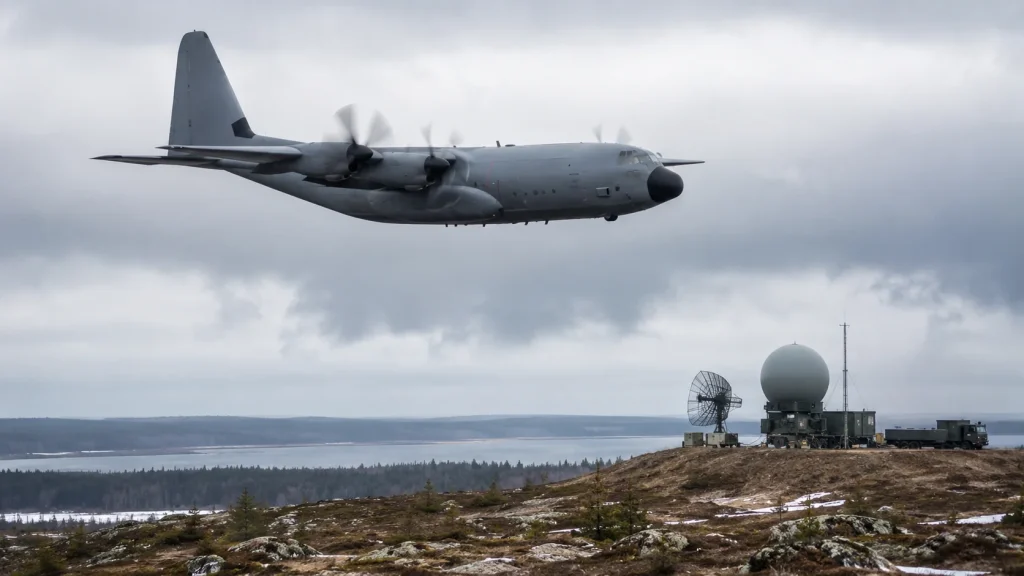
- The May 2026 RAF incident brought renewed focus to Russian electronic interference.
- GPS disruption does not automatically mean aircraft become unsafe.
- RAF aircraft use layered navigation systems and trained crew procedures.
- Similar concerns have previously emerged near Kaliningrad and Baltic routes.
- NATO increasingly treats electronic disruption as a strategic security issue.
What Is Russian Jamming of UK Aircraft and Why Has It Become a Defence Concern in 2026?
Electronic jamming refers to the intentional disruption of radio frequencies, navigation signals or communications used by aircraft. In recent years, attention has increasingly focused on alleged signal interference affecting military and government aircraft operating near strategically sensitive areas.
For UK operations, concerns largely centre around the Baltic region, where military movements, surveillance missions, diplomatic travel and allied exercises place aircraft in environments that may experience elevated levels of electronic activity.
Modern aircraft depend on multiple technologies working together rather than one isolated system. Satellite navigation, onboard inertial systems, secure communications and radar all contribute to maintaining safe operations. When one layer experiences disruption, pilots and crews rely on backup procedures and alternative systems.
What makes 2026 particularly notable is the increasing strategic value of electronic influence. Rather than traditional confrontation, states are increasingly focused on methods that complicate operations while remaining below conventional military thresholds.
Air Vice-Marshal Martin Reynolds (Ret.), former RAF aviation analyst, explained: “Electronic disruption changes the operating environment without physically engaging aircraft. Modern crews train for degraded conditions, but repeated interference increases planning demands and operational pressure.”
What Happened to the RAF Aircraft Carrying the UK Defence Secretary in May 2026?
The issue moved into wider public attention after reports emerged that an RAF aircraft transporting UK Defence Secretary John Healey experienced suspected GPS interference while returning from Estonia in May 2026.
The aircraft reportedly encountered navigation disruption for an extended period while travelling near the Russian border region. Officials indicated the aircraft remained fully operational and standard contingency procedures were followed.
Military crews are trained to expect degraded environments and can shift between navigation layers if satellite positioning becomes unreliable.
Unlike public assumptions, GPS interference does not mean pilots suddenly lose awareness or control.
| Incident Element | Reported Detail |
| Passenger | UK Defence Secretary |
| Region | Baltic area |
| Issue | GPS disruption |
| Aircraft Status | Continued safely |
| Navigation | Backup procedures used |
| Strategic Concern | Electronic interference |
The incident increased public interest because it demonstrated how electronic disruption can affect government transport missions without crossing into direct military confrontation.
How Are UK Government and Military Flights Being Affected in the Baltic Region?
UK government and military aircraft operating near Northern and Eastern European routes may encounter signal anomalies that require procedural adaptation.
This does not necessarily mean aircraft lose control or become unsafe. Instead, crews may need to switch systems, cross-check positions and rely on alternative navigation techniques.
Recent attention has centred not only on routine military operations but also on official government travel. The May 2026 incident highlighted that interference concerns extend beyond surveillance missions and training flights.
Officials increasingly describe electronic disruption as operational friction rather than direct attack. Aircraft continue flying safely, but repeated events increase workload, planning complexity and mission adaptation requirements.
Government aircraft can include diplomatic transport missions, official travel and support operations. Military flights may include logistics, reconnaissance, training and allied coordination.
Navigation Challenges and Operational Implications
When navigation interference occurs, flight crews typically respond using established protocols.
Operational impacts may include:
- Increased cockpit workload
- Route verification procedures
- Alternative navigation references
- Communication checks
- Delayed operational timing
Military crews train extensively for environments where satellite positioning becomes unreliable.
Potential Operational Effects of Aircraft Signal Interference
| Area | Normal Operations | During Interference |
| Navigation | Satellite-assisted routing | Backup positioning methods |
| Communications | Continuous secure contact | Increased verification |
| Mission Timing | Predictable scheduling | Possible adjustments |
| Situational Awareness | Automated support | Greater crew monitoring |
| Flight Planning | Standard routes | Flexible contingency planning |
The challenge is rarely a complete failure. More commonly, it is reduced efficiency and increased operational complexity.
Why Has the Baltic Sea Region Become a Focus for Aviation Interference?
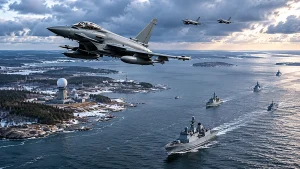
The Baltic region occupies a uniquely strategic position between NATO member states and Russia.
UK defence activity often contributes to alliance exercises, reassurance missions and regional monitoring efforts. These operations increase aviation presence in an area where military infrastructure and geopolitical competition remain highly visible.
Several factors elevate regional importance:
- Dense military activity
- Strategic sea and air routes
- NATO coordination requirements
- Geographic proximity between competing interests
Because modern military capability increasingly includes electronic operations, airspace management has become more complex.
Signal interference in such regions attracts significant attention because it influences decision-making, logistics and operational confidence.
Was the RAF Aircraft Ever in Immediate Danger During the Jamming Incident?
One of the biggest misconceptions around aviation interference is the assumption that aircraft depend entirely on GPS.
Military aircraft operate using multiple overlapping systems.
When GPS performance reduces, crews can rely on:
- Inertial navigation
- Crew cross-check procedures
- Radar support
- Alternative positioning references
- Secure communications
| System | Purpose During Disruption |
| GPS | Position reference |
| Inertial Navigation | Independent tracking |
| Radar | Validation |
| Crew Procedures | Manual monitoring |
| Communications | Coordination |
Operational complexity may increase, but safety protocols remain active throughout the flight.
What Electronic Warfare Methods Are Commonly Associated with Aircraft Jamming?
Electronic warfare includes technologies intended to influence how information moves through operational environments.
Common categories include:
- Signal jamming
- Signal masking
- Spoofing attempts
- Communication interference
- Electromagnetic spectrum disruption
Jamming attempts to reduce signal quality.
Spoofing differs because it may attempt to imitate legitimate signals rather than block them.
For aviation, distinguishing between technical malfunction and deliberate interference can require extensive analysis.
Electronic activity is not always visible to passengers or external observers, making assessment highly technical.
Has Russian Jamming of UK Aircraft Happened Before?
The 2026 incident has drawn comparisons with earlier reports involving UK government aviation.
Although circumstances differ between events, analysts increasingly point to a wider pattern of electronic pressure around strategically sensitive regions.
| Year | Report |
| 2024 | Aircraft carrying senior UK officials reported GPS disruption |
| 2025 | Continued Baltic electronic monitoring |
| 2026 | RAF aircraft incident renewed concern |
These events do not necessarily confirm identical causes but show why electronic resilience is receiving greater investment.
How Are RAF and UK Defence Operations Responding to Airspace Disruption?
The UK has continued investing in operational resilience and allied coordination.
RAF planning increasingly assumes that future environments may involve degraded communications and navigation.
Defence Readiness and Resilient Flight Procedures
Current approaches generally include:
- Multi-system navigation capability
- Crew training for degraded environments
- Secure communication layers
- Intelligence-supported mission planning
- Alliance coordination
Preparation focuses on reducing dependence on any single technology. Operational readiness increasingly values flexibility rather than perfect conditions.
Military planning also considers how quickly crews adapt during changing conditions.
Could Russian Electronic Interference Affect Civil Aviation Alongside Military Flights?
Civil aviation and military aviation operate differently, but both use modern navigation technologies. Most civil aircraft include robust backup systems and follow strict regulatory requirements.
However, regional interference events can influence:
- Route management
- Air traffic awareness
- Pilot workload
- Airline operational planning
Civil aviation authorities continuously monitor unusual navigation patterns. Importantly, disruption reports do not automatically indicate immediate danger.
Air transport systems include multiple safety layers designed to maintain continuity.
What Technologies Help Protect UK Aircraft from Navigation and Signal Interference?

Aircraft protection increasingly combines hardware, software and procedural capability.
Anti-Jamming Systems and Resilient Navigation Capabilities
Emerging approaches include:
- Encrypted positioning systems
- Directional antenna technology
- Enhanced onboard processing
- Signal authentication
- Alternative positioning technologies
These developments support both military and government operations.
Anti-Jamming Technologies and Operational Benefits
| Technology | Function | Operational Value |
| Signal Filtering | Removes interference | Cleaner navigation input |
| Encrypted Navigation | Protects positioning | Greater security |
| Multi-Sensor Fusion | Combines data sources | Improved reliability |
| Resilient Communications | Maintains contact | Operational continuity |
| Automated Detection | Identifies anomalies | Faster response |
Investment decisions increasingly focus on maintaining capability during disruption rather than preventing every incident.
How Is NATO Addressing Electronic Disruption Across European Airspace?
NATO has increasingly prioritized resilience and interoperability. Electronic disruption affects not only aircraft but also coordination between allied forces.
Responses generally include:
- Shared situational awareness
- Joint training exercises
- Information exchange frameworks
- Technology development programmes
Interoperability remains essential.
Aircraft from different nations must continue operating together under challenging conditions.
Dr James Whitmore, European Security and Defence Analyst, stated: “Electronic pressure campaigns test decision-making and coordination as much as technology. Collective readiness often determines operational confidence.”
What Are the Strategic and National Security Implications for the United Kingdom?
Electronic disruption carries implications beyond aviation.
Questions emerge around:
- Defence readiness
- Alliance credibility
- Infrastructure resilience
- Long-term military planning
Defence Policy and Regional Deterrence Measures
The UK’s response may continue developing around:
- Improved capability investment
- Intelligence integration
- Stronger allied cooperation
- Enhanced operational flexibility
National security increasingly extends into technological resilience.
The ability to operate under disruption may become as important as preventing disruption itself.
How Could Aviation Interference Change UK Military Flight Planning in the Future?
Future planning may assume signal degradation as a routine operating condition.
Mission preparation could place greater emphasis on:
- Flexible routing
- Cross-domain coordination
- Autonomous support tools
- Redundant communications
Military aviation doctrine continues evolving alongside changing operational realities. This shift reflects broader defence trends where resilience becomes central to effectiveness.
What Does the Growing Threat of Airborne Electronic Attack Mean for European Security?
Electronic activity highlights how modern competition increasingly occurs outside traditional confrontation. Airspace remains central because movement, surveillance and alliance coordination depend upon it.
European security planning is therefore likely to continue prioritizing:
- Electronic awareness
- Infrastructure resilience
- Shared defence capability
- Aviation continuity
Future deterrence may depend not only on aircraft numbers but on the ability to sustain operations under contested conditions.
Can the UK Strengthen Protection Against Future Aircraft Jamming Incidents?
The UK possesses established aviation and defence capability, but future resilience depends on adaptation.
Protection measures may continue focusing on:
- Navigation independence
- Better detection capability
- Operational training
- Technology modernisation
- Allied integration
Success will likely depend on balancing advanced systems with disciplined procedures. Resilience is becoming an operational requirement rather than an optional enhancement.
What Has the UK Learned From Recent Aircraft Jamming Incidents?
Recent events suggest future aviation resilience will depend less on avoiding disruption entirely and more on maintaining capability while disruption occurs.
Likely areas of focus include:
- Navigation independence
- Faster anomaly detection
- Crew training
- NATO coordination
- Operational flexibility
Electronic pressure increasingly forms part of modern strategic competition.
Conclusion: What Do the 2026 Baltic Sky Risks Mean for UK Aviation and Defence?
Concerns around Russian jamming of UK aircraft reflect a broader shift in how strategic competition influences modern aviation. Rather than direct confrontation, electronic interference introduces operational friction that challenges navigation, coordination and planning.
UK government and military aircraft remain supported by layered systems, trained crews and established procedures, yet resilience continues to grow in importance. The Baltic region demonstrates how airspace security, defence readiness and technological adaptation increasingly intersect.
For the UK and its allies, future aviation effectiveness will depend not only on capability but also on maintaining reliable operations under increasingly complex electronic conditions.
Frequently Asked Questions
Did Russia officially confirm it jammed the UK aircraft?
No. Public reporting and official commentary have referred to suspected electronic interference affecting the RAF aircraft, but direct attribution in electronic incidents is often technically complex and politically sensitive. Governments usually rely on intelligence assessments rather than immediate public confirmation.
What happened to the RAF aircraft carrying the UK Defence Secretary in May 2026?
Reports stated that the RAF aircraft transporting UK Defence Secretary John Healey experienced GPS disruption while travelling near the Russian border after a visit to Estonia. Despite the interference, the aircraft remained operational and continued safely using established backup procedures.
Can GPS jamming cause military aircraft to lose control?
No. Military aircraft are designed with multiple navigation and communication systems. If GPS performance becomes unreliable, crews can rely on inertial navigation, onboard procedures, radar references and alternative positioning methods to maintain safe operations.
Has the UK experienced similar aircraft interference incidents before?
Yes. Previous reports involving UK government and military aviation have raised concerns about GPS disruption and electronic interference near strategically sensitive areas, particularly around Baltic and Eastern European operating routes.
Why is the Baltic region becoming more associated with aircraft jamming concerns?
The Baltic region is strategically important because of NATO activity, military exercises and its proximity to Russian territory. Increased operational presence means electronic disruption and airspace resilience receive greater attention.
Could civilian passenger aircraft also be affected by GPS interference?
Civil aviation uses layered navigation systems and strict operational procedures. Interference may increase monitoring and pilot workload, but commercial aircraft are built with backup systems designed to maintain safe flight operations.
What does the May 2026 incident mean for future UK aviation planning?
The incident reinforced the importance of preparing aircraft and crews to operate even when navigation signals are degraded. Future planning is increasingly focused on resilience, flexible operations and maintaining continuity under electronic disruption conditions.