
1. UK On-Pack Recycling Labels (OPRL)
These symbols offer clear instructions on whether an item is widely collected by UK councils. They tell you exactly how to prepare packaging, such as whether to rinse containers, flatten boxes, or keep caps attached
2. Plastic Resin Identification Codes (RIC)
This technical system uses numbers 1–7 to identify the specific plastic resin used in a product. These codes help waste facilities sort materials based on their chemical makeup to ensure they are processed correctly.
3. Metal, Glass, and Paper Material Symbols
These headings highlight non-plastic materials that are highly recyclable. They distinguish between magnetic steel and infinitely recyclable aluminium, while also identifying glass disposal requirements and sustainable paper certifications.
4. Specialist Disposal and Environmental Marks
These labels identify items requiring special handling, such as electronics, batteries, or industrially compostable materials. They also include general environmental reminders and marks indicating a manufacturer’s financial contribution to recovery schemes.
UK On-Pack Recycling Labels (OPRL)
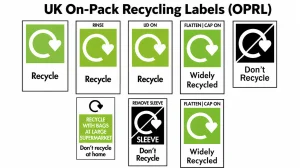
-
Recycle This standard green circular arrow indicates that the packaging is widely collected for recycling by local authorities. It is the most common symbol found on items like plastic bottles and cardboard boxes.
-
Recycle – Rinse. This label instructs you to wash out any food or liquid residue from the container before placing it in the bin. Rinsing is essential to prevent the contamination of other recyclable materials like paper or dry card.
-
Recycle – Lid On. This indicates that the cap or lid should be screwed back onto the container before it is recycled. Keeping the lid attached ensures that small components are not lost during the automated sorting process.
-
Widely Recycled – Flatten | Cap On This label requests that you squash or flatten the bottle or carton to save space in collection vehicles. Once flattened, you should replace the cap to ensure both parts of the packaging are processed together.
-
Don’t recycle. The black symbol with a diagonal line indicates that the item is not currently collected for recycling by most councils. These items should be placed in your general waste bin to avoid clogging recycling machinery.
-
Recycle with bags at a large supermarket – Don’t recycle at home. This is used for flexible “soft” plastics, such as bread bags or crisp packets, which are typically not picked up at the kerbside. You should take these specific materials to the collection points located at major grocery stores instead.
-
Don’t Recycle – Remove Sleeve. This indicates that the main container may be recyclable, but the outer plastic sleeve is not and must be detached. Removing the sleeve allows the sorting machines to correctly identify and process the underlying material.
-
Widely Recycled – Flatten | Cap On (Variant) This is another version of the instruction to collapse the packaging to improve transport efficiency. It reinforces the “Simpler Recycling” goal of ensuring caps remain with their original containers during disposal.
Plastic Resin Identification Codes (RIC)
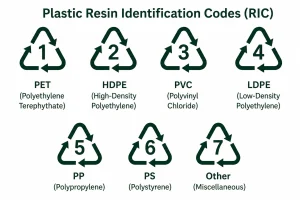
-
1 – PET (Polyethene Terephthalate) This plastic is commonly used for water and soft drink bottles and is the most widely recycled plastic in the UK.
-
2 – HDPE (High-Density Polyethylene) A versatile plastic found in milk jugs and cleaning bottles, it is highly durable and easily processed by most recycling facilities.
-
3 – PVC (Polyvinyl Chloride) Commonly used for piping and certain food trays, this material is difficult to recycle and often excluded from household bins.
-
4 – LDPE (Low-Density Polyethylene) This flexible plastic is used for bread bags and grocery wraps, which are typically recycled at large supermarket collection points.
-
5 – PP (Polypropylene) Used for margarine tubs and microwaveable trays, this heat-resistant plastic is increasingly accepted in kerbside recycling collections.
-
6 – PS (Polystyrene) Often found in takeaway containers and protective packaging, it is technically difficult to recycle and rarely accepted in standard bins.
-
7 – Other (Miscellaneous) This category covers all other resins or mixed plastic materials, which are generally not suitable for traditional recycling processes.
Metal, Glass, and Paper Material Symbols
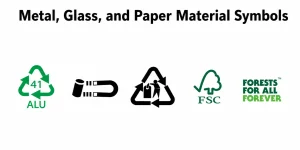
-
Recyclable Aluminium (ALU 41) The number 41 inside the triangle identifies the material as aluminium, which is used for drink cans and foil. This symbol signifies that the metal is infinitely recyclable and should be placed in your dedicated metal recycling bin.
-
Recyclable Steel (Magnet Symbol) This logo features a magnet attracting a can, indicating the packaging is made of steel. Because steel is magnetic, it can be easily separated from other waste, making it a highly recyclable material in the UK.
-
Glass Recycling This symbol depicts a person disposing of a bottle into a recycling loop, reminding consumers to recycle glass jars and bottles. In the UK, glass should be separated by color and taken to local bottle banks or placed in kerbside glass boxes.
-
FSC Certified (Forest Stewardship Council) The checkmark and tree logo indicate that the paper or wood used in the packaging comes from well-managed, sustainable forests. This certification ensures that the material is environmentally responsible and socially beneficial.
-
Forests For All Forever This is the official tagline of the FSC, reinforcing the commitment to protecting forest ecosystems for future generations. When you see this alongside the FSC logo, it confirms the brand’s support for sustainable forestry practices.
Specialist Disposal and Environmental Marks
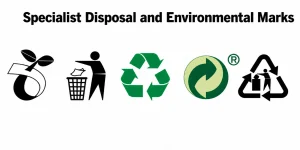
-
Compostable Seedling Logo
This identifies that the product is certified to be industrially compostable according to European standards.
These items should be placed in your food waste or garden waste bin rather than the standard recycling bin.
-
Tidyman
This symbol serves as a general reminder to the public to dispose of waste responsibly and not to litter.
It is a trademark of the “Keep Britain Tidy” campaign and does not relate specifically to recyclability.
-
waMobius Loop
This indicates that an object is technically capable of being recycled.
It does not guarantee that the item will be accepted by your local UK recycling collection or that the item has been made from recycled material.
-
The Green Dot
This signifies that the manufacturer has made a financial contribution to a national packaging recovery organisation.
A common misconception is that this means the packaging itself is recyclable; however, that is not necessarily the case.
-
Glass Recycling (Alternative Loop)
This version of the recycling loop reminds consumers to dispose of glass bottles and jars in a recycling bank.
Properly separating glass by colour at these points helps ensure the material can be efficiently processed and reused.
Frequently Asked Questions
1. What is the most common recycling symbol in the UK?
The “Recycle” green arrow is the most frequent, showing an item is collected by 75% or more of councils. It appears on everyday goods like plastic bottles, drink cans, and cardboard.
2. Does the “Green Dot” symbol mean an item is recyclable?
No, it only means the manufacturer has paid into a national packaging recovery scheme. It does not guarantee recyclability, and the item may still belong in general waste.
3. Why do some labels ask me to leave the “Cap On”?
Attached caps are easily captured by automated sorting machines rather than being lost during processing. This ensures small plastic components are successfully recycled instead of falling through machiner.
4. What do the numbers 1 through 7 inside a triangle mean?
These are Resin Identification Codes (RIC) that identify the specific plastic type used in the product. They help determine if materials like PET or Polypropylene are accepted by your local service.
5. How should I dispose of items with the “Crossed-out Wheelie Bin” mark?
This indicates electronic waste (WEEE) or batteries that cannot be placed in standard household bins. You must take these to the designated recycling centres to safely handle hazardous materials.
{
“@context”: “https://schema.org”,
“@graph”: [
{
“@type”: “BlogPosting”,
“@id”: “https://crypto.clickdo.co.uk/how-to-sell-stocks-on-etoro#blogposting”,
“mainEntityOfPage”: {
“@type”: “WebPage”,
“@id”: “https://crypto.clickdo.co.uk/how-to-sell-stocks-on-etoro”
},
“headline”: “How to Sell Stocks on eToro: 2026 Step-by-Step Guide”,
“image”: “https://crypto.clickdo.co.uk/wp-content/uploads/2026/05/How-to-Sell-Stocks-on-eToro.webp”,
“datePublished”: “2026-05-05”,
“dateModified”: “2026-05-05”,
“author”: {
“@type”: “Person”,
“name”: “Adam”
},
“publisher”: {
“@type”: “Organization”,
“name”: “UK Cryptocurrency News Blog”,
“logo”: {
“@type”: “ImageObject”,
“url”: “https://crypto.clickdo.co.uk/wp-content/uploads/2023/04/Untitled-design-1.png”
}
}
},
{
“@type”: “FAQPage”,
“@id”: “https://crypto.clickdo.co.uk/how-to-sell-stocks-on-etoro#faq”,
“mainEntity”: [
{
“@type”: “Question”,
“name”: “Can I sell stocks instantly on eToro?”,
“acceptedAnswer”: {
“@type”: “Answer”,
“text”: “Yes, stocks can be sold instantly during market hours using market orders. However, execution speed and price depend on liquidity and market conditions.”
}
},
{
“@type”: “Question”,
“name”: “Do I pay tax after selling stocks on eToro in the UK?”,
“acceptedAnswer”: {
“@type”: “Answer”,
“text”: “Yes, profits may be subject to capital gains tax depending on your total annual gains. It is important to track earnings and consult HMRC guidelines.”
}
},
{
“@type”: “Question”,
“name”: “Why is my money not available after selling stocks?”,
“acceptedAnswer”: {
“@type”: “Answer”,
“text”: “Funds are subject to a T+2 settlement period. Only after this period can the money be withdrawn or reused.”
}
},
{
“@type”: “Question”,
“name”: “Can I partially sell my stocks on eToro?”,
“acceptedAnswer”: {
“@type”: “Answer”,
“text”: “Yes, eToro allows partial sales, enabling investors to sell only a portion of their holdings while keeping the rest invested.”
}
},
{
“@type”: “Question”,
“name”: “What is the cheapest way to withdraw money from eToro?”,
“acceptedAnswer”: {
“@type”: “Answer”,
“text”: “Using GBP accounts or eToro Money can reduce or eliminate certain fees. Choosing the right method can save costs.”
}
},
{
“@type”: “Question”,
“name”: “Are there risks when selling stocks on eToro?”,
“acceptedAnswer”: {
“@type”: “Answer”,
“text”: “Yes, market volatility and timing risks can affect the final price. Selling at the wrong time may lead to losses.”
}
},
{
“@type”: “Question”,
“name”: “Can I cancel a sell order after placing it?”,
“acceptedAnswer”: {
“@type”: “Answer”,
“text”: “Pending orders can be cancelled before execution. Once completed, the trade cannot be reversed.”
}
}
]
}
]
}