
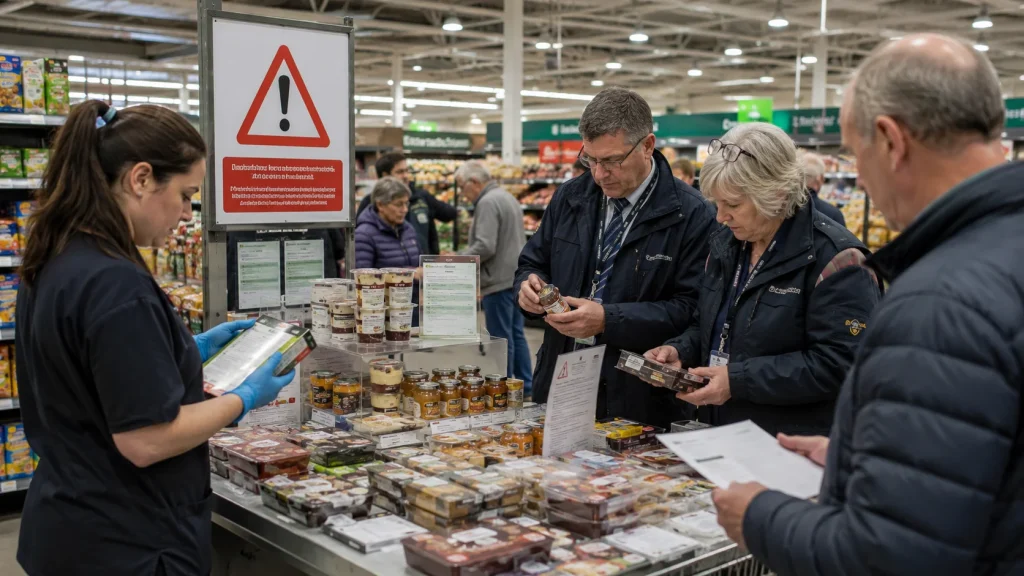
Key Takeaways:
- Tesco, Waitrose and Morrisons have issued product recalls affecting selected food items.
- Common causes include allergen concerns, contamination risks and labelling mistakes.
- Consumers should check batch codes and best-before dates carefully.
- Most recalled products can be returned without difficulty for a refund.
- The Food Standards Agency helps coordinate and communicate recall alerts.
- Shoppers should follow official supermarket guidance rather than social media rumours.
- Quick action is especially important for individuals with food allergies.
Which Products Have Been Included in the Latest Sainsbury’s Tesco Food Recalls?
When we reviewed the latest supermarket recall notices issued during 2026, we found that several products sold through Sainsbury’s, Tesco, Waitrose and Morrisons had been withdrawn due to food safety concerns.
Among the most notable recalls was Arran Fine Foods Caramelised Red Onion Chutney, which was sold through both Sainsbury’s and Tesco.
The product was recalled after concerns were raised about the possible presence of metal fragments. We also identified recalls involving contamination concerns, packaging issues and allergen-related risks affecting products sold through multiple retailers.
To help consumers understand the latest alerts, we summarised some of the key recalls below.
| Product | Retailer | Reason for Recall |
|---|---|---|
| Arran Fine Foods Caramelised Red Onion Chutney | Sainsbury’s, Tesco | Possible metal fragments |
| Morrisons Savers Cashews | Morrisons | Possible glass contamination |
| Tesco Grape & Berry Medley | Tesco | Potential salmonella contamination |
| Tesco Finest Chocolate Affogato Dessert | Tesco | Possible plastic contamination |
Following our review of recent recall notices, we found that contamination concerns, undeclared allergens and packaging issues continue to be the most common reasons products are withdrawn from sale.
While only specific batches are usually affected, consumers should always compare product details against official recall notices before deciding whether action is required.
As always, consumers should compare the information on their packaging with the details provided in official recall notices before taking action.
Which Tesco Food Products Have Been Included in the Latest Recall?
During our latest review of Tesco recall notices published in 2026, we found that food safety concerns ranged from undeclared allergens to contamination risks.
Recent Tesco recall notices have involved products affected by contamination concerns, allergen risks and manufacturing issues identified through routine quality monitoring.
Tesco has also participated in joint recall notices involving branded products sold across multiple supermarkets. These recalls demonstrate how food safety investigations often affect retailers simultaneously when products originate from shared manufacturers or suppliers.
Before taking action, shoppers should carefully compare their products with the details provided in the official recall notice.
Affected Tesco Products and Batch Information
One of the most important findings from our research was the role batch information plays during recalls. Batch codes help supermarkets identify precisely which products need to be withdrawn without unnecessarily removing unaffected stock.
Information Consumers Should Check
| Product Detail | Why It Matters | Where to Find It |
| Product Name | Confirms the affected item | Front of packaging |
| Batch Code | Identifies recall eligibility | Side or back label |
| Best-Before Date | Matches recall notice | Date section |
| Allergen Information | Highlights potential risk | Ingredients panel |
| Product Weight | Helps distinguish variants | Front label |
Checking these details carefully can prevent confusion and ensure consumers respond appropriately.
Which Sainsbury’s Products Have Been Recalled in 2026?
While reviewing recent recall notices, we noticed that Sainsbury’s has been involved in several precautionary food recalls throughout 2026. Like Tesco and other major supermarkets, Sainsbury’s works closely with suppliers and regulators whenever potential food safety concerns are identified.
One of the most significant recalls we found involved Arran Fine Foods Caramelised Red Onion Chutney. Selected batches were recalled after concerns emerged regarding possible metal contamination. Consumers who purchased the affected products were advised not to consume them and to return them for a refund.
Our review found that many Sainsbury’s recalls are issued as precautionary measures rather than responses to widespread consumer harm. Nevertheless, shoppers should always take recall notices seriously and follow the guidance provided by the retailer.
What Food Items Has Waitrose Asked Customers to Return?

Our research into Waitrose recalls revealed a similar pattern. Most product withdrawals involved food safety concerns identified through routine monitoring or supplier investigations.
Waitrose typically provides detailed instructions explaining why products have been recalled and what customers should do next. This level of transparency helps shoppers understand the issue rather than simply being told to return a product.
We found that allergen-related recalls remain among the most common reasons products are removed from sale. Even small packaging errors can create serious risks for individuals with food allergies.
Consumers are generally advised not to consume affected products and to follow the retailer’s return procedures.
Products Impacted by the Waitrose Recall Notice
The products included in Waitrose recalls often range from packaged snacks and ready meals to speciality food items. The exact products vary depending on the nature of the issue.
What stood out during our review was how clearly Waitrose communicates product descriptions, batch numbers and return instructions. This makes it easier for customers to determine whether they have purchased an affected item.
By providing accurate information, the retailer helps reduce uncertainty and encourages quicker consumer action.
Which Batch Codes and Best-Before Dates Are Affected?
As we reviewed recent recall notices, we found that batch codes and best-before dates remain among the most important details consumers should check. In many cases, only specific production runs are affected, meaning unaffected products remain safe to consume.
For example, the Arran Fine Foods Caramelised Red Onion Chutney recall applied only to selected batches carrying specific best-before dates. Similar guidance has been issued in other supermarket recalls involving nuts, desserts and ready meals sold through major UK retailers.
This highlights why consumers should avoid relying solely on product names and instead compare all packaging information with the details contained in official recall notices.
Which Morrisons Products Are Subject to the Current Food Recall?
As we examined Morrisons’ recall announcements, we observed many of the same trends seen at Tesco and Waitrose. Product recalls are generally linked to food safety concerns rather than widespread incidents of harm.
Morrisons often issues notices as soon as a potential problem is identified. This precautionary approach reflects wider industry efforts to protect consumers and maintain trust.
Affected products may include packaged groceries, chilled foods, frozen items or products supplied by third-party manufacturers. Consumers should avoid relying on memory alone and instead check official recall notices carefully.
Morrisons Recall Details and Customer Guidance
Morrisons provides detailed guidance explaining how customers can identify affected products and obtain refunds. These notices typically include photographs, product descriptions and batch information.
We found that the retailer places considerable emphasis on customer reassurance. Many recall notices explain whether the issue presents a significant health concern or is being addressed as a precaution.
This helps shoppers understand the situation while still encouraging them to take the recall seriously.
What Are the Main Reasons Behind These UK Supermarket Food Recalls?
During our investigation, three key causes appeared repeatedly across recall announcements: undeclared allergens, contamination concerns and labelling errors. Each of these issues can affect consumer safety in different ways, which is why supermarkets often act quickly when problems are discovered.
Undeclared Allergens
Undeclared allergens remain one of the most common reasons food products are recalled in the UK. For people with allergies, missing information can create significant health risks.
If a product contains ingredients such as milk, nuts, eggs or gluten that are not listed correctly, consumers may unknowingly expose themselves to substances that trigger allergic reactions.
Because of these risks, supermarkets generally issue recalls immediately once allergen labelling problems are identified.
Contamination Risks
Contamination concerns can arise from several sources, including foreign objects, bacterial contamination or manufacturing issues. Although contamination recalls often attract significant media attention, many are issued as precautionary measures before any illnesses have been reported.
Retailers prefer to remove products quickly while investigations continue rather than risk consumer harm.
Labelling and Packaging Errors
Incorrect labels may seem minor, but they can have serious consequences. Errors involving ingredients, nutritional information or cooking instructions may affect consumer decisions and safety.
Many recalls occur because packaging fails to meet regulatory requirements, even when the product itself is otherwise safe.
Common Recall Causes
| Recall Reason | Potential Risk | Typical Action |
| Undeclared Allergens | Allergic reactions | Immediate recall |
| Contamination Concerns | Illness or injury | Product withdrawal |
| Labelling Errors | Consumer confusion | Packaging correction |
| Manufacturing Faults | Safety uncertainty | Precautionary recall |
What’s New in UK Supermarket Food Recalls During June 2026?
As we examined the latest food safety alerts published during June 2026, we observed continued activity across several major UK supermarkets.
Recent notices have involved contamination concerns, undeclared allergens and packaging issues affecting selected food products sold through Sainsbury’s, Tesco, Waitrose and Morrisons.
What stood out during our research was how quickly retailers acted once potential risks were identified. In most cases, products were removed from sale as a precaution before any widespread issues were reported.
This ongoing activity demonstrates how food safety monitoring systems continue to operate across the UK food supply chain and why consumers should regularly check recall updates issued by retailers and regulators.
What Risks Have Been Identified in the Latest Recall Alerts?

During our analysis of recent recall notices, four major safety concerns appeared repeatedly across Sainsbury’s, Tesco, Waitrose and Morrisons recalls.
Undeclared Allergens
Undeclared allergens remain one of the most common reasons products are removed from sale. Even a small labelling mistake can pose serious health risks for people with food allergies.
Salmonella Contamination
Products suspected of salmonella contamination are recalled because the bacteria can cause food poisoning symptoms, including diarrhoea, stomach cramps and fever.
Foreign Object Contamination
Foreign object recalls involve materials such as glass, plastic or metal accidentally entering products during manufacturing. These incidents often trigger immediate recalls because of the risk of injury.
Packaging and Labelling Errors
Incorrect ingredient information, missing allergen warnings or mislabelled packaging can all result in precautionary withdrawals from sale.
How Could the Recalled Food Products Affect Consumer Health?
The impact of a recalled product depends on the reason behind the recall. Some recalls pose minimal risk to the general public, while others can have serious consequences for specific groups.
For allergy sufferers, undeclared ingredients may cause severe reactions requiring urgent medical attention. Contaminated products may increase the risk of illness, while incorrect preparation instructions could create food safety concerns.
The safest approach is to stop using the affected product until further information becomes available.
What Should Shoppers Do If They Have Purchased a Recalled Product?
When we reviewed guidance from supermarkets and regulators, one recommendation appeared consistently: consumers should act promptly once they identify a recalled item.
Delaying action can increase risks, particularly where allergens or contamination concerns are involved.
Checking Product Information at Home
The first step is verifying whether the product matches the recall notice.
Consumers should compare:
- Product name
- Batch code
- Best-before date
- Packaging details
- Product weight
Accurate identification helps prevent unnecessary returns and ensures affected products are removed from use.
Returning Products for a Refund
Once consumers confirm they have an affected item, they should follow the retailer’s instructions. Most supermarkets provide straightforward return procedures and often offer refunds even without a receipt.
Typical Recall Response Process
| Step | Consumer Action | Outcome |
| 1 | Check recall notice | Confirm eligibility |
| 2 | Stop using product | Reduce risk |
| 3 | Contact retailer if needed | Receive guidance |
| 4 | Return product | Obtain refund |
| 5 | Monitor updates | Stay informed |
What Role Does the Food Standards Agency Play in UK Food Recall Alerts?
During our research, we found that the Food Standards Agency (FSA) plays a central role in the UK’s food safety system.
The agency works with manufacturers, suppliers and retailers to assess food safety risks and coordinate responses when problems arise. It also publishes official recall notices that provide consumers with reliable information.
By maintaining oversight across the food industry, the FSA helps ensure recalls are managed consistently and transparently. Its involvement also helps prevent misinformation from spreading during high-profile recall incidents.
What Refunds Are Available for Recalled Products?
Most supermarket recalls include provisions for customer refunds. During our review of retailer policies, we found that affected products can usually be returned for a full refund regardless of whether the item has been opened.
The exact process may vary slightly between supermarkets, but the objective remains the same: encourage consumers to return affected products rather than continue using them.
In some cases, retailers may also provide exchanges or alternative compensation options depending on the circumstances.
Consumers should always check the instructions included within the recall notice for specific details.
How Can UK Consumers Stay Updated on Future Food Safety Warnings?

One issue we encountered repeatedly during our investigation was that many consumers only learn about recalls after seeing news reports or social media discussions.
While these sources can be helpful, official channels remain the most reliable.
Consumers can stay informed by following:
- Food Standards Agency alerts
- Supermarket recall pages
- Retailer email notifications
- Customer service updates
- Trusted news outlets
Many supermarkets now maintain dedicated recall sections on their websites, making it easier for shoppers to access accurate information.
Why Is It Important to Act Quickly When a Food Recall Alert Is Issued?
Throughout our research, one message remained consistent: timing matters.
Food recalls are issued because a potential risk has been identified. Even when the risk appears low, delaying action increases the chance that affected products may be consumed.
By checking products promptly and following recall guidance, consumers can protect themselves and their families while supporting broader food safety efforts.
Conclusion: What Should UK Shoppers Remember About Tesco, Waitrose and Morrisons Recall Food Alerts?
Our investigation into the latest Tesco Waitrose Morrisons recall food alerts found that recalls are generally precautionary measures designed to protect consumers rather than cause alarm.
Whether the issue involves allergens, contamination concerns or packaging errors, the most important step is checking official recall information and acting promptly.
Sainsbury’s, Tesco, Waitrose and Morrisons all provide guidance to help customers identify affected products and obtain refunds where necessary.
By staying informed through trusted sources and responding quickly to recall notices, UK shoppers can minimise risks and make safer decisions for themselves and their households.
One additional finding from our research was the growing involvement of multiple supermarkets in the same recall notices. Products supplied through shared manufacturers can often affect Sainsbury’s, Tesco, Waitrose and Morrisons simultaneously, making it increasingly important for consumers to verify product details rather than assume recalls apply to only one retailer.
FAQs
Which products have been included in the latest Sainsbury’s Tesco food recalls?
During our review of recent supermarket recall notices, we found that products including Arran Fine Foods Caramelised Red Onion Chutney, Tesco Grape & Berry Medley and Tesco Finest Chocolate Affogato Dessert were withdrawn from sale due to food safety concerns.
Which supermarkets have issued food recall alerts in June 2026?
Recent recall notices have involved Sainsbury’s, Tesco, Waitrose and Morrisons. The alerts were linked to issues such as contamination concerns, allergen risks, packaging errors and manufacturing faults.
What was the reason behind the Arran Fine Foods recall?
The Arran Fine Foods Caramelised Red Onion Chutney recall was issued after concerns were raised about the possible presence of metal fragments in selected batches. Consumers were advised not to consume affected products.
Can customers receive a refund without a purchase receipt?
In many recall situations, supermarkets provide refunds even if customers no longer have their receipt. Retailers generally prioritise consumer safety over proof of purchase when managing recalled products.
How can shoppers check whether their product is affected by a recall?
Consumers should compare the product name, batch code, best-before date and packaging information against the details provided in the official recall notice. This helps determine whether the product is included in the recall.
What should consumers do if they have purchased a recalled product?
Consumers should stop using the affected product immediately and follow the guidance provided in the recall notice. Most retailers advise returning the item to a store for a refund or safe disposal.
Where can consumers find official UK food recall alerts?
Consumers can stay informed by checking Food Standards Agency alerts, supermarket recall pages, retailer customer service updates and other trusted sources that publish verified food safety information.