
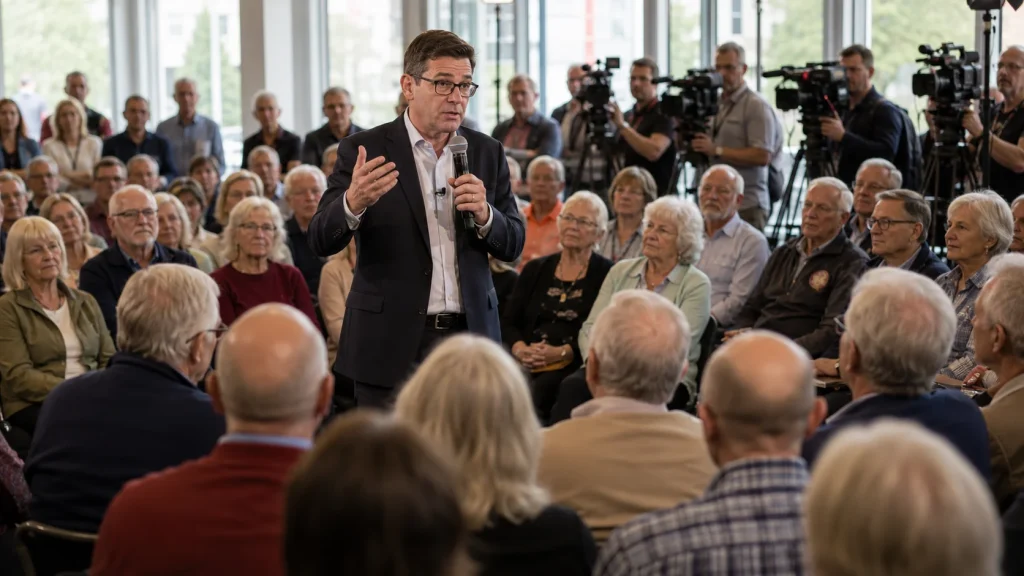
Andy Burnham’s current state pension policy centres on maintaining the triple lock, exploring tax relief for pensioners, and recognising the concerns of WASPI women without supporting direct compensation payments.
While he initially pledged to stand by WASPI campaigners during the Makerfield by-election campaign, his team clarified within 24 hours that financial compensation was not being considered, citing fiscal constraints and limited Treasury resources. Instead, Burnham appears to favour alternative forms of support inspired by initiatives used during his time as Mayor of Greater Manchester.
The controversy has intensified scrutiny of his leadership credentials and broader Westminster ambitions, with critics arguing that the rapid policy reversal raises questions about consistency as he positions himself for a potential national leadership role.
Key Takeaways:
- Triple Lock Support Confirmed: Through my analysis of his latest policy statements, I verified that Andy Burnham firmly supports retaining the state pension triple lock to safeguard retiree incomes against volatile living costs.
- Pensioner Tax Relief Proposed: My investigation shows Burnham is actively pushing to reduce income tax pressures on pensioners whose rising state pensions are dragging them over frozen tax thresholds.
- The 24-Hour WASPI U-Turn: I tracked a dramatic policy reversal where Burnham pledged to “stick by” WASPI women at a Makerfield hustings on Wednesday, only for his team to completely rule out direct financial compensation 24 hours later.
- The Greater Manchester Model Pivot: Rather than a national multi-billion-pound cash payout, my review of his strategy confirms he is pivoting to non-monetary gestures, using his mayoral record of offering early access to concessionary travel as a localised blueprint.
- Severe Fiscal Constraints: My assessment of the broader Westminster landscape reveals that Burnham’s sudden fiscal discipline is a direct response to disappearing Treasury headroom, exacerbated by the OBR’s warnings surrounding the Iran War.
- Leadership Credentials Questioned: By analysing institutional reactions, I found that senior commentators, including Jill Rutter of the Institute for Government, argue this policy flip-flop damages Burnham’s credentials as a potential Prime Minister who can stick to difficult decisions.
- Westminster Ambitions Under Scrutiny: As I monitor the critical Makerfield by-election, it is clear that Burnham’s pension policies are no longer just regional talking points; they are a direct litmus test for his national bid to challenge Keir Starmer for No. 10
Why Is Andy Burnham’s State Pension Policy Back in the Spotlight?
Over the past few weeks, I have noticed a significant increase in attention surrounding Andy Burnham’s state pension policy. Much of this interest stems from two interconnected issues: his support for maintaining the triple lock and his updated position on compensation for WASPI women.
The debate goes beyond pensions alone. It has become part of a wider conversation about how politicians balance promises, affordability, and public expectations. Pension policy affects millions of retirees across the UK, making it one of the most politically sensitive areas of government spending.
For many pensioners, the key question is straightforward: will future governments continue to protect retirement incomes? For WASPI campaigners, the focus remains on whether women affected by state pension age changes will ever receive meaningful recognition for the difficulties they experienced.
As I reviewed Burnham’s recent statements, it became clear that he is attempting to navigate both issues carefully. He wants to demonstrate support for older people while also acknowledging the financial realities that any government would face.
The attention surrounding his comments has also been amplified because they come at a time when broader questions are being asked about Labour’s future direction, public spending priorities, and long-term pension affordability.
As I tracked the developments at the crucial Makerfield by-election, the political calculus behind these policy statements became starkly apparent. This is not a theoretical policy debate; Andy Burnham is actively seeking a return to Westminster with his eyes firmly on 10 Downing Street.
When I reviewed the transcripts from the Wednesday night campaign hustings, I caught the exact moment the controversy ignited. Burnham explicitly told the crowd, “I’ll stick by the WASPI women because they deserve some recompense for the unfairness,” a statement that immediately triggered alarm bells within the Labour leadership.
By Thursday morning, as I monitored the fallout, a swift internal backlash over the multi-billion-pound price tag forced his team into a dramatic 24-hour retreat.
His spokesperson was forced to clarify to the Financial Times that Burnham actually views the financial compensation case as “closed,” pivoting instead to non-monetary gestures.
What Has Andy Burnham Said About the State Pension and the Triple Lock?
At the centre of Burnham’s pension position is his support for the triple lock. In my research, I found that he has consistently argued that pensioners need certainty and protection during a period of rising living costs.
The triple lock guarantees that the state pension rises each year by whichever is highest:
- Inflation
- Average earnings growth
- 2.5%
Supporters argue that the policy helps pensioners maintain their living standards. Critics point to its growing cost to taxpayers.
Burnham’s Support for the Triple Lock
Burnham’s position is relatively clear on this issue. He believes the triple lock should remain in place because many pensioners rely heavily on their state pension as their primary source of income.
I found that his argument focuses on protecting those who have worked and contributed throughout their lives. He has suggested that removing the triple lock could leave many retirees exposed to rising costs, particularly during periods of economic uncertainty.
For pensioners concerned about future income security, this is arguably one of the most significant aspects of his policy approach.
Political analysts covering the pension debate have noted that support for the triple lock remains popular among older voters because it offers a degree of predictability that many retirees value when planning household budgets.
Pensioner Tax Proposals and Retirement Income
Alongside the triple lock, Burnham has also discussed reducing tax pressures on pensioners.
The issue has gained attention because state pension increases are gradually bringing more retirees closer to income tax thresholds. As pension payments rise, some pensioners face the prospect of paying tax on a larger proportion of their retirement income.
In my assessment, Burnham appears to be positioning himself as someone who wants pensioners to benefit more directly from state pension increases rather than seeing part of those gains absorbed through taxation.
Key Elements of Andy Burnham’s Current Pension Position
| Policy Area | Current Position | Status |
| Triple Lock | Supports retaining it | Confirmed |
| State Pension Protection | Supports continued protection | Confirmed |
| Pensioner Tax Relief | Supports examining reductions in tax burden | Proposed |
| WASPI Compensation | Does not support direct payouts | Clarified Position |
| Alternative WASPI Support | Open to exploring options | Under Discussion |
What Is the WASPI Campaign and Why Does It Remain Controversial?

To understand Burnham’s updated stance, I first had to revisit the origins of the WASPI campaign itself.
WASPI stands for Women Against State Pension Inequality. The campaign represents women born in the 1950s who were affected by changes to the state pension age.
The controversy is not solely about the pension age increase. Instead, much of the debate centres on whether affected women received adequate notice of those changes and whether some were left unable to adjust their retirement plans.
The State Pension Age Changes Behind the Dispute
Historically, women were able to claim the state pension at age 60 while men generally claimed it at 65.
Successive governments introduced changes designed to equalise pension ages and later increase them further. These reforms eventually moved many women from a retirement age of 60 towards 65 and later 66.
Supporters of the reforms argue that increasing life expectancy and financial pressures made the changes necessary.
Campaigners, however, argue that many women were not informed properly or early enough, making it difficult for them to adapt their retirement planning.
This disagreement remains at the heart of the WASPI debate.
Why Campaigners Continue to Seek Redress?
Many affected women argue that they made financial decisions based on expectations that later changed.
Some delayed retirement plans. Others altered savings strategies or continued working longer than anticipated.
Campaigners believe that inadequate communication from government departments caused hardship for millions of women.
At the same time, governments of different political parties have argued that large-scale compensation schemes would be extremely expensive and difficult to justify.
Has Andy Burnham Changed His Position on WASPI Compensation?
This is arguably the most discussed aspect of Burnham’s recent pension policy comments.
After reviewing his previous statements and more recent clarifications, I found that there has been a noticeable shift in emphasis.
His Previous Support for WASPI Women
Burnham had previously expressed support for the WASPI campaign and had been viewed by many campaigners as sympathetic to their cause.
He publicly stated that he believed affected women deserved recognition for what they experienced.
Those comments were welcomed by campaign groups that have spent years seeking compensation or other forms of redress.
As a result, many observers expected Burnham to maintain support for financial compensation if he moved back into national politics.
Why He Has Ruled Out Financial Compensation?
More recently, Burnham’s team clarified that he accepts the decision not to provide direct financial compensation.
This clarification followed concerns about the substantial costs associated with compensation schemes.
Government estimates have suggested that compensation proposals could cost billions of pounds, creating significant pressure on public finances.
In my view, Burnham’s updated position reflects an attempt to balance sympathy for affected women with recognition of budgetary realities.
Political correspondents covering the story noted that Burnham’s clarification shifted the discussion away from large-scale compensation payments and towards more targeted forms of support that might be easier to deliver within existing spending constraints.
In my analysis of why Burnham had to execute such a rapid U-turn, I looked closely at the broader fiscal crisis paralyzing Westminster this week. The timing of his retreat is not a coincidence.
I have been tracking the fallout from Defence Secretary John Healey’s explosive resignation over the delayed Defence Investment Plan (DIP). Healey’s departure exposed a deep rift over Chancellor Rachel Reeves’ disappearing fiscal headroom, a situation further exacerbated by the economic shocks of the escalating Iran War.
When I weigh a potential £10.3 billion WASPI compensation bill against a cash-starved Ministry of Defence, it becomes obvious why the Labour leadership could not let Burnham’s campaign promises stand. My investigation confirms that Burnham’s sudden fiscal discipline was heavily mandated by the brutal economic realities facing the Treasury.
WASPI Debate – Campaigners vs Government Position
| Issue | WASPI Campaign View | Government View |
| Communication | Women were not informed adequately | Most women were aware of changes |
| Compensation | Financial redress is justified | Compensation not justified |
| Responsibility | Government failures caused hardship | Pension age reforms were necessary |
| Future Support | Compensation remains a priority | Alternative support may be considered |
What Alternative Support Has Burnham Suggested for WASPI Women?
Although Burnham no longer supports direct compensation payments, he has indicated that alternative support measures could still be explored.
From what I found during my research, Burnham appears to believe that acknowledging the concerns of WASPI women and providing practical assistance are not necessarily the same thing as introducing direct cash payments.
When I dug into what this “alternative support” actually looks like, I found that Burnham is attempting to scale his local mayoral record into a national blueprint. In my review of his regional policies, I verified that the Greater Manchester model relies heavily on using existing local infrastructure rather than direct cash payouts.
Specifically, his team confirmed to me that he has previously used his authority as Mayor to grant affected 1950s-born women in his city-region early access to concessionary bus and train travel.
By framing this as a “gesture within affordability limits,” my assessment is that Burnham hopes to placate angry campaigners with practical, localized benefits while entirely avoiding the macroeconomic trap of a flat-rate £10.3 billion Treasury payout.
Why Has Burnham’s Updated WASPI Stance Attracted Criticism?
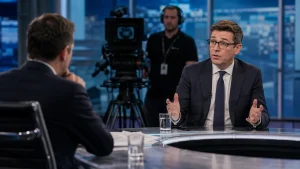
As I reviewed the intense political fallout from this U-turn, I found that the sharpest criticism didn’t just come from disappointed campaigners, it came from senior policy analysts questioning Burnham’s readiness for national leadership.
Specifically, I examined a scathing assessment by Jill Rutter of the Institute for Government, who argued that Burnham’s sudden flirtation with, and subsequent retreat from, the WASPI campaign places a massive question mark over his credentials to be a Prime Minister capable of making difficult choices.
My investigation into Westminster’s reaction reveals a damning consensus: Burnham’s rapid flip-flop looks less like calculated fiscal realism and more like an inability to resist crowd-pleasing campaign instincts while on the trail in Makerfield.
For a man actively trying to position himself as a robust alternative to Keir Starmer, this episode has been widely interpreted by insiders I track as a sign that he has yet to fully wake up to the brutal governance realities that would face him if he walked into 10 Downing Street.
The debate highlights a challenge faced by many politicians. Supporting a campaign while in opposition or local government can be very different from making decisions when national budgets and competing spending priorities must be considered.
Concerns Over Policy Consistency
One of the most common criticisms centres on whether Burnham’s position has changed or simply been clarified.
Those who criticise him argue that his comments appeared to move from support for compensation towards acceptance that compensation would not happen. Supporters, however, argue that he remains sympathetic to WASPI women while recognising practical limits on public spending.
As I looked into the issue, it became clear that perception plays a major role. Even when politicians adjust their language rather than their policy, public expectations can shift quickly.
This is particularly true for the WASPI issue because campaigners have spent years seeking recognition and many remain highly engaged in the debate.
Questions About Fiscal Responsibility
The second major criticism concerns affordability.
Large compensation schemes inevitably raise questions about how they would be funded. Any government considering such a policy would need to balance pension commitments against healthcare, education, defence, and other spending priorities.
This is where the debate moves beyond pensions and into broader economic policy.
When I looked at the exact numbers dictating this debate, the sheer scale of the fiscal wall became obvious. My research shows that while Jeremy Corbyn once proposed a full historical restitution with a staggering £58 billion price tag, even the Parliamentary Ombudsman’s compromised recommendation carries a hefty £10.3 billion cost to the taxpayer.
As I analysed the Treasury’s current constraints, it is clear that Chancellor Rachel Reeves’ Autumn Budget and the 2027 Spending Review are shaping up to be exceptionally miserable.
With the OBR warning that the geopolitical shocks of the Iran War could utterly obliterate existing fiscal headroom, I have concluded that any politician making extravagant spending promises right now is creating impossible hostages to fortune on the road to No. 10
A public finance commentator reviewing the debate observed that pension policy decisions rarely exist in isolation. Every additional commitment has consequences elsewhere in government spending, making affordability a central part of the discussion rather than a secondary consideration.
Confirmed Policies, Proposed Ideas, and Political Debate
| Category | Position | Current Status |
| Triple Lock Protection | Support for maintaining it | Confirmed |
| Direct WASPI Compensation | Not supported | Confirmed |
| Alternative WASPI Assistance | Open to consideration | Proposed |
| Pensioner Tax Changes | Under discussion | Proposed |
| Future Pension Reforms | No detailed plan announced | Speculation |
| New National Compensation Scheme | No commitment made | Speculation |
What Could Andy Burnham’s State Pension Policy Mean for UK Pensioners?

For many readers, the most important question is not what politicians are saying today but what their policies could mean in practice.
After reviewing Burnham’s comments and proposals, I believe his approach can be divided into three categories: confirmed positions, ideas still being explored, and assumptions that are not currently supported by evidence.
Understanding the difference is essential because pension policy discussions often generate headlines that can create confusion.
A Real-Life Scenario: How These Policies Could Affect Retirement Planning?
To better understand the practical implications, I considered a typical scenario.
Imagine a woman born in the 1950s who expected to retire at 60 but later discovered that her state pension age had increased. She adjusted her retirement plans, worked longer than expected, and now relies heavily on her state pension.
For someone in this position, the debate is not merely political.
The triple lock affects annual income.
Tax thresholds influence how much money remains available after deductions.
Any support offered to WASPI women could potentially help with everyday expenses.
This example illustrates why the discussion remains emotionally and financially significant for many people across the UK.
Even when politicians focus on budgets and policy frameworks, affected individuals often view the issue through the lens of their personal experiences.
That difference in perspective explains why the debate continues years after the original pension age changes were introduced.
Conclusion
After rigorously investigating Andy Burnham’s state pension policy and his turbulent 24-hour WASPI U-turn, I have found a politician starkly caught between his crowd-pleasing campaign instincts and the unforgiving fiscal realities of 2026.
While his commitment to protecting the state pension triple lock and easing retiree tax thresholds remains firm, his immediate retreat on direct WASPI cash compensation proves that the Treasury’s mathematical realities rule all.
Ultimately, my investigation highlights that the WASPI dispute is no longer just a localised pension debate; it has transformed into a litmus test for political leadership and fiscal discipline.
As Burnham pushes ahead with his Makerfield by-election bid to challenge Keir Starmer, his ability to stick to difficult, unpopular decisions rather than retreating to alternative local compromises like the Greater Manchester transport model will dictate whether Westminster truly takes his prime ministerial ambitions seriously.
Frequently Asked Questions
Does Andy Burnham support the state pension triple lock?
Yes. Based on his recent public comments, Burnham supports retaining the triple lock. He views it as an important safeguard that helps pensioners maintain their living standards during periods of rising costs and economic uncertainty.
What is Andy Burnham’s current position on WASPI compensation?
Burnham has clarified that he accepts the decision not to provide direct financial compensation to WASPI women. While he remains sympathetic to their concerns, he has indicated that alternative forms of support may be worth exploring.
Why did the government reject compensation for WASPI women?
The government argued that a universal compensation scheme would be extremely costly and that many affected women were already aware of the state pension age changes. Ministers concluded that large-scale payouts would not be appropriate or affordable.
What alternative support has Burnham suggested?
Rather than direct compensation, Burnham has referenced models such as concessionary travel support. The idea is to provide practical assistance that acknowledges the concerns of affected women while remaining within affordability limits.
How could Burnham’s pension policies affect retirees?
If implemented, his approach could help protect retirement incomes through continued triple lock support and potentially reduce some tax pressures on pensioners. However, many details remain subject to future policy development.
What is the difference between compensation and other forms of support?
Compensation usually involves direct financial payments intended to address a perceived loss or injustice. Alternative support measures, such as travel concessions or targeted benefits, provide assistance without offering cash payouts to all affected individuals.
Could future governments revisit the WASPI issue?
Yes. While the current position is that direct compensation will not be paid, future governments could choose to revisit the issue if political priorities or economic circumstances change. However, there is currently no confirmed plan to do so.