
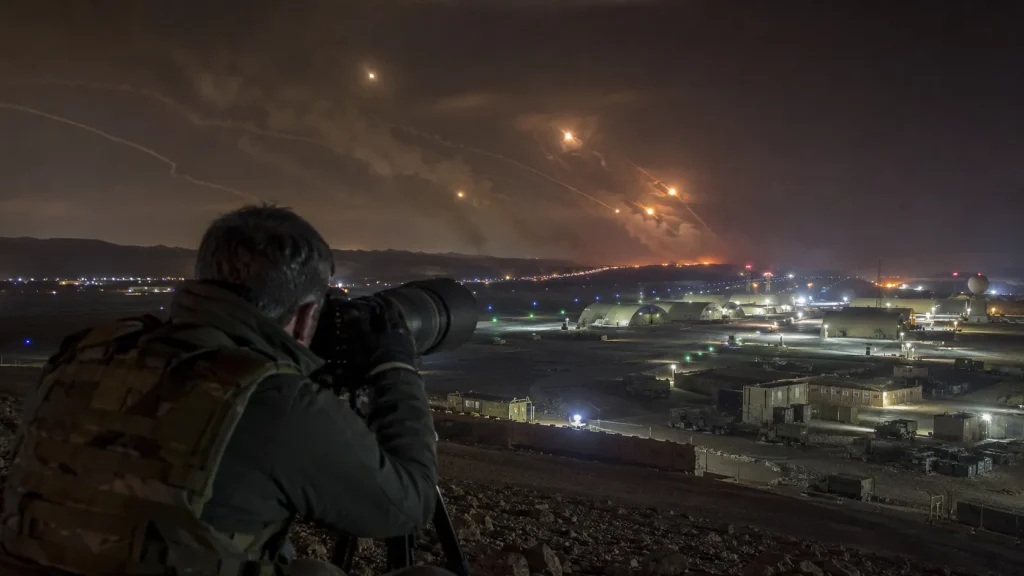
Iran’s Islamic Revolutionary Guard Corps said it targeted King Faisal Air Base and Prince Hassan Air Base in Jordan on 22 July 2026, placing the two military installations at the centre of a widening confrontation involving Iran, the United States and regional countries hosting American forces.
The Financial Times reported that the IRGC named King Faisal and Prince Hassan air bases as targets during an operation involving missiles and drones. Iran also claimed that US-linked military equipment was damaged.
Those claims require careful qualification. Jordan confirmed that Iranian missiles and drones had targeted its territory during the same period, but publicly available Jordanian statements did not confirm that King Faisal Air Base suffered a direct hit.
Jordan also did not release a detailed assessment showing damage to aircraft, hangars, runways or other facilities at the base.
As of 24 July, the most defensible account is that Iran claimed responsibility for an attack directed at King Faisal Air Base, while the precise outcome of that operation remained uncertain.
What Happened in the King Faisal Air Base Strike?
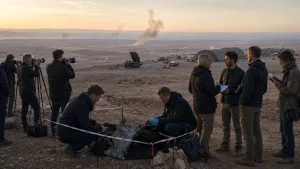
The latest reported incident occurred on 22 July, when the IRGC announced that it had launched missiles and drones against military facilities in Jordan.
Iran identified King Faisal Air Base and Prince Hassan Air Base as targets associated with American military activity. Iranian accounts described the operation as part of a continuing retaliatory campaign against US forces and infrastructure across the Middle East.
Jordan’s Armed Forces issued a separate account of activity in the country’s airspace. The military said air-defence systems had detected six missiles originating from Iranian territory and targeting Jordan.
Four were intercepted, while two fell in remote, uninhabited areas. Jordan reported no casualties or material damage from those two impacts.
That official statement confirmed that an Iranian attack was directed towards Jordan on the same date as the IRGC’s King Faisal announcement. It did not, however, say that any of the missiles reached King Faisal Air Base.
The difference is important. Confirmation that missiles entered Jordanian airspace does not automatically confirm every detail of Iran’s account, including the intended target of each weapon, whether a base was hit or whether particular equipment was destroyed.
Jordan reported further military activity on 23 July. According to the Jordanian Armed Forces, the Royal Jordanian Air Force dealt with four missiles and six Iranian drones targeting the kingdom over the previous 24 hours.
Three of the missiles and all six drones were intercepted, while one missile fell in an uninhabited area.
The repeated incidents indicate that the King Faisal Air Base strike claim emerged during a broader sequence of Iranian missile and drone attacks rather than a single isolated launch.
What Has Been Officially Confirmed?
Several parts of the incident are supported by official statements or consistent reporting.
Iran’s Revolutionary Guards publicly claimed that King Faisal and Prince Hassan air bases were targeted. Jordan officially confirmed that missiles and drones originating from Iran were directed at its territory during the same period.
Jordan also confirmed that its air-defence forces engaged the incoming weapons. Its military statements documented multiple interceptions on 22 and 23 July and said the weapons that were not intercepted fell in remote areas.
King Faisal Air Base is a genuine Royal Jordanian Air Force installation in southern Jordan. It is also commonly called King Feisal Air Base in official English-language material.
Reports locating the base near Al-Jafr refer to the same installation despite the difference in spelling.
The base has been linked in international reporting to US military personnel and operations. However, detailed information about the number of American personnel, the units deployed there and their operational roles is not routinely disclosed.
It is therefore reasonable to describe King Faisal as a Jordanian military base reportedly used in connection with US operations. It would be less accurate to describe it simply as an American-owned base.
Interactive Conflict Explainer
King Faisal Air Base Strike: What Is Actually Known?
Review the available evidence first, then open the timeline to see how the reported events developed.
Evidence Overview
What Is Confirmed and What Remains Unverified?
Iran said King Faisal Air Base was targeted on 22 July 2026. Jordan confirmed incoming Iranian missiles and drones, but it did not publicly confirm a direct hit, damage or casualties at the base.
What Official Reporting Supports
- The IRGC named King Faisal and Prince Hassan air bases as targets.
- Jordan confirmed that Iranian missiles and drones targeted its territory.
- Jordan reported multiple interceptions on 22 and 23 July.
- Weapons not intercepted were reported to have fallen in remote areas.
What Has Not Been Publicly Established
- Whether a weapon directly hit King Faisal Air Base.
- Whether aircraft, hangars, runways or radar systems were damaged.
- Whether personnel at the base were killed or injured.
- Whether operations at the installation were disrupted.
Why the Distinction Matters
Confirmation that weapons entered Jordanian airspace does not prove every detail of Iran’s account. Claims of major damage should remain qualified until supported by official assessments or independently verified evidence.
Incident Timeline
How Did the Reported Events Unfold?
This sequence shows why the latest claim should be treated as part of a broader series of missile and drone attacks.
Previous Reports Mentioned the Base
Earlier accounts linked King Faisal Air Base to attacks on facilities associated with US operations, although public evidence remained incomplete.
Iran Announced the Operation
The IRGC named King Faisal Air Base and Prince Hassan Air Base as targets during missile and drone attacks.
Jordan Reported Six Incoming Missiles
Jordan said four were intercepted and two fell in remote areas, with no casualties or material damage reported from those impacts.
Further Interceptions Were Reported
Jordan reported additional missiles and drones, showing that the incident formed part of a broader sequence of attacks.
Safe Conclusion
Iran identified King Faisal Air Base as an intended target, while Jordan confirmed incoming weapons and multiple interceptions.
Still Unresolved
A direct hit, damage to military assets, operational disruption and base-specific casualties remain publicly unverified.
What Remains Unverified?
The central uncertainty concerns whether an Iranian missile or drone directly hit King Faisal Air Base on 22 July.
Iran said that the base was targeted and claimed that US military assets were damaged. Jordan confirmed the wider incoming attack but did not publicly identify King Faisal as an impact location.
No comprehensive public assessment from Jordan or the United States had established, as of 24 July:
- How many missiles or drones were specifically assigned to King Faisal Air Base.
- Whether any weapon penetrated the base’s defences.
- Whether a runway, hangar, radar installation or fuel facility was struck.
- Whether aircraft or drones were damaged or destroyed.
- Whether Jordanian, American or other personnel at the base were injured.
- Whether the base temporarily suspended operations.
- Whether circulated images accurately showed King Faisal Air Base after the attack.
Iranian military statements can establish what Iran says it attempted or achieved. They cannot independently prove the physical outcome.
Jordanian interception reports establish that weapons entered or approached Jordanian airspace. They do not necessarily identify each weapon’s planned destination.
An authoritative conclusion would normally require a battle-damage assessment, geolocated imagery, satellite photographs taken before and after the incident, physical evidence from the site or confirmation from officials with direct knowledge.
Until such evidence becomes available, claims that King Faisal Air Base was destroyed or rendered unusable should not be presented as fact.
Was This the First Reported Attack on King Faisal Air Base?
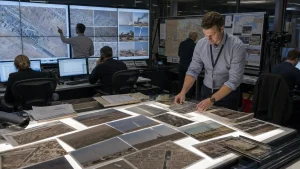
The 22 July announcement was not the first time King Faisal Air Base had been mentioned during the regional conflict.
Earlier reports indicated that Iran had attacked the installation during a previous round of hostilities in July. Some accounts also alleged damage to military aircraft or facilities associated with US forces.
The public evidence surrounding the earlier incident was similarly incomplete. US officials did not immediately provide a detailed damage assessment, while Iranian sources promoted claims of successful impacts.
This creates a potential source of confusion for readers searching for the “King Faisal Air Base strike”. The phrase may refer to the earlier reported attack, the operation claimed on 22 July or the broader series of strikes directed at military facilities in Jordan.
A clear chronology is therefore necessary:
- Earlier in July, King Faisal Air Base was identified in reports about Iranian attacks on US-linked facilities in Jordan.
- On 22 July, the IRGC explicitly announced another operation targeting King Faisal and Prince Hassan air bases.
- Jordan confirmed incoming Iranian missiles and reported intercepting most of them.
- On 23 July, Jordan announced another series of missile and drone interceptions.
- As of 24 July, no detailed public assessment had conclusively established the scale of damage at King Faisal.
Describing the event as a series of claimed attacks is more accurate than treating every report as evidence of one clearly documented strike.
Was King Faisal Air Base Damaged?
The available evidence does not support a definitive answer.
Iran claimed that its operation damaged American military assets, including equipment reportedly kept at the targeted facilities. Such claims have not been independently confirmed in sufficient detail.
Jordan’s military said that the missiles falling outside its interceptions landed in remote, uninhabited areas and caused no casualties or material damage. That statement suggests those particular weapons did not strike a populated or developed military site.
However, the Jordanian announcement did not provide a complete weapon-by-weapon account of the operation. It also did not explicitly address every Iranian claim about King Faisal Air Base.
A lack of public confirmation does not prove that no damage occurred. Military authorities may delay or limit disclosures for operational and security reasons. Equally, the absence of a public assessment cannot be used to validate Iran’s claims.
The appropriate conclusion is that damage at King Faisal Air Base remained unconfirmed publicly as of the article’s last update.
Any future assessment should distinguish between minor damage, such as debris impacts or temporary disruption, and major operational damage involving aircraft, runways, command systems or air-defence equipment.
Were there Casualties at King Faisal Air Base?
No reliable public statement reviewed for this report confirmed deaths or injuries specifically at King Faisal Air Base during the 22 July operation.
This point must be separated from casualties reported at other military installations in Jordan.
Muwaffaq Salti Air Base, also known as Al-Azraq Air Base, is a different facility. American service members were reported killed and injured in attacks involving that installation during the wider confrontation.
Those casualties should not be attributed to King Faisal Air Base unless an official source clearly connects them to the King Faisal incident.
Confusing the bases can create a materially false account. Jordan contains several military installations with different locations, functions and reported relationships with US forces.
King Faisal Air Base is near Al-Jafr in southern Jordan. Muwaffaq Salti Air Base is situated near Azraq, farther north. Prince Hassan Air Base is another separate installation.
Reports about casualties, aircraft damage or missile impacts must therefore be checked against both the date and the name of the base.
As of 24 July, the accurate wording is that no base-specific casualty figure had been publicly confirmed for the latest claimed attack on King Faisal Air Base.
Why is King Faisal Air Base Important?
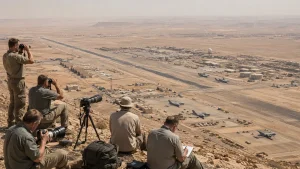
King Faisal Air Base is strategically significant because of its location, military function and reported connection to US operations in the region.
The installation belongs to the Royal Jordanian Air Force and is located near Al-Jafr. Its southern position places it away from Jordan’s largest population centres and gives it access to broad areas suitable for military aviation and training.
International reporting has indicated that US personnel have operated from the base. The exact scale and purpose of that presence are not fully disclosed publicly, but the relationship makes the installation relevant to Iran’s campaign against facilities connected to the United States.
Jordan is a longstanding American security partner. The two countries cooperate on defence, counterterrorism, training and regional security. US forces have also used facilities in Jordan to support operations in the Middle East.
For Iran, striking or threatening a facility used by US personnel can serve several objectives. It can impose military costs, demonstrate regional reach, pressure governments hosting American forces and complicate US operations.
For Jordan, the situation creates a difficult security challenge. The country must defend its territory and military installations while trying to prevent the wider confrontation from turning Jordan into a permanent battlefield.
How did Jordan Respond?
Jordan responded by activating air-defence systems and using Royal Jordanian Air Force capabilities against incoming missiles and drones.
The Jordanian Armed Forces said weapons were engaged after they entered the country’s airspace. Military engineering teams were also deployed to locations where missiles or interception debris fell.
Jordanian officials have repeatedly framed these actions as the defence of national sovereignty rather than participation in another country’s war.
That distinction is politically important. Jordan maintains security ties with the United States, but it also faces domestic and regional pressure over any perception that its territory is being used for attacks against neighbouring countries.
By describing its interceptions as a response to weapons targeting Jordan, the government presents its actions as defensive and focused on protecting civilians, infrastructure and national territory.
Residents are generally advised not to approach fallen missile or drone debris. Fragments may contain hazardous materials, unexploded components or sensitive military technology. Securing impact sites is therefore a technical and public-safety task as well as a security operation.
Why Does the Attack Matter Beyond the Base?

The King Faisal Air Base strike claim matters because it illustrates how a conflict between Iran and the United States can spread across national borders.
US forces and facilities are distributed across several Middle Eastern countries. An Iranian strategy aimed at American regional assets can therefore expose host countries to missile and drone attacks even when those countries are not the primary parties to the conflict.
Jordan’s geographic position increases its exposure. It borders Iraq, Syria, Saudi Arabia, Israel and the occupied West Bank, placing it close to several active military and political flashpoints.
Repeated launches also create risks beyond military installations. Missiles, drones and interception debris can fall in populated areas or damage civilian infrastructure.
Active air-defence operations can affect commercial aviation, airport schedules and the routes airlines are willing to use.
The incidents may also influence Jordan’s security relationship with the United States. Continued attacks could lead to stronger air defences, changes in the location of military assets or tighter controls on information about foreign deployments.
At a regional level, the attacks demonstrate that bases outside the Gulf can become targets in a US-Iran confrontation. That increases the possibility of retaliation, miscalculation and further expansion of the conflict.
What Happens Next?
The most important unanswered question is whether Jordan or the United States will release a detailed assessment of King Faisal Air Base.
Such an assessment could confirm whether the installation was hit, identify damaged equipment and clarify whether operations were disrupted. Publicly available satellite imagery may also provide evidence if it clearly shows the correct base and can be independently authenticated.
Additional military statements will need to be examined carefully. Iran may issue further claims about damage, while Jordan may continue reporting interceptions without disclosing operational details about individual bases.
Readers should also watch for:
- Confirmation from the Jordanian Armed Forces.
- Statements from US Central Command or the Pentagon.
- Independently verified satellite imagery.
- Base-specific casualty reports.
- Changes to military deployments in Jordan.
- New aviation or airspace warnings.
- Further Iranian missile or drone launches.
- US or allied retaliation linked directly to the attacks.
The story remains developing. New evidence could establish that King Faisal Air Base was damaged, or it could show that Jordan’s defences prevented a successful strike.
Until then, reporting should preserve the distinction between the confirmed incoming attack and Iran’s unverified claims about its outcome.
Conclusion
Iran claimed that it targeted King Faisal Air Base in Jordan on 22 July 2026 as part of an operation involving missiles and drones. Jordan confirmed that Iranian weapons targeted the kingdom and said most of the incoming missiles and drones were intercepted.
What Jordan did not publicly confirm was a direct impact at King Faisal Air Base. It also did not announce damage or casualties at the installation.
Claims that aircraft, hangars or other US-linked assets were destroyed therefore remain unverified. Reports of American casualties at other Jordanian bases must not be attributed to King Faisal without specific evidence.
The clearest current conclusion is that an attack was directed towards Jordan and that Iran identified King Faisal as one of its intended targets. Whether the base was successfully struck, and what damage resulted, remains unresolved.
Frequently Asked Questions
Where is King Faisal Air Base?
King Faisal Air Base is located near Al-Jafr in southern Jordan. It is operated by the Royal Jordanian Air Force and is also officially written as King Feisal Air Base.
Who claimed responsibility for the King Faisal Air Base strike?
Iran’s Islamic Revolutionary Guard Corps claimed that it targeted King Faisal and Prince Hassan air bases on 22 July 2026.
Did Iran successfully hit King Faisal Air Base?
Iran claimed that the operation hit military assets, but Jordan did not publicly confirm a direct impact at King Faisal Air Base. The result therefore remains unverified.
Was King Faisal Air Base destroyed?
There is no authoritative public evidence showing that the entire base was destroyed or rendered inoperable. Claims of extensive destruction should be treated cautiously.
Were any soldiers killed at King Faisal Air Base?
No reliable base-specific casualty figure was publicly confirmed for the latest claimed attack. Casualties reported at Muwaffaq Salti Air Base relate to a separate location.
Does the United States use King Faisal Air Base?
International reports have said that US personnel or military assets have operated from the installation. Detailed deployment information is not routinely disclosed publicly.
Why did Iran target the base?
Iran said its regional attacks were aimed at US military assets and facilities supporting American operations. King Faisal became a target because of its reported connection to US forces.