
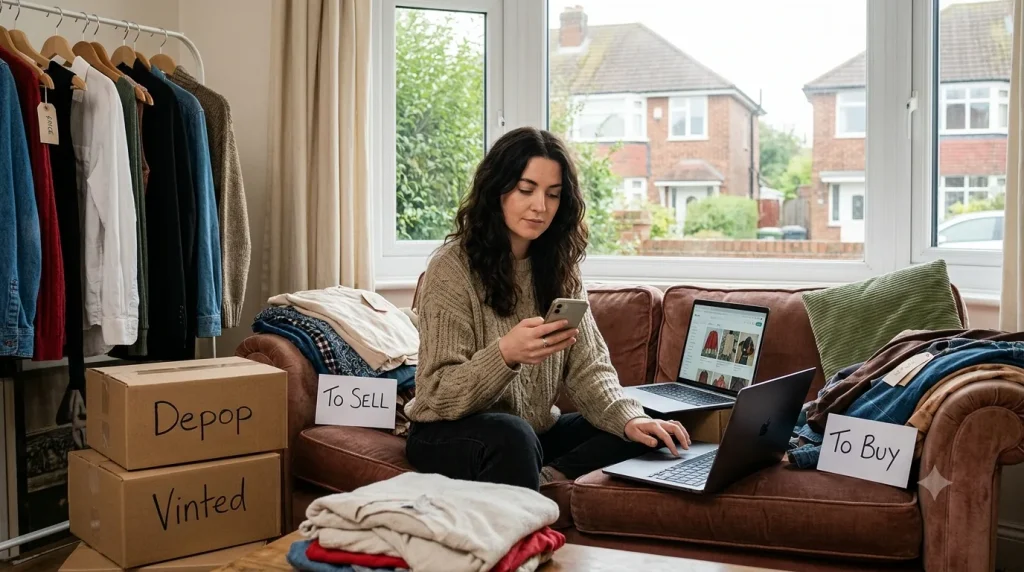
After comparing Vinted and Depop from the perspective of a UK buyer and seller, I think Vinted is the better all-round option for most people who simply want to buy affordable second-hand clothes or clear unwanted items from their wardrobe.
Depop feels like the stronger choice when I look specifically at vintage clothing, Y2K fashion, streetwear and more individual pieces.
Its whole shopping experience feels more centred around discovering clothes with personality rather than simply finding the cheapest version of something.
For sellers, the biggest difference I noticed is cost. Vinted currently has no standard seller fee, while Depop has also removed its old UK selling commission but still charges a payment-processing fee.
My simple verdict is:
- Choose Vinted If you want everyday bargains, high-street clothes or a straightforward wardrobe clear-out
- Choose Depop If you are looking for vintage, Y2K, streetwear or more distinctive fashion
- Try Both If you regularly buy or sell different types of clothing
What Is the Difference Between Depop and Vinted?
When I compared the two platforms, the biggest difference was not simply their fees. It was the way they approached second-hand shopping.
Vinted feels more like a practical marketplace. Depop feels more like a fashion marketplace.
That distinction sounds small, but it changes how I would use each one.
What Is Vinted?
Vinted immediately makes sense if the aim is to find a specific second-hand item or sell clothes you no longer wear.
When I look through the types of products available, there is a strong emphasis on everyday clothing, shoes, accessories and familiar high-street brands. Vinted has also expanded into categories beyond fashion.
The selling model is simple. You list an item, choose a price and wait for someone to buy it or send an offer.
What stands out most to me is that Vinted does not currently charge sellers a standard selling fee. For somebody trying to clear ten or twen lower-priced pieces from a wardrobe, that matters.
What Is Depop?
Depop gives me a noticeably different impression.
Rather than feeling purely transactional, it puts more emphasis on fashion discovery, presentation and individual seller style.
Vintage jackets, Y2K pieces, streetwear, retro sportswear and curated outfits feel much more at home here.
That does not mean everything on Depop is unusual or expensive. There are plenty of ordinary clothes too. But if I were searching for something distinctive rather than a basic item from a familiar high-street brand, Depop is the platform I would be more inclined to browse first.
Depop vs Vinted: Which Is Better for Buyers?
Looking at both platforms purely as a shopper, I would choose based on what I was trying to buy.
If I knew that I wanted a specific pair of jeans, coat or jumper from a recognisable brand, Vinted would probably be my first search.
If I wanted a 1990s jacket, unusual vintage T-shirt or Y2K-style piece and did not have one exact product in mind, I would start with Depop.
Which Is Cheaper for UK Shoppers?
This is where I think buyers need to be slightly careful.
It is easy to look at a £10 listing on Vinted and a £12 listing on Depop and assume that the Vinted item will definitely be cheaper.
That is not always how the final checkout works.
Vinted currently adds a Buyer Protection fee of 5% of the item price plus £0.70.
If I take a £20 item as an example, the Buyer Protection fee would be £1.70. That puts the purchase at £21.70 before delivery is added.
Depop also has a Marketplace fee for UK buyers. This can be up to 5% of the purchase price plus up to £1, excluding shipping and applicable taxes.
This is why I would always compare the final amount shown at checkout rather than judging the deal from the listing price alone.
On cheap items in particular, a fixed fee can make a surprisingly noticeable difference.
Which Has the Better Range of Clothes?
For everyday clothing, I would give Vinted the advantage.
I would be more likely to search Vinted for:
- High-Street Clothing
- Everyday Jeans And T-Shirts
- Children’s Clothes
- Trainers
- Sportswear
- Basic Jackets And Coats
- Wardrobe Clear-Out Bargains
Depop is where I would be more inclined to look for:
- Vintage Clothing
- Y2K Fashion
- Retro Sportswear
- Streetwear
- Unusual Jackets
- Statement Pieces
- Curated Fashion
There is plenty of crossover between the two, so I would not treat those categories as strict rules.
But after comparing their positioning and shopping experience, the difference between Vinted or Depop becomes much easier to understand.
Which Is Better for Vintage, Y2K and Designer Fashion?
If vintage and Y2K clothes were my priority, I would start with Depop.
Its audience and fashion-led presentation make browsing those categories feel more natural.
Vinted can still be surprisingly good for vintage clothing, particularly if someone has listed an old item without placing much importance on its aesthetic or era. That can occasionally create opportunities to find interesting pieces at relatively ordinary second-hand prices.
For designer items, however, I would be more cautious on either marketplace.
I would look closely at:
- Seller Feedback
- Detailed Product Photos
- Receipts Or Proof Of Purchase
- Item Condition
- Platform Protection
- Any Available Verification Service
Vinted also offers Item Verification for qualifying designer products, which is worth considering when buying something more valuable.
Which Is Easier to Search and Shop On?
Vinted feels better suited to targeted searching.
If I know the brand, size, colour and type of item I want, filtering through listings makes sense.
Depop feels more useful when I know the style I want but not necessarily the exact item.
For example, searching specifically for a black Nike hoodie feels like a Vinted-type task.
Browsing for a vintage racing jacket or Y2K top feels much more like the kind of shopping experience Depop is built around.
That is one of the clearest differences I found when comparing Depop vs Vinted for buyers.
Offers and Price Negotiation
I would rarely assume the asking price is necessarily the final price on either marketplace.
Both Vinted and Depop allow negotiation in different forms, so making a reasonable offer can be worthwhile.
The important thing for me would still be checking the final checkout total after an offer is accepted.
Saving £2 on an item can feel less impressive once buyer fees and delivery are added, particularly on inexpensive purchases.
Depop vs Vinted Fees for Sellers
The seller fees were one of the most important parts of this comparison because a lot of older Depop vs Vinted articles are now out of date.
Depop used to be widely associated with a 10% selling fee in the UK.
That is no longer the standard position.
| Seller Cost | Vinted | Depop |
| Standard UK Selling Fee | £0 | £0 |
| Seller Payment Processing | £0 Standard Seller Charge | 2.9% + £0.30 |
| Optional Promotion | Paid Promotional Options Available | Boosted Listings Can Carry An Additional Fee |
| Approximate Return On A £20 Item Before Optional Promotion And Postage | £20 | About £19.12* |
| Best Suited To | Everyday And Lower-Cost Selling | Fashion-Led And Curated Selling |
*The Depop example is a simplified illustration based on the listed £20 price. Actual processing calculations can also involve shipping and applicable taxes.
Which Platform Lets Sellers Keep More Money?
When I worked through the basic numbers, Vinted came out ahead on a standard sale.
If I sold something for £20 on Vinted without paying for optional promotional features, the platform’s standard selling-fee structure means there is no ordinary seller commission deducted from that £20 item price.
On Depop, the standard selling fee is also gone for eligible UK listings, but the payment-processing charge remains.
At 2.9% plus £0.30, a simple £20 example produces a processing deduction of about 88p.
That leaves roughly £19.12 before considering anything else that might apply.
That difference is not enormous on one transaction.
But if I were clearing 20 or 30 inexpensive items from a wardrobe, I would start noticing it.
This is why Vinted vs Depop fees matter more for frequent sellers and lower-value items than they might for somebody making one occasional sale.
Is Depop or Vinted Better for Selling Clothes?
If I had a pile of ordinary clothes that I simply wanted out of my wardrobe, I would choose Vinted first.
If I had a smaller collection of vintage, retro or unusual clothes that deserved more careful presentation, I would be more tempted to use Depop.
Which Is Easier for Listing and Managing Items?
Both platforms are designed to make listing relatively simple.
The basic process is familiar:
- Take Clear Photos
- Describe The Item
- Select The Category
- Add The Size
- Explain The Condition
- Choose A Price
- Publish The Listing
Where I see the difference is in the way I would approach the listing.
On Vinted, I would focus heavily on accuracy, price and searchable details.
On Depop, I would be more conscious of presentation because fashion discovery plays a bigger part in the marketplace.
That might mean thinking more carefully about the main image, styling and how the item is described.
Which Is Better for Everyday High-Street Clothes?
For ordinary high-street clothes, I would choose Vinted.
If I were selling a Zara jumper, Next coat, Nike hoodie or pair of everyday jeans, I would expect buyers to care primarily about:
- Price
- Size
- Condition
- Brand
- Delivery Cost
That fits Vinted well.
There is usually little need to turn an ordinary wardrobe item into a highly curated fashion listing.
Which Is Better for Vintage and Trend-Led Fashion?
This is where I would lean towards Depop.
If I had an unusual 1990s jacket, Y2K top or retro sportswear piece, I would want it in front of shoppers who actively browse according to aesthetics and trends.
Depop’s younger and more fashion-focused audience makes that appealing.
I would still consider listing the item on Vinted as well, particularly if the priority was a faster or simpler sale rather than maximising its fashion appeal.
Which Is Better for Higher-Value Items?
For an expensive item, I would stop worrying about which app has the coolest interface and concentrate on protection.
Before buying or selling something valuable, I would check:
- Seller Or Buyer Feedback
- Authenticity Evidence
- Tracked Delivery
- Platform Protection Rules
- Photographs Of Important Details
- Return Or Dispute Procedures
- Current Fees
I would also keep every important part of the transaction within the platform.
The moment someone asks to move payment elsewhere, I would become much more cautious.
Which Platform Is Better for Clearing Out Your Wardrobe?
Vinted would be my choice.
The reason is not particularly complicated.
When clearing a wardrobe, most people are not running a curated vintage business. They may simply have several tops, coats, shoes and jeans they no longer wear.
On £5, £10 and £20 items, avoiding standard seller deductions becomes useful.
I would probably separate anything unusually fashionable or vintage and consider Depop for those pieces.
Depop vs Vinted Buyer Protection and Safety
Buyer protection is one area where I would not choose a platform based purely on reputation.
I would look at exactly what each platform requires when something goes wrong.
And there is an important difference.
How Vinted Buyer Protection Works?
Vinted’s Buyer Protection applies to purchases completed using its buying system.
If an item does not arrive, arrives damaged or is significantly different from its description, qualifying buyers can raise an issue.
The part that would make me pay attention is the deadline.
Vinted tells buyers to report qualifying problems within two days of being notified that the item has been delivered.
If I bought something through Vinted, I would therefore open and inspect it as soon as possible.
I would not leave a parcel unopened for a week and assume I could deal with the problem later.
How Depop Protection Works?
Depop also offers protection for qualifying purchases.
Its current UK protection information covers circumstances including items that do not arrive, arrive damaged or are significantly not as described.
Depop’s timing is different.
Eligible buyers generally need to report the problem within 30 days of the purchase date.
That sounds much longer than Vinted’s two-day reporting period, but the two deadlines are measured from different points.
Vinted ties its key reporting window to delivery.
Depop counts from purchase.
That distinction is much more useful than simply saying one app has “better protection”.
How to Buy Safely on Depop and Vinted?
My approach would be virtually the same on either marketplace:
- Keep Payments Inside The App
- Read The Entire Description
- Look Closely At Every Photograph
- Check Seller Feedback
- Ask About Damage Or Wear
- Request Measurements When Needed
- Use Tracked Platform Shipping Where Appropriate
- Inspect The Item Immediately After Delivery
- Report Problems Before The Deadline
For vintage clothing, I would pay particular attention to measurements.
A vintage garment labelled “large” can fit very differently from a modern large, so relying only on the tag is risky.
Depop vs Vinted Postage: Which Is Easier?
Postage matters more to me as a seller than it does as a buyer because I want the process after a sale to be straightforward.
How Vinted Postage Works?
Vinted’s integrated shipping system is one of the features that makes it attractive for casual selling.
When the relevant integrated delivery option is used, the seller receives the shipping instructions or prepaid label and takes the parcel to the appropriate drop-off location.
That means I would not need to calculate postage manually for every ordinary sale.
For somebody clearing several items at once, that removes a bit of friction from the process.
How Depop Shipping Works?
Depop also offers integrated UK shipping options, including its Depop Shipping service.
The seller can receive the relevant QR code or label and tracking can update through the transaction.
Depop also has specific requirements that sellers need to follow if they want to qualify for certain seller protections.
That means I would always check the shipping instructions attached to the actual order rather than assuming that any delivery method would provide the same protection.
Which Is More Convenient for Buyers and Sellers?
I would give Vinted a slight edge for casual sellers.
Its postage process fits the overall simplicity of the platform.
Depop is not particularly difficult, but if my priority was listing several inexpensive wardrobe items and getting them posted with minimal fuss, Vinted would be my preference.
Vinted vs Depop: Pros and Cons
After comparing the main differences, this is how I would summarise them.
| Platform | Pros | Cons | Best For |
| Vinted | No Standard Seller Fees, Strong Everyday Selection, Simple Selling, Integrated Shipping, Broad Product Range | Buyer Protection Fee Increases Checkout Cost, Short Post-Delivery Problem Window, Strong Price Competition | Everyday Clothing, Bargains, Wardrobe Clear-Outs And Casual Selling |
| Depop | Strong Vintage Selection, Y2K And Streetwear, Fashion Discovery, Curated Seller Profiles | Seller Payment-Processing Fee, Buyer Marketplace Fee, Optional Promotional Costs | Vintage, Streetwear, Y2K, Curated Fashion And Distinctive Items |
For me, that table explains why there is no completely universal answer to which is better, Depop or Vinted.
They overlap, but their strengths are different.
What New Changes Have Vinted and Depop Introduced?
This is one section I think is particularly important because both platforms have changed enough that older comparisons can now be misleading.
Recent Vinted Changes in the UK
One of the developments I found most interesting is Vinted’s push into payments.
In March 2026, Vinted Pay received an Electronic Money Institution licence from the UK’s Financial Conduct Authority.
That gives Vinted Pay the regulatory permission required to issue electronic money and provide payment services in Britain.
For me, this is important because it shows Vinted moving beyond simply running a marketplace and investing in more of the underlying infrastructure behind transactions.
Vinted has also continued expanding beyond clothing.
The marketplace now covers areas such as:
- Electronics
- Home Items
- Entertainment
- Sports
- Collectables
That makes today’s Vinted noticeably broader than the clothes-focused marketplace many people originally joined.
Recent Depop Changes in the UK

Depop has experienced an even bigger corporate change.
eBay completed its acquisition of Depop on 30 July 2026.
For me, this is one of the most significant developments affecting the platform because Depop is now backed by one of the world’s largest marketplace businesses.
Depop is still operating under its own identity rather than simply becoming another section of eBay.
The platform has also changed its approach to paid promotion.
Its updated Boosted Listings structure means sellers who choose to promote qualifying listings need to consider an additional promotional charge.
That reinforces an important distinction I noticed while comparing the platforms.
Depop can truthfully have no standard selling fee while sellers can still face costs through payment processing or optional promotion.
What Are Vinted and Depop Planning Next?
Looking at where both businesses are investing gives me a better idea of how this comparison could change over the next few years.
Vinted’s Future Plans
The areas I would watch most closely are Vinted’s:
- Payment Infrastructure
- Delivery Network
- Marketplace Expansion
- Verification Services
- New Product Categories
Vinted Pay is particularly interesting for UK users.
The regulatory approval is already in place, but I would not describe every planned wallet or payment feature as available in Britain until Vinted confirms the rollout.
That distinction matters because a company’s plan and a feature people can actually use today are not the same thing.
Depop’s Future Plans
With Depop now owned by eBay, I would expect much of the attention to focus on how the two marketplaces can use their respective strengths.
Areas previously discussed around the transaction included:
- Shipping
- Personalisation
- Trusted Marketplace Services
- Seller Reach
- Inventory Visibility
- Potential Cross-Listing Opportunities
I would treat these as areas to watch rather than guaranteed features.
The acquisition has happened.
That does not mean every possible integration mentioned around the deal has already launched.
What UK Buyers and Sellers Should Watch For?
If I regularly used either platform, I would keep an eye on:
- Vinted Pay In The UK
- Changes To Marketplace Fees
- New Buyer Protection Rules
- Shipping Changes
- Designer Verification
- New Depop Features Following The eBay Acquisition
- Seller Promotion Costs
- Cross-Platform Selling Tools
This is particularly important for sellers because pricing an item using information from a three-year-old comparison could mean working from fees that no longer exist.
Should You Choose Depop or Vinted?
If I had to choose only one, I would decide according to what was in my wardrobe or shopping basket.
Choose Vinted If…
I would choose Vinted if:
- I Wanted Everyday Second-Hand Bargains
- I Was Clearing Out Ordinary Clothes
- I Wanted To Minimise Standard Seller Costs
- I Preferred Targeted Search And Filtering
- I Was Selling Lower-Value Items
- I Wanted A Straightforward Shipping Process
Choose Depop If…
I would choose Depop if:
- I Wanted Vintage Clothing
- I Was Looking For Y2K Fashion
- I Enjoyed Browsing Fashion For Inspiration
- I Had Distinctive Pieces To Sell
- I Was Selling Streetwear Or Retro Clothing
- Presentation Was An Important Part Of My Listing
Use Both Depop and Vinted If…
For many people, I think this is actually the most sensible answer.
I would not treat Vinted and Depop as mutually exclusive.
If I were clearing a wardrobe, I might put everyday high-street items on Vinted while reserving vintage or distinctive pieces for Depop.
As a buyer, I would also check both platforms when searching for something specific.
The same jacket could appear at completely different prices depending on where it is listed and how the seller has positioned it.
If I listed one physical item on both marketplaces, I would remove the duplicate listing immediately after it sold to avoid accidentally accepting two orders for something I could only send once.
Conclusion: Is Depop or Vinted Better?
After comparing Depop vs Vinted in the UK, I would choose Vinted for most everyday buying and selling.
It suits the way I would approach ordinary second-hand shopping. Search for what I want, compare prices, make an offer if appropriate and buy it.
For sellers, the lack of a standard selling fee also makes Vinted especially attractive when clearing inexpensive clothes from a wardrobe.
But I would not call Depop the loser.
If I wanted vintage, Y2K, streetwear or something that felt more individual, Depop would probably be the first place I looked.
That is ultimately the most useful answer to is Depop or Vinted better.
Vinted is stronger for straightforward second-hand shopping and casual selling.
Depop is stronger when fashion discovery, aesthetics and distinctive clothing matter more.
For anyone who regularly buys or sells second-hand clothes, using both can make more sense than choosing one permanently.
Frequently Asked Questions
Is Depop or Vinted Better in the UK?
I would choose Vinted for everyday second-hand buying and casual selling, while Depop would be my preference for vintage, Y2K and more individual fashion.
Is Vinted Cheaper Than Depop?
Vinted has an advantage for sellers because it has no standard seller fee. As a buyer, I would compare the complete checkout cost because both platforms can add buyer-side charges.
Is Depop or Vinted Better for Selling Clothes?
For a normal wardrobe clear-out, I would choose Vinted. For vintage, curated or trend-led pieces, I would be more inclined to try Depop.
Is Vinted or Depop Safer for Buyers?
Both have protection systems, so I would focus on following the platform rules, keeping payment in-app and reporting any problem within the required deadline.
Which Is Better for Vintage Clothes, Depop or Vinted?
I would start with Depop for vintage clothing because fashion discovery is one of its strengths, although Vinted can still have excellent vintage finds.
Does Depop Charge Sellers in the UK?
Depop currently has no standard UK selling fee on eligible listings, but sellers using Depop Payments still face a payment-processing fee.
Does Vinted Charge Sellers in the UK?
Vinted does not currently charge a standard seller fee. Optional paid promotional tools can still cost extra.